
Organic Champagnes to try in 2019
We bring you a selection of organic Champagnes to try from smaller-scale producers...


According to the Association des Champagnes Biologiques, only 600 of the 33,000 hectares of vines in Champagne are certified organic, or in the process of certification.
That’s a tiny percentage. The caveat is that not all producers seek certification, citing cost and principles as reasons. Some larger Champagne houses have begun shifting towards organics, and also biodynamics, but it is a gradual process – particularly bearing in mind that many buy in grapes from different growers.
Still, all of this can make your search for fully organic Champagne a long and weary one. Luckily, Decanter’s tastings team has tasted several over the last few months. You can find our top choices below.
A word about sulphites
EU rules set lower maximum limits for sulphites in organic wines than in conventional wines.
There are naturally variations in levels used, although many organic and biodynamic producers attempt to minimise sulphur dioxide use wherever possible.
Some organic, biodynamic and ‘natural’ winemakers produce ‘no added sulphur’ wines.
All wine has some level of sulphur dioxide, which is in small amounts during fermentation.
Winemakers traditionally add extra sulphur dioxide to kill off naturally occurring yeasts on the grapes and in the cellar. It is also added at bottling to act as an anti-oxidant, to help preserve the wine as it’s shipped throughout the world and, potentially, then stored for many months or years.
While sulphites must be listed on bottle labels as a potential allergen, some experts have said that there is no proven link between sulphites and headaches.
Best organic Champagne:
You might also like:
Decanter’s guide to anniversary buys 2019
Best Champagnes of 2018 tasted by our experts
How does English sparkling wine compare to Champagne? The vintage category
Robert Barbichon, Réserve 4 Cepages, Champagne, France
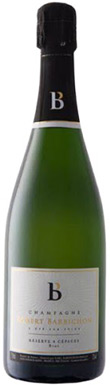

From a fourth-generation grower, this organic Champagne is a blend of Pinot Noir, Chardonnay and Pinot Meunier plus 7% Pinot Blanc, mostly from the 2013...
Robert Barbichon

André Beaufort, Reserve Grand Cru, Champagne, France
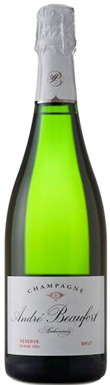
From vines grown on a small 7ha organic vineyard in the grand cru of Ambonnay, this Champagne is a Pinot Noir-dominant blend with 10% Chardonnay,...
André Beaufort
Lelarge-Pugeot, Les Meuniers de Clemence, Champagne, France, 2013
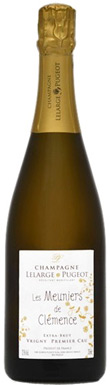
An unusual 100% Pinot Meunier Champagne from premier cru vineyards in Vrigny, farmed organically and biodynamically by seventh- and eighth-generation growers. Inviting aromas of nuts,...
2013
Lelarge-Pugeot
Vincent Couche, Chloé, Champagne, France
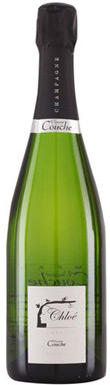
Vincent Couche has farmed his 14ha of vines biodynamically since 2008. This blend of 66% Pinot Noir and 34% Chardonnay is named after his wife....
Vincent Couche
Yves Ruffin, Cuvée Thierry Ruffin, Champagne, France, 2006
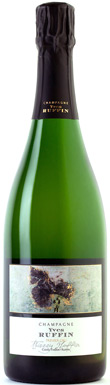
Made by a third-generation grower from 3ha of organic vines in the premiers crus of Avenay-Val-d'Or and Tauxières. Vinified in acacia wood, this Chardonnay-led fizz...
2006
Yves Ruffin
Lelarge-Pugeot, Tradition Extra Brut 1er Cru, Champagne, France
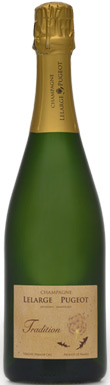
Based in the premier cru village of Vrigny, seventh-generation Dominique Lelarge and his family run their certified organic 8ha estate following biodynamic principles. This wine...
Lelarge-Pugeot
Val Frison, Portlandia, Champagne, France, 2014
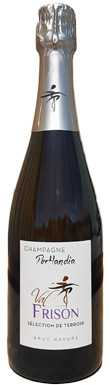
The estate is run by winemaker Valérie Frison, and this zero dosage Champagne is made from a small organic vineyard on Portlandian limestone. A blend...
2014
Val Frison
