Paso Robles’ Saxum Vineyards: Producer profile and 10 wines to try
Saxum Vineyards, is one of the top producers in California, with three generations working some of the best vineyards in Paso Robles. Brianne Cohen takes a look for Decanter.


With a degree in Systemic Botany from CalPoly San Luis Obispo, Justin Smith, a Paso Robles local, didn’t receive many job offers after graduation. Smith and his friends enjoyed working summers in the James Berry Vineyard owned by his parents, and along the way, Smith realised that growing grapes had a lot in common with his love of plants.
‘It was a lot of hard work growing up on the farm. I was ready to go out in the world and do something else, but I still loved growing plants,’ he says. Without a job, Smith returned to manage the family vineyard and decided he wanted to make wine.
Scroll down to see tasting notes and scores for 10 Saxum wines
Paso pioneers
Smith and his parents, James Berry Smith and Terry Smith, moved from Encinitas, California, in San Diego County to Paso Robles when he was 10 years old. James Berry Smith, affectionately known as ‘Pebble’, was a veterinarian who wanted a change of pace. In 1981, he and Terry bought land in Paso Robles, planted 13 hectares of mostly Chardonnay, and sold all of the fruit, much of it to Fetzer, where he also managed grower relations.
John Alban of Alban Vineyards in Edna Valley, a pioneer of the Rhône movement, convinced James Smith to graft over some of the Chardonnay to Mataro and Viognier in 1988. Around the same time, Wild Horse Winery, another of his clients, asked him to plant Syrah, which led to an increased focus on Rhône varieties.
James Smith sold off almost all the fruit and never made wine commercially save for a couple of barrels a year he kept for himself, a practise he exposed son Justin to and which laid his winemaking foundation as opposed to any formal training.

In 1997, Justin Smith and his college roommate, Matt Trevisan, started a brand called ‘Linne Calodo’.
The wine was made in the Wild Horse Winery cellar where Trevisan worked at the time, and the pair were given the run of the place between midnight and 5am. Smith left the brand in 2002 to build Saxum Vineyards.
Latin for ‘stone’, Saxum refers to both the rocky, stony sites in the vineyard and the fact that ‘Stone’ was a family name on his father’s side, hence the nickname Pebble.
In starting Saxum Vineyards, Justin Smith kept back some Syrah he had already made from the Bone Rock Syrah block of the James Berry site. He built a small ‘winery’ on the property – no more than a garage with floor drains.
In this garage, Saxum Vineyards was born. The strategy was to grow slowly and stay small. As contracts expired with other wineries, he’d keep more fruit for himself and slowly grow Saxum’s production.
Saxum Vineyards at a glance
Founded: 2000
Owner: Justin & Heather Smith
Annual production: 8,000-10,000 cases (12 bottle cases)
Total hectares planted to vines:
27ha planted in total (breakdown below)
17ha James Berry Vineyard
4ha Old Creek Vineyard
6ha V2 Vineyard
Appellations: Paso Robles AVA – Willow Creek District, San Luis Obispo Coast AVA, and York Mountain AVA
Estate vineyards: James Berry Vineyard 1981-present, Old Creek Vineyard 2017-present, V2 Vineyard 2022-present
Key wine varieties: Syrah, Grenache, Mataro
Winemaker: Justin Smith 2000-present
The James Berry Vineyard
Located in the Willow Creek District, the James Berry Vineyard is responsible for nearly half of Saxum’s production, including the James Berry White and the James Berry Red, plus two block designates: ‘Bone Rock Block’ and ‘Rocket Block’.
The Bone Rock Block, primarily planted with Syrah, is named after the whale fossil rocks in the vineyard. Rocket Block is their favourite Grenache block. ‘Seeing all the hard work that went into growing Paso grapes and seeing them sold off and put in with bigger California blends’ was challenging for Smith, who watched the region’s quality potential disappear. Growing quality Paso grapes and making quality Paso Robles wines became the goal.

The James Berry Vineyard is not yet certified but is farmed organically and with regenerative farming practices. In 1983, the vineyard saw the most rain it had ever experienced. James Smith consulted with the California Department of Conservation about protecting the hillside vines from such high rainfall in future.
They suggested using no-till cover crops and the vineyard has been no-till for over 40 years. In this high rainfall, high elevation sub-district, watering needs are minimal, if at all.
Though Paso is warm, the west side of Willow Creek District does not get as hot as east Paso. High-pH soils plus cool nights preserve acidity, so no acidification is used in their winemaking. Compost produced on site is the only nutrient used on the vines.
While James Berry Vineyard is the pinnacle for Saxum Vineyards, Justin Smith also sources high-quality fruit from noteworthy local vineyards such as G2, Heart Stone, Paderewski and 4hearts.
Smith is heavily involved in farming these vineyards in a more collaborative style. Having worked with Smith since the beginning of his vineyard career, Bill Gibbs, vineyard owner and manager, says: ‘I’m grateful for his influence on the success of my vineyards Heart Stone and G2. I couldn’t have done it without him.’
Winemaking philosophy
As a young winemaker, Smith’s wines were, in his own words: ‘Boisterous, big, extracted, and in your face, but the quality of the grapes shone through.’ Along the way, he’s fine-tuned things and backed off on extraction. At one point, he admits he backed off too much, and things were too lean. ‘Now I realise there’s a happy middle ground,’ he says.
Though ripe, rich, and higher in alcohol, the purity of Saxum’s wines comes through in the simple winemaking technique used for most of the wines – three weeks in a stainless steel tank or concrete vessel with no crushing and varying degrees of whole-cluster.
Not quite a cold soak, but it’s four days on average before fermentation starts, with no enzymes or acid added. When the tank ferments to dryness, they gently press it off with an old basket press into barrels to age for two to three years. The only ingredients in a bottle of Saxum wine are grapes, yeast, and minimal SO2 at bottling.

Expanding the estate
Early on, critical acclaim and high scores resulted in low market availability for Saxum’s wines. The 2007 James Berry Vineyard Red was the first wine to score 100-points from a major wine publication. Now, the wines are highly allocated and available by mailing list only, with a highly over-subscribed waiting list. There is no official tasting room, and the opportunity to taste at the property is rare.
Two new vineyards will increase Saxum’s estate wine offerings enough to become an ‘estate only’ winery shortly. Six kilometres from the Pacific and with a striking view of the California coastline is the 4.5ha Old Creek Vineyard in the San Luis Obispo Coast AVA.
Dedicated to Syrah, the vineyard will have a single bottling, with the first release coming later this year. The Syrah is the old Estrella clone, the same selection on the Bone Rock Block at James Berry. It is California’s ‘heritage’ massal selection Syrah of suitcase cuttings taken from Chapoutier in Hermitage.
The vines are own-rooted, high-density plantings on a gentle northeast-facing slope, away from the coast, protecting it from the hot sun. The San Luis Obispo Coast AVA is cooler than Paso, allowing the fruit to hang well into November (the first harvest for this vineyard was 14 November of last year), with good acid retention. The soils at Old Creek derive from the Monterey Formation and include fractured calcareous shales, sandstone, and limestone, the same soils found at James Berry.

York Mountain is home to Saxum’s newest estate vineyard. With 93ha of primarily steep and wooded land, the V2 Vineyard is two kilometres (as the crow flies) from the James Berry Vineyard. Topping out at 609m of elevation, the property boasts 6ha planted predominantly with Grenache, with some Mataro, Zinfandel, and various whites. York Mountain is a separate AVA within San Luis Obispo County that abuts the western edge of Paso Robles.
Established in 1983 and one of the smallest AVAs in California at 2,600ha, it is cooler, wetter, and foggier than the AVAs of Paso because the Santa Lucia Range does not protect it as much from oceanic influences.
York Mountain soils are well-draining, heat-retaining sandstone rather than limestone, a good combination for this cool and wet area, which boasts 30 – 50% more rainfall than Paso. The V2 Vineyard soils are predominantly fractured sandstone, including scallop and oyster shells from the ancient seabed, pushed up from tectonic activity and now broken down into sand.
Saxum’s next-generation
Justin’s son Colin is taking the helm of the York Mountain property. As the assistant winemaker, his father is his primary teacher in the cellar just like his father was to him – three generations of self-taught winemakers – and not a wine degree in sight.
Colin spent time at Stirm Wine Co. in Santa Cruz and Beaux Frères in the Willamette Valley in Oregon before his boomerang journey back home to Paso.
Over 20 years ago, Justin, ‘started with the intention that world-class wine can come from Paso.’ This goal has been achieved with Saxum’s success and slow, intentional growth.
10 wines from Saxum Vineyards
Related articles
- Rainy weather makes for another wet California winter
- Producer profile: Hundred Acre plus 18 great wines to try
- Napa Valley’s Darioush: Producer profile plus 10 wines tasted
Saxum Vineyards, James Berry Vineyard White, Paso Robles, Willow Creek, California, USA, 2021


The white sibling from the celebrated James Berry vineyard. A complex nose of ripe pears, citrus blossoms and an exotic saffron note. Mouthwatering acidity and waxiness up front, green fruits in the middle and lactic notes rounding up the rear. Complexity shines through from the Grenache Blanc and Roussanne blended with Chenin Blanc and Chardonnay. Demands food for supreme enjoyment. To be released in spring 2024.
2021
Saxum VineyardsPaso Robles

Saxum Vineyards, James Berry Vineyard Red, Paso Robles, Willow Creek, California, USA, 2021
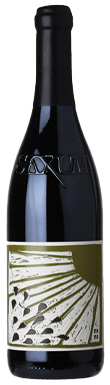
The flagship Grenache-based estate red from this esteemed Paso producer. The nose opens with plumminess, cherry notes, and fruit purity that shines through to the palate: bold, showy, serving dark fruits, a liquorice note and sweet toasted oak. The James Berry vineyard showcases potential realised in Paso Robles with expertly balanced structural elements. To be released in spring 2024.
2021
Saxum VineyardsPaso Robles
Saxum Vineyards, Broken Stones, Paso Robles, California, USA, 2021
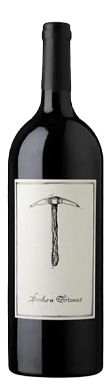
This Syrah-dominant blend gives a dark and stormy nose with blackberries, black pepper and black liquorice. The palate is dark, rich and complex, with firm tannins and a long finish. Rich fruits and figs dominate, with sweet vanilla and cinnamon spices and a lengthy, dark chocolate finish.
2021
Saxum VineyardsPaso Robles
Saxum Vineyards, G2 Vineyard, Paso Robles, Willow Creek, California, USA, 2021
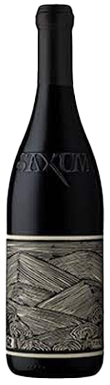
Saxum has been working with the G2 vineyard since 2014, and this Grenache-dominant 2021 embodies the phrase ‘iron fist in a velvet glove’, in its restraint combined with power. Dark cherries on a shy nose, hints of cedar and toastiness. The palate is a well-integrated study on precision and interplay: dark currant and plum fruits, cinnamon, black pepper, completed by sweet oak spice.
2021
Saxum VineyardsPaso Robles
Saxum Vineyards, 4hearts Vineyard, Paso Robles, Willow Creek, California, USA, 2021
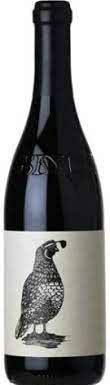
A precise and balanced example of a full-bodied and structured red blend of Petit Sirah, Cabernet Sauvignon, and Zinfandel. On the 4hearts Vineyard, the plantings are dry-farmed and head-trained in the traditional style. American oak barrels are also a tip of the hat to the old California style. A rich dark fruit concentration and assertive tannins make up the backbone of this wine, best served with a BBQ platter, including burnt ends.
2021
Saxum VineyardsPaso Robles
Saxum Vineyards, Somnus, Paso Robles, California, USA, 2019
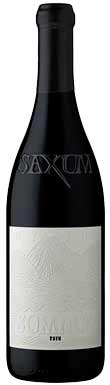
<p>One of only two non-vineyard designate wines in the Saxum portfolio. Generous stem inclusion in fermentation resulted in spicy and tannic component wines from each lot that Smith thought would benefit from extended barrel ageing. The wine is inky purple in the glass with aromas of rich dark compote-style fruits plus herbal spices. On the palate, the tannins are well-integrated with heaps of dark fruit notes, including blackberries – a winning pairing with braised short ribs or duck confit.</p>
2019
Saxum VineyardsPaso Robles
Saxum Vineyards, Bone Rock - James Berry Vineyard, Paso Robles, Willow Creek, California, USA, 2020
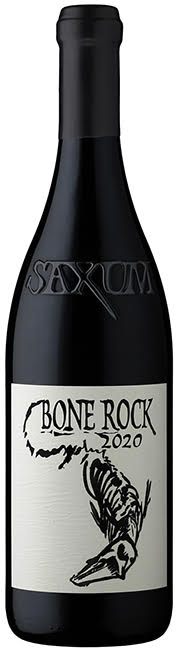
Where Saxum started, the Bone Rock Block, planted in 1990, is the oldest block of Syrah on the James Berry Vineyard. Named after the whale fossil rocks found in the vineyard, the wine gives notes of plums, dark cherries, spice and toastiness from the use of mostly new oak. Primary fruit is driven on both the nose and palate, and stem inclusion lends texture and structure. It will improve with age.
2020
Saxum VineyardsPaso Robles
Saxum Vineyards, Paderewski Vineyard, Paso Robles, Willow Creek, California, USA, 2021
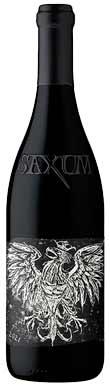
Owned by Epoch Wines, the Paderewski Vineyard tends to give wines with supple tannins and crush red fruit aromatics, and this vintage is no exception - sweet red fruits on the nose, star anise, and cinnamon sticks. The palate is filled with red fruits, rounded medium tannins, and refreshing acidity. Aged in primarily foudre and some new oak, this wine is remarkably drinkable now but will age well.
2021
Saxum VineyardsPaso Robles
Saxum Vineyards, Heart Stone Vineyard, Paso Robles, Adelaida District, California, USA, 2021
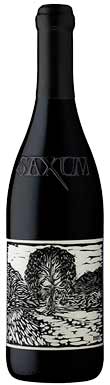
An air of brightness and freshness permeates this wine from the Heart Stone Vineyard, owned by Bill Gibbs. Red fruits plus black fruits play well together to add a lift, plus dark undertones of dried spices and black pepper. Like all Saxum wines, this wine is full-bodied and structured with ample tannin character and acidity. Best served with a sliced skirt steak with chimichurri or fire-grilled portobello mushrooms.
2021
Saxum VineyardsPaso Robles
