Pessac-Léognan: Setting the pace
Home to one first growth and some of France’s finest red and white wines, Pessac-Léognan is still not nearly as well known internationally as its superstar neighbour regions. But exciting new developments suggest this could be set to change.


March was a starry month for Bordeaux’s Pessac-Léognan, but most wine lovers didn’t even realise it. Backstage at the glamorous 95th Academy Awards ceremony in Hollywood, nominees and winners sipped La Clarté de Haut-Brion, a white wine made by first growth Château Haut-Brion in Pessac-Léognan. Yet few wine lovers outside France know that appellation name, or that in 1987 it was carved from the northern part of the wider Graves region south of Bordeaux.
Wildly energetic Jacques Lurton, who became the president of the Syndicat de Pessac-Léognan last year, aims for global awareness. He says: ‘I want to shake the tree. Pessac-Léognan should be one of the best-known names in Bordeaux, like Margaux in the Médoc and St-Emilion on the Right Bank. Our identity is our wines’ high quality. Our style is elegance and balance, not excess.’
Scroll down to see tasting notes and scores of 12 top Pessac-Léognan wines
You could argue it’s the most dynamic wine spot in Bordeaux.
A recently opened cellar is the region’s ultimate in eco-consciousness. Winemakers are experimenting with new grapes and wines. A vibrant tourism scene includes Bordeaux’s first ‘forest bathing’ tasting, and much more.
Lurton likes to talk about the future, but Pessac also has a long, illustrious wine history, and for centuries was more important than the Médoc. The warm local climate, partly shaped by the pine forests sheltering vines from wind and humidity, and a range of terroirs make it special for both reds and whites. Yet it was only Château Haut-Brion in this region that was classified in the 1855 classification. The Crus Classés de Graves, a group of 16 top châteaux, wasn’t created until 1953. All are in Pessac-Léognan.
Lurton’s father André, who died in 2019, fought to establish the appellation. Now, after spending 20 years making wine all over the globe before returning to his Bordeaux roots to run Vignobles André Lurton, Jacques Lurton is presiding over an appellation in the throes of change. Here’s what’s new.
The ultimate eco-cellar
Nothing symbolises today’s environmental era in Pessac-Léognan better than the gorgeous innovative chai at Château Haut-Bailly, which opened to visitors in 2021. Grand architectural-statement cellars dot Bordeaux, but Haut-Bailly’s looks like a tree- and shrub-covered hillock that blends into, rather than dominates, the landscape.
It’s constructed in the shape of a circle, the best way, says managing director Véronique Sanders, to match a building with the land. Two-thirds is underground; a curved window like an eye lets in natural light. Above the domed ceiling a roof garden, with dogwood, pine trees, plants and grasses able to survive without extra watering, keeps the cellar temperature stable. The Jardin du chai won a silver medal at the Victoires du Paysage 2022, a national competition that rewards the most beautiful landscaping of the year.
‘It’s also a cellar for tomorrow, able to cope with climate change,’ explains Sanders. Like the appellation’s other recently opened cellars, at Châteaux Latour-Martillac and La Garde, it’s designed for precision winemaking with small vats, to save energy, and to conserve water and recycle waste.
Wine discoveries

The region’s white wines typically feature Sauvignon Blanc solo or blended with fuller-bodied Semillon, and sometimes Sauvignon Gris or Muscadelle. But there’s a new fascination with Semillon, which requires warmer temperatures so is well suited to a changing climate.
At Château Latour-Martillac, Semillon is the historical variety, with many different clones preserved in the property’s oldest plot. The Kressmann family spent more than a decade identifying the best three for a tiny parcel, whose grapes first went into the 2014 vintage.
Lurton is also a fan, for Semillon’s ability to age, and for its Bordeaux origins. He’s started planting Semillon at his Châteaux La Louvière and Rochemorin and launched a varietal example under his new brand Diane.
Pessac-Léognan reds are generally blends of Merlot, Cabernet Sauvignon and Cabernet Franc or Petit Verdot, but Château La Garde, owned by Maison Dourthe, has launched a new Mosaic line of single-varietal wines from single terroirs, available to buy at the property. The numerous vats in its brand-new cellar enable the separate vinification of grapes from its vineyard’s 27 soil types. And in its new tasting room, you can purchase a collector box of six of those wines with art labels: Merlot on gravels, Merlot on limestone, Merlot on clay, Merlot on clay and limestone, Cabernet Sauvignon on deep gravels, and Cabernet Sauvignon on gravel and clay.
As in other parts of Bordeaux, châteaux are ageing some wines in clay amphorae. At La Garde, global brand director Valentin Jestin says using them for the new varietal line ensures that the purity of the fruit will reveal the true character of the terroir.
The ever-innovative Lurton, too, is playing around with terroir and amphorae at Château Couhins-Lurton with two new wines called Acte II. For the white (100% Sauvignon Blanc), he selects clay and gravel plots whose characteristics are different from those used for the grand vin, and ferments and ages it mostly in horizontal sandstone amphorae, using 70% amphora and 30% barrel. The Château Couhins-Lurton regular white reverses the percentages.
The new tourism

The first time I visited Château La Mission Haut-Brion’s famous vineyard, I was taken aback by how urban it was: streets, houses, schools and city buildings surrounded it. But as wine tourism booms, Pessac-Léognan is pushing its proximity to downtown Bordeaux as a plus that offers city visitors easy access to nature.
Wine lovers can hop on a tram or bus, ride a few stops, and be a short walk from Châteaux Les Carmes Haut-Brion, Pape Clément and several others with gorgeous gardens and vineyards to stroll in. At Pape Clément, you can (since 2017) purchase olive oil from the estate’s thousand-year-old olive trees.
One of the most intriguing new nature and wine experiences is Château Olivier’s Bain de Forêt, or forest bathing. Inspired by Japanese sylvotherapy, the estate initiated it last year, with the aim of helping visitors discover the château’s vast park of century-old trees. Jean Clauzel, the château’s head of oenotourism, says: ‘The immersion is walking and soaking up the forest as far as the eye can see to experience a real moment of escape.’ The guided tours include feeling tree bark and walking without shoes, and culminate in a tasting of the château’s white wine.
Starting this spring, Châteaux Carbonnieux and Larrivet Haut-Brion have joined La Bulle Verte low-carbon wine road, which is an itinerary for tastings, lunches and outdoor picnics that you can explore on foot or with electric bikes or scooters.
Almost all of the region’s 75 châteaux are family-owned, and today’s innovative tourism culture owes a lot to the new generation. At Château Larrivet Haut-Brion, the three daughters in the Gervoson family are behind a series of unusual projects, including a collection of painted concrete eggs, a chance to create your own wine blend, escape games in the cellar and, this summer, Saturday morning yoga.
The first in modern Pessac-Léognan to understand the importance of wine tourism was the Cathiard family of Château Smith Haut Lafitte, whose luxury hotel Les Sources de Caudalie has just been completely refurbished. They have also launched a label in the Napa Valley, earlier this year.
The newest luxury place to stay, though, is Château Léognan, which opens this summer with glamorous rooms in the château, tower and renovated stables, featuring views of surrounding pine forests, and unique cabins and treehouses in the heart of the woods.
Collector appeal

Château Haut-Brion has always been the star of the appellation, and owner Prince Robert of Luxembourg has been upping its presence around the world for a decade. Now he’s opened Le Pavillon Catelan, a super-elegant visitor centre with 19th-century decor between Haut-Brion and La Mission Haut-Brion. The vaulted cellar with its own patio is a grand wine boutique where collectors can purchase rare verticals.
Naturally, a couple of estates offer NFTs (non-fungible tokens). Château Pape Clément, Bordeaux’s oldest wine estate, instituted an NFT club last year to celebrate 770 vintages, from 1252 to 2022. The membership card entitles the buyer to a specially labelled bottle of the great 2016 vintage, a numbered digital artwork and VIP experiences.
And at the beginning of Bordeaux en primeur week in April [first tastings of the new 2022 vintage], Château Malartic-Lagravière launched NFTs linked to engraved and numbered magnums of its 2022 vintage. The estate, owned by the Bonnie family, became the first Bordeaux château to partner with new, exclusive and very expensive private wine society the Osiris Club. Members spend a day blending their own red with the winemaker, touring the cellar and eating lunch at the château.
Climate change and sustainability
Lurton, like other château owners, feels the most important challenge for Pessac-Léognan is finding ways to fight climate change. The eco-pioneer is Château Smith Haut Lafitte, which has long farmed organically (officially certified in 2019) and biodynamically, and boasts a ‘stealth winery’ (Chai Furtif – dedicated to the estate’s young vines) which houses the world’s first system to recycle CO2 from fermentation. This year the Cathiards have added the first llamas to munch grass between the vines.
Organic vineyards are increasing; others moving that way include Château de Fieuzal and Domaine de Chevalier.
Non-traditional grape varieties are also on the rise, with adaptation to a changing climate in mind. At Pape Clément, drones now measure water stress and vine health, while robots routinely weed vineyards.
But the key centre for research in Pessac-Léognan is cru classé Château Couhins, owned by a research institute. INRA, the French National Institute for Agricultural Research, acquired it in 1968 as an experimental site. It developed a ‘GreenSeeker’ sensor to assess and map vines’ vigour plant by plant. They’re studying ways rootstocks and varieties interact and testing 52 grapes’ adaptation to climate change. So far, says château director Dominique Forget, whites that show promise include Petite Arvine, Roussanne, Chenin Blanc and even Assyrtiko.
For Pessac-Léognan, the future looks bright.
Defining a region: McCoy’s pick of 12 from Pessac-Léognan
Wines are listed in colour order, white then red, by score
Related articles
- Pessac-Léognan & Graves 2020 in bottle: overview plus top-scoring wines
- Bordeaux 2022 en primeur prices forecast to rise, finds Liv-ex
- What to do in Bordeaux for wine lovers: The essential list
Château Couhins-Lurton, Blanc, Pessac-Léognan, Cru Classé de Graves, Bordeaux, France, 2019
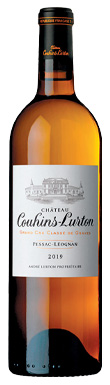

This is the first vintage under owner and winemaker Jacques Lurton's control. In a very warm year, it maintains freshness and vivid citrus and pear aromas, showing elegance as well as power, but the style is evolving. Vignobles André Lurton has some 300ha of vineyards in Pessac-Léognan but this, their flagship estate, is the smallest of their six châteaux and classified cru classé only for its white wine. It's 100% Sauvignon Blanc from a 5.5ha vineyard with gravel and sand, and gravel on limestone, and it's surprisingly long lived.
2019
Château Couhins-LurtonPessac-Léognan

Château Larrivet Haut-Brion, Blanc, Pessac-Léognan, Bordeaux, France, 2020
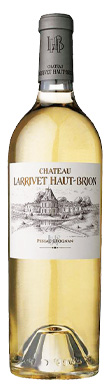
This sample shows an estate on the rise. The white from the 2020 vintage is an aromatic blend of 83% Sauvignon Blanc and 17% Semillon, which gives richness and a smoky depth to its mineral-tinged flavours. Yields were only 20hl/ha, from 8.5ha of vines. The balance is perfect.
2020
Château Larrivet Haut-BrionPessac-Léognan
Château Carbonnieux, Blanc, Pessac-Léognan, Cru Classé de Graves, Bordeaux, France, 2020
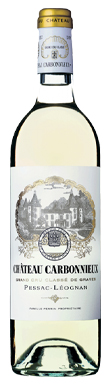
A textbook Pessac-Léognan in a modest, fragrant and refreshingly fresh yet creamy-textured style. Aromas of wild mint, citrus peel and white flowers, and pure flint and citrus flavours that would be perfect with grilled fish. At this large estate, 45ha are planted with white varieties, and Sauvignon Blanc dominates. The 2020 harvest was very early, 19 August to 4 September.
2020
Château CarbonnieuxPessac-Léognan
Château Haut-Brion, Pessac-Léognan, 1er Cru Classé, Bordeaux, France, 2018
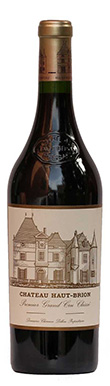
Another stellar vintage for this always elegant first growth. Despite a stormy spring and May hailstorm, September harvest conditions were ideal. What stands out for me is the elegance, intense purity and a juicy, vibrant freshness that seems to be the hallmark of the vintage. It's generous, velvety and wonderfully complex, with aromas of tobacco, black truffle, and rich red and black fruit flavours.
2018
Château Haut-BrionPessac-Léognan
Château Haut-Bailly, Pessac-Léognan, Cru Classé de Graves, Bordeaux, France, 2016
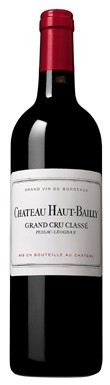
Refined, elegant, brilliant. Spring rain and a dry, sunny summer and autumn meant perfectly ripe grapes, a growing season CEO Véronique Sanders dubbed Le Bonheur (‘a delight’). This sumptuous, smooth red has just about everything: concentration, power, richness, floral and tobacco leaf scents, dark berry and cassis flavours, a plush texture, and long, polished tannins.Haut-Bailly is cru classé for red only.
2016
Château Haut-BaillyPessac-Léognan
Château Les Carmes Haut-Brion, Pessac-Léognan, Bordeaux, France, 2018
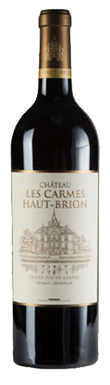
The combination of silky-soft texture and powerful intensity of flavour is completely seductive. Violet aromas and deep, black fruit flavours dominate now. Whole-bunch fermentation for about half the grapes and a high percentage of Cabernet Franc gives the wine a unique profile. The growing season was tough, with spring hailstorms and mildew, and despite the hot, dry weather from June to harvest, this wine has a delicious freshness that will help it age brilliantly.
2018
Château Les Carmes Haut-BrionPessac-Léognan
Château Smith Haut Lafitte, Pessac-Léognan, Cru Classé de Graves, Bordeaux, France, 2015
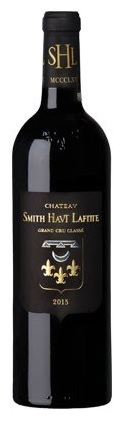
The 25th vintage of owners Daniel and Florence Cathiard. This is delicious - smooth and juicy with chalky tannins and such a perfumed personality - gorgeous Cabernet Franc aromas. Full of spiced dark berry fruit, liquorice, gravelly touches yet juicy, clean and lifted. Still young and a touch tight on the finish suggesting this has a lot further to go. 2% Petit Verdot completes the blend.
2015
Château Smith Haut LafittePessac-Léognan
Domaine de Chevalier, Pessac-Léognan, Cru Classé de Graves, Bordeaux, France, 2020
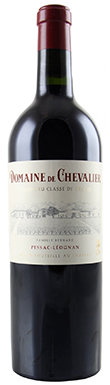
Layered elegance and savoury tobacco and blackcurrant – the château’s hallmark. It’s a textbook expression of the appellation, and one of the best of the 2020 Pessac-Léognans. Spring rains helped the vines weather the hot, dry summer and preserved the wine’s bright freshness. The estate is cru classé for both red and white, but in this vintage I prefer the red.
2020
Domaine de ChevalierPessac-Léognan
Château Malartic-Lagravière, Pessac-Léognan, Cru Classé de Graves, Bordeaux, France, 2018
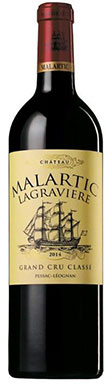
Candied red fruit and sour cherry aromas. Elegantly layered with kirsch and vanilla notes. A lovely texture of fine tannin, well-balanced with refreshing acidity. Promising supple fruit. Good potential but needs time to shine.
2018
Château Malartic-LagravièrePessac-Léognan
Château Latour-Martillac, Pessac-Léognan, Cru Classé de Graves, Bordeaux, France, 2018
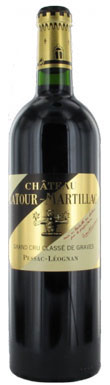
Clean, vibrant aromas of cigar box, fresh leather and sweet spice. Subtle blueberries and integrated tannin structure. Pleasing with impressive complexity, balanced acidity and deep purple fruit notes. Polished but closed wild cherry, ripe plum, and blackcurrant. A mouth-filling experience with ripe fruit, robust tannins, and youthful acidity. Needs time to evolve.
2018
Château Latour-MartillacPessac-Léognan
Château La Garde, Pessac-Léognan, Bordeaux, France, 2018
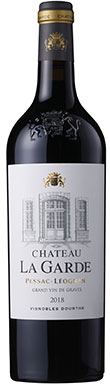
Dense nose of smoke, blackcurrant and soft spice. Gentle, with black cherry, olive stone, and coarse tannins. Warm alcohol, green tannins with a toasty finish.
2018
Château La GardePessac-Léognan
Château Le Pape, Pessac-Léognan, Bordeaux, France, 2016
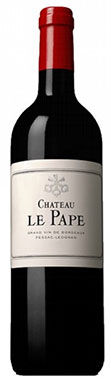
Since Château Haut-Bailly took over this neighbouring property in 2012, the wines have been getting ever more stylish and polished. From the great vintage of 2016, the wine shows the effects of all the improvements in vineyard practices and winemaking. It’s rich and luscious, with dark sweet blackberry and spice flavours, and surprising depth for a very reasonable price.
2016
Château Le PapePessac-Léognan
