
Mouton Rothschild interview: MD Philippe Dhalluin to retire
Château Mouton Rothschild's highly respected MD speaks to Jane Anson following news of his impending retirement, and remembers a time in the early days when he was 'nearly fired'.


This week saw Bordeaux vote in a new mayor, Pierre Hurmic, who promises a green agenda for the city and who overturns 73 years of right-wing administration exemplified by the long-time hold of Alain Juppé and his political allies – much-loved by the wine community, incidentally, and who backed the Cité du Vin.
Scroll down for Jane Anson’s top Mouton tasting notes and scores, including Philippe Dhalluin’s favourite vintage: 2016
It meant that the news Philippe Dhalluin will be leaving Mouton Rothschild at the end of this year may have been slightly overshadowed locally.
But, it still created a stir among wine lovers worldwide.
The announcement came via an email that was headed ‘go fishing’, a typically understated and personal way to mark a retirement from what has been one of the most successful tenures of any director of a First Growth property.
Alongside his role as Mouton MD, Dhalluin is executive director and winemaker or consulting winemaker across Baron Philippe de Rothschild SA (BPDR)’s six estates, which include:
- Mouton Rothschild, d’Armailhac and Clerc Milon in Pauillac;
- Baronarques in Limoux;
- Almaviva in Chile, jointly owned with Concha y Toro;
- Plus a 50% stake in Opus One in Napa Valley, with Constellation Brands owning the other 50%.
In a mark of how important Dhalluin’s contribution has been, it turns out that two people are going to replace him.
Jean-Emmanuel Danjoy will become director of winemaking, with technical responsibility for the three Pauillac estates, having impressed as director of Clerc Milon over the past decade.
Ariane Khaida has been appointed as executive director of châteaux wines; this includes a seat on the board of directors at Opus One and Almaviva.
There was a similar structure before Hervé Berland left in 2012, where Berland was MD and Dhalluin director of winemaking.
Philippe Dhalluin’s time at Mouton
Under his tenure, Mouton has produced legendary wines, such as the 2006 and 2010 vintages.
Petit Mouton, meanwhile, has become recognised for delivering some of the biggest returns on investment of any Bordeaux wine. If we can forgive the hyperbole, it’s not hard to see why wine critic James Suckling named Dhalluin his ‘winemaker of the decade’ in January of this year.
While his two predecessors, Hervé Berland and Patrick Léon, were tempted to other projects after leaving Mouton, Dhalluin says that he plans to concentrate on his many hobbies.
He will initially stay on as a consultant to the new-look team, officially retiring on 1 December 2020.
He also intends to stay in the Bordeaux region, despite having been born in Valenciennes, near the city of Lille in northern France.
Dhalluin has lived in the Bordeaux region since the age of 16, moving in 1974, making him ‘Bordelais d’adoption’, as people like to say around here.
His father worked in aeronautics, which is what brought the family to southwest France, and despite early thoughts of being a pilot, then a geologist or an architect, he ended up being tempted into the local industry.
He began to study both engineering and agronomy – something that links him to Ariane Khaida, who is also both an engineering graduate and qualified pilot.
However, Dhalluin ended up at the Institute of Oenology in 1982, where he got his masters.
‘When I graduated, I didn’t feel legitimate enough to get a job in Bordeaux,’ he tells me. ‘I wasn’t born in the vineyards and so felt I didn’t have the experience of my peers.’
To make up for that, he went to Peru, where he spent three years working for Tacama, at the time the only winery in the Ica Valley, which is known today as the Valley of Wines.
He might sound modest speaking about it now, but the choice of Tacama in fact speaks volumes about his quiet ambition. This is one of the oldest vineyards in South America, with a history dating back to the 1540s and it happened to have Emile Peynaud, the legendary Bordeaux oenologist, as its consulting winemaker.
In 1985 Dhalluin moved back to Bordeaux to head up Château Beaumont, a quality workhorse Cru Bourgeois that also had Peynaud as consultant.
Dhalluin’s first step on the classified ladder came three years later at Château Branaire-Ducru in St-Julien, where owner Patrick Maroteaux had just arrived. He also came from northern France, albeit 100km from Valenciennes in the region of Aisne.
It was Dhalluin’s work here that no doubt attracted Baroness Philippine de Rothschild’s attention.
He drew praise for putting this slightly flagging Fourth Growth back on the right track by, as he remembers it today, ‘reinventing everything’.
He says, ‘In many ways Branaire was still being run as in the 1960s until Patrick Maroteaux arrived. Together we brought it up-to-date, installing the first modern, gravity-flow vat house in the Médoc.’
By 2003, he had been recruited to Mouton, where he worked for the first six months alongside former technical director Patrick Léon.
During his time with BPDR, he has used his experience of reimagining the winemaking process at Branaire. The new winery at Clerc Milon, for example, used many of the same gravity-flow techniques, although with a bigger budget and able to go even further, with an extra subterranean level for the barrels.
Even at Mouton, there were clear improvements needed that had a seismic impact on the wine.
‘The biggest change that I made on arrival was increasing selection in the vineyard and winemaking,’ Dhalluin says.
‘In 2004 there was almost no Petit Mouton being made, with the majority of the crop going into Mouton itself. I increased the production of Petit Mouton by five or six times, and reduced yields overall.
‘At the same time I brought in a replanting programme using massal selection where possible and decreased the sizes of the vats used for the winemaking, to be able to follow exact vineyard plots right through the process and to increase precision in the blending.’
For the first time, old vines were picked separately from young vines, even if in the same plot.
‘Baroness Philippine nearly fired me.’
The 2005 vintage – using 64% of the available crop according to information at the time – both made and almost broke Dhalluin’s reputation, although it is hard to believe that 15 years on.
It was a clear departure from earlier styles and got mixed reactions. Looking at the critics’ initial scores at the time, I see a 94/96 points from Robert Parker Jr and a 92/94 from Suckling. However, Decanter’s Steven Spurrier gave the wine a much more confident 19 points out of a possible 20.
It caused Baroness Philippine to ‘nearly fire me’, as Dhalluin remembers it today. She didn’t speak to him for a month.
‘Luckily by the time the 2006 Mouton came around, it got immediately high ratings,’ he adds.
‘Jean-Pierre de Beaumarchais, Baroness Philippine’s husband, ended up comparing the storm to the Battle of Hernani that was depicted in a play by Victor Hugo and set as a fight between the ancients and moderns. In the end, the new style was accepted, and I could take a small amount of satisfaction in being compared to Victor Hugo!’ he says.
Leaving that brilliantly Rothschild anecdote to one side – the Mouton side of the family has always been involved in theatre – one of my own favourite moments with Dhalluin is far more low key.
It was an afternoon that I spent in the vineyards with him around five years ago. We drove over to see to the blackberry orchards that provide the fruit for the rarely-seen Mouton liqueur de cassis, grown just over the AOC Pauillac border.
We then headed back to walk across the Grand Plateau de Mouton where the gravel heads down seven metres in depth, and where many of the oldest vines used for the massal selection that he introduced in 2005 are located.
Dhalluin was pointing out the plots that surrounded us, named after former owners or key staff, such as La Baronne Philippine, Baronne Pauline and Raoul Blondin.
We stopped on the 100th row of La Baronne Philippine, the oldest row of the plot that dates back to the late 19th century (this entire section has large areas that haven’t been replanted since 1900).
He showed me the trunks of the vines that were surprisingly thin for such old plants, ‘because the soil is such poor quality that they grow extremely slowly’.
The visit finished with a trip to the tiny Grotte de Lourdes statue that is hidden in a corner of Pauillac near Grand Puy Lacoste.
It’s a pilgrimage site from the early 20th century but one that today is known to very few people besides the true locals. Of which, it was abundantly clear, Philippe Dhalluin is now one – and will continue to be long after his retirement in December.
Anson’s top-rated Mouton wines
You may also like
Château Mouton Rothschild through the agesBordeaux: The five first growthsAnson: How legendary Mouton Rothschild 1945 tastes nowBordeaux 2019 wines: Our en primeur verdict
Château Mouton Rothschild, Pauillac, 1er Cru Classé, Bordeaux, France, 2016
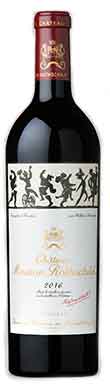

In 2016 Mouton has produced one of the top contenders for the wine of the vintage. Massive and profound, it also retains wonderful freshness which...
2016
Château Mouton RothschildPauillac

Château Mouton Rothschild, Pauillac, 1er Cru Classé, Bordeaux, France, 2015
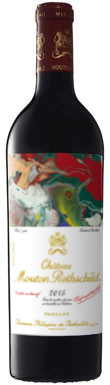
Initially very dark-fruited. So classically Mouton. Animalistic. All about pencil shavings, cedar and tobacco. Wonderfully classic in the mouth, loaded with red fruit, ample concentration...
2015
Château Mouton RothschildPauillac
Château Mouton Rothschild, Pauillac, 1er Cru Classé, Bordeaux, France, 2010
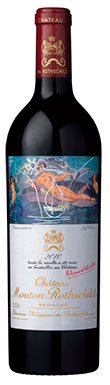
Smoked grilled tar on the nose, it feels both very 2010 and supremely Mouton - accomplished and confident. A more glamorous, enticing edge than the...
2010
Château Mouton RothschildPauillac
Château Mouton Rothschild, Pauillac, 1er Cru Classé, Bordeaux, France, 2009
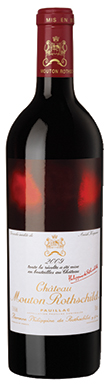
The texture is the most striking thing on this wine, right from the attack. It rolls out a carpet of silk and welcomes you in,...
2009
Château Mouton RothschildPauillac
Château Mouton Rothschild, Pauillac, 1er Cru Classé, Bordeaux, France, 1989
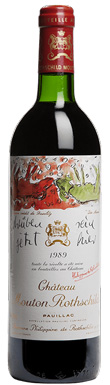
An extremely early year for the property, with harvest from 6-25 September. One to savour, it has the signature smoked, toasted glamour of Mouton, with...
1989
Château Mouton RothschildPauillac
Château Mouton Rothschild, Pauillac, 1er Cru Classé, Bordeaux, France, 1986
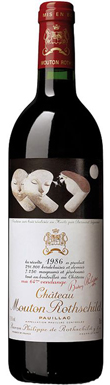
Wonderful, concentrated and still astonishingly young, this has brushes of violet aromatics rising above the tight cassis fruits and rich black truffle, and the classic...
1986
Château Mouton RothschildPauillac
Château Mouton Rothschild, Pauillac, 1er Cru Classé, Bordeaux, France, 1982
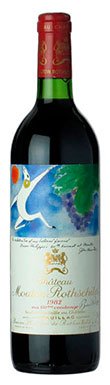
The structure, sense of power and overall force made Mouton one of the most compelling wines of this tasting. Richer, deeper and headier than the...
1982
Château Mouton RothschildPauillac
Château Mouton Rothschild, Pauillac, 1er Cru Classé, Bordeaux, France, 1945
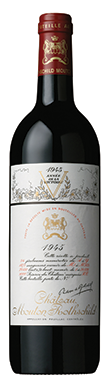
I almost picked Petit Mouton 2006 because it's at a great stage for drinking right now, but who am I kidding that Mouton 1945 wasn't...
1945
Château Mouton RothschildPauillac
