
Pieropan Calvarino: Vertical tasting 1987 – 2021
Aldo Fiordelli looks at the factors which make Calvarino one of Italy's most important white wines.


In Italian, a ‘calvarino’ refers to a little ordeal, in this case a reference to the trials and tribulations of working on the steep slopes and the dark basaltic rock that makes up the soils in this part of the Soave region in Veneto.
Scroll down to see tasting notes and scores for Pieropan Calvarino
Calvarino by Pieropan has been harvested on its own since 1971 and today amounts to eight hectares of vines (about 70,000 bottles are produced annually). Having recently celebrated 50 vintages, it is the oldest cru bottling of an Italian white wine. ‘This is a very important anniversary for us,’ explains Andrea Pieropan, who represents the fourth generation at Pieropan, together with his brother Dario.
‘Vigneto Calvarino marked a turning point in the panorama of Italian white wine, because with it we understood the importance of interpreting a terroir. Our dad knew and wanted to harmonise the relationship between man, territory and vine in a unique and exemplary wine, setting a milestone for Italian enology.’
In the 1970s, there were very few regions of Italy that labeled wines with the name of the parcel, giving more space to the first appellations or brands at the time. Together with the famed Italian wine critic Luigi Veronelli, Leonildo Pieropan decided to label his two cru wines with the name of their respective vineyards: La Rocca, and Calvarino (an old family parcel owned since 1901).
Leonildo took pride in recognising his two vineyards on the labels, highlighting the unique ‘genius loci’ of his land. In doing so, he managed to transmit an interpretation of the terroir – the complex relationship between grape variety, soil and climate environment, and human work – which is what makes wine an authentic expression of a territory and its culture.

La Rocca is a pure Garganega wine grown over limestone, producing a sought-after oak-fermented white, while Calvarino is a blend of Garganega with up to 30% of Trebbiano di Soave, planted on volcanic soil.
Despite my preference for La Rocca due to the elegant pairing of Garganega with limestone, Calvarino has many details which make it an exceptional wine: the acidity of Trebbiano – which can be considered aggressive when young – lends a particularly bracing freshness to the enticing delicacy of Soave, balanced by the beguiling gracefulness of Garganega and by the extended lees ageing for 12 to 15 months (reduced from up to 24 months pre-2005). Its volcanic character slowly emerges, subtle at first but progressing to smoky at around 10 years of age.
Trebbiano revival
Not by chance, Italy is experiencing a collective interest in rediscovering the different clones of Trebbiano (Toscano, d’Abruzzo, Spoletino) – including Trebbiano di Soave, which is a sibling of the successful Verdicchio. In the case of Pieropan, Trebbiano di Soave is typically fermented in concrete and since 2018, the winery has installed tulip-shaped concrete vessels which are ‘more reductive’ according to Andrea and Dario.
The importance of Calvarino stems from the combination of the talent of Leonildo Pieropan (who left us in 2018) and his tendency to ignore trends – extended lees ageing and maintaining the Pergola training system, for example – with the potential of Garganega and the strong identity of basaltic rock.
In the end it is the ageing potential of this wine that impresses the most. Leonildo Pieropan had the foresight to sense this, stowing away at least 1,000 bottles of Calvarino every year to the family library. Today, his wife Teresita has shining eyes remembering those vintages, just as a wine lover might have when opening such a precious antique. The 1992, ‘a bad, rainy vintage’, as recalled by Andrea and Dario, emerged as golden in colour and today is still one of the best examples of Calvarino.
The soulful wines from this vineyard are showcased in another label, as well: it’s not bottled as a Soave due to its winemaking process, aged in 10hl oak barrels in a solera system composed of five vintages. The 2008, 2009, 2010, 2011 and 2012 composition was bottled in 2021 and released in 2022. Named ‘Calvarino 5’, it’s an utterly unique white wine of roughly 7,000 bottles which represents the steadfast commitment of the Pieropan family, their dependable style of production, and the great quality of their wines.
Back in time: Pieropan Calvarino
Related articles
- Pieropan: producer profile
- Monteraponi’s Trebbiano Toscano: Burgundian-style Tuscan benchmark
- Italy’s finest white wines: 20 top bottles, region by region
Pieropan, Calvarino, Soave, Classico, Veneto, Italy, 1987
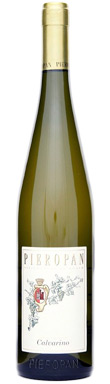

Tasting an Italian white with almost 40 years of ageing is rare, and to find this in such good shape is quite impressive. Rich gold...
1987
PieropanSoave

Pieropan, Calvarino, Soave, Classico, Veneto, Italy, 1990
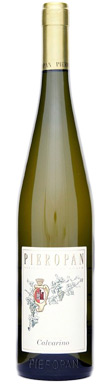
A great vintage in almost all of Italy (as well as France and Spain), this 1990 Calvarino is rich gold in the glass, with a...
1990
PieropanSoave
Pieropan, Calvarino, Soave, Classico, Veneto, Italy, 1992
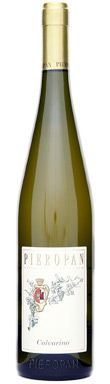
1992 was a cool and wet vintage in much of Europe, including here, however after 30 years this is a wine full of energy. The...
1992
PieropanSoave
Pieropan, Calvarino, Soave, Classico, Veneto, Italy, 2005
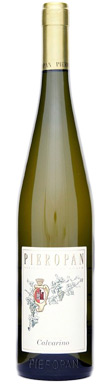
Richer gold in colour with a less exuberant nose focused on tinned peaches, citrus, almond, acacia and honey, as well as plenty of candied fruits....
2005
PieropanSoave
Pieropan, Calvarino, Soave, Classico, Veneto, Italy, 2010
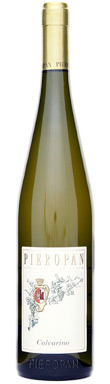
Tasted today, 2010 and older vintages of Calvarino start to show a more assertive gold colour and smoky character, derived from the volcanic soil. The...
2010
PieropanSoave
Pieropan, Calvarino, Soave, Classico, Veneto, Italy, 2016
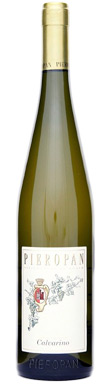
In the 2016 vintage, a double harvest become necessary. ‘This vintage should be considered similar to 2020, a warm vintage where we try to preserve...
2016
PieropanSoave
Pieropan, Calvarino, Soave, Classico, Veneto, Italy, 2021
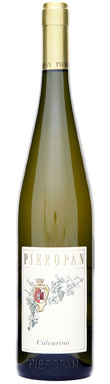
According to Andrea Pieropan, the 2021 vintage was ‘dry and warm at the end of the season. The grapes lost weight due to the evaporation.’...
2021
PieropanSoave
