
Pinot Bianco: Italy’s northern star plus 12 top wines to try


Pinot Bianco seems an unlikely variety to be a local hero, but the results prove its superstar status in northeastern Italy, as Michael Garner explains...
Spectacular vineyards should produce equally special wines, and in the Alto Adige, where some of Europe’s highest vines cling to precipitous Alpine slopes, the formidable list of contenders includes Chardonnay, Sauvignon, Gewürztraminer and Riesling. Yet the relatively unsung Pinot Bianco outperforms them all.
Scroll down for Michael Garner’s top 12 Pinot Biancos
Until the 1980s, Italy’s northernmost region produced mainly cheap bulk wine, much of it red, for its traditional markets of Austria and Germany. During the quality revolution that followed, Pinot Bianco was to shake off the shackles of its long-held role as workhouse white and soar to local hero status. ‘Before the 1980s,’ says Hans Terzer, winemaker at the acclaimed St Michael-Eppan cooperative, ‘Pinot Bianco and Chardonnay weren’t recognised as separate varieties and they were both known as Pinot: Verde and Giallo. But even then growers knew to plant Giallo (Chardonnay) lower down the slopes and leave the higher sites for Verde (Bianco).’ Terzer was one of the first to unlock the variety’s potential by reducing vineyard yields for his Schulthauser selection, whose debut was the 1982 vintage. The wine continues to be a blueprint for producers keen to explore a traditional, local approach to winemaking.The key to the variety’s success in both Alto Adige and Friuli-Venezia Giulia is altitude – the higher the better, according to the region’s agricultural research centre at Laimburg. It has been predicted that the vine’s future may lie above 900m, if average summer temperatures continue to rise. For now, the best sites are mainly found at 450m-900m, where cool microclimates favour freshness of fruit and good levels of acidity.Freshness is a central theme when it comes to Pinot Bianco’s diverse styles, which range from fruit-forward, stainless-steel fermented wines bursting with apple and nectarine aromas, notes of white flowers and lime, to more serious, part barrel-fermented examples enriched by extra lees contact and suitable for ageing for up to 20 years. There are super-premium examples too, but they often lack the restrained elegance of the simpler versions: much of Pinot Bianco’s beauty is in its silky texture and salty freshness.As a rule of thumb, lower-altitude examples are quite fleshy, forward and faster to mature; those from the poorer soils of higher vineyards show greater intensity of aroma, are leaner, livelier and longer-lasting.
The highs of Alto Adige
The ideal conditions for Pinot Bianco, according to Terzer, are limestone and clay soils below the Mendola massif, which towers above the western side of the valley between Appiano and Caldaro. It is home to noteworthy cooperatives such as Girlan and Kaltern and a growing number of smaller growers such as Niedrist and Niklas. However, the central Adige valley is challenging the area’s preeminence.
The south-facing lower slopes of the sheltering mountains between the cities of Bolzano and Merano produce distinctive, racy wines. A cooperative is once again the pace-setter: Cantina Terlano produces several versions of Pinot Bianco, including the elegant Vorberg Riserva. Terlano’s marketing director Klaus Gasser claims that the village’s unique south-facing amphitheatre and sandy-loam soils are responsible for the wines’ ageing capacity – even its standard Pinot Bianco can hold up for decades in bottle. Beyond Merano, the Venosta valley marks the western limits of winemaking in the Alto Adige. Better known for its apple orchards, the 80ha or so of vines here show great promise, and Franz Pratzner in particular makes wonderful, ageworthy Pinot Bianco at his Falkenstein estate.
Three other outposts complete the Alto Adige Pinot Bianco scene. The hillsides between Cortaccia and Magrè produce a slightly more delicate style from esteemed names such as Lageder, Tiefenbrunner and the Nals Margreid co-op. On the eastern side of the valley opposite Termeno, the villages of Montagna and Mazzon may be better known for Pinot Nero, but growers such as Franz Haas and Pfitscher make excellent Pinot Bianco too. The Pfitscher brothers claim the relatively cool microclimate is the key. Finally, east of Bolzano and just above the narrow entrance to the Isarco valley, estates such as Ebner, Gumphof and Wassererhof and the local cooperative Cantina Valle Isarco make intensely flavoured Pinot Bianco, which ages well.
Pinot Bianco has always been the area’s classic aperitif, but it works well with a wide range of foods too, in particular the local speciality schlutzkrapfen – filled pasta parcels served with melted butter and sometimes cheese. On the other hand, Helmuth Zozin, winemaker at Manincor, prefers his excellent, long- lasting Pinot Bianco from Terlano with oven-baked sea bass and vegetables.
Rich pickings in Friuli
A rather different picture emerges to the east in Friuli-Venezia Giulia, where the variety faces even stiffer competition from local favourites Friulano, Malvasia and Ribolla, as well as international varieties. In general, earlier harvests from lower vineyards result in wines with lower acidity and higher alcohol, but they still have a real majesty.
While growers in the Alto Adige prize the verticality of their Pinot Bianco, meaning their wines have a depth and length of flavour defined by acidity. In Friuli, by contrast, other features are more pronounced – principally the wine’s weight, richness and texture. Fruit aromas and flavours are similarly luscious, with aromas of red apple and ripe pear backed up with citrus inflections and salty, mineral tones.
The variety is grown throughout Friuli. In the areas of Grave and Aquileia, Pinot Bianco produces simple and fresh wines to be drunk young, but the variety hits its stride in the three hillier denominations that form Friuli’s border with Slovenia. The most southerly is Isonzo, a gravelly limestone plain that stretches from Gorizia towards the Adriatic coast. On the northern bank (Rive Alte) of the river Isonzo, a number of highly rated growers make an attractive, ripe style of wine, including Pierpaolo Pecorari, whose Pinot Bianco peaks at around five years and, according to its maker Alessandro Pecorari, is the perfect partner for seafood risotto.
Isonzo’s neighbour, Collio Goriziano (or simply Collio), is the region’s most celebrated denomination. Vineyards stand on undulating sand and marl slopes and the wines display a distinctive mineral tang that provides the perfect foil for the variety’s sumptuous fruit flavours and persuasive texture. The wines age well for up to 10 years.
At the heart of the denomination lies Roberto Felluga’s Russiz Superiore estate in Capriva del Friuli. His succulent Pinot Bianco is produced from 40- to 50-year-old vines planted by his father, but he acknowledges the variety has an image problem. ‘It really suffers from its association with Pinot Grigio,’ he says. ‘There have been discussions about upgrading Collio to DOCG status and we’re looking at creating sub-zones for premium varieties like Pinot Bianco to boost its reputation.’ Capriva would doubtless be towards the head of the queue for special status. Collio is a treasure trove for those who love the seductive side of Pinot Bianco: seek out wines from Castello di Spessa, Schiopetto and Toros.
Further to the north in the Colli Orientali, Pinot Bianco has to contend with the area’s famous dessert wines Picolit and Ramandolo. Annalisa Zorzettig, whose family has farmed hillside vineyards here for more than a century, believes Pinot Bianco is greatly undervalued. ‘Ribolla Gialla and Friulano may be easier to sell, but we really believe in Pinot Bianco. It has an elegance and sapidity all of its own.’
Whole-bunch fermentation and six months on fine lees help to bring out those very qualities under the family’s Myò label. Fortunately the Zorzettigs are not alone in flying the flag, and local growers such as Ermacora, Iacuzzi, Marinig, Petrucco, Pizzulin and Volpe Pasini also produce small volumes of high-quality Pinot Bianco.
Friuli and Alto Adige are rightly recognised as Italy’s finest regions for white wine. They both have a veritable array of varieties, and yet Pinot Bianco remains the outstanding performer in both regions. It is a compelling statement of the variety’s worth.
Michael Garner is a DWWA Regional co-Chair for Italy and author of Amarone and the Fine Wines of Verona.
See Michael Garner’s top 12 Pinot Biancos
You may also like
A wine lover’s guide to SardiniaBest Campania wines from southern Italy: What to look forTen of the best Italian vineyards & terroirsDiscover Sicily: 20 great buysBest Veneto wines: Expert picks
Cantina Terlano, Vorberg Pinot Bianco, Trentino-Alto Adige, Italy, 2015
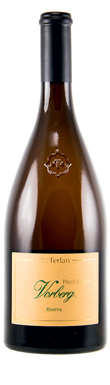

Archetypal Alto Adige Pinot Bianco that has been partially fermented in large barrels. Luscious ripe pear with hints of kiwi, pineapple and quince jelly. Opulent...
2015
Cantina Terlano

Le Vigne di Zamò, Tullio Zamò, Friuli, Colli Orientali, Friuli Venezia Giulia, Italy, 2015
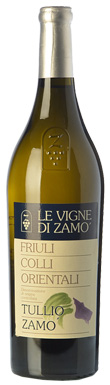
Extravagant and voluptuous style from partial barrel fermentation with plenty of ageing on the fine lees and in bottle. Balanced, long, poised and surprisingly graceful.
2015
Le Vigne di ZamòFriuli
Nals Margreid, Sirmian Pinot Bianco, Trentino-Alto Adige, Italy, 2017
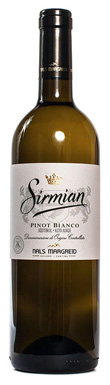
Stony, salty nose, notes of lime and quince jelly; juicy and ginger pears on the palate. Lively acidity with flowers all over the finish. Delicious,...
2017
Nals Margreid
Russiz Superiore, Pinot Bianco, Collio, Friuli Venezia Giulia, Italy, 2017
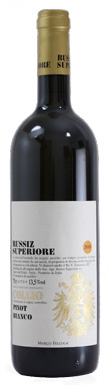
The essence of Collio: full, ripe and forward with floral tones, red apple and nectarine aromas. Full, fleshy palate with creamy lemon and candied pear...
2017
Russiz SuperioreCollio
Falkenstein, Weissburgunder, Südtirol Vinschgau, Trentino-Alto Adige, Italy, 2016
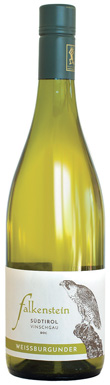
Wonderful freshness with notes of beeswax and oregano. Round and juicy with a salty finish defined by glorious acidity. Fermented and matured in acacia barrels.
2016
FalkensteinSüdtirol Vinschgau
Markus Prackwieser, Gump Hof, Renaissance Weissburgunder, Alto Adige/Südtirol, Trentino-Alto Adige, Italy, 2015
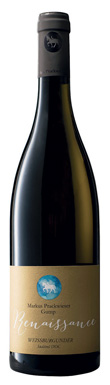
Broad, ripe and buzzing with pear and kiwi notes. Salty and silky palate with opulent, perfumed green fruits and even a hint of quinine. Well-integrated...
2015
Markus Prackwieser, Gump HofAlto Adige/Südtirol
Venica & Venica, Tàlis, Collio, Friuli Venezia Giulia, Italy, 2017
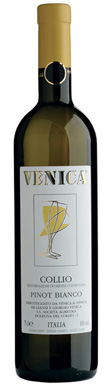
Lightly candied pear aromas with floral notes of camomile and lemon blossom. Juicy, ripe and fleshy on the palate, which has real breadth: salty pear...
2017
Venica & VenicaCollio
Pfitscher, Langefeld Pinot Bianco, Trentino-Alto Adige, Italy, 2017
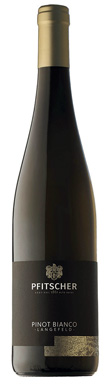
Stainless steel-fermented and matured to maintain the pristine glory of aromas and flavours of pear, lime zest, jasmine and sherbet lemon. Rounds off with a...
2017
Pfitscher
Pierpaolo Pecorari, Pinot Bianco, Friuli Venezia Giulia, Italy, 2016
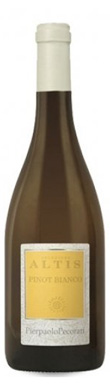
Ripe, expressive nose: aromas of pear, quince and camomile. Lively on the palate with tingling acidity; flavours of russet apple and brazil nut. Juicy, fresh...
2016
Pierpaolo Pecorari
St. Michael-Eppan, Schulthauser, Trentino-Alto Adige, Italy, 2017
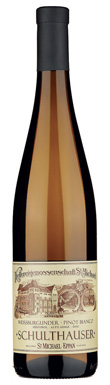
Scented and lightly seasoned orchard fruits and flowers. Fine, delicate and long. This wine is a reference point for the variety and is as good...
2017
St. Michael-Eppan
Zorzettig, Myò, Friuli, Colli Orientali, Friuli Venezia Giulia, Italy, 2016
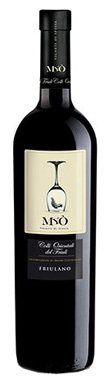
With a full, broad and scented nose of pear, lime and ginger, this has a well modulated and succulent palate with a long, gently tapering...
2016
ZorzettigFriuli
Petrussa, Pinot Bianco, Friuli, Colli Orientali, Friuli Venezia Giulia, Italy, 2017
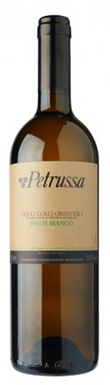
From low-yielding vineyards at Prepotto, a stone’s throw from the Slovenian border, this offers full, ripe aromas of greengage, kiwi, pear and lime; nutty and...
2017
PetrussaFriuli
