
Planeta discovery tasting at Decanter’s London Fine Wine Encounter 2022
The audience was treated to a tour of Sicily with Planeta winemaker, Patricia Tóth at the Decanter London Fine Wine Encounter on 5 November.


Patricia Tóth, winemaker at Planeta, visited the Landmark hotel in London at the beginning of November for Decanter’s London Fine Wine Encounter – the first since 2019.
Planeta had a stand in the new Cellar Collection room, treating guests to back vintages of Planeta Chardonnay, but there was also a full room of wine fans listening eagerly to Patricia during her discovery tasting masterclass featuring the Sicilian winery’s diverse portfolio of wines.
Scroll down to see tasting notes and scores for six Planeta wines in the ‘discovery tasting’
Tóth made apologies for her English in case it started to ‘sound a bit rustic’, since she had spent the previous few weeks in Planeta’s cellars following harvest, not uttering a word of the language. But she needn’t have worried – Tóth delivered an insightful and passionate lesson on the variety on offer from Italy’s southern island.
Early days
Sicily is one of Italy’s most exciting wine regions, and Planeta have played a pivotal role in its viticultural heritage since their foundation in 1995 – although they have roots which stretch back much further.
As president of the Settesoli cooperative from 1973 to 2011, Diego Planeta played a vital role in Sicily’s modernisation. He initially worked with renowned wine consultant, Giacomo Tachis, however it was Carlo Corino, an enologist from Piedmont who had spent time in Australia, who had the biggest impact: he introduced modern technology such as temperature controlled stainless steel vats, and convinced Planeta that the members of the cooperative should grow international varieties such as Merlot and Chardonnay. They were a big success, and it encouraged Diego to follow a similar path when he began plans for his own winery.
In 1985 he began laying the foundations of the Planeta winery, planting 59 hectares of primarily international varieties, including Chardonnay, Merlot, Viognier and Sauvignon Blanc, as well as local varieties Nero d’Avola, Grecanico and Grillo, around the family’s 500-year-old farmhouse in Ulmo, near Menfi.
Following 10 years of experiments, Planeta’s first commercial vintage was in 1995, produced at the newly-built winery on the banks of Lake Arancio nearby. The first wine, Planeta Chardonnay, was an immediate success.
Planeta soon expanded, planting vines in Dispensa and Gurra (both in the Menfi locality) in 1996, now the site of Planeta’s second Menfi winery. In 1997, Diego acquired and restored a dilapidated estate in Dorilli, near Vittoria in the southeast.
In 1998, the Buonivini estate was founded in Noto at the southern tip of the island. In 2008, Planeta’s first vines were planted in Passopisciaro on the north side of Mt Etna, and a winery was subsequently established among the vines in Sciaranuova and Montelaguardia in 2012.
Finally, the small La Baronia winery was established at Capo Milazzo at the northeast end of the island.

Mosaic of terroirs
Today, Planeta owns five wine estates and seven cellars across Sicily, totalling 386 hectares of vines. Tóth introduced this patchwork of estates and vines as ‘a mosaic of terroirs’, which aptly sums up the differences in soils, elevations and rainfall between each location. For example, Menfi’s soils have more clay, while Vittoria features red sand and Noto is powdery and calcareous. Capo Milazzo, meanwhile, has alluvial soils covered in ancient volcanic ash, while Etna is fully volcanic soil.
Tóth also explained that although Planeta spent many years focusing on wine, today it operates a polyculture model where grapes are just one agricultural product grown on their estates, which also produce almonds, lemons and olives.
Planeta is also deeply involved in research into Sicily’s indigenous grape varieties, as well as carrying out sustainable farming projects across the island. Alessio Planeta is on the board of directors of SOStain, an environmental body which is encouraging member wineries take steps towards sustainability. After over 10 years of following sustainable farming practices, plus several years undergoing conversion, from the 2021 vintage all of Planeta’s wines are certified organic.
The aim of the ‘discovery tasting’ was to take a tour of Planeta’s various estates and introduce the audience to the wealth of diversity in its range, as well as giving a top-level sense of how the differences in terroir and grape variety translate into the final product.
The tasting
We started with Allemanda, produced at the Buonivini winery in Noto. It’s a rarity, not only for being a dry (rather than sweet) Moscato Bianco, but also because there are only 38ha planted in all of Sicily, according to Tóth. First produced in 2008, it’s a delicious white wine combining Moscato fruit flavours with a touch of refreshing salinity.
We then visited the Feudo di Mezzo winery on Etna, tasting Eruzione 1614 Carricante, an intriguing blend of 90% Carricante and 10% Riesling Renano. The name alludes to the famous 1614 eruption of Etna, when the lava flows reached the edge of Contrada Sciaranuova, where the grapes for this wine are sourced. Etna’s north slopes are primarily red wine territory, and Tóth described Planeta’s decision to work with Carricante as a ‘visionary decision’ at a time when very little was grown here. A delicious wine, the limey attack of the Riesling works beautifully with the juicy yellow plum and flint character of the Carricante, vinified and matured in stainless steel for a fresh style.
Then to Menfi for Planeta’s second-ever wine, Cometa, a 100% Fiano which has developed an international reputation since its first vintage in 2000. Partially barrel fermented and oak-aged, the majority only seeing stainless steel, it’s deliciously honeyed, delicately lacy, fresh and salty. It’s easy to see why this was one of Sicily’s first superstars.
Next up was Mamertino, a 60% Nero d’Avola and 40% Nocera blend from the small Baronia estate at Capo Milazzo. This leased property belongs to Fondazione Barone G. Lucifero di San Nicolò, a foundation which provides opportunities and care for underprivileged children. Tóth described the windy promontory, closed off to the public, as a ‘complex farming story with kids in the middle’. Cask-matured Mamertino is fresh and herbal, succulent yet with a mineral tightness. ‘We think one of the big local grapes on the island will be Nocera,’ Tóth added.
The fifth stop was to the Dorilli winery in Vittoria, tasting the Dorilli Cerasuolo di Vittoria Classico from Sicily’s only DOCG. Vinified in stainless steel and matured in large oak barrels, Tóth explained that Nero d’Avola doesn’t like new oak, so she uses only old oak . ‘I like to give a hidden support to it,’ she said. Fragrant and juicy, this is everything that good Cerasuolo di Vittoria should be.
The sixth and final stop returned to Planeta’s roots in Menfi, with Burdese, which means ‘from Bordeaux’ in the Sicilan dialect. First produced in 1999, it’s a blend of 70% Cabernet Sauvignon and 30% Cabernet Franc matured for 16 months in new French oak barriques. Fresh, long and structured, this is a distinctly Sicilian take on the French version, giving an extra dash of ripeness but not at the expense of balance.
Planeta discovery tasting:
Related articles
- Sicily report 2022: spotlight on Europe’s hottest region plus 65 wines tasted
- Photo highlights: Decanter Fine Wine Encounter London 2022 25th Anniversary
- Marsala: Diverging paths plus eight bottles worth seeking out
Planeta, Allemanda, Noto, Sicily, Italy, 2021
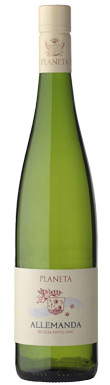

Allemanda is a rarity, not only for being a dry (rather than sweet) Moscato Bianco, but also because there are only 38 hectares planted in...
2021
PlanetaNoto

Planeta, Eruzione 1614 Carricante, Sicilia, Sicily, Italy, 2019
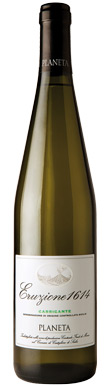
This white from Etna (labelled as Sicilia DOC) is an intriguing blend of 90% Carricante and 10% Riesling Renano. Planeta also make a 100% Riesling...
2019
PlanetaSicilia
Planeta, Cometa, Menfi, Sicily, Italy, 2021
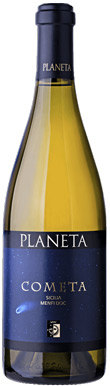
Since its first vintage in 2000, Cometa has carved its own path as a 100% Fiano partially barrel fermented and oak-aged. From chalky vineyards in...
2021
PlanetaMenfi
Planeta, Mamertino, Mamertino, Sicily, Italy, 2018
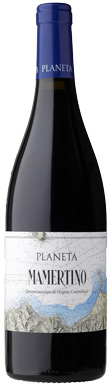
A 60% Nero d’Avola and 40% Nocera blend aged in 25hl casks for 12 months, this wine is from the small Baronia estate on the...
2018
PlanetaMamertino
Planeta, Dorilli, Cerasuolo di Vittoria, Classico, Sicily, Italy, 2018
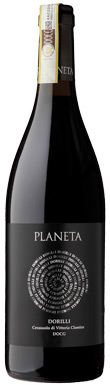
Prominent producer Planeta has recovered an ancient estate in the Dorilli countryside near the sea to the south, the vines on soils rich in sand...
2018
PlanetaCerasuolo di Vittoria
Planeta, Burdese, Menfi, Sicily, Italy, 2016
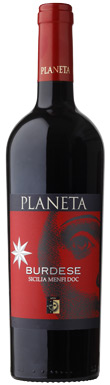
Burdese means ‘from Bordeaux’ in the Sicilian dialect and refers to the blend of 70% Cabernet Sauvignon and 30% Cabernet Franc - the Cabernet Sauvignon...
2016
PlanetaMenfi
