Ten most improved Pomerol châteaux


Here are 10 Pomerol châteaux that have shown significant improvement over the past 13 years, according to regular Decanter contributor Panos Kakaviatos...
Scroll down for Kakaviatos’ top wines from 10 of Pomerol’s smaller estates
Petrus 2005 sells in the UK for at least £2,500 per bottle and the 2015 costs around £3,000. But it’s not the only Pomerol commanding four-figure sums. Château Lafleur and Le Pin also hit these peaks; while names like La Conseillante, Vieux Château Certan and l’Evangile sell in triple figures.No wonder merchants often feel that ‘bargain Pomerol’ is an oxymoron.‘I don’t know of any “bargains”,’ says Jeremy stockman of Watson’s Wine in Hong Kong. ‘We have the bigger brands, and they are all fully priced,’ he emphasises.Ben Giliberti, education director for Washington DC-based importer Calvert Woodley, agrees. ‘Pomerol lacks the strong following enjoyed by top crus of other regions,’ he says. ‘Loyalty may come, but demand for now is limited to the fortunate, high-scoring few.’
Pomerol is a contradiction. Some of Bordeaux’s greatest names come from its smallest fine wine appellation: 140 producers and some 800ha of vines are found in an area only 3km wide by 4km long. While small, Pomerol’s soils are diverse – with gravel, sand and clay; and wine blends vary, dominated by Merlot, but including Cabernet Franc and also Cabernet Sauvignon for some.
It has no official ranking, no grands crus or first growths.
Yet, according to Germany-based buyer Michael Grimm of Bacchus- Vinothek, ‘some hidden gems can be found’.
He lists Guillot Clauzel as an ‘insider wine’ – and praises Châteaux Lafleur, Gazin, La Grave and Plince. As elsewhere in Bordeaux, it’s not just the big names that are making wine with greater precision now.
This article highlights estates where major improvements have been made and compares their 2015 and 2005 vintages. some – like Châteaux Nenin and Petit-Village – have excellent terroir, but were underperforming. Importantly while they have now improved, prices have not caught up.
Château Beauregard
Covering 17.5ha, this estate sits at the entrance to Pomerol. Improvements since 2005 were capped with organic certification in 2014 and total estate renovation including new fermentation tanks for parcel-by- parcel vineyard selections – just in time for the 2015 vintage.
Director Vincent Priou says lower yields add concentration without losing elegance: the 2005 was harvested at 44hl/ha; the 2015 at 31hl/ha. He has increased planting density for some plots to 9,000 vines per hectare.
The blend may include up to 40% Cabernet Franc, due to climate change. Certified organic in 2014, Priou has chosen not to indicate that on the label, but he may in the future.
Château Gazin
Gazin remains a top choice for Pomerol fans seeking value and quality. The 2015 can be bought for less than the 2005, even though both are of high quality.
‘That’s what wine buyers want,’ says Michel Falck of Strasbourg- based merchant Au Millésime. Co-owner Nicolas de Bailliencourt explains that since 2005, director Mickaël Obert has fine-tuned selection and winemaking here. Gazin’s vineyard covers 26ha on the upper terrace of the Pomerol terroir whose soils include surface gravel and a subsoil of the celebrated blue clay with iron.
Though not certified organic, the vines are cultivated using an environmentally friendly approach, with organic fertilisers and minimal use of pesticides.
Château Gombaude Guillot
This 8ha family-owned estate might not be the most densely planted, but it is situated in the heart of the Pomerol plateau not far from Châteaux L’Eglise Clinet, Lafleur and Trotanoy.
It offers one of the best pleasure-to-price ratios of all the wines tasted for this article. Certified organic in 1997, the estate is currently in the process of acquiring biodynamic certification. It’s also in tune with the times, making low-sulphur wines (only 25mg total since the 2015 vintage). Special mention should go to the estate’s bright and juicy Pom ‘N’ Roll bottling, which is aged without oak.
‘People like the quality and come back for more of it as an entry-level Pomerol,’ notes Mike Gould of Noble Green Wines in London.
Château La Pointe
At 23ha, this is among the largest Pomerol properties – and has improved noticeably according to Strasbourg-based French merchant Stéphan Maure. Since 2008, general manager Eric Monneret and technical manager Emilie Faniest have surveyed the soils and renovated the vat cellar.
Ably advised by Hubert de Boüard of Château Angélus in St-Emilion, La Pointe is better than ever. The good news for wine lovers is that prices have not caught up. ‘Our parcel-by-parcel work in the vineyard and vat room allows us to optimise ripeness and obtain better quality tannin,’ says Monneret.
Historically the vineyard was planted at a density of 6,000 vines per hectare, but in 2012, a programme began to increase density to over 8,000.
Château Mazeyres
Vineyards are divided into three zones of clay and gravel in the west, sandier soils over clay in the south and more clay further east.
Concerned about climate change, director Alain Moueix has increased the percentage of Cabernet Franc in the blend and adds some Petit Verdot, ‘which has naturally higher acidity’.
Since 2013, he has substituted oak for concrete vats, including eggs, which were first used for the 2015 vintage and result in a fresher style of wine.
‘A vertical we did earlier this year shows how the last few vintages have gained in body and freshness,’ says Moueix, who now runs the estate according to biodynamic principles.
Château Montviel
A relatively new property, this 10ha estate was founded in 1985. Improvements since 2005 include micro-vinification (started in 2014), with separate vinifications of the 17 different vineyard parcels.
‘That way, we know the qualitative reality of each,’ says director Henri Parent. Greater selection means more of the château’s second wine is now made. ‘In 2005 we produced 50,000 bottles without a second wine, but in 2015, we made only 25,000 bottles of Montviel,’ says Parent. If you like the style of Montviel, you’ll love the price.
Château Nénin
When Jean-Hubert Delon of Château Léoville Las Cases purchased Nénin in 1997, he reviewed pruning and trellising methods, replanted or uprooted vines and modernised equipment.
Ageing and storage cellars were extended and completely refitted, and air conditioning was added. The wines had been somewhat boring given the quality of the soils: many grow on the great clay-gravel terroirs of the Pomerol plateau.
‘The vineyard was getting old, yields were too high and the infrastructure obsolete,’ says director Pierre Graffeuille. It has taken some time for the changes to show in the wine, which bills itself as a vin de garde.
Indeed it displays the most ‘Left Bank’ character of all the estates in this article, but the 2015 shows more elegance than the 2005.
Château Petit-Village
Set on the highest part of the Pomerol plateau, on deep gravel and clay soils with a ferrous base lending grip to the wine, Petit-Village recently underwent a complete renovation.
New concrete vats of varying sizes now enable parcel-by-parcel vinification.
Since 2015, technical director Diana Berrouet Garcia, sister-in-law of Olivier Berrouet of Petrus, has focused on sustainable winemaking. ‘We want to preserve the environment without using herbicides, insecticides or anti-botrytis treatments,’ she says. By 2017, half of the vineyard was cultivated organically, with biodynamic practices being introduced.
‘We are lucky to have owner AXA Millésimes, with the proper means for marketing, management and communication,’ she adds. Don’t be surprised if prices go up soon.
Château Rouget
The Labruyère family, owners of Rouget since 1992, also manage vineyards in Burgundy. Located near Châteaux L’Eglise-Clinet, Le Gay and Petrus, the estate covers 17ha, some stretching across the Pomerol plateau.
A replanting programme started in 1992, combined with the purchase of additional plots from prestigious neighbouring estates on the high plateau back in 1999.
Edouard Labruyère explains that viticulture has changed in the last 10 years; no longer parcel-by- parcel, but by ‘inter parcel’.
Part of the harvest is fermented whole cluster, adding freshness to the wine, and the amount of new oak has been ‘drastically reduced’.
Tasting both vintages shows that this is indeed a value Pomerol – Labruyère comments that his wine ‘often comes out ahead of some very beautiful names’ in blind tastings.
Château Vray Croix de Gay
Billed on its website as ‘the most affordable of the great Pomerols’ – and it’s hard to disagree. This 4ha property includes a plot of vines near Château Trotanoy and another near Château Lafleur, combining heat-retaining gravel and clay.
Former Petrus director Jean-Claude Berrouet has consulted here since 2014; in the same year oenologist Pénélope Godefroy arrived from Château Latour in Pauillac.
She is converting the estate to biodynamic viticulture and since 2015 has used preparations such as horsetail, nettle and camomile to help fight fungal diseases. ‘Biodynamic work really helps the vine to balance itself in various climatic and physiological conditions,’ she explains.
Since 2014, extractions have been softer, leading to greater elegance and precision. Prices are increasing, but it still represents excellent value.
See Kakaviatos’ top wines from 10 of Pomerol’s smaller estates
You might also like:
30 top Bordeaux wines under £30
The greatest Bordeaux vintages that never were
The Bordeaux barometer: Cool vs hot vintages
Château Beauregard, Pomerol, Bordeaux, France, 2015
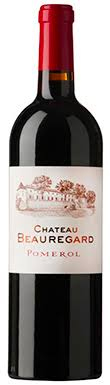

Hugely appealing layers of black cherry and spice with a mineral elegance; silky, plush and complete with a mouthwatering finish.
2015
Château BeauregardPomerol

Château Beauregard, Pomerol, Bordeaux, France, 2005
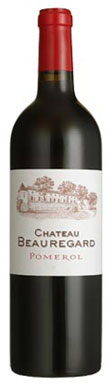
Notably deep ruby in colour, as with all great 2005s this is still full of fruit and tannin but it is definitely hitting its drinking window. Still fairly subtle on the aromatics at first, but it opens up and draws you in, and has the lifting juicy salinity that is conferred by the Cabernet Franc. Here you get a rich round quality to the fruit that has been less evident in the older wines, completed by the chocolate liquorice slice of Pomerol. Subtle, balanced and will age.
2005
Château BeauregardPomerol
Château Gazin, Pomerol, Bordeaux, France, 2015
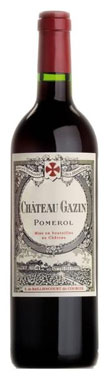
Youthful blackcurrants, damsons and berries with cedar, coffee and liquorice notes; compact and well-constructed with a silky texture.
2015
Château GazinPomerol
Château Gazin, Pomerol, Bordeaux, France, 2005
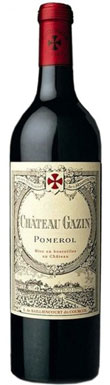
A blend of 85% Merlot, 10% Cabernet Sauvignon and 5% Cabernet Franc. Its refined, pencil lead aspects are almost Médoc-like – perhaps the Cabernet Sauvignon shining through? Shows finesse and a certain sense of aristocratic breeding – with a bit of extra-fine dark chocolate on the long finish. This really is a lovely wine.
2005
Château GazinPomerol
Château Gombaude-Guillot, Pomerol, Bordeaux, France, 2015
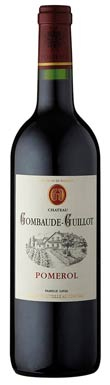
Tasted just after the Gazin, this lacks the density of the former, but still conveys bright fruit notes such as forest strawberry and juicy plum. Initially taut tannins yield to a medium-bodied palate, followed by a long finish. A blend of 80% Merlot and 20% Cabernet Franc, aged in 50% new oak.
2015
Château Gombaude-GuillotPomerol
Château Gombaude-Guillot, Pomerol, Bordeaux, France, 2005
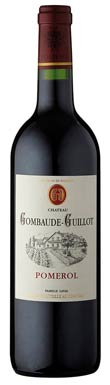
While the 2015 seemed a little brighter and more precise, here the strawberry aspect is more baked. There are also tertiary, beefy aspects on the palate, which lacks the focus and purity of the 2015. Fabrice Renner has been selling this wine in St-Louis, France since 2001. ‘Clearly, we see an improvement in quality with the 2015,’ he notes. A blend of 85% Merlot and 15% Cabernet Franc, also aged in 50% new oak.
2005
Château Gombaude-GuillotPomerol
Château La Pointe, Pomerol, Bordeaux, France, 2015
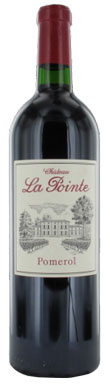
The immediate oak-derived aspect on the nose becomes far more integrated on the palate and is not as obvious as with Montviel, for example. A blend of 84% Merlot and 16% Cabernet Franc that leaves the overall impression of being both supple and elegant. Superb value for money.
2015
Château La PointePomerol
Château La Pointe, Pomerol, Bordeaux, France, 2005
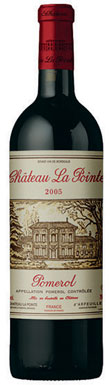
Another fine surprise from this estate. The plummy fruit here is more stewed than fresh in character, but the wine shows elegance and refinement in its expression of Merlot (75% blended with 25% Cabernet Franc). There are some balanced tertiary notes. It may lack some of the density of the 2015, but I still enjoyed its greater freshness and lovely sap. La Pointe shows ‘particular coherence’, according to Alsace-based wine merchant Fabrice Renner.
2005
Château La PointePomerol
Château Mazeyres, Pomerol, Bordeaux, France, 2015
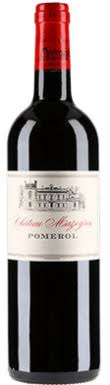
Intense and aromatic, featuring candied red and blue fruits. The palate is well integrated, with fresh fruit, smoky bacon, iodine and wild berries. Persistent acidity and solid tannin integration. A balanced finish.
2015
Château MazeyresPomerol
Château Mazeyres, Pomerol, Bordeaux, France, 2005
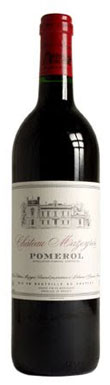
Made from 80% Merlot and 20% Cabernet Franc, the 2005 seems to have aged rather quickly, with mushroom and earth taking over the fruit. Ready to drink now, yet it lacks the precision, focus and finesse of its 2015 counterpart. Clearly an example where better selection and vat room management has improved quality.
2005
Château MazeyresPomerol
Château Montviel, Pomerol, Bordeaux, France, 2015
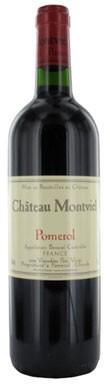
Refined and complex with lots of bright perky black cherries allied with spicy oak, supple tannins and a long finish.
2015
Château MontvielPomerol
Château Montviel, Pomerol, Bordeaux, France, 2005
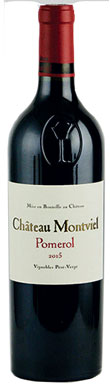
The initial nose of toffee and caramel combined with red and dark fruits is promising, but the palate is somewhat tired by comparison. The tannins are not as refined as in the 2015, nor is there the same polish overall, though the 80% Merlot and 20% Cabernet Franc blend is the same.
2005
Château MontvielPomerol
Château Nénin, Pomerol, Bordeaux, France, 2015
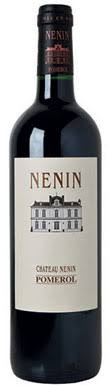
Rich plum aromas with smoky, minty notes, hints of umami, blackcurrant leaf and clove. The palate is soft and juicy, mid-weight with fresh acidity balancing the ripe black fruit. Smooth, finely sanded tannins lead to a fresh, lingering finish.
2015
Château NéninPomerol
Château Nénin, Pomerol, Bordeaux, France, 2005
An attractive minty, almost eucalyptus nose, with red cherry brightness; however, it’s not as dense or long as the 2015. Indeed, while the 2015 is a little closed, the tannins here come across almost hard by comparison, making the wine less charming than you’d expect from a Pomerol. The blend contains 74% Merlot and 26% Cabernet Franc.
2005
Château NéninPomerol
Château Petit-Village, Pomerol, Bordeaux, France, 2005
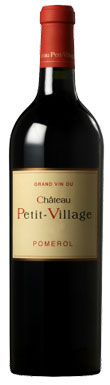
I recall enjoying this wine from barrel, with its fresh fruit aromatics, solid tannins and fine length. Tasted two years ago in Bordeaux, it again showed freshness but lacked density. Tasty, but not at the level of the 2015. A blend of 75% Merlot, 18% Cabernet Sauvignon and 5% Cabernet Franc.
2005
Château Petit-VillagePomerol
Château Rouget, Pomerol, Bordeaux, France, 2015
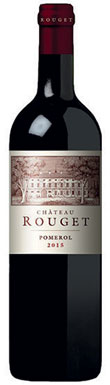
A generosity of poached damsons and vanilla spice over savoury cedar and woodsmoke; plush and concentrated with ample, focussed tannins.
2015
Château RougetPomerol
Château Rouget, Pomerol, Bordeaux, France, 2005
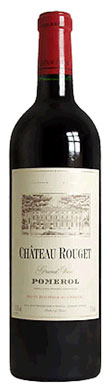
I liked this blend of 85% Merlot and 15% Cabernet Franc just as much as the 2015. The lower alcohol here lends freshness, with the ripe Cabernet Franc grapes yielding a nice floral aspect. Not over-extracted, this is a rather classic style. A true Pomerol: bravo!
2005
Château RougetPomerol
Château Vray Croix de Gay, Pomerol, Bordeaux, France, 2015
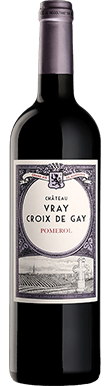
This estate’s 3.7ha of vineyards are split predominantly across two sites next to, respectively, Châteaux Lafleur and Trotanoy, at the tip of the gravelly plateau, with clay and deposits of iron. A blend of 85% Merlot with 15% Cabernet Franc, the 2015 is silky, beautifully balanced and loaded with black fruit – everything you could want for its relatively modest price tag. Gareth Birchley: Beginning to evolve. Black cherries. Lovely texture – super-silky. Medium-bodied but wonderfully balanced. Fine tannins. A crunchy, fresh finish. Vincenzo Arnese: Classical nose of stewed red fruits and integrated oak. The palate is elegant, very refined, with a slightly elevated finish. Good, intense fruit. Lots of potential. Arthur Coggill: Spicy and herbaceous. Blackcurrant leaf, clove, cedar and smoky plum. Gentle entry, supple and rounded. Acidity's in check. Finely milled tannins. Tastes simple but is very well crafted.
2015
Château Vray Croix de GayPomerol
Château Vray Croix de Gay, Pomerol, Bordeaux, France, 2005
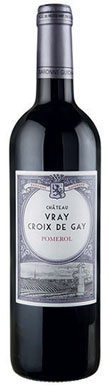
While the 2015 really impressed, this vintage is not as balanced. A blend of 90% Merlot and 10% Cabernet Franc, it’s also less dense and opulent, though it does show fruit-driven expression. Vray Croix de Gay is a fine example of a Pomerol that has improved over the last 10 years.
2005
Château Vray Croix de GayPomerol
