
Château Prieuré-Lichine: New reviews show a gear shift


This Margaux estate has really started to punch above its historical position as a fourth growth in the Bordeaux 1855 classification, helped by significant investment in the cellar, writes Jane Anson.
Here’s a good example of how difficult it can be to follow scores:
Steven Spurrier, who needs no introduction from me and has been tasting Médoc wines for Decanter for several decades before handing over for the 2016 vintage, gave the 2015 Prieuré Lichine 92 points during en primeur week.
Two years later, when tasting the 2015 after it was bottled, I gave the same wine 96 points.
This is, perhaps, way above what you might normally expect for this particular Margaux fourth-growth.
You’ll have to decide for yourself which score is closer to your own taste when you open the wine.
That’s the thing about critics – the score they award can only be an expression of their opinion, and can only be confirmed when you pull the cork.But I’m thrilled to have gone out on a limb for Prieuré-Lichine, and when I re-tasted the 2015 again for a vertical last week, I was yet again blown away by its texture, structure and sheer joyfulness.
The vertical also helped me to put this score within the wider context of the estate. I’m judging each bottle on what it tastes like when it’s in front of me, but when you look a little behind the scenes, the reasons for Prieuré Lichine’s clear improvement in recent vintages start to make sense – as do the reasons why it suffered a number of years of uneven quality.
This is the only classified château in Margaux with vineyard plots in every one of the five communes that make up the AOC. That means it has areas of vines, ranging from a few rows to larger 5ha, 10ha or 15ha parcels, in Margaux, Cantenac, Labarde, Soussans and Arsac. These different plots make up 70ha in total, which is quite clearly an awful lot of puzzle pieces to fit together.
The reason for this is the unflagging determination of former owner Alexis Lichine to restore an estate that had dwindled away to almost nothing when he bought it in the early 1950s.
He did a brilliant job, but it meant a headache for scheduling vineyard tasks and harvesting. And it wasn’t until a more scientific approach arrived with the Ballande Group as of 1999 – specifically in the form of soil studies – that these five main areas (they call them islands) were able to be redrawn into 150 separate plots, each one treated differently.
Consultant Stéphane Derenoncourt has said that his first five years were really all about understanding the requirement of these different pieces of soil.
Two other things are key to understanding the improvement in Prieuré Lichine.
Firstly a new cellar in 2013, and secondly the purchase of the 8ha Château Pontet Chappaz in 2012 that brought additional Cabernet Sauvignon from excellent gravelly terroir straight into the first wine.
New cellars, of course, are two-a-penny is the Médoc. But not every estate has to juggle that number of disparate plots when working out vineyard work from pruning to trellising, never mind harvesting.
The former cellar was equipped with large-sized tanks that were all either 120hl or 220hl in size, which inevitably meant combining ripeness levels, even grape varieties as the harvest came in to the cellar.
The new version has tulip shaped cement vats, in a range of sizes from 60hl to 120hl, meaning grapes can be harvested and vinified as the vintage conditions require. Harvesting now routinely takes four weeks, because they pick not just from one section to another but from within individual plots and rows.
‘The new cellar and the increased vineyard definition has turned what was previously a weakness for Prieuré Lichine into a strength,’ says technical director Etienne Charrier.
‘When you can track the terroirs, it adds great complexity to have this variety. In dry vintages like the summer of 2018, for example, it’s excellent to have the choice of clay and limestone pockets.’
Then there are small and not-so-small details. Canopy cover has been increased, trellising adapted to individual requirements. The yield has gone up from 32hl/h in 2010 to 42hl/h in 2015 because they have pulled back on the green harvesting, helping to free up a more juicy expression of the fruit.
The number of coopers has expanded from one to four. The blend has also changed, with Cabernet Sauvignon up to around 65% in most years from 55% in the early 2000s.
Individually, these things might be barely discernable, but together they have turned Prieuré Lichine into an estate that is worth shouting about – the definition, surely, of a 95+ wine.
See Jane’s Prieuré-Lichine tasting notes:
You might also like:
How the Bordeaux 2018 harvest is shaping up
Bordeaux 2017 vintage review and full en primeur report
Château Prieuré-Lichine, Margaux, 4ème Cru Classé, Bordeaux, France, 2015
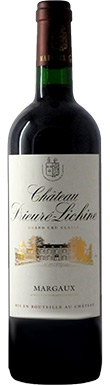

Beautifully concentrated black fruits on the nose and palate – a classy and elegant blend.
2015
Château Prieuré-LichineMargaux

Château Prieuré-Lichine, Margaux, 4ème Cru Classé, Bordeaux, France, 2016
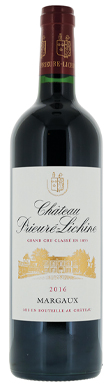
A top wine, especially for its excellent price/quality ratio. Great aromatic floral finesse. Regal elegance on the palate: smooth texture and fine-grained tannins underpin engaging...
2016
Château Prieuré-LichineMargaux
Château Prieuré-Lichine, Margaux, 4ème Cru Classé, Bordeaux, France, 2014
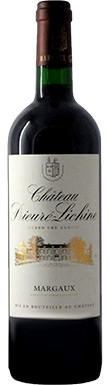
Things have clearly switched up a notch with this wine, it’s become rich, deep and gorgeously mouth-filling. The nose is not as intense as the...
2014
Château Prieuré-LichineMargaux
Château Prieuré-Lichine, Margaux, 4ème Cru Classé, Bordeaux, France, 1998
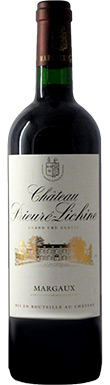
Heading back 20 years, this is normally seen as a Right Bank vintage but it’s produced a wonderfully rich and deep Prieuré-Lichine. There was more...
1998
Château Prieuré-LichineMargaux
Château Prieuré-Lichine, Margaux, 4ème Cru Classé, Bordeaux, France, 2010
While showing off cassis and blackberry fruit, this bottle did not show a wine as well structured or as long as one would have hoped...
2010
Château Prieuré-LichineMargaux
Château Prieuré-Lichine, Margaux, 4ème Cru Classé, Bordeaux, France, 2012
This is deep, rich and pretty full-on for the vintage. I can see the ambition here, although it's a little austere right now and still...
2012
Château Prieuré-LichineMargaux
Château Prieuré-Lichine, Margaux, 4ème Cru Classé, Bordeaux, France, 2011
This wine achieves a sense of rippling elegance that’s classically Margaux, although there is discernibly less flesh here than the 2010 wine and the tannins...
2011
Château Prieuré-LichineMargaux
Château Prieuré-Lichine, Margaux, 4ème Cru Classé, Bordeaux, France, 2013
Fresh purple-red, cassis nose with lifted Margaux fragrance, lovely balanced expression of fruit and terroir.
2013
Château Prieuré-LichineMargaux
Château Prieuré-Lichine, Confidences de Prieuré-Lichine, Margaux, Bordeaux, France, 2015
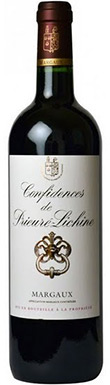
This was the first vintage made in Prieuré-Lichine’s new cellars, all cement vats, and as a result it’s significantly different to the 2014. More precise...
2015
Château Prieuré-LichineMargaux
Château Prieuré-Lichine, Confidences de Prieuré-Lichine, Margaux, Bordeaux, France, 2016
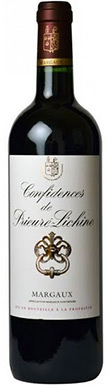
This is full of dark fruits, maintained in the winery by the use of careful pumping over and short maceration periods at 26°C maximum. The...
2016
Château Prieuré-LichineMargaux
Château Prieuré-Lichine, Confidences de Prieuré-Lichine, Margaux, Bordeaux, France, 2012
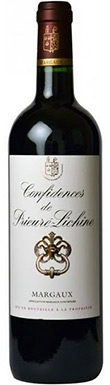
This vintage lacked some charm when it was very young, but the ageing in-barrel (no new oak) then bottle has really helped. It’s easy to...
2012
Château Prieuré-LichineMargaux
