
Priorat: An enthralling new wave arises
If your thoughts go instinctively to huge, chunky reds with heady extraction and alcohol, take another look and reassess the wines emerging on the new wave from Priorat, Catalonia’s premium DOQ region, as our in-situ expert explains.


Wine rarely comes from ugly places, but few wine regions can compete with the beauty of Priorat, southwest of Barcelona. As you head inland from the coastal city of Tarragona – a particularly beautiful train journey that winds through the hills – the land starts to rise and the population becomes notably sparse.
There are barely 2,200ha under vine here – a mere 30th of the size of Rioja, according to that region’s annual reporting.
Priorat’s vineyards are scattered across the rugged, rolling terrain, at varying aspects and elevations; there are no vast swathes of vineyards to announce your arrival here. Instead, the sheer harshness of the land is apparent, with layers of rocky schist and steep vineyard slopes that seem to defy the commercial realities of wine production.
This is not a place for the faint-hearted.
Scroll down to see notes and scores for 10 magnificent wines from Priorat
A star is born
Like much of Spain, Priorat can trace its winemaking roots back to ancient times, but the region’s modern winemaking history began later than in its famous Iberian counterparts.
Scala Dei began making wine commercially in 1974, but its potential wasn’t really identified for another decade, when René Barbier III arrived in the region, along with a wave of like-minded winemaking friends. (Barbier, the founder in 1979 of respected producer Clos Mogador, trained and worked in Bordeaux and Burgundy, among others, but is from a long-established winemaking family based on the Catalan coast.)
The style of wine that most still associate with Priorat was created during the 10 years that followed. The old, low-yielding vineyards that were salvaged produced concentrated, powerful wines – very much in vogue at the time – propelling the region to stardom. Critics, particularly from the US, were quick to praise the wines; high point-scores followed.
The Priorat region grew rapidly with investment being made and new wineries opening, including from larger players such as Penedès-based Familia Torres.

Powering down
Grape (and wine) prices are naturally on the higher side here; due to the low planting density, vine age and dry conditions, grape production is about quality not quantity. For the 2023 harvest, selling prices for grapes started at around €1.60/ kg but rose far higher for old vines and grapes such as Carinyena (Cariñena/Carignan), according to Clos Pachem head winemaker Josep Riba Comaposada.
To compare to Spain’s best-known region, in a report on his website in October 2023, Decanter contributor Tim Atkin MW noted that: ‘Against the backdrop of a large and extremely difficult 2023 harvest… Rioja’s grape prices remain unsustainably low at between €0.50 and €1.20 per kilo.’
For Priorat, scarcity, fame and hype led to it becoming one of, if not the most expensive wine region in Spain.
By the mid-2000s, Priorat was at the height of its power – both commercially and in the glass. Expensive new oak was de rigueur, 15% alcohol in a wine was typical, and it was common to see international grape varieties such as Cabernet Sauvignon, Merlot and Syrah blended with the native Garnatxa (Garnacha/Grenache) and Carinyena (Cariñena/Carignan).
The focus was very much on big, bold red wines; the few white wines being made were typically also big, powerful and oaky.
Yet for all the success of the region, some argued that this style of wine was becoming somewhat one-dimensional and alienating critics who valued elegance and transparency. A quiet revolution got underway, as a new generation of winemakers came into the region and set about telling the story of a different Priorat.
Leading the charge

‘Generational change is always hard,’ explains Sara Pérez, revolutionary winemaker and now owner of Mas Martinet, one of the original ‘Gang of Five’ wineries (together with Clos de l’Obac, Clos Dofí [subsequently Finca Dofí], Clos Erasmus and Barbier’s Clos Mogador) that established the region in the late 1980s. ‘A lot of people criticise my wines as being atypical, but what is Priorat? I think we’re only just beginning to really discover that.’
Pérez took over the winery from her father José Luis Pérez Ovejero in the late-1990s, but it wasn’t until the early 2000s that she started to put her own ideas into practice, looking at higher-elevation plantings and a fresher, lighter style of wine. ‘For me, Priorat is a place, not a defined style; it should have many different faces,’ she says.
Her single-vineyard wines Camí Pesseroles and Els Escurçons are planted at elevations typically high for the region (300m-400m and 600m respectively; vines at Scala Dei range from 400m to 800m, among the region’s highest). Els Escurçons was badly affected by a fire in 2015 and the few bottles made in that vintage proudly displayed a phoenix on the label.
Pure-fruited, energetic and so light on their feet, these are remarkably different from how a ‘classic’ Priorat is still described in textbooks.
The limits and beyond

‘For me, wine is about freshness and life,’ explains Dominik Huber, owner and winemaker at the celebrated Terroir al Límit in Torroja del Priorat. ‘I want a wine that I can come back to again and again, not one that I can only drink one glass of.’
Huber, originally from Bavaria in southern Germany, might be the most extreme of this next generation of Priorat winemakers. His team are often the first to begin the harvest, aiming for lower alcohol and higher natural acidity; vinification is almost exclusively in concrete tanks.
Al Límit means ‘at the limit’ and it’s very fitting; many of its red wines sit at 13.5% alcohol, the lowest permitted by the region’s regulations.
‘It just shows that not everyone is on-board yet with the new direction,’ adds Huber. ‘In 2021, many wines from the region fell below this threshold due to the cooler, wetter weather. Often these were very good wines, but they weren’t acceptable according to the rules of DOQ Priorat, so were declassified.’
Huber’s wife Tatjana also makes superb wines in a similar style under the Coreografia label (Garnatxa-based, red and clarete-style rosé blends, and the Pas de Deux Garnatxa-Carinyena red) in Montsant, the DO region that forms an almost-complete ring effectively surrounding Priorat.
‘We eat a lot of lighter, fresher styles of food and so our wines are also a reflection of what we consume them with,’ comments Huber.
Pérez and Huber both learned their trade at Mas Martinet; Pérez as the next generation of the family to run the winery and Huber as a student of wine. It was at Mas Martinet that Huber first met South African winemaker Eben Sadie, with whom he first created Terroir al Límit in 2001, using fruit purchased from the Pérez family (Sadie has since moved back to Swartland to focus on his own project).
It’s worth noting that both Mas Martinet and Terroir al Límit use an element of reductive winemaking for added tension in the wines.
‘Heavy reductive characters aren’t the goal,’ clarifies Huber, ‘but for me, a little just adds an edge that is very attractive.’
This little extra zip, along with the incredible detail of the wines, does feel very natural. Nowhere is this more evident than in Terroir al Límit’s flagship-range wine Les Manyes, the most remarkable expression of Garnatxa Peluda (the rare, downy-leaved variant of the variety) that I have ever tasted – 100% varietal, grown at 800m, whole cluster-fermented then aged eight months in cement tanks.
Exploring diversity

A significant development in Priorat is an increase in white wine production. Despite the region’s warm and dry climate, the white wines have incredible aromatic precision and a naturally high level of acidity, courtesy of the stony schist soils and pronounced diurnal temperature range.
Plantings are led by Garnatxa Blanca, Macabeo and Pedro Ximénez, and together account for less than 10% of total production in the region, though this is growing at a rapid rate.
René Barbier IV (born in 1973 in Nancy in France, home to his mother, Isabelle Meyer) is now at the wheel of Clos Mogador, the winery – one of the most celebrated in the region – founded by his father.
‘Priorat has always been a red wine region,’ he explains, ‘but with the revival of brisat (skin contact) methods, earlier harvests and a better understanding of what makes Priorat unique, I can see our own production ending up at 50:50 between red and white wines.’
Clos Mogador’s Nelin has long been one of the most emblematic white wines of the region. A complex blend based on Garnatxa Blanca and Macabeo, it has taken on new life under Barbier Jr’s leadership – it’s fresher and more driven, yet retains its traditional punch and texture.
Another, widely supported change is the renewed focus on indigenous varieties. Merlot and Cabernet Sauvignon were planted in the 1980s and ’90s to appeal to the international market, but the high temperatures and lack of water proved less than ideal conditions for these varieties to thrive.
Even Syrah needs certain microclimates to really grow well in Priorat, and few old vineyards of the variety exist.
Embracing change

Many winemakers have taken the opportunity to top-graft [onto existing rootstock] to indigenous varieties, often in fairly high-profile vineyards.
‘Manyetes [the acclaimed single vineyard in Gratallops] used to be around 30% Cabernet Sauvignon,’ explains Barbier Jr, ‘but the rising temperatures cooked the grapes to a crisp. Only Carinyena can really survive in harsh conditions like this, so we have shifted over the years.’
Even commercial giants such as Alvaro Palacios have increased the portion of Garnatxa in their wines, increasing year by year and replacing international varieties.
‘Carinyena and Garnatxa only really show themselves after 15-20 years in the vineyard,’ explains Oriol Castells, the general manager of Alvaro Palacios in Priorat, ‘so it is important to begin planting them now.’
Despite inevitable friction as styles and ideas change, the new direction for Priorat is clearly being met with enthusiasm. Out in the trade, sommeliers in major wine cities such as Tokyo, New York, London and Copenhagen have started to list the wines with more frequency, particularly those made in a more minimal-intervention style.
More sustainable viticultural methods, such as at the biodynamic Nin-Ortiz, are attracting new buyers and drinkers who have previously avoided the weight and power of Priorat. The perception of the region in the market is evolving.
The true beauty of Priorat is its landscape. The old vineyards, the steep slopes, the dry river beds, shrubs, forests and mountains together create a special place in which to make wine – almost as if Portugal’s Douro valley has a long-lost brother on the other side of the Iberian peninsula.
The wines that reflect this unique sense of place are likely to thrive, and that is certainly the direction in which the best winemakers in Priorat are headed.
Priorat renewal: Kerr’s pick of 10 from the DOQ’s new wave
Related articles
- Investing in Spain: Top-scoring fine wines to enjoy and cellar
- Decanter’s Dream Destination: Hostal de La Gavina, Costa Brava, Spain
- Vineyards in northwestern Spain hit by extreme weather
Mas d'en Gil, Coma Calcari, Priorat, Catalonia, Spain, 2021
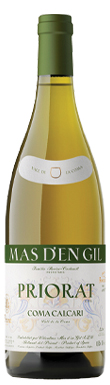

The cooler, fresher year of 2021 has refined this to perhaps the best bottling I've tasted so far. A single-vineyard, varietal Garnacha Blanca, with one...
2021
Mas d'en GilPriorat

Família Nin-Ortiz, Planetes Blanc, Priorat, Catalonia, Spain, 2021
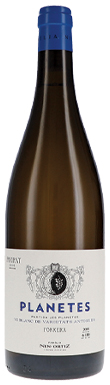
A beautiful wine, showcasing what many believe to be the future of white wine in Priorat: Carinyena Blanca. Waxy, lightly smoky, golden apples and pastry...
2021
Família Nin-OrtizPriorat
Vall Llach, Horta-Colomer Vi de Paratge, Priorat, Catalonia, Spain, 2022
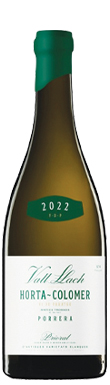
Equal parts Carinyena Blanca and Gris, fermented in 600-litre clay containers then left to mature for a further three months. Subtle yet so bright and...
2022
Vall LlachPriorat
La Conreria d’Scala Dei, Primera Vinya Les Brugueres, Priorat, Catalonia, Spain, 2021
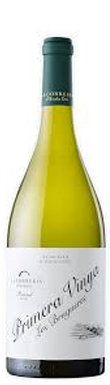
High-toned and vibrant, this is the herbal, refreshing side of Garnacha Blanca, brought on by the relatively high elevation of 450m and above at which...
2021
La Conreria d’Scala DeiPriorat
Terroir al Límit, Les Manyes, Priorat, Catalonia, Spain, 2021
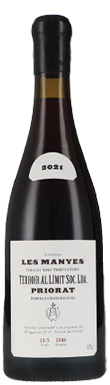
Delicate smoky reduction notes with beautifully vivid flavours of wild strawberries, rose petals, wild herbs and crushed rocks. Detailed and finely etched, yet powered with...
2021
Terroir al LímitPriorat
Clos Mogador, Gratallops, Priorat Vinya Classificada, Catalonia, Spain, 2021
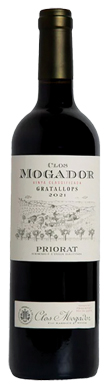
Ripe red fruits, blackberries, toast, smoke, spices and warm earth. So alive in the glass, it never seems to start changing and brightening as it...
2021
Clos MogadorPriorat Vinya Classificada
Mas Martinet, Cami Pesseroles, Priorat, Catalonia, Spain, 2021
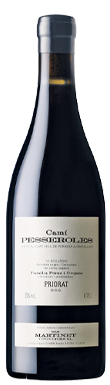
A blend of Carinyena from vines more than 80 years-old and younger-vine Garnacha, from high-elevation vineyards in Priorat. A savoury, detailed wine, fermented in open...
2021
Mas MartinetPriorat
Sandra Doix Celler, MarLa Les Salanques, Priorat, Catalonia, Spain, 2020
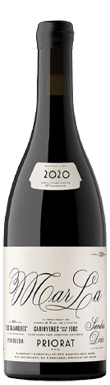
Smoky, dark-fruited and very tight and mineral. Incredibly structured, but also fluid and elegant. Classic Priorat on the nose with a real sense of subtleness...
2020
Sandra Doix CellerPriorat
Álvaro Palacios, Vi de Vila Gratallops, Priorat, Catalonia, Spain, 2022
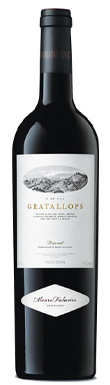
This wine gets softer and more elegant with every vintage. Floral, bright and a beautifully manageable 14% alcohol. Ripe red fruits, sappy herbs, violets and...
2022
Álvaro PalaciosPriorat
Ferrer Bobet, Selecció Especial Vinyes Velles, Priorat, Catalonia, Spain, 2019
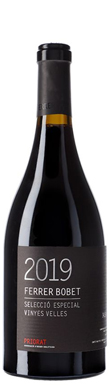
A wine that's heading in a very new direction: ripe and powerful, but far fresher and lighter on its feet than many of its contemporaries....
2019
Ferrer BobetPriorat
