
Producer Profile: Château TrotteVieille
A jewel in St-Emilion’s crown, this family-owned property has one of the oldest histories in the region, and Cabernet vines more than a century old. But it flies surprisingly under the radar for a premier grand cru classé B estate, quietly producing wines of understated purity.

They’re beautiful, aren’t they?’ I was asked while ambling through Château TrotteVieille’s St-Emilion vineyard on a beautifully sunny day in September – grapes still on the vine, full of juice and awaiting the final picking that would come in a few days. ‘Indeed, they are,’ I replied as I bent down for a closer look, wellington boots mulching the recently rain-filled soil. The objects in question were pre-phylloxera vines dating back to the 19th century. Gnarled, thickly set and brimming with green leaves and plentiful berries, a marker of this year’s excellent fruit set and bumper crop to come. I knew TrotteVieille had some impressive vines – said to be the oldest on the Right Bank, and likely in all of Bordeaux – but there’s something uniquely moving about seeing these majestic living creatures that have been firmly rooted for more than 140 years.
Scroll down to see tasting notes and scores for 15 Château TrotteVieille wines
About 3,000 of these ancient Cabernet Franc vines are nestled in the middle of two plots, within an eight-hectare (7ha planted) enclosed vineyard, or clos, of which 40 disease-proof vines have been selected and are being used for the estate’s new massal selection plantings (propagation using cuttings taken from the best-quality existing vines on a plot). The vineyard, farmed organically but not certified, is roughly split equally to Merlot and Cabernet Franc with 5% of Cabernet Sauvignon, of which 80% is high-density plantings.
Differing from those of neighbouring vineyards, soils here are shallow clay over a mineral-rich, limestone shelf – a rare phenomenon in the region. ‘It’s the most beautiful terroir that can exist for vines,’ says long-time estate manager Christophe Dussutour, who also oversees the Castéja family’s Pomerol estates Château du Domaine de l’Eglise and Château La Croix du Casse. The family also owns several other Bordeaux estates, including fifth growths Châteaux Batailley and Lynch Moussas in Pauillac. ‘The vineyard copes extremely well [both] in drought and when it rains,’ Dussutour adds.
Inspiring site
This advantage was unknown to Marcel Borie, co-founder of négociant company Borie-Manoux, when he purchased the estate in 1947 – then unclassified, TrotteVieille was ranked as a premier grand cru classé B estate in 1955, retaining that status up to today. ‘It was a gamble on my grandfather’s part,’ recounts Philippe Castéja (son of Emile Castéja and Denise Borie, Marcel’s daughter). ‘The estate was in poor shape, and after World War II red wines were difficult to sell.’ But after liking the 1943 TrotteVieille wines, and finding the spot ‘extraordinary’ when he visited, Borie sold his wheat-producing estates in Haute-Vienne (around Limoges) to raise the capital. ‘It was a pure coup de coeur,’ Castéja says.

TrotteVieille’s vines are situated to the side and back of the château, which is in direct sight of St-Emilion’s monolithic church spire. A beautiful view, but one that comes with strict rules for estates wanting to renovate. ‘We were prisoners in a sense,’ Castéja says. ‘As we’re within UNESCO surroundings, we could not increase the footprint, size or height of the buildings.’ After 12 years of work, the new facility for winemaking and ageing was inaugurated in 2022, but was sufficiently functional to produce the 2021 vintage. For Castéja, the architect had to satisfy two criteria: first, ‘to make the building look as if it had always been there’ – not an easy feat for an estate with a history of winemaking dating back to at least the mid-15th century; and second, to ‘showcase the wines in a spectacular cellar’, which houses 14,000 library bottles.
Château TrotteVieille at a glance
Estate: 12ha, 11ha under vine
Varieties planted: Merlot (50%), Cabernet Franc (45%), Cabernet Sauvignon (5%)
Age of vines: 60 years old on average
Estate manager: Christophe Dussutour
Technical director: Xavier de Rozières
Certification: HVE3 (Haute Valeur Environnementale) as of 2021
The vat room, created by Borie in 1949 and filled with large 90hl-120hl concrete tanks, was changed when Castéja arrived at the estate in the 1990s. He initially split the tanks in half for ‘more precision’, but went one step further more recently by removing the cement and installing 26 small stainless steel tanks ranging in capacity from 20hl-70hl. The grand vin is aged for 18 months in 100% new oak (the second wine for 12-14 months in 50/50 new and used oak), and has been that way ‘for a number of years’, as ‘the wines react well to new wood’. Certainly the natural concentration of TrotteVieille seems to cope well with the toast-levels chosen for the barrels, and there is little evidence of oak on the palate.
The second wine, Dame de TrotteVieille (formerly La Vieille Dame), comes from younger vines and was introduced in 2000. From 2012 it also includes 4ha of vines from the acquisition of neighbouring Château Bergat, a St-Emilion grand cru classé. TrotteVieille also makes a limited, non-commercialised, 135-bottle production of Les Vieille Vignes, launched in 2004, made solely from the old-vine Cabernet Franc and, from 2022, vinified in a custom-made spherical wooden vat.
Signature style
When asked about the much-discussed St-Emilion classification – revised in 2022 and now including 85 estates in all, just two of them with the top “A” status – Castéja says: ‘TrotteVieille is among the estates that should be [ranked] “A”, of course, but if to be “A” is to have a restaurant or 30ha of vines, then we are not. The rules are the rules, we accept to play by them and that’s it. The only thing I can say is that I think some of the key aspects of the wines are not taken into account enough.’

The wines have their own very specific aromatic and taste profile. Cabernet Franc plays a central part, offering notes of dried herbs, flowers, exotic spices and black fruit, while the taste focuses on a concentrated core of dark fruit, high acidity, silky tannins and a pronounced saline, mineral undertone. For consultant Axel Marchal (recipient of the inaugural 2021 Decanter Rising Star award), who in 2016 joined his associate Valérie Lavigne at the estate, where she had worked since 1998 alongside the late Denis Dubourdieu, ‘TrotteVieille can be distinguished by its shining aromatic expression, a very pure fruitiness (various shades of fresh fruit), and also by its vibrant palate, with finessed tannins and saltiness on the finish’. Fellow consultant Thomas Duclos describes a ‘pêche des vignes’ aroma: a combination of ripe, juicy white peach and succulent raspberry.
The humble and understated nature of the venture is striking, not only given the history and pedigree of the estate but also the quality and consistency in the style and unique signature of the wines. While the estate is open to visitors by appointment, and offers accommodation, it remains discreet, retaining the kind of charm you only get from long-term, generational ownership, befitting of a long-standing St-Emilion premier grand cru classé. ‘We believe in the long run – we’re not in a hurry,’ Castéja says. ‘In agriculture and viticulture, you can’t rush. It takes 10 years to see what a vine is able to do and 20 years for a red wine vine to reach full capacity in terms of what it can give. We think we’re showing what we can do and I think that we’re understood nowadays.’
Full of potential
If you can’t readily recall TrotteVieille’s distinctive gold-on-black bottles (reversed for the second wine’s labels), it may be because the wines only joined Bordeaux’s La Place distribution network in 2017, following years of distribution through the family business. ‘There was a big demand, but it remains a low-key distribution because of the limited volumes.’ About 18,000 bottles of the grand vin are produced each year.

While certainly proud, Castéja says: ‘It’s a challenge to make this style recognised. We’ve worked hard to bring it into the light, but we have an extraordinary chance at TrotteVieille to work with such an old population of vines’.
The new cellar has added an extra level of precision to the winemaking and the team are looking forward to the new massal Cabernet Franc planted in 2016 coming into production, with an additional 0.5ha planted last year and more scheduled for December 2024.
‘The quality potential is very high,’ says Marchal. ‘TrotteVieille is not a wine that displays a lot en primeur, but its ageing potential is amazing. Duclos agrees: ‘When we taste old vintages, we clearly see the wines have been great for a long time – 1949 and 1961 are amazing.’
I found myself enjoying the wines from the slightly hotter years, which ‘perform well at the estate’ says Duclos; 2003, 2005, 2010, 2018 and 2019 with full structure, racy acidity and fine tannins. The 2000 felt most enjoyable to drink now, however a 1988 and 1996 went down well over lunch and were also in extremely good condition.
‘We can do better,’ says Castéja, ‘but we’re already at a very good level now.’
Pick of the vintages: a taste of TrotteVieille
Related articles
- St-Emilion vertical: Tasting 20 years of Clos Fourtet
- Bordeaux: Hopes rise for 2023 harvest but mildew leaves mark
- Alexis Leven-Mentzelopoulos becomes head of Château Margaux
Château Trotte Vieille, St-Émilion, 1er Grand Cru Classé B, Bordeaux, France, 2019
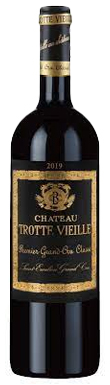

The makings of an exceptional wine in 2019 which, for me, narrowly beats the 2018, balancing excellent definition, succulence, ripeness of fruit, velvety sleek tannins,...
2019
Château Trotte VieilleSt-Émilion

Château Trotte Vieille, St-Émilion, 1er Grand Cru Classé B, Bordeaux, France, 2016
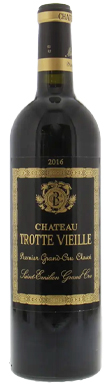
Floral dried herbs, liquorice and black fruit on the nose - very TrotteVieille in aromatic profile. Sweet, ripe, fresh blackcurrants and strawberries deliver both a...
2016
Château Trotte VieilleSt-Émilion
Château Trotte Vieille, St-Émilion, 1er Grand Cru Classé B, Bordeaux, France, 2020
Liquorice, gorgeous floral notes and fragrance on the nose; roses, violets and jasmine with tobacco and cedar touches. Smooth and so supple, forward, bright and...
2020
Château Trotte VieilleSt-Émilion
Château Trotte Vieille, St-Émilion, 1er Grand Cru Classé B, Bordeaux, France, 2015
Dark liquorice, blueberry, cocoa powder and black chocolate - such a typical nose where you get more wood and savoury touches more than freshness of...
2015
Château Trotte VieilleSt-Émilion
Château Trotte Vieille, St-Émilion, 1er Grand Cru Classé B, Bordeaux, France, 2010
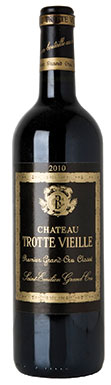
96
Power combined with elegance in the 2010. A dusting of dark cocoa powder, cola, mint, exotic sweet spices, caramel, toast and blackcurrants on the nose. Juicy and vibrant, more lean than I was expecting, tannins are fine and supportive with clear austerity and bitterness around the edge, giving a spiced frame that lets the fruit pulse through the middle. This is certainly on the intense side, but not weighty at all, concentration balanced by high acidity and a lovely stony minerality underneath that, really puts you in St-Emilion on the terroir. Direct and focussed, precise and lifted with a minty, liquorice finish. Feels like a very representative TrotteVieille though give this more time before opening.
2010
Château Trotte VieilleSt-Émilion
Château Trotte Vieille, St-Émilion, 1er Grand Cru Classé B, Bordeaux, France, 2000
An attractive and still youthful wine with an impressive structure and intensity. Mouthfilling and succulent with a bright juicy freshness balancing sumptuous strawberry, plum and...
2000
Château Trotte VieilleSt-Émilion
Château Trotte Vieille, St-Émilion, 1er Grand Cru Classé B, Bordeaux, France, 2006
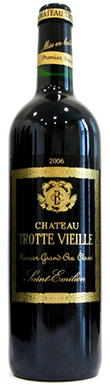
95
Where the 2005 is rich and heady - certainly very stylish and confident, this is long, fun and fruity with floral notes on the nose with blackcurrants and sweet exotic spices. Fresh, lively and forward, this carries interest straight away, smooth and succulent, agile and generous with filling tannins that have a chalky texture putting the limestone terroir into the glass with sides of strawberry and cherry fruit. Gentle and satisfying, structured and muscular but with excellent acidity and purity. Still young but approachable and enjoyable with lots of detail on show.
2006
Château Trotte VieilleSt-Émilion
Château Trotte Vieille, St-Émilion, 1er Grand Cru Classé B, Bordeaux, France, 2003
A wonderfully clear, pure and precise wine, which showcases the ripe, fleshy fruit from the extremely hot 2003 vintage but maintains elegance and balance with...
2003
Château Trotte VieilleSt-Émilion
Château Trotte Vieille, St-Émilion, 1er Grand Cru Classé B, Bordeaux, France, 2021
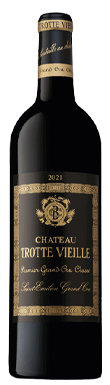
Floral and fragrant; rose petals and Turkish delight. Clean and crisp on the palate, doesn't hold the same degree of weight and texture as the...
2021
Château Trotte VieilleSt-Émilion
Château Trotte Vieille, St-Émilion, 1er Grand Cru Classé B, Bordeaux, France, 2005
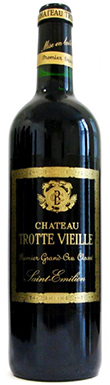
Black liquorice really quite strong on the nose with tobacco and spice. The palate is equally rich and full, brimming with textured ripe tannins, thick...
2005
Château Trotte VieilleSt-Émilion
Château Trotte Vieille, Dame de TrotteVieille, St-Émilion, Grand Cru, Bordeaux, France, 2020
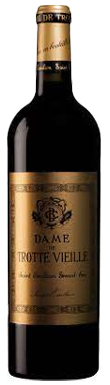
Quite a heady nose, full of floral notes and ripe black fruit. Smells sun kissed on the nose, but this has great acidity on the...
2020
Château Trotte VieilleSt-Émilion
Château Trotte Vieille, St-Émilion, 1er Grand Cru Classé B, Bordeaux, France, 2011
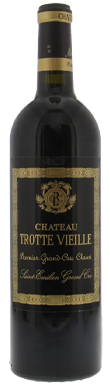
Seductive nose full of pink flowers, black fruits and cola cubes. Bright and playful, juicy and quite tannic, but not as wide and expansive as...
2011
Château Trotte VieilleSt-Émilion
Château Trotte Vieille, Dame de TrotteVieille, St-Émilion, Grand Cru, Bordeaux, France, 2019
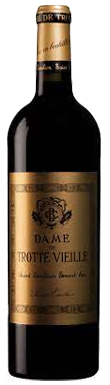
Green peppercorns, black pepper, a subtle fragrance of roses, emphasis on spice and pepper with blackcurrants. Smooth and clean, lovely purty and elegance. Where 2018...
2019
Château Trotte VieilleSt-Émilion
Château Trotte Vieille, Dame de TrotteVieille, St-Émilion, Grand Cru, Bordeaux, France, 2018
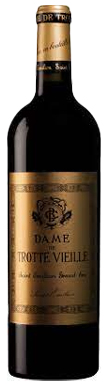
Another standout second wine, and good intro to the grand vin, in the line-up. Quite heady on the nose, dried flowers with ripe, fresh and...
2018
Château Trotte VieilleSt-Émilion
Château Trotte Vieille, Dame de TrotteVieille, St-Émilion, Grand Cru, Bordeaux, France, 2016
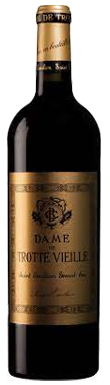
In 'great' vintages second wines can go one of two ways, this however is fabulous giving enough grand vin signature to be an introduction to...
2016
Château Trotte VieilleSt-Émilion