
Producer profile: Domaine de la Grange des Pères
Last year James Lawther MW visited this cult wine producer, situated in the Languedoc region of l'Hérault, and got a rare chance to talk to the late winemaker Laurent Vaillé about humble beginnings and why he was happy to be patient when it came to winemaking.
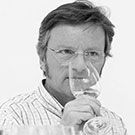

In 2019, bottles of Domaine de la Grange des Pères were submitted for sale in an online auction in France.
Vintages presented included the inaugural red 1992 and continued vertically through to 2016. The bidding was enthusiastic, bottles of the 1992, 1993 and 1994 going for over €1,000 a flagon, the 1992 eventually knocked down for €5,219. At the same event vintages of the rarer white made €552 (2004) and €448 (1996). Needless to say, these were all record prices.
Scroll down for James Lawther MW’s top picks from Domaine de la Granges des Pères
Domaine de la Grange des Pères history
I recount this as a scene setter, to convey to those less familiar with Grange des Pères the reputation it has gathered over the years. And also, as a reminder of how far the Languedoc has come in its desire to be considered a serious player in the production of fine wine. Even ten years ago these sorts of prices would never have been imagined for a Languedoc wine.
Domaine de la Grange des Pères is the creation of one man, Laurent Vaillé, who has sadly now passed away (May, 2021). Or perhaps I should say, one man and his family.
His grandfather bought the property on the edge of Aniane, a small town to the west of Montpellier, in 1958. It was known as the Grange des Pères as some of the buildings had once belonged to Benedictine monks. At this point in time production was geared towards large quantities of table wine, an activity his father continued as a member of the local cooperative while diversifying into market gardening.
Seeing a limited future in volume wine, Vaillé’s parents initially encouraged him to find another vocation. But after two false starts studying pharmacy and then physiotherapy, they finally bowed to his desire to be a vigneron and on his father’s advice he enrolled in a degree course in oenology in Montpellier.
Grange des Pères at a glance
Owner: Laurent Vaillé
Area under vine: 15ha (13ha red, 2ha white)
Soils: chalky limestone-clay; galets roulés, sand
Grapes grown: (red) 45% Mourvèdre, 30% Syrah, 15% Cabernet Sauvignon, 10% Counoise; (white) 85% Roussanne, 15% Marsanne
Vine density: 5,000 vines/ha
Average yield: 25hl/ha
Key dates to know
1988: First plantings
1992: First vintage of the red wine
1995: First vintage of the white wine
Expert advice
The 1980s turned into a formative time. Alongside his studies, Laurent Vaillé obtained work experience with a number of key producers in France. The names included Eloi Dürrbach of Domaine de Trévallon in Les Baux de Provence, Gérard Chave of Domaine Jean-Louis Chave in Hermitage and Jean-François Coche-Dury in Meursault. ‘Eloi Dürrbach provided the initial inspiration as he started from scratch and that encouraged me to do the same, Vaillé said.
Towards the end of this period the Vaillés grubbed up the old vineyard and acquired parcels of new land in the chalky garrigue of the Massif de l’Arboussas south-east of Aniane. This is the hilly area where another leading Languedoc estate, Mas de Daumas Gassac, has vineyards and where the American Mondavi group tried to purchase land in the early part of the new millennium. Today, it falls within the boundary of the appellation Terrasses du Larzac.
The land had first to be cleared, a task undertaken by Laurent Vaillé, his father and brother, Bernard. Planting then started in 1988, the year he received his degree in oenology. His work experience with producers, chance encounters and wines tasted dictated which grape varieties were planted and where.
Dürrbach was again an influence regarding Cabernet Sauvignon, as was a Mas de Daumas Gassac 1982 he tasted at the time. ‘The Gault & Millau guide labelled it the Château Lafite of the Languedoc and you could really see why, it was sensational,’ he exclaims. While Chave, of course, swayed him towards Syrah, Roussanne and Marsanne and introduced him to the intricacies of blending. Initially, there was also a little Chardonnay as a nod towards Burgundy.
Plantings
These five grape varieties were all planted on the north-facing slopes of the massif, the words of Jacques Reynaud of Château Rayas in Châteauneuf-du-Pape ringing in his ears. ‘In the south of France, you want to plant everything north-facing except Mourvèdre.’
The latter variety was planted on warmer, south-facing parcels located further north with sandy, stony galets roulés soils. The location had been recommended by the president of the Aniane co-operative, the Mourvèdre a revelation in another wine he tasted, a Domaine Tempier 1971 Cuvée Speciale from Bandol.
Later in 1995 Counoise was added in the same site having been recommended by Dürrbach and validated by a tasting at Château de Beaucastel in Châteauneuf-du-Pape.
The invaluable advice from these leading names was also complemented by plant material from their estates. So, the Cabernet Sauvignon for planting at Grange des Pères came from Trévallon, the Syrah, Roussanne and Marsanne from Chave, the Mourvèdre from Tempier, Beaucastel and Gérard Gauby in the Roussillon and, later on, the Counoise from Beaucastel and the legendary Henri Bonneau in Chateauneuf-du-Pape.
The astonishing thing is that there was never really a master plan as to what should be planted and blended together. ‘It just evolved gradually and there was an element of luck but I did have a few sleepless nights worrying that it would all work,’ he said. Asked why he didn’t plant any Grenache, one of the bedrock grape varieties of the Languedoc, he replied, ‘I was convinced that to have good Grenache it needed to be old and I was in too much of a hurry.’
First vintages
The initial vintage of the red wine, 1992, was a majority blend of Mourvèdre and Syrah with the addition of Cabernet Sauvignon. The Counoise was added from 1998 and these days can be as much as 10% of the blend.
The first vintage of the white, 1995, was a blend of Roussanne (majority) and Marsanne with a dash of Chardonnay. This disappeared in 2010 more for logistical reasons (the Chardonnay ripened earlier than the other varieties so complicated the harvest) than qualitative.
Today, the 13-hectare red vineyard is planted to Mourvèdre (45%), Syrah (30%), Cabernet Sauvignon (15%) and Counoise (10%). The blend varies a little each year but is close to this ratio.
Likewise, the 2ha of white varieties contain just Roussanne (85%) and Marsanne (15%) with a similar yearly blend.
The use of Cabernet Sauvignon, unauthorised in Languedoc appellations, has meant the red wine has always had Vins de Pays and latterly IGP (Indication Géographique Protégée) status. The same applies to the white although it complies with the rules for appellation Languedoc.
The 1992 was well received, even as a Vins de Pays, and the reputation of Grange des Pères established almost from the outset. I have not sampled this particular vintage but having tasted one or two older wines (as well as the unblended 2018 from barrel) can make some observations.
Grange des Pères style
Vintage character definitely has a say as was demonstrated by a leaner, leafy 1996 and the richer, more generous 2001. More recently, 2016 has all the vestiges of a concentrated but well-balanced year. ‘I always try to respect the vintage and this is what dictates the style,’ he said, adding, ‘I’m not looking for a standardised product.’
A consistent feature is the sweetness of fruit that portrays the southern climes. But this is balanced by a chalky freshness derived from the limestone soils. The tannic structure is firm but refined, the Cabernet adding extra backbone, the wines holding well over a period of roughly 20 years while the tannins soften gently. The youthful fruit is pure and appealing, the aromatic complexity with age more muted, herbal, forest floor notes typical with berry fruit nuanced behind. Alcohol degrees are kept in check which helps the balance.
As to the barrel-fermented white wine, it is rich and generous, again with an ingrained freshness. In youth the oak is integrated but apparent, the 228-litre Burgundy barrels from cooperage François Frères providing a mealy, Burgundian character. As this dissipates a honeyed, floral complexity appears with age.
Viticulturally, the vineyard at Granges des Pères is farmed with care and attention. The vines are pruned close to the ground thus shortening the distance the sap has to rise. A gobelet system is used but with trellising that spans 1.6 metres. Average yields are extremely low at 25hl/ha. The soils are ploughed, synthetic chemicals excluded and a biodynamic approach (uncertified) used for cultivation. ‘I try to respect the lunar calendar but it’s easier to do in the cellar as there’s a roof,’ he quipped.
The work in the cellar is kept simple. The hand-picked grapes are vinified by parcel in stainless steel tanks. They are destemmed but not crushed and can spend up to three weeks in tank during the alcoholic fermentation and maceration period. The juice is initially pumped over to provide oxygen for the alcoholic fermentation and then the grape cap punched down. Thereafter, the free-run wine is drained-off into tank, allowed to settle and then run-off into barrel.
The maturation process is long, the wine spending two years in barrel. ‘This is the rhythm of the cellar as the malolactic fermentation can take up to a year. My wine needs time so I am happy to be patient,’ he resumed. The 228-litre Burgundy barrels all come from François Frères, a cooperage he trusts for the quality of the oak after years of collaboration and several trials.
Mystique
Before meeting Laurent Vaillé, I had the impression of a rustic, reclusive figure in the mould of Jacques Reynaud, the former owner of Château Rayas. This is not at all the case. He was amiable and attentive with a penchant for good food. But his focus was on the vineyard and wine and not publicity. He didn’t do promotional tours relying instead on a constant group of distributors (e.g. Yapp Brothers in the UK and Kermit Lynch in California). Social media and internet are another no go.
The volume of wine produced is also an unanswered question. ‘Gérard Chave once told me, that to guarantee a peaceful life with distributors, never divulge the quantity of wine produced as they would always be wanting more,’ he exclaimed. Clearly the white remains limited, the red confidential.
All of which means the story of Grange des Pères has taken its own path driven by consumers and to a certain degree the wine press. This in itself has led to a number of uncorrected errors and fabrications. The white wine has never, as has been written, contained any Gros Manseng. Chardonnay was initially included but not since 2010. There was a period when 600-litre demi-muid barrels were used for vinifying the white but this is no longer the case. For the red wine, Petit Verdot has never been an option.
It all adds to the myth of Granges des Pères, a Languedoc wine with added refinement that can only do the region proud.
See James Lawther MW’s top picks from Domaine de la Grange des Pères
See also
Wine ‘Mozart’ Laurent Vaillé of Grange des Pères diesLanguedoc-Roussillon v Southern Rhône: Top wines comparedThe Decanter Interview: Alain BrumontExclusive tasting of Jurançon’s cult Clos JolietteGoing green in Languedoc-Roussillon – Organics and Biodynamics
Domaine de la Grange des Pères, Pays d'Hérault, Languedoc-Roussillon, France, 2016
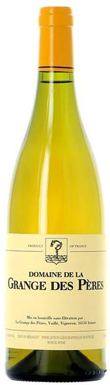

An embryonic wine but clearly has the depth for ageing. Rich and powerful on the nose with mealy, waxy, citrus notes. The oak is present...
2016
Domaine de la Grange des PèresPays d'Hérault

Domaine de la Grange des Pères, Pays d'Hérault, Languedoc-Roussillon, France, 1996
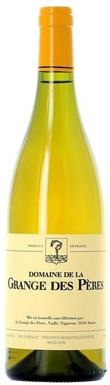
A wine at its apogee. Golden in colour, subtle and understated on the nose with hints of wax, almond and dried herbs evolving to honeyed...
1996
Domaine de la Grange des PèresPays d'Hérault
Domaine de la Grange des Pères, Pays d'Hérault, Languedoc-Roussillon, France, 2016
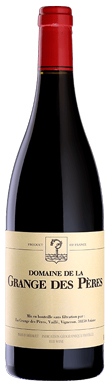
Slightly disjointed at the moment but this has enormous potential. Violet hue in the glass, the nose is fragrant and alluring with raspberry coulis, pepper...
2016
Domaine de la Grange des PèresPays d'Hérault
Domaine de la Grange des Pères, Pays d'Hérault, Languedoc-Roussillon, France, 2011
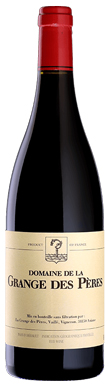
Riper and more solar in style, the fruit richer and raisined. Sweet fruited attack; supple, berry and garrigue-nuanced mid-palate with finely woven tannins and a...
2011
Domaine de la Grange des PèresPays d'Hérault
Domaine de la Grange des Pères, Pays d'Hérault, Languedoc-Roussillon, France, 2001
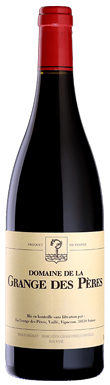
A mature wine but with reserve. Definitely feels Mediterranean. Mahogany-brown in colour. It has earthy, tobacco leaf aromas with a hint of berry fruit and...
2001
Domaine de la Grange des PèresPays d'Hérault
Domaine de la Grange des Pères, Pays d'Hérault, Languedoc-Roussillon, France, 1996
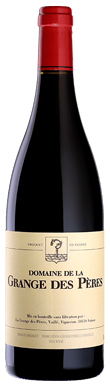
If the 2001 was Mediterranean, the 1996 has more of a Bordeaux feel. Brick red hue. Still has a touch of sweetness but also tertiary,...
1996
Domaine de la Grange des PèresPays d'Hérault
