
Producer profile: Remírez de Ganuza


This groundbreaking Rioja winery is known for its pioneering techniques and singular approach towards winemaking. Matt Walls pays a visit
What impresses me most of all is the vision. In 1989, at the age of 39 and with no winemaking background, Fernando Remírez de Ganuza set up his own bodega in Rioja and started to make wine. Not just any wine: concentrated, structured reds for long-term ageing. Instead of following local norms, he has been a peerless innovator, constantly in search of ways to optimise the health and perfect ripeness of his grapes.
Scroll down for Matt Walls’ pick of Remírez de Ganuza wines
Thirty years on, as his first vintages are hitting maturity, has the ‘modern’ style of Rioja that he helped to usher in been vindicated? Or does this approach now appear outdated in the contemporary climate of minimal intervention?
Remírez de Ganuza at a glance
Established 1989
Vineyards 80ha in 246 parcels
Main red varieties Tempranillo, Graciano, Garnacha
Main white varieties Viura, Malvasia
Average vine age 50 years old
Number of bottlings Nine
Winemaker Jesús Mendoza
Inside track
Fernando had little winemaking experience before he established his bodega, but his knowledge of the terroir of Rioja Alta, and especially Rioja Alavesa, was second to none. He gained an intimate knowledge of local vineyards in his previous career as a vineyard broker, buying and selling parcels of vines. He observed what little care was being taken at that time in the sorting and handling of grapes, ‘and I was convinced I could do better’, he says. Certainly when it came to sourcing the best vineyards, he had the inside track.
Rioja Alavesa is the smallest, most northerly of the three Rioja sub-regions, situated between the Ebro river to the south and the rocky peaks of the Sierra Cantabria to the north. Its high-altitude vineyards contribute a freshness to the wines and ‘a richness of aromas, more than in the other areas’, says Fernando. He also believes this region delivers wines with the most balanced acidity.
The winery is made up of a series of picturesque stone buildings, which are built around a central courtyard in the middle of the village of Samaniego. A short walk down a cobbled street leads to Viña Coqueta, the bodega’s most-prized vineyard. Fernando now farms 80ha of vines in total, spread over six main sites, mostly on clay-limestone, alongside some sandy soils.
Experiments with biodynamics and organics have yielded mixed results, and for Fernando a consistent quality of fruit remains paramount. As such, he practises what he calls ‘precision viticulture’. He only sprays when there is a problem to address, and minimises treatments as much as possible.

Peerless innovation
Concentrating on fruit quality from the outset, Fernando’s first priority was to buy a sorting table. Today they are taken for granted, but at the time they were much less common. ‘Along with Bodegas Roda, we were the first winery in Spain to use one,’ he says, ‘back in 1991.’ It was so difficult to find one that Fernando ended up sourcing it from the meat industry and then adapting it himself.
The second major innovation happened in 1998, when they started doing something extraordinary. Fernando noticed that the ‘shoulders’ of the grape bunches are riper and more concentrated, so he started cutting off the tips – or puntos – and only using the more mature shoulders of the bunches for the bodega’s reds, including its two core wines, the yellow-labelled Reserva and Gran Reserva. This inadvertently gave birth to a new, entry-level carbonic maceration bottling called Erre Punto Tinto, to give a new purpose to the tips.
If anything, Remírez de Ganuza is better known for its innovation in the winery than in the vineyard. It started using truncated, cone-shaped fermenters as early as 1996, and has designed a new method of extraction for its rare top cuvee, Trasnocho, that took nine years to perfect. When the juice for the Reserva and Gran Reserva has been run off, the remaining skins are pressed by inserting a PVC bag into the fermenters and gradually filling it with water. This gently presses the grapes while avoiding friction and oxidation, and the resulting juice is used to produce this rich, luxuriously dark-fruited wine that is only made in top vintages.
The bodega’s first white wine, Remírez de Ganuza Blanco, was released in 2004. Never content to follow the herd, the whites wines are barrel-fermented at a low temperature in chilled chambers. The batonnage to add richness to the wines isn’t done by opening the barrels and stirring the lees. In order to avoid oxidation, the closed barrels are placed on rollers and rotated instead. Due to demand, the bodega has since added a single-vineyard Blanco Reserva to its range.
In with the new
The most striking way that the bodega broke with tradition at its inception was with the use of new French oak. Until the late 1980s, the traditional approach in Rioja was long ageing in American oak barrels, often older ones. But right from the start Fernando has used more French than American oak, and almost always 100% new barriques. Except for experiments with second-use barrels, all of the Remírez de Ganuza wines (except for the Erre Punto Tinto) continue to be matured in this way.
It was a controversial approach at the time, and the bodega has been saddled with the ‘modern’ sobriquet ever since. Once a complimentary term celebrating concentrated, ripe fruit and quality oak, in some circles it has taken a turn for the pejorative, associated with excesses of icon wines of the 1990s. The danger with such liberal use of new oak is that it can bury the fruit and erase terroir. But a recent tasting of the 1994 and 1995 Gran Reservas, now wonderfully mature but vanishingly rare, proves that it need not necessarily be the case. There is an unashamed ripeness and richness to the fruit, especially in warmer vintages, and although the wines are undoubtedly shaped by oak, their flavours aren’t dominated by it.
Remírez de Ganuza: a timeline
1950 Birth of Fernando Remírez de Ganuza
1989 Bodegas Remírez de Ganuza established
1991 First vintage bottled
1992 First commercially released vintage
1994 Jesús Mendoza joins. First vintage to be exported
1997 1992 vintage released from the bodega
2001 Jesús Mendoza promoted to head oenologist; first vintage of Trasnocho
2003 Starts using the skins of white grapes in red wine fermentations
2004 First vintage of Remírez de Ganuza Blanco
2010 Urtasun family becomes co-owner of the estate, with a 50% stake
2014 First vintage of Tre3mano from Ribera del Duero
The next generation
The bodega’s commitment to new oak barriques may be unchanged, but it continues to evolve in other ways. Fernando continues to scout for promising vineyards to add to its estate, and he’s still experimenting with new methods and bottlings, though few are released commercially. As for producing its own Viñedos Singulares – the new Rioja classification for single-vineyard bottlings – Fernando says: ‘There’s no plan right now; it’s not a priority.’ Seeing as it’s not always the same vineyards that excel from one year to the next, he prefers to put his faith in blending. The bodega’s one single-vineyard red, Viña Coqueta, is classified as a Reserva. Fernando’s latest project is Tre3mano (pronounced ‘tresmano’), a partnership in Ribera del Duero.
As he approaches his 70th birthday, Fernando shows no signs of slowing down. But when he does, the estate is in good hands. In 2010 he was joined by José Ramón Urtasun, who now co-owns the bodega and is in charge of global sales. Of Fernando’s three children, Cristina works at the estate as marketing director; his son Javier is a successful artist in Zaragoza; tragically, his second daughter María died in a car accident as a teenager. Her name lives on in a special bottling, María Remírez de Ganuza, a selection of the best barrels of Viña Coqueta, with the proceeds from sales going to charity.
Meticulous attention to detail, winery innovation and 100% new oak may not be fashionable today, but it’s testament to Fernando’s uncompromising vision that the estate sees no need to chase trends. Without doubt Fernando helped to usher in a new era for Rioja, reinvigorating the region and opening the door for some of today’s most exciting players. Today there is room for a multiplicity of styles in Rioja, and for this we should thank iconoclasts such as Fernando Remírez de Ganuza.
Matt Walls is a contributing editor to Decanter
Remírez de Ganuza, Blanco, Rioja, Northern Spain, Spain, 2016
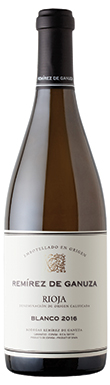

A blend of Viura and Malvasía, fermented in new French oak barriques with lees movement. Blanched almond, red apple and subtle pear, camomile and linden...
2016
Remírez de GanuzaRioja

Remírez de Ganuza, Rioja, Northern Spain, Spain, 1994
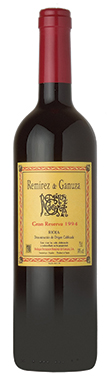
Mostly Tempranillo, with 10% Graciano, from 60-year-old vines on average. Spends 27 months in new barriques. Just starting to take on some fox colour to...
1994
Remírez de GanuzaRioja
Remírez de Ganuza, Rioja, Northern Spain, Spain, 2001
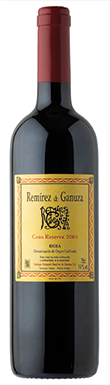
Still a little closed, but gradually offering blackcurrant, star anise, pine needles, balsamic notes and gentle earthiness. Medium- to full-bodied, with immediate vibrancy on the...
2001
Remírez de GanuzaRioja
Remírez de Ganuza, Rioja, Northern Spain, Spain, 2010
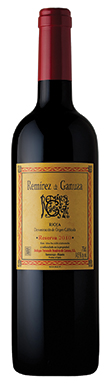
Gorgeous nose of blueberry and blackberry compote, lifted violets and a touch of chimney soot. Highly structured and concentrated with great vigour and energy. There’s...
2010
Remírez de GanuzaRioja
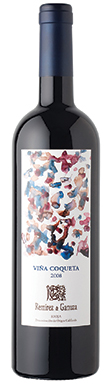
Remírez de Ganuza, Viña Coqueta, Rioja, Northern Spain, Spain, 2008
93
Made from 43-year-old vines from a single vineyard near the winery. Aged for 26 months in new oak barriques. Already at a lovely state of maturity; aromatically complex with baked blackcurrant, some lifted, high-toned balsamic notes and some subtle sous bois. A good sense of richness on the palate, fine-sand tannins and berry acidity; very harmonious. Very drinkable, characterful and well balanced.
2008
Remírez de GanuzaRioja
Remírez de Ganuza, Fincas de Ganuza, Rioja, Northern Spain, Spain, 2012
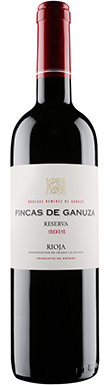
The fruit from younger vineyards or from barrels that don’t make the final blend for the yellow-label Reserva. Blueberry and blackberry underpinned with a gentle...
2012
Remírez de GanuzaRioja
Remírez de Ganuza, Erre Punto Tinto, Rioja, Northern Spain, Spain, 2017
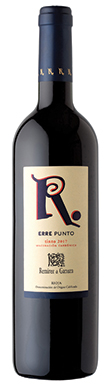
The tips of the bunches go into this juicy entry-level wine made with carbonic maceration. Banana and bubblegum hints from the carbonic work well with...
2017
Remírez de GanuzaRioja
