
Prosecco Superiore: Sparkling pioneers plus the 12 wines to seek out
Seeking to demonstrate their top-tier status, Prosecco’s DOCG producers have continued to innovate. Richard Baudains introduces those steering these premium wines forward.


In 2009, in a radical rewrite of the DOC, Prosecco ceased to be the name of a grape variety and became a wine of geographical origin, taking its name from a tiny village in the province of Trieste on the border with Slovenia.
On the basis of EU law, the move gave the original producers the exclusive right to the name Prosecco, but involved creating a new vineyard area stretching nearly 150km across the plains of the Veneto and Friuli-Venezia Giulia.
Scroll down to see Richard’s tasting notes and scores for his 12 top Prosecco Superiore to try
To distinguish the hillsides from the rest, a DOCG was created for Prosecco di Conegliano Valdobbiadene Superiore, and a simple DOC for the flat lands. The strategic reset thwarted potential international competition, but it created domestic competition – the DOC has five times the production capacity of the DOCG, and significantly lower costs.
The urgent need for the Conegliano Valdobbiadene Superiore DOCG was to differentiate, to make both tradition and terroir count. As then-president of the producers’ consorzio Franco Adami said at the time: ‘We have to get over the idea that not all Prosecco is the same. We have created a Superiore category – now we have to demonstrate we can make superior wines.’ This is the challenge that has stimulated the emergence of pioneering trends and has driven the evolution of the DOCG over the past 10 years.
Prized slopes
The aim of making the terroir count was built into the DOCG of 2009, in the creation of the ‘rive’ category for designated growing areas. There are 43 of these (which some would argue is too many), and they approximate to the French ‘cru’ village.
The initial response from producers was tepid, but cru labelling has gathered momentum to the point that the rive has now been recognised in the national system as Unità Geografiche Aggiuntive. Among the few who believed in single-cru bottling from the outset was Masottina, the producer that can take credit for establishing Ogliano as Conegliano’s most interesting rive. A round palate with subtle fruit, depth of flavour and a distinctive savoury finish are the essential notes of the wines from these gently sloping hills in the eastern corner of the DOCG.
At the Valdobbiadene end of the DOCG to the west, the character changes. Merotto from Farra di Soligo, another top producer that came out immediately with a rive selection, illustrates the more floral, crisp and sprightly style of the wines from the steep terraces of the Col San Martino.
Single-vineyard wines
Other producers took the concept further with single-vineyard selections to counter the common perception of Prosecco as a mass-production wine. Franco Adami’s Vigneto Giardino is one of Prosecco’s historic sites. Steep-sloping, in a natural south-facing amphitheatre, the wine made from its grapes is the benchmark for the category of ‘dry’ Prosecco (17-32g/L of sugar). This seductive, fruit-driven style is slightly out of vogue these days, but the world would be a sadder place without it.
At the other end of the sugar scale, the fruit that is used for Sorelle Bronca’s Particella 68 is sourced from a tiny plot of old vines in the Rive Colbertaldo. The wine was originally a fruity ‘extra dry’ style (12-17g/L), but in 2011 Sorelle Bronca converted it to ‘brut’ (0-12g/L), making it one of the first high-profile Prosecco producers to reduce the sugar content of its top selection.
Villa Sandi, another producer that anticipated the trend for single-vineyard bottling, also broke the mould on sugar levels. Villa Sandi owns a spectacular 1.5ha vineyard on the upper slopes of Cartizze, the sub-zone within the DOCG that, by long tradition, has been the source of the sweetest of the denomination’s dry-category wines.
Nowadays, an increasing number of producers make a brut from Cartizze, but Villa Sandi was probably the first and certainly the most celebrated to do so with its La Rivetta.

Small scale, wide acclaim
On the subject of terroir, one provision of the 2009 norms that initially attracted little attention was the creation of a new DOCG for a strictly limited area around the charming hillside town of Asolo. It might have been viewed as an afterthought at the time, but in recent years, production of the firmer, more structured wines of Asolo Prosecco Superiore has gone from strength to strength. The pioneer of premium winemaking here is the organic, family-owned estate of Bele Casel, whose excellent handcrafted Proseccos continue to set the standard for the denomination.
Conegliano Valdobbiadene is traditionally an area of growers. A family with a few hectares of vines will typically sell its grapes rather than make and bottle its own wine, but there is also a nucleus of top-quality, small- scale grower-producers.
One of the pioneers is the Frozza family, whose origins go back to the turn of the last century and who set an example for many when they began their own production, to wide acclaim, in the 1990s.
Another is Silvano Follador, who represents a new, young generation of wine-growers. Follador inherited a small plot of prime vineyard and, fresh out of high school, made the life-defining decision to become a wine producer. A minimal interventionist in the vineyard and the cellar, he makes just two Prosecco Superiore wines, either extra brut or nature depending on the vintage, one of which – an absolute rarity – is a metodo classico.
Array of styles
Stylistically, Prosecco is far more diversified than it was 10 years ago. The carefree, semi- aromatic, fresh-fruit and floral profile remains a reference point, but it is no longer the default setting. Alongside it, in particular at the top end of producers’ ranges, a more ‘adult’ Prosecco – as Paolo Bisol from Ruggeri calls it – has developed. The style is dry (even austerely so, in brut nature versions) with more lees character and possibly the mature notes of autolysis, which used to be anathema to oenologists in Conegliano Valdobbiadene.
Ruggeri is one of its most influential proponents. The producer launched the bone-dry Vecchie Viti before brut became trendy and released an extra-brut label before the DOCG even contemplated such a thing (though the latest revisions now include it). Pushing the boundaries further, Ruggeri’s latest release is a subtly complex vat-aged wine called Cinqueanni, which ages on the lees for five years.
One of the revolutionary provisions of the 2009 DOCG was for vintage labelling, which prepared the way for longer vat and/or bottle ageing. One of the very first to successfully develop a riserva-style Prosecco was the house of Bortolomiol. It was one of the main architects of the post-war reconstruction of the wine industry in Valdobbiadene, and founder Giuliano Bortolomiol was an early promoter of the brut style in Prosecco. The brut nature Gran Cuvée del Fondatore created in his honour is a late- bottled special selection which defies preconceptions of Prosecco by evolving depth and complexity with age.

What’s old is new
Another element of stylistic diversification is, in fact, a return to the past. The wine traditionally known as ‘col fondo’ (or ‘sur lie’) is bottled in early spring with its own yeasts and allowed to slowly re-ferment, producing a completely dry Prosecco with tangy salty- lemon flavours and a delicate frizzante. Once a rustic product made for local consumption, it has become a fixture in the ranges of a growing number of wineries – some of which are developing a cult following.
Col fondo wines were excluded from the original DOCG, but the style has been rehabilitated in the latest update under the name ‘sui lieviti’. If credit had to go to a single producer for this resurgence, it would have to be Casa Coste Piane, where the charismatic winemaker Loris Follador dedicates virtually his entire production to it.
The other top-quality estate committed almost exclusively to sui lieviti is Cà dei Zago, where brother and sister Christian and Marika Zanatta turned their backs on their conventional oenological training to espouse an artisan winemaking style, and this year underlined their commitment to it with the new 2019 vintage single-vineyard Vigneto Mariarosa.
In the 10 years since the game-changing DOCG of 2009, Prosecco Superiore producers have risen to the challenge of demonstrating that not all Prosecco is the same, and the demonstration lies in the glass. It is not just that the wines from the hills of Conegliano-Valdobbiadene are better than they were a decade ago. Prosecco Superiore today has personality – or, rather, personalities. These are the expressions of terroir, but they also express the talent and commitment of the growers and winemakers in this unique corner of the Veneto.
Setting the sparkling standard: Baudains’ 12 top Prosecco Superiore to try
Read next:
Tasting Prosecco rosé: 14 to try
Understanding Prosecco Conegliano-Valdobbiadene Superiore
Traditional Method Italian sparkling wines: Panel tasting results
Bortolomiol, 70th Anniversary Rive di Santo Stefano, Prosecco, Conegliano-Valdobbiadene Superiore, Veneto, Italy, 2017
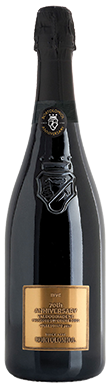

To underline the uniqueness of this limited-edition release, the wine was sourced from a rive which has not appeared in the Bortolomiol range before as...
2017
BortolomiolProsecco

Silvano Follador, Extra Brut, Prosecco, Conegliano-Valdobbiadene Superiore, Veneto, Italy, 2019
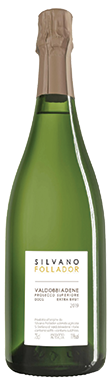
Silvano Follador declines to define himself as a natural winemaker, but he ferments with indigenous yeasts and has long since stopped using any form of...
2019
Silvano FolladorProsecco
Sorelle Bronca, Particella 68, Prosecco, Conegliano-Valdobbiadene Superiore, Veneto, Italy, 2019
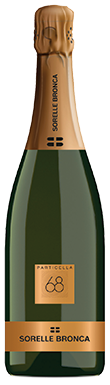
Sorelle Bronca produces two equally remarkable single-vineyard selections: the Particella 232 Extra Brut takes its structure and terse intensity from the clay soils and 300m...
2019
Sorelle BroncaProsecco
Bele Casel, Vecchie Uve, Prosecco, Asolo Superiore, Veneto, Italy, 2017
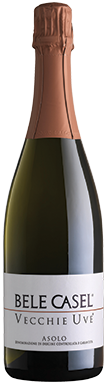
The ‘Vecchie Uve’ are five traditional and frequently neglected grape varieties which organic producer Bele Casel uses for this unique cuvée. Unfiltered and without added...
2017
Bele CaselProsecco
Masottina, RDO Brut, Prosecco, Conegliano-Valdobbiadene Superiore, Veneto, Italy, 2019
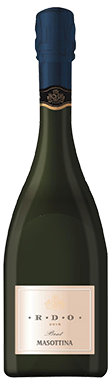
Masottina is the biggest owner in Conegliano’s Rive di Ogliano, from which it produces two selections, an extra dry and a brut. Both have undergone...
2019
MasottinaProsecco
Ruggeri, Vecchie Viti, Prosecco, Conegliano-Valdobbiadene Superiore, Veneto, Italy, 2019

Prior to harvest, the Ruggeri agronomists go through the vineyards on the terraces of Cartizze and Santo Stefano, individually tagging the old vines that provide...
2019
RuggeriProsecco
Villa Sandi, La Rivetta, Prosecco, Valdobbiadene Superiore di Cartizze, Veneto, Italy, 2019
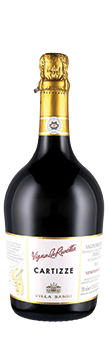
First bottled in 2008, this single-vineyard selection comes from a 1.5ha plot with vines up to 50 years old. In addition to the development of...
2019
Villa SandiProsecco
Adami, Vigneto Giardino Asciutto Rive di Colbertaldo, Prosecco, Conegliano-Valdobbiadene Superiore, Veneto, Italy, 2019
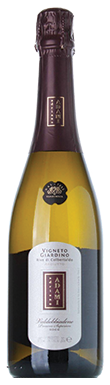
Although not declared on the label, with its 20-21g/L of residual sugar, Adami’s Vigneto Giardino just creeps into the category of dry. The vinification and...
2019
AdamiProsecco
Cà dei Zago, Brut Nature, Prosecco, Conegliano-Valdobbiadene, Veneto, Italy, 2019
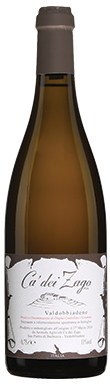
In the last two vintages, Christian and Marika Zanatta have begun to push back the boundaries of the col fondo style by giving their wine...
2019
Cà dei ZagoProsecco
Casa Coste Piane, Frizzante Naturalmente, Prosecco, Conegliano-Valdobbiadene, Veneto, Italy
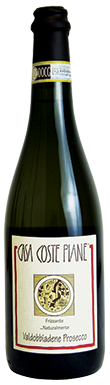
White hedgerow fruits on the nose, with a touch of yeasty pizza dough, introduce a broad and dry palate with a slightly chalky texture and...
Casa Coste PianeProsecco
Frozza, Giovanin Fondo Naturale Frizzante, Veneto, Italy, 2016
Hail damage in 2019 prevented Frozza from bringing out its top-selection Rive di Colbertaldo this year, but it did present a limited-edition reserve from the...
2016
Frozza
Merotto, Cuvée del Fondatore Rive di Col San Martino, Prosecco, Conegliano-Valdobbiadene Superiore, Veneto, Italy, 2019
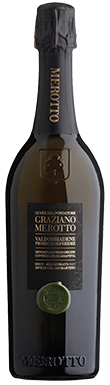
The Cuvée del Fondatore is Merotto’s top selection, from a rive site associated with richly aromatic wines. Graziano Merotto highlights this feature with late harvesting,...
2019
MerottoProsecco
