
Quinta do Vesúvio: Producer profile and eight wines to seek out
Celebrating its bicentenary in 2023, Quinta do Vesúvio has been owned by the Symington Family since 1989 and now produces top red wines as well as Ports. Richard Woodard explores the history of this unique Douro estate.


Even in the spectacular vineyard landscape of Portugal’s Douro Valley, Quinta do Vesúvio stands apart. Partly that’s because of its sheer scale: 326ha of land, 130ha of it under vine, spread over 32 valleys and seven hills. Partly it’s because of the diversity of altitude and aspect that its vineyards enjoy. But mostly it’s because of the quality and longevity of the Ports and table wines that it produces.
Scroll down to see tasting notes and scores for eight wines from Quinta do Vesúvio
Located on the south bank of a sinuous bend in the river high in the Douro Superior, the wine estate celebrated its bicentenary in 2023. But its saga goes back much further than the first time vines took root in its soils.
Johnny Symington, chairman of Symington Family Estates, owner of Vesúvio since 1989, charts its history back to 1565. At that time it was known as Quinta das Figueiras and grew a combination of citrus fruit, almonds, olives and – as the name suggests – figs. Only after António Bernardo Ferreira bought it in 1823 were vines introduced, and a new name found: Quinta do Vezúvio (in old Portuguese spelling).
Pioneer vision
Ferreira was, in Symington’s words, ‘completely and utterly bonkers’, given the remoteness of Vesúvio’s location, 120km – or two weeks on horseback – from Porto. ‘He had incredible foresight,’ says Symington. ‘He started bulldozing without any bulldozers, building terraces and stone walls on a scale never seen before in the Douro.’
Soon there was a winery, a large house, a church, a school and an aqueduct – all constructed using only men and horses. In 1823, 100 people were working at Vesúvio; by 1825, it was 500. Planting the vineyards in the steeply sloping schistous rock took them 13 years.

Ferreira was proud of his work, writing: ‘All the English have poured praise on my lodge and held that they cannot find another adega [winery] to match mine in the Douro.’ But he didn’t enjoy his creation for long, dying in 1835. His son, also called António Bernardo, died a decade later, leaving the quinta to his wife (and first cousin) – Dona Antónia Adelaide Ferreira, one of the most remarkable figures in the history of the Douro.
Dona Antónia put Vesúvio on the map, selling her wines in London and hosting lavish parties and dinners. When phylloxera came, she kept all the workers on to plant citrus and olive trees – even mulberry trees to breed silkworms – and to build a 16km wall around the property. When the railway came in 1887, she talked the railway company into giving Vesúvio its own station.
Eyes on the prize
Even then, the Symington family knew Vesúvio, with Symington’s great-grandfather buying Quinta da Senhora da Ribeira, on the opposite bank, in 1890. ‘They spent 100 years looking across the river, thinking: “Not a bad place…”,’ he says wryly.
Then, in 1989, the Ferreiras put Vesúvio up for sale. ‘My father [Ian Symington] basically said: “There is only one opportunity that we will ever have to buy Vesúvio. It’s now or never.” So we did, and we preserved his view.’
This jewel of the Douro, however, had lost some of its lustre. There were only 60ha of vines, and no wine was being produced (the grapes were sold). ‘It was by no means abandoned, but it was not in good shape, so it was an opportunity for us to restore it to its former glory, and that’s taken us the past 30 years,’ says Symington.
Vines and wines
In that time, the vineyard has more than doubled in size to 133ha, much of it systematically planted with key varieties such as Touriga Nacional, Touriga Franca, Tinta Amarela and Tinta Roriz. Touriga Nacional is mainly confined to the higher altitudes and northwest-facing slopes, sheltering from the intense summer sun. While the much more heat-tolerant Touriga Franca is found on west-facing spots – and is assuming greater influence as temperatures rise.
Beyond its growing conditions, Vesúvio’s trump card is its diversity. Vines are planted at altitudes from 106m to 462m, on a mix of socalcos (dry stone wall terraces), patamares (literally ‘platforms’ or unwalled terraces) and old stone terraces. They are planted in two-vine rows and three-vine rows in a multiplicity of orientations.
The quinta typically bottles only about 7% of its production as table wine and 4% as vintage Port – the latter wholly foot-trodden in Vesúvio’s original granite lagares. So that palette of blending options is crucial.

Balance and biodiversity
It also means that the wines sourced from this remote, inhospitable place – where annual rainfall totals 300mm on average, and less than half that in some years – combine their expected structure, power and concentration with a remarkable perfume and elegance. They have an ethereal character that never leaves them as they age, often for decades.
Drought conditions are tough for vines, but good for minimum-intervention farming. As the estate has been farmed more and more sustainably in recent years, its biodiversity has reaped the rewards. Wild boar, foxes, badgers and wildcats live here; eastern imperial eagles, Bonelli’s eagles and Egyptian vultures nest on the cliffs.
Proof that for all the relative ease of modern transportation, Vesúvio clearly remains not only a wonderful place to grow grapes, but also a wild, remote, spectacular landscape. It’s certainly one that would be familiar to António Bernardo Ferreira and even those who came before him.
Quinta do Vesúvio: Eight wines to try
Related articles
- Decanter’s Dream Destination: Octant Douro, Douro Valley, Portugal
- Douro red wines: panel tasting results
- Portugal’s icon wines: top bottles from the Douro
Quinta do Vesúvio, Douro, Douro Valley, Portugal, 2012
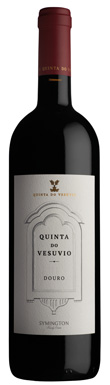

Vesúvio's Douro DOC red wines owe much to high-altitude vineyards in the estate’s Quinta Nova and Vale da Teja blocks – and, in an unusually...
2012
Quinta do VesúvioDouro

Quinta do Vesúvio, Douro, Douro Valley, Portugal, 2015
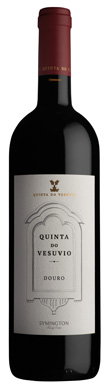
From a rollercoaster year – winter rains, early summer drought, very cool August – in which Touriga Franca really shone (taking more than 40% of...
2015
Quinta do VesúvioDouro
Quinta do Vesúvio, Douro, Douro Valley, Portugal, 2020
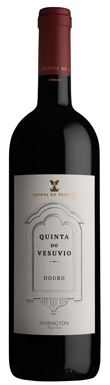
The 2020 vintage was unusual in many ways – the Covid-19 pandemic made every winery a bubble and, for Quinta do Vesúvio’s flagship Douro DOC...
2020
Quinta do VesúvioDouro
Quinta do Vesúvio, Douro, Douro Valley, Portugal, 2009
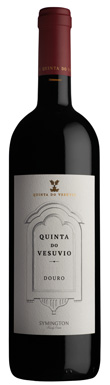
The second vintage of Vesúvio’s DOC red wine was – even by Douro standards – a hot, dry year, with only 7mm rain in the...
2009
Quinta do VesúvioDouro
Quinta do Vesúvio, Pombal do Vesúvio, Douro Superior, Douro Valley, Portugal, 2020
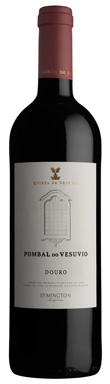
Using fruit sourced from the heart of the Vesúvio estate (around its dovecote, or ‘pombal’) at an altitude of about 450m, this marries concentration with...
2020
Quinta do VesúvioDouro Superior
Quinta do Vesúvio, Comboio do Vesúvio, Douro Superior, Douro Valley, Portugal, 2020
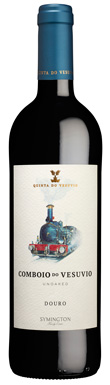
This wine is a tribute to the train (‘comboio’) that has been such a lifeline to Quinta do Vesúvio since the late 19th century –...
2020
Quinta do VesúvioDouro Superior
Quinta do Vesúvio, Vintage, Port, Douro Valley, Portugal, 2019
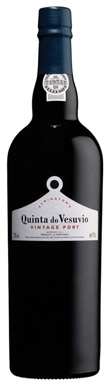
From an unusual year – very dry but cool, rescued by rains in late August and at harvest time, when picking paused – comes a...
2019
Quinta do VesúvioPort
Quinta do Vesúvio, Vintage, Port, Douro Valley, Portugal, 1995
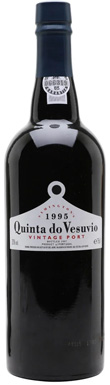
Despite the shadow of the widely declared 1994s, this was a well-received release from a year dominated by a searingly hot August, bringing harvest dates...
1995
Quinta do VesúvioPort
Quinta do Vesúvio, Douro, Douro Valley, Portugal, 2012
Vesúvio's Douro DOC red wines owe much to high-altitude vineyards in the estate’s Quinta Nova and Vale da Teja blocks – and, in an unusually...
2012
Quinta do VesúvioDouro
Quinta do Vesúvio, Douro, Douro Valley, Portugal, 2015
From a rollercoaster year – winter rains, early summer drought, very cool August – in which Touriga Franca really shone (taking more than 40% of...
2015
Quinta do VesúvioDouro
Quinta do Vesúvio, Douro, Douro Valley, Portugal, 2020
The 2020 vintage was unusual in many ways – the Covid-19 pandemic made every winery a bubble and, for Quinta do Vesúvio’s flagship Douro DOC...
2020
Quinta do VesúvioDouro
Quinta do Vesúvio, Douro, Douro Valley, Portugal, 2009
The second vintage of Vesúvio’s DOC red wine was – even by Douro standards – a hot, dry year, with only 7mm rain in the...
2009
Quinta do VesúvioDouro
Quinta do Vesúvio, Pombal do Vesúvio, Douro Superior, Douro Valley, Portugal, 2020
Using fruit sourced from the heart of the Vesúvio estate (around its dovecote, or ‘pombal’) at an altitude of about 450m, this marries concentration with...
2020
Quinta do VesúvioDouro Superior
Quinta do Vesúvio, Comboio do Vesúvio, Douro Superior, Douro Valley, Portugal, 2020
This wine is a tribute to the train (‘comboio’) that has been such a lifeline to Quinta do Vesúvio since the late 19th century –...
2020
Quinta do VesúvioDouro Superior
Quinta do Vesúvio, Vintage, Port, Douro Valley, Portugal, 2019
From an unusual year – very dry but cool, rescued by rains in late August and at harvest time, when picking paused – comes a...
2019
Quinta do VesúvioPort
Quinta do Vesúvio, Vintage, Port, Douro Valley, Portugal, 1995
Despite the shadow of the widely declared 1994s, this was a well-received release from a year dominated by a searingly hot August, bringing harvest dates...
1995
Quinta do VesúvioPort
