
Regional Profile: Abruzzo plus top wines worth seeking out
Susan Hulme MW reveals how Abruzzo’s forward-thinking producers are harnessing their native varieties to create character in the bottle...


Hard to pinpoint on a map it may be, but this central Italian region has long been a default choice for restaurant-goers thanks to its soft, easy-drinking reds, with its light whites a popular choice too.
The Abruzzo landscape is breathtaking, with its dramatic, snow-capped mountains on the western horizon dropping down to the sun-drenched beaches and shimmering sea of the Adriatic coast.
Scroll down for Susan Hulme MW’s pick of the best Abruzzo wines
The mountains and the sea are never far away, providing constant breezes to moderate the summer heat and cool the vines at night.
The drying winds help to prevent the diseases that thrive in dampness, thus making organic viticulture practical.
This varied landscape allows for different elevations, aspects and microclimates – it really seems meant for viticulture.
Yet, on re-reading Luigi Veronelli’s The Wines of Italy, published in 1960, there is hardly a mention of the Abruzzo.
It gets no introduction and is skipped over in about 200 words, mentioning just two grape varieties, Trebbiano and Montepulciano, along with a few of the key towns and suggested pairings with local dishes.
In those days, many of the average wines were easily forgettable. As Cristiana Tiberio of Cantina Tiberio says: ‘Trebbiano d’Abruzzo often oxidised after a few months in bottle, and Montepulciano d’Abruzzo was tannic and fruitless, when not downright flawed.’

One thing most wines from the Abruzzo lacked was a clear identity – a sense of place and personality.
In an attempt to redress this, the Montepulciano d’Abruzzo DOC was established in 1968, formalising regulations designed to ensure quality:
- maximum vineyard elevation within specific sites;
- maximum yield and minimum alcohol;
- minimum percentage of Montepulciano – 85% in some areas, rising to 100% in others.
Four years later, in 1972, Trebbiano d’Abruzzo DOC was established.
In 2003, in another big step towards quality, the Colline Teramane subzone was granted a DOCG, further defining and delimiting some of the best quality vineyards in the north of the region.
The latest area to achieve DOCG status, in 2019, was Terre Tollesi (also known as Tullum). Production is low but the wines are considered distinctive enough to stand on their own, while still flying the flag for Montepulciano.
Abruzzo at a glance
Total area under vine: 36,000ha
Total production: 3.8m hl
Producers: More than 200, from 40 cooperatives
Main grapes: Montepulciano, Trebbiano, Pecorino, Passerina, Cococciola, Montonico
The grapes
One of the Abruzzo’s natural strengths is its native grape varieties.
Montepulciano, which comprises 70% of the Abruzzo’s output, produces friendly, fruity and accessible red wines. The deeply coloured, dark-berry, fruity wines, not overly tannic, are easy to enjoy.
Producers have responded to market tastes and moved away from heavily oaked styles. There has been an increase in the use of stainless steel and a return to the use of cement vats; coupled with a reduction in both the use of small oak barrels and in the time spent in oak. The result is a fresher, more approachable style of red that is in keeping with modern taste.
Abruzzo has characterful indigenous white grape varieties such as Pecorino, Cococciola and Passerina, as well as Trebbiano Abruzzese.

Pecorino especially, with its apple and citrus notes and its high acidity giving a juicy brightness, has increased dramatically in popularity and plantings. The grape gets its name from the Italian for sheep, pecora, the story being that sheep ate the grapes as they moved up and down the hillsides grazing.
Typically part of Trebbiano blends, Cococciola has also started to feature as a varietal wine. It often produces lightly floral, softly textured, herbal wines that are gentle and approachable.
Passerina is steely and minerally in style with a salty, savoury finish. Better examples can be quite Chablis-like.
Traditionally, Trebbiano d’Abruzzo wine can be made from Trebbiano Abruzzese and/or Trebbiano Toscano grapes. Although the result can be quite dull if made from the latter, a handful of stunning wines are made from the intriguing Trebbiano Abruzzese.
In fact, Trebbiano Abruzzese is capable of producing some of Italy’s most exciting white wines. It does not accumulate sugars easily, instead considerately keeping alcohol levels fairly low at about 12%-13%. It is delicate and bright in its aromas and flavours of flowers and citrus, yet for all its fragility it is intense, persistent and incredibly long lived.
In July 2019, I tasted the wonderful Valentini Trebbiano 1978. It was a revelation, showing how good Trebbiano Abruzzese can be in the right hands. It shone bright, almost Riesling-like, not in its aromas – though pretty, floral, honey notes are true to both varieties – but in its rapier-like qualities of acidity and intensity, combined with delicacy, finesse and its incredible ability to age.
Making a mark
In recent years, Abruzzo whites have been making their presence felt on UK shelves, often in the form of supermarket own-brand wines.
Lisa de Leonardis at Elledue, a public relations and export company based in the Abruzzo, comments: ‘In the last 10 years, something has changed… People have started to look for white wines. This fact has determined the success of Passerina and Pecorino both in Italy and in the global market. According to our experience in export, these are becoming the most requested regional labels.’
But, according to Valentino Di Campli, president of Consorzio Vini d’Abruzzo, ‘Abruzzo sparkling wine is the news’, a development that is due to ‘the natural predisposition of the native Abruzzo grapes to the sparkling process, from Trebbiano to Pecorino, from Cococciola to Montonico and Passerina’.
The consorzio also notes an upturn in the sales of Cerasuolo d’Abruzzo, a traditional, serious-style dry rosé which is more deeply coloured than current fashion dictates, but has delightful, sappy, savoury red/green flavours such as rosehip and cranberry.
The wine received its own DOC in 2010, which allowed this distinctive and characterful rosé to stand out from the crowd. It is popular in Italy, where it rivals the traditional pairing of beer with the traditional Sunday night pizza.
Whether red, white or rosé, sparkling or still, recent figures show that, in the five years from 2013 to 2018, exports of Abruzzo wines increased by 50%, placing them in the top three exporting regions in Italy.
Germany remains the top destination market for Abruzzo wines in terms of volume (19%), yet, in the period analysed, the UK recorded the largest percentage growth, with a staggering 259% upturn.
The region’s cooperatives have played a particularly significant role in this success, not just in meeting the increased market demand but also in providing a route to market for their members’ grapes. In fact, 40 cooperatives are responsible for as much as three-quarters of production in the region.
The innovators
In the past, the Abruzzo has been fortunate to have a few pioneering, artisanal wine producers who have shown what can be achieved with Abruzzo wines.
In Italy, Valentini wines have an almost mythical status, and the producer is rightly regarded as one of the country’s best. Its Trebbiano d’Abruzzo commands prices that most white wine producers could only dream of – and the wines have an extraordinary ageing potential.
Valentini’s Cerasuolo and Montepulciano d’Abruzzo are equally complex, ageworthy wines with their own identity. Two other producers are important in the history of Abruzzo wines.
Emidio Pepe founded his eponymous winery in 1964, and was very much ahead of the curve in making ‘natural’ wines, a long time before they became super-trendy. He also believed strongly in the ageing potential of the two traditional varieties grown in the region, Montepulciano and Trebbiano.
Pepe’s naturally made, foottrodden and handcrafted wines have achieved cult status among the cognoscenti.
Gianni Masciarelli is another of the region’s pioneering producers. His ideas about using the Guyot training system instead of traditional pergolas played their part in putting Abruzzo wines on the map.
These producers make world-class wines with the local varieties from which so much ordinary wine was once – and in some cases, still is – made.
In the past, they were swimming against the tide, but they were proving it could be done.
Now, every year there are more producers who desire to excel and to express the uniqueness of their grape varieties and terroir. The swell is growing.
Abruzzo DOCs
Montepulciano d’Abruzzo DOC: 9,325ha; 834,470hl (2018)
Trebbiano d’Abruzzo DOC: 2,121ha; 107,500hl (2018)
Cerasuolo d’Abruzzo DOC: 851ha; 62,290hl
Abruzzo DOC: 224ha; 13,430hl
Colline Teramane Montepulciano d’Abruzzo DOCG: 134ha; 3,320hl
Controguerra DOC: 36ha; 2,360hl
Terre Tollesi (Tullum) DOCG: 19ha; 687hl
Villamagna DOC: 16ha; 190hl
Ortona DOC: 8ha; yield not reported
Generational shift
Cristiana Tiberio owes her involvement in wine to her father’s discovery of a special vineyard of Trebbiano Abruzzese in 1999.
Since 2004, she and her father have been producing some excellent examples of Abruzzo wine. Highlighting the dramatic upturn in quality, Cristiana has noticed how importers are now happy to take more than one Abruzzo wine – proof that the personalities of the wines are becoming more differentiated, whether through style, mesoclimate or terroir.
‘Today,’ she says, ‘thanks to a new generation of winemakers taking over at the helm of their family estate – individuals who have trained in viticulture and oenology, and have travelled the world learning from the best – there is a good number of high-quality wines being made in the region.
That wasn’t really the case 30 to 40 years ago, when there was essentially only one estate making worldclass wine – Valentini.’
Indeed, in the last 20 years, there has been a natural evolution as the next generation of winemakers continue the work of their parents and grandparents, for example Francesco Valentini at Valentini and Sofia Pepe at Emidio Pepe.
There is also an increase in the number of independent producers, many of them from the Abruzzo itself. They have either inherited old family properties or land that they want to renovate, or they have decided to liberate themselves from the role of grape-grower and produce their own wines instead.
Perhaps most importantly, in their travels outside the region and outside Italy, they have tasted great wine.
With this experience in mind, they have reassessed vineyard locations, and many of the quality-minded producers are now looking for cooler, higherelevation sites.
There is also a much greater respect for the environment and an awareness of the need to protect it, so organic and environmentally sustainable concerns inform what is done in the vineyard.
For wine is, more than anything else, about the people who make it. Their passion, their dedication and their commitment to what they do is transmitted through their wines to us, the wine drinkers.
I suspect that if Luigi Veronelli, that much-loved Italian wine critic, were still alive today, he would have a lot more than 200 words to say about the Abruzzo.
See Susan Hulme MW’s pick of the best Abruzzo wines
You may also like
Expert’s choice: Alto AdigeHow terroir makes a difference in BarbarescoPuglia travel guide for wine loversStars of Southern Italy – and the wines to try
Valentini, Trebbiano d’Abruzzo, Trebbiano d’Abruzzo, Abruzzo, Italy, 2015
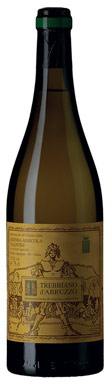

2015 was cool and rainy in spring, warm and dry in July and August; the harvest was then postponed. The wine has its typical reductive...
2015
ValentiniTrebbiano d’Abruzzo

Tiberio, Pecorino, Abruzzo, Italy, 2017
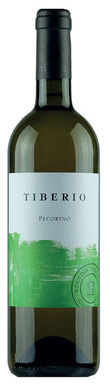
Pecorino has become super-trendy in Italy – maybe it is that combination of juicy fresh lemons and greengage, with the savoury, dry finish. This is...
2017
Tiberio
Marchesi de Cordano, Brilla Cococciola, Colline Pescaresi, Abruzzo, Italy, 2018
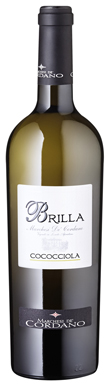
Really pretty example of Cococciola with delicate orange flower and dried camomile notes. Lively and juicy on the palate with a white grapefruit twist and...
2018
Marchesi de CordanoColline Pescaresi
Cantina Citra, Pecorino, Terre di Chieti, Abruzzo, Italy, 2018
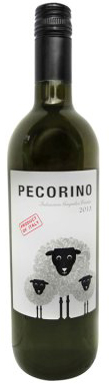
Lemon peel, light floral and sea salt notes on the nose are followed by a soft, round textured palate offset by zesty, lively citrus...
2018
Cantina CitraTerre di Chieti
Contesa, Pecorino, Abruzzo, Italy, 2018
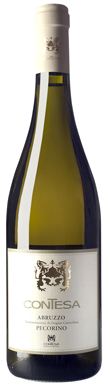
Lively bitter lemon and grapefruit flavours with very juicy, bright acidity and a salty, savoury finish. A bit more personality than most large-scale cooperative Pecorinos
2018
Contesa
Luigi Valori, Cerasuolo d'Abruzzo, Abruzzo, Italy, 2018
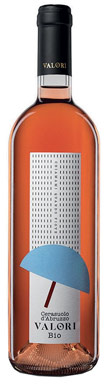
This organic rosé is beautiful in every way. Pretty, salmon-pink colour with delicate wild strawberry and cranberry aromas, bright, refined cherry flavours and a bitter-almond,...
2018
Luigi ValoriCerasuolo d'Abruzzo
Cataldi Madonna, Cerasuolo d'Abruzzo, Abruzzo, Italy, 2018
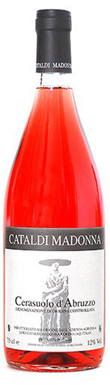
Pretty but serious rosé: deep cherry colour, ripe cherry fruit and cherry-candy aromas then a long, salty-savoury finish with lightly sappy tannins.
2018
Cataldi MadonnaCerasuolo d'Abruzzo
Emidio Pepe, Montepulciano d’Abruzzo, Abruzzo, Italy, 2015
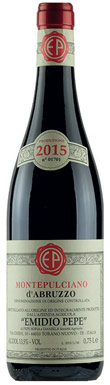
Pepe’s 2015 Montepulciano has flavours and aromas of blackberry, smoke, flint and green herb woven into a wonderful velvet texture, supported by fine-grained tannins and...
2015
Emidio PepeMontepulciano d’Abruzzo
Masciarelli, Villa Gemma Riserva, Montepulciano d’Abruzzo, Abruzzo, Italy, 2014
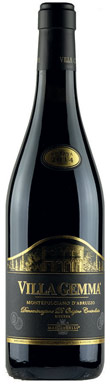
Attractive roast coffee bean and dark toast aromas on the nose. Big, bold and concentrated on the palate, with flashes of vanilla oak but plenty...
2014
MasciarelliMontepulciano d’Abruzzo
Cantina Tollo, Mo Riserva, Montepulciano d’Abruzzo, Abruzzo, Italy, 2014
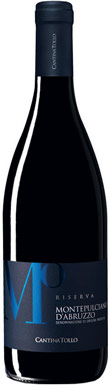
Round and full-bodied with dark-berried, brambly, smoky fruit. A great effort by the Tollo co-op: concentrated but not heavy. Lovely freshness and intriguing spiciness on...
2014
Cantina TolloMontepulciano d’Abruzzo
