
Regional profile: Champagne’s Montagne de Reims
Champagne's most northerly sub region cannot easily be defined, such is the variety in its soil types and exposures, yet the wines it produces have attracted the attention of both larger houses and top quality smaller growers alike. Tom Hewson profiles this unique area and selects 12 top Champagnes to seek out.


The vineyards in the northern part of the Champagne region are often sliced into three distinct areas: the Côte des Blancs for Chardonnay, the Marne Valley for Meunier and the Montagne de Reims for Pinot Noir.
Scroll down to see tasting notes and scores for Tom Hewson’s top picks of Montagne de Reims Champagnes
The first two can be neatly surmised: the Côte des Blancs is a single, chalky cuesta – a hill with a steep face on one side and a gentle slope on the other – that can be driven north to south in 20 minutes. The Marne Valley is a winding valley planted with an overwhelming majority of one grape variety and with hardly a grain of chalk to play with. The Montagne de Reims, though, is different.
‘With its sheer size and numerous variations in terroir, it’s difficult to talk about the viticultural areas of the Montagne de Reims as a unified entity’, writes Peter Liem in his 2017 book Champagne.

The Montagne de Reims can be divided into roughly four sub-zones: the north face of the Grande Montagne; the eastern edge of the Grande Montagne (the Perle Blanche); the southern slopes of the Grande Montagne and the west; and the Petite Montagne and the northwest.
This area of Champagne has it all: cool north-facing slopes, known as far back as the 10th century for their still reds (historically referred to as Vins de la Montagne); sun-soaked southerlies (whose wines were known as Vins de la Rivière); sweeping chalky slopes and folds of clay and sand; irreplaceable Pinot Noir and sought-after Chardonnay.
If you had to pick one of Champagne’s subregions to survive on, the Montagne would promise the most varied diet.
Montagne de Reims: The facts
The Grande Montagne is home to all but one of Champagne’s grand cru villages for Pinot Noir, which constitutes 56% of its plantings. These are split between the north and south faces
Chardonnay makes up 30% of plantings, mainly in the Perle Blanche area facing east
Meunier, which makes up 14% of plantings in Champagne overall, is mainly focused in the Petite Montagne, Vesle and Ardre, where it makes up between 50%-60% of plantings
The Grande Montagne is on Cretaceous chalk, with topsoils of varying depth, whereas the Petite Montagne and the northwest area are on younger soils of sand, clay and limestone
8,000 hectares of vines are planted in the Montagne de Reims in total
Source: Union des Maisons de Champagne
Cool-School: The north face
To this day there exists some uncertainty as to why the north-facing villages of the Montagne de Reims have been able to make such fine wine not just recently, but over centuries. North-facing slopes intercept less sunlight than those that face south, which slows down the ripening of the grapes. Quentin Paillard, who makes wine at Pierre Paillard from both the north-facing slopes of Verzenay and the south-facing vineyards of Bouzy, illustrates this: ‘In 2018 the difference was huge. We started harvesting eight days later in Verzenay for the same level of ripeness. Budburst is not much later, it’s really just a longer time on the vine.’
What does this slower ripening mean for the wines? ‘Don’t play with these grapes unless you have time,’ says Remi Vervier of Champagne Palmer & Co, a fine cooperative of growers based on the northern slopes of the Montagne de Reims. For Vervier the main difference is that the Pinots here need age to shine. ‘The south is not the same: the Pinot Noir is more fruity in Bouzy and Ambonnay,’ he says, ‘in the north, if you rush you will never achieve much.’
The grapes of the grands crus around the northern edge of the Montagne are an essential Pinot Noir backbone of many of Champagne’s vintage and prestige-level wines. Among the larger producers, Louis Roederer’s vintage cuvée is almost entirely from the northern Montagne de Reims, as are the wines of Palmer & Co above the entry level (which is often blended with Chardonnay from the east of the Montagne de Reims). Wines from the village of Mailly are almost entirely swallowed up into the village’s high quality co-op, Mailly Grand Cru.
West of Mailly there’s still plenty of fine Pinot Noir, as well as Meunier and a little Chardonnay, in the premiers crus of Ludes, Chigny-les-Roses, Rilly-la-Montagne and Villers-Allerand, as well as the lower-sited grands crus of Beaumont-sur-Vesle, Puisieulx and Sillery, whose reputation is more modest (Tom Stevenson points out in his 1986 book Champagne that the region has a few grands crus that achieved their ‘misplaced status’ thanks to their wines being commonly blended with Verzenay). Growers in these grands crus would surely have grounds to protest, but there are few estate-bottled wines here.

Top terroir-specific producers:
- Bérêche & Fils
- François Secondé
- Hugues Godmé
- J Lassalle
- Louis Roederer (vintage)
- Mailly Grand Cru
- Mouzon-Leroux & Fils
- Palmer & Co
- Vilmart & Cie
The Perle Blanche: Villers-Marmery and Trépail
The slopes turn eastwards around the Grand Montagne, from Verzenay round to Villers-Marmery, toward the morning sun. In the minds of the Champenois, the slopes facing east means one thing: Chardonnay.
Chardonnay is the earliest-budding grape variety in Champagne, which leaves it vulnerable to spring frost. Facing east not only avoids the worst of the afternoon heat spikes, but also means that the vineyards warm up fastest with the rising sun, reducing the risk of early morning cold snaps nipping the emerging buds.
Is this a similar terroir to the chalky, east-facing slopes of the Côte des Blancs, then? Arnaud Margaine of A Margaine in Villers-Marmery doesn’t think so: ‘we have soils which are much deeper here’, he says, pointing out that chalk bedrock is more prominent in the Côte des Blancs. ‘I’d say our Chardonnay is rounder, whereas the Côte des Blancs is more mineral.’
Chardonnay from the Perle Blanche forms an important part of prestige cuvées such as Rare and Dom Ruinart, and finds its way in smaller quantities into a great deal of non-vintage Blanc de Blancs.

Top terroir-specific producers
- Palmer & Co
- A Margaine
- Sadi Malot
- Henriet-Bazin
- David Leclapart
The sunbathers: Ambonnay, Bouzy and the west
Turning the corner round the Grande Montagne’s southeastern edge, past Trépail, sees the slopes slanting towards the south. Here, two of Champagne’s great powerhouses of Pinot Noir bask in the sun: the grands crus of Ambonnay and Bouzy.
‘Bouzy tends to be around one degree warmer than our other sites,’ says Paillard, pointing out that red fruit aromas tend to come from the southern villages while the northern villages show more citrus.
Nicolas Maillart makes small amounts of wine from Bouzy, which offer a contrast to his Pinot Noirs from Éceuil in the Petite Montagne: ‘Pinot Noirs from Bouzy mature with power, and the chalky soils contribute to a long finish. Éceuil is more accessible young, but Bouzy is better for ageing’ he says.
It is here that many of Champagne’s still reds are made, either as wines to be bottled and sold as Coteaux Champenois (the appellation for Champagne’s still wine production), or as red wines designed to be blended into Champagne rosés.
Ambonnay has a long-standing reputation for being ‘more delicate’, according to Patrick Forbes in his 1967 book Champagne – the Wine, The Land, The People, a fact which Peter Liem attributes to the more easterly aspect enjoyed by at least part of the village.
Down by the river in Tours-sur-Marne and folded up into the cooler hills in Tauxières and Louvois, Pinot Noir continues its dominance in villages less often seen bottled in isolation – although this is starting to change.

Top terroir-specific producers
- Brice
- Egly-Ouriet
- Eric Rodez
- Marguet
- Paul Bara
- Paul Déthune
- Pierre Paillard
The Petite Montagne and the northwest
West of Reims, the vineyard slopes sit on younger soils of sand, marl and clay, the chalk buried too deep for vines to reach. ‘Villers-Allerand is the turning point,’ says Maillart, ‘there the topsoil is one metre deep. Whereas in Éceuil it is 10.’
The Petite Montagne, so-called because of its more modest elevation rather than because of the quality of the wines, extends northwards from the northwestern corner of the Grande Montagne. Despite the historical premier cru status of many of the villages here, it has always flown somewhat under the radar: André Simon’s influential 1962 book, The History of Champagne, sidelined the wines as ‘undistinguished’. The truth, though, is that few high-quality independent growers were championing the region until fairly recently. Today, it is a hotbed for them.
While Éceuil is celebrated for Pinot Noir on clay and limestone, much of the Petite Montagne is planted to Meunier on sand. Producers such as Jérôme Prévost and Egly-Ouriet (with the cuvée Les Vignes de Vrigny) highlight just how fine, fragrant and surprisingly persistent Meunier can be on these sandy, largely eastfacing slopes. Today, the number of producers taking up the mantle in this area is ever growing.
Heading west and north to the valleys of the Vesle and Ardre, the vine-covered slopes give way to a more undulating landscape where the sands and clays are widely planted to Meunier (although a handful of producers, such as Yann Alexandre, find good homes for Pinot Noir and Chardonnay too). It’s a little cooler and more humid here, but in the age of climate change later ripening is not necessarily a disadvantage.
At Champagne’s northern frontier, near the Massif de St Thierry, a handful of producers such as Chartogne-Taillet in Merfy and Minère F&R in Hermonville are challenging the region’s long-held reputation as autre cru – or below the premier and grand cru rating system.

Top terroir-specific producers
- Chartogne-Taillet
- Egly-Ouriet
- La Closerie
- Lacourte-Godbillon
- Louis Brochet
- Minière F&R
- Nicolas Maillart
- Roger Coulon
- Yann Alexandre

Vintages in the Montagne de Reims
With such a varying landscape, vintages here are rarely uniform: the cooler northern slopes may prevail in hot vintages, and vice versa in cool, difficult vintages. Pinot Noir is slightly sturdier than Pinot Meunier, but both show the effects of difficult vintages more clearly than Chardonnay (meaning that the Perle Blanche sees slightly less vintage variation). Accordingly, it’s best to proceed with caution for 2011 and 2017, when all but the very top echelon of growers were touched.
Champagne’s perennial headaches – botrytis and downy mildew – strike unpredictably on the Montagne. 2021’s humidity was more challenging in sectors with damper, deeper soils and northerly exposures, such as Ludes, than it was in the southern exposures where chalk was near the surface and vines dried off quickly. The same dynamic meant that much of south-facing Bouzy and Ambonnay escaped the worst of the botrytis pressures in 2017.
Otherwise, 2012’s ripeness and bright concentration, 2013’s energy and longevity and 2019’s full-bodied yet refined ripeness are widely considered top vintages, with good but more mixed pictures in 2014, 2015 and 2016.
Whatever the weather, though, there are good wines somewhere on the Montagne; 10 centuries of vine growing goes some way to prove it.
Montagne de Reims: Key names to know
- A Margaine
- Chartogne-Taillet
- Egly-Ouriet
- Eric Rodez
- Hugues Godmé
- Marguet
- Nicolas Maillart
- Palmer & Co
- Pierre Paillard
- Yann Alexandre
Tom Hewson’s picks of the best Champagnes from the Montagne de Reims
Related articles
- Regional profile: Champagne’s Côte des Bar
- A guide to non-vintage Champagne
- Champagne 2013: 10 years on
Nicolas Maillart, Mont Martin Premier Cru Brut Nature, Champagne, France, 2019

Shows a controlled weight of brown pastry, grilled peach and roasted apple, pulled tight with a firmer structure and length than many Pinot Meuniers (Maillart...
2019
Nicolas Maillart

Vilmart & Cie, Grand Cellier d'Or Premier Cru Brut, Champagne, France, 2016
Pristine, showing a beautifully supple, creamy mid-palate through succulent peach and pear fruit, with additional complexity from browned pastry and sea salt. A streak of...
2016
Vilmart & Cie
A. Margaine, Le Caractère M de Margaine Premier Cru Brut, Champagne, France
Gently creamy, satin-textured and complex, with grilled apricot, quince and pear flavours propped up by ratafia biscuit and white butter richness. Despite the age, it...
A. Margaine
Egly-Ouriet, Les Prémices Brut, Champagne, France
The most accessible and open-knit of Egly-Ouriet's cuvées, Les Prémices carries an appetising brown bread, honey and spice complexity behind the fragrant, rounded orchard fruit...
Egly-Ouriet
Hugues Godmé, Montagne Nord Brut Nature, Champagne, France
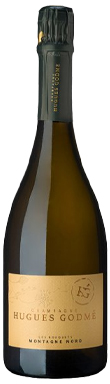
Godmé's wines are some of the finest independent examples of the northern Montagne. Hugely persistent, taut fruit here, with poached apricots, yellow apple and honey,...
Hugues Godmé
Palmer & Co, Blanc de Blancs Brut, Champagne, France
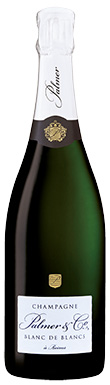
92
2017 was not an easy vintage for black grapes on the Montagne, but the Chardonnay from the Perle Blanche is in fine form in this consistent cuvée. It's ripe with sweet tones of yellow apple, white peach and nut oil riding on a clean, zippy palate, which is lightly smoky with reductive notes but approchably juicy and showing a lick of pineapple. A fine example of Montagne Chardonnay.
Palmer & Co
Paul Bara, Grand Cru Extra Brut, Champagne, France
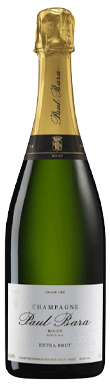
Meaty, ripe Bouzy fruit with surprising sheen and drive. Classic apple and dried fruit intensity, some candied fruit maturity and a focused finish; all the...
Paul Bara
Eric Rodez, Blanc de Noirs Grand Cru Extra Brut, Champagne, France
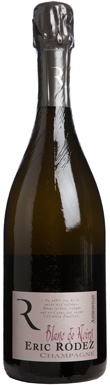
91
An attractive quite evolved nose of truffle, figs and a hint of white chocolate, while the palate is super-exuberant with its savoury Pinot charm wreathed in finely-poised acidity; confident stuff!
Eric Rodez
Roger Coulon, L'Hommée Premier Cru Extra Brut, Champagne, France
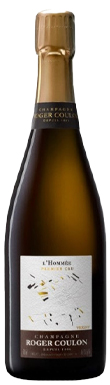
Golden-fruited and open-stanced, with dried apple, apricot tart and dark spices; this is voluminous on the palate and slightly savoury in style. An intriguing, pithy...
Roger Coulon
Mailly, Grand Cru Brut Réserve, Champagne, France
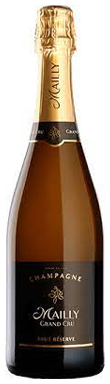
Pleasant stone and strawberry characters; rounded, a little bitter red grapefruit and salted crackers. 75% Pinot Noir and 25% Chardonnay from the grand cru village...
Mailly
Bérêche & Fils, Campania Remensis Rosé Extra Brut, Champagne, France, 2018
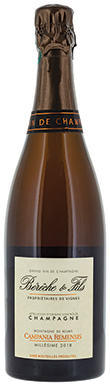
This unusual rosé shows all the charm and fragrance of the Petite Montagne: roasted plum, clementine and a gentle tobacco smokiness, presented with plenty of...
2018
Bérêche & Fils
Pierre Paillard, Les Terres Roses Grand Cru Rosé Extra Brut, Champagne, France
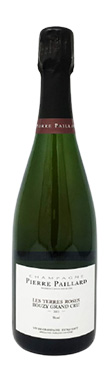
Bouzy's reputation for beautiful red fruit is even clearer in rosé, although this is heavily tempered by Chardonnay. Red grapefruit and pomegranate fruit are lifted...
Pierre Paillard
