
Regional profile: Rheinhessen
Anne Krebiehl MW meets a group of energetic young winemakers committed to breaking free of the region’s volume-based past, while revealing great terroirs beyond its already-famed Roter Hang…


Jochen Dreissigacker’s story exemplifies Rheinhessen’s wine revolution. His modern, new winery finished in May 2018 is visible from afar. Built into the vineyard to exacting standards, it cost millions. It is site potential and confidence made manifest.
Scroll down to see Anne Krebiehl MW’s top-notch dozen from the Rheinhessen
Dreissigacker, still under 40, remembers a time when punters recoiled from Rheinhessen at wine tastings, so tainted was the region with its image of cheap, indifferent, high-volume wines. The only wine worth tasting would be from the Roter Hang, or Red Slope – a dramatic escarpment along the Rhinefront.
But Rheinhessen’s hinterland? ‘Nein, danke.’ To a degree this was justified – and climate change was a decisive factor. An official guide book, Die Rheinweine Hessens, published in 1927, shows that while viticulture was widespread and central to the economy, there were only two spots where Riesling ripened reliably: on the famous Red Slope and in the Scharlachberg, a south-facing quartzite slope in Bingen. The rest of Rheinhessen was often too cool to ripen Riesling fully each year.
No wonder earlier-ripening varieties and crossings abounded in post-war years. Here was the vast pool of plentiful, cheap Müller- Thurgau, Silvaner and Kerner that slaked the thirst of newly converted wine drinkers in the UK, US, Scandinavia and Canada who had just been acquainted with the guise of continental sophistication that was Liebfraumilch.

That Rheinhessen has fascinating soils was not so evident then: the way grapes were grown did not offer that – and, admittedly, soil was substrate rather than provenance. Almost all of Rheinhessen used to be an inland sea within the Mainz Basin. Its Tertiary sediments created today’s limestone soils, covered in places with loam, sand, silt or gravel. All this lies atop much older formations which only come to the surface in certain spots.
The Roter Hang, for instance, where a 5km stretch of Rotliegendes, a reddish sandstone, slopes majestically down to the Rhine between Nierstein and Nackenheim. Its vineyards, namely Rothenberg, Pettenhal, Hipping and Oelberg, face east-southeast, catch the morning sun and benefit from the thermic stability of the Rhine. That red stone gives the Rieslings an unusual, herbal savouriness. The other spot is on the Devonian quartzite of the Scharlachberg in Bingen and former islands of volcanic porphyry in the west. But most of Rheinhessen’s vineyards are gentle slopes, which lent themselves to mechanised, large-scale viticulture. The image stuck, the world markets and consumer preferences changed, and by the 1990s Rheinhessen ailed.
Sudden ascent
Today, things could not be more different. The opening shot was fired less than 20 years ago when ‘Message in a Bottle’ was founded in 2002, an initiative of young, ambitious winemakers who focused on single-vineyard sites, quality and provenance. This was an illustrious gathering including all of today’s stars: Klaus Peter Keller, Philipp Wittmann, Hans-Oliver Spanier and more. But they were more than a group of youngsters with new ideas; their drive and energy were about survival, as Dreissigacker explains: ‘Many estates had their back to the wall.’
Rheinhessen at a glance
Area under vine* 26,617ha
Grapes* 70.9% white, 29.1% red; Riesling 4,628ha, Müller-Thurgau 4,292ha, Dornfelder 3,365ha, Silvaner 2,228ha, Grauburgunder 1,721ha, Spätburgunder 1,467ha, Weissburgunder 1,302ha, Portugieser 1,159ha, Kerner 802ha
Production** 2.9m hl (2018)
Producers 2,394 bottling their own wine Of 136 communes in Rheinhessen, 133 produce wine** Officially there are three Bereiche (viticultural districts) – Bingen, Nierstein and Wonnegau – and 414 Einzellagen (designated singlevineyard sites) The VDP has classified 38 Grosse Lagen (410ha in total) and 25 Erste Lagen (1,527ha)
Sources: *Deutsches Weininstitut Bodenheim 2019; **www.rheinhessen.de
Their business model of producing as much bulk wine as possible no longer added up. But these youngsters were well educated and well travelled, so they recognised the potential that lay at their feet. They were also fed up with being labelled world-class tractor drivers with poor winemaking skills. ‘All of a sudden really good wines were made,’ Dreissigacker says, as yields were lowered, grapes handharvested, and wines made with dedication. What’s more, the public loved them.
Today the sites have been recognised. The Grosse Gewächse, or grands crus, of Morstein and Kirchspiel, Heerkretz and Hubacker sell out and are bynames for quality. The southern limestone-dominated Wonnegau, the northern Selz Valley with its limestone ridges, and the complex volcanic soils in the beautiful heathland of the west have become hotspots not only for Riesling, but also for nuanced Spätburgunder (Pinot Noir).
The traditional Pinot-pocket of Ingelheim is once again suffused with ambitious winemakers, and a newly energised Roter Hang is leading the way in adapting to the increasing challenge of climate change. Rheinhessen is also home to Germany’s most sought-after, most expensive dry Riesling – G-Max by Klaus Peter Keller.
Yet, not all Rheinhessen has followed suit. In this vast region, Germany’s largest with 26,617ha, sandwiched between Pfalz, Nahe have grown up, as has the region. But we are not yet where we want to be,’ says Johannes Geil-Bierschenk of Weingut Oekonomierat Johann Geil, who is chairman of Maxime Herkunft Rheinhessen (‘Maximum Provenance Rheinhessen’). ‘The dynamic of the region is unbroken. The aspiration is still the same,’ he says. The collaborative approach of the group is powerful. Members commit to lower yields, later release and the quality pyramid of Gutswein, Ortswein and Lagenwein (estate, village and single site wines) already practised by the VDP producers’ association.
Committed to quality
All of Rheinhessen’s VDP member estates are also Maxime members, even though they abide by stricter statutes: this was a calculated sign of cooperation and shows how much the VDP’s message of provenance-based publicity has pervaded German thinking. The aim is to enshrine this easy-to-understand and provenance-based pyramid into law.
Maxime Herkunft by now has 90 members, but they only represent 7% of Rheinhessen’s vineyard. Their domestic and international success stands in contrast to the ultra-low margin economics of bulk production. The varietal statistic is telling. Of 26,617ha in 2017, 4,648ha were Riesling, 4,292ha Müller- Thurgau, followed by 3,365ha of Dornfelder as the top varieties. A decade earlier, in 2007, according to Deutsches Weininstitut Mainz, those stats were: 4,320ha Müller-Thurgau, 3,769ha Riesling, 3,444ha Dornfelder.
Philipp Wittmann of Weingut Wittmann says: ‘The greatest story here is the vineyards, and it is astonishing that not everybody has understood this yet.’ The latest generation is upping the ante even more, also with Chardonnay and particularly Sauvignon Blanc.
Thus Geil-Bierschenk’s words make sense: ‘We form the qualitative forefront of the region. We cannot wait for change to happen.
‘We want that provenance can be tasted in our wines, and this can only be achieved via quality. Rheinhessen today is an Eldorado for the young, the wild, the different.’
Rheinhessen: 10 names to know
Roter Hang
Fritz Ekkehard Huff, Nierstein-Schwabsburg
Christine Huff, her Kiwi husband Jeremy Bird-Huff and her father Fritz Ekkehard farm 8.5ha in Nierstein and Schwabsburg with choice parcels in Pettenthal and Orbel. She is one of the young stars at the Roter Hang, making wines that combine effortless lightness and wonderful, aromatic depth.
Gunderloch, Nackenheim
Johannes Hasselbach joined this quality stalwart on the Roter Hang after a time in accounting. His family was famous for its off-dry and nobly sweet wines from the Rothenberg vineyard, but Johannes makes predominantly dry wines which always seem to have an appealing scent of petrichor. His work in channelling the heat in the vineyard is exemplary.
Kühling-Gillot, Bodenheim

Carolin Spanier-Gillot’s parents managed to assemble a great portfolio of sites on the Roter Hang and she went about expressing it. Today, the wines are made by her husband Hans-Oliver Spanier who runs his equally great Battenfeld-Spanier estate on the limestones of the Wonnegau, employing spontaneous ferments, large old barrels and long ageing on gross lees to bring out salty, intense expression.
Wonnegau
Bianka & Daniel Schmitt, Flörsheim-Dalsheim
This young couple have struck out to make unconventional, skin-fermented and amphora-aged wines and do so with utter precision and devotion, and a particular knack for creating expressive blends. With 16ha biodynamically farmed vineyards, they are more famous abroad, and do more trade, than at home.
Keller, Flörsheim-Dalsheim
While Julia & Klaus Peter Keller’s G-Max Riesling is too rare for ordinary mortals to get their hands on, simply everything that the Kellers produce is worth buying – and surprisingly affordable. Their Rieslings are crystalline, their Pinot Noirs dreamy and expressive. If you can get your hands on a Scheurebe Kabinett, buy it for its sheer, exuberant exoticism.
KF Groebe, Westhofen
Fritz Groebe is the quiet man of the Wonnegau. His wines are made in a very time-honoured, slow fashion in an old vaulted cellar beneath Westhofen. Nothing is hurried, nothing is loud, the wines just are. They are serene and pure and made to last. His 8.5ha include parcels in Aulerde, Morstein and Kirchspiel. Great value.
Liebfrauenstift, Worms
Wilhelm Steifensand is a descendant of PJ Valckenberg, who in 1808 bought the vineyards once tended by the Capuchin monks of the Liebfrauenstift. The Valckenberg trading company popularised the original Liebfraumilch in the 19th century and paved the way for the pale imitations that swept the world in the 1960s and ’70s. Steifensand sold his share in 2015 but retained the original vineyards in Worms with the aim of restoring this Riesling to its historic glory. The 11.5ha are farmed organically.
Wittmann, Westhofen

Philipp Wittmann’s parents were already ahead of their time with organic farming, and Philipp introduced biodynamic methods as early as 2004. Since he took over fully in 2007, the estate has climbed to Germany’s top with pristine Rieslings from the best sites in Westhofen. Wittmann also buys in additional fruit for his affordable 100 Hügel label.
North & West
Knewitz, Appenheim

Since brothers Björn and Tobias Knewitz took over their parental estate in 2009 they have earned deserved plaudits for their brilliantly pure, snappy and bright Rieslings. They farm 20ha mainly of calcareous loams and marls on limestone bedrock around Appenheim. Great value.
Wagner-Stempel, Siefersheim
Daniel Wagner has put this ruggedly beautiful area on the map with his steely, pristine, uncompromisingly thrilling Rieslings grown in the volcanic ridges of rhyolite and melaphyr. He describes it as ‘undiscovered and wild, hard to farm but compelling’. Certified organic since 2008. Best vineyards Heerkretz and Höllberg
See Anne Krebiehl MW’s top-notch dozen from the Rheinhessen
You may also like
Top buys from the German VDP wine tasting: 2018 whites & 2017 redsTen exciting dry and off-dry German Riesling winesGermany: Grosses Gewächs new releases – Riesling 2017 and Pinot 2016
Dreissigacker, Riesling Morstein, Grosses Gewächs, Rheinhessen, Germany, 2014
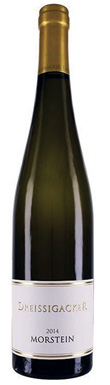

Organic. Smoke, quince and a touch of honey on a nose suffused with dried apricot. Rounded, smooth, very textured and chalky. Generous fruit with a...
2014
DreissigackerGrosses Gewächs

Kühling-Gillot, Riesling Oelberg, Grosses Gewächs, Rheinhessen, Germany, 2017
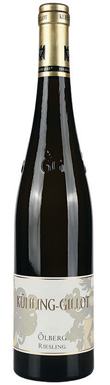
Organic-biodynamic. All the deeply savoury aromatics of the Roter Hang’s iron-rich rhyolite are here, but in a super-charged version. Bloodwort, sun-warmed stone, citrus zest and...
2017
Kühling-GillotGrosses Gewächs
Wittmann, Riesling Aulerde, Grosses Gewächs, Rheinhessen, Germany, 2016
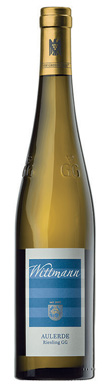
Dried peach, ripe pear and wet earth on a heady nose. Combines the warmth of the Wonnegau with the inherent coolness of limestone. Peach and...
2016
WittmannGrosses Gewächs
Wagner Stempel, Rotliegend Neu-Bamberg Riesling, Rheinhessen, Germany, 2018
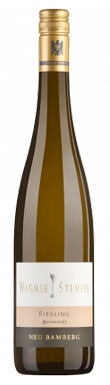
Greengage and grapefruit, yellow fruit appearing with air. Has real tension and is mouthwatering with salty, zesty spice and an inherent freshness. Insistent and exciting.
2018
Wagner Stempel
Bianka & Daniel Schmitt, Orpheus Weissburgunder Landwein Rhein, Rheinhessen, Germany, 2015
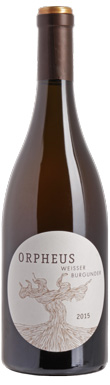
Biodynamic, and matured in amphora for a year. A veil of smoke before notes of Golden Delicious apple. Taut, fresh, bone-dry, with a gentle phenolic...
2015
Bianka & Daniel Schmitt
Ekkehard Huff, Riesling Schwabsburger, Rheinhessen, Germany, 2017
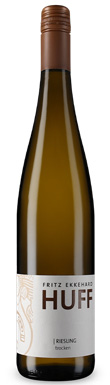
From the cooler site of the Roter Hang but still on the rhyolite soils. Starts with a promising whiff of reduction before yarrow and grapefruit...
2017
Ekkehard Huff
Gunderloch, Jean Baptiste Riesling Kabinett, Rheinhessen, Germany, 2018
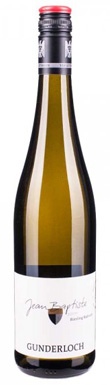
From the Rothenberg, Pettenthal and Hipping vineyards. Chervil, lemon and grapefruit peel on the nose express the Roter Hang spiciness. Citrus zestiness with a juicy...
2018
Gunderloch
Knewitz, Riesling Goldberg, Rheinhessen, Germany, 2016
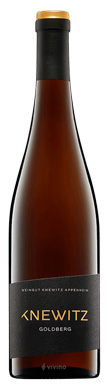
The fact that the Goldberg vineyard is Tobias Knewitz’s warmest is beautifully expressed in the gentle notes of ripe peach on the nose. This inviting,...
2016
Knewitz
Groebe, 1763 Riesling, Rheinhessen, Germany, 2018
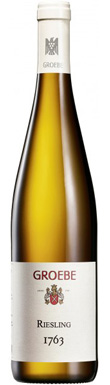
Named for the estate’s founding year, this begins with a cloud of green apple, lemon and zesty grapefruit swirling from the glass. The palate is...
2018
Groebe
Louis Guntrum, Riesling Oppenheimer Sackträger, Rheinhessen, Germany, 2017
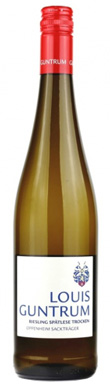
Gentle pear and ripe, inviting aromas of Amalfi lemon. Gentle sweetness boasts these same fruit notions on the juicy, light palate, enlivened with a little...
2017
Louis Guntrum
Thörle, Spätburgunder Saulheimer Hölle, Rheinhessen, Germany, 2017
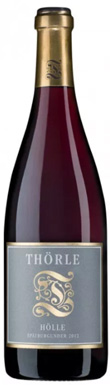
Opens with pure, ripe but wonderfully tart cherry aromas, expressed on the palate as pristine fruit. A vivid spine of freshness with concentrated fruit, enfolded...
2017
Thörle
Bischel, Spätburgunder Johannisberg, Rheinhessen, Germany, 2016
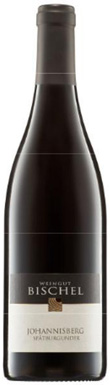
Heady cherry on the nose almost attains an almond and amarena character on the palate. Lots of crunch and bite to that pristine fruit along...
2016
Bischel
