
Ribera del Duero: eight producers to watch
This region is home to at least two of Spain’s classic reds, but it’s far more varied than you’d think. Here are eight innovative producers who are following their own visions of what their soils and vines can achieve.


Given the prestige and the fame of its top wines, most notably Pingus and Vega Sicilia, it’s easy to forget that Ribera del Duero is a young DO, established in 1982. In the ensuing 39 years Ribera has accumulated plaudits and brickbats in equal quantity. For every person who considers it Spain’s top red wine region, there’s another who finds the wines too powerful, too oaky or too pricey.
Ribera is certainly historic – the Romans tended vineyards here – but the DO is best viewed as something inchoate: as a work in progress, if you prefer. It has expanded from 6,460ha in the early 1980s to 24,157ha today and is still growing. And remember: the region may be young, but many of its best vineyards (21.8% of them) are more than 50 years old.
Scroll down to see tasting notes and scores for 12 top wines from eight Ribera del Duero producers
Often viewed as homogenous, Ribera del Duero is extremely diverse in altitudes, soil types and aspects. How could it be otherwise in a region that’s 115km long, 35km wide and varies between 740m close to the river (from which the DO takes its name) and 1,000m up on the moorlands, which have been brought into play by a changing climate.
Ribera del Duero’s 307 bodegas are heterogeneous too, of course. All of them work with Tempranillo (known here as Tinto Fino: the grape covers nearly 96% of plantings, after all), but Albillo Mayor (white), Cabernet Sauvignon, Garnacha and Merlot (among others) play a part, too. And styles vary considerably from village to village, winery to winery.
Ribera has changed a lot in the last decade and will continue to evolve. As it does, these are eight of my favourite bodegas to keep an eye on.
Ribera del Duero producers to know:
La Loba
La Loba is a tribute to Ana Carazo’s grandmother, who features on the labels of her wines and was called ‘the wolf’. There’s something of the lone wolf about Carazo, too, who does everything herself at this remote boutique winery close to Ribera del Duero’s eastern extremity. She’s the kind of person you’d want on your Armageddon team.
Born in Alicante, where her parents owned a wine wholesale company, Carazo ended up running a bodega in Matanza de Soria, the home of some family vineyards, after working in Bierzo, Jumilla, the Loire valley, New Zealand and, gaining experience with a number of different producers, Ribera del Duero. La Loba was created in 2011, with a focus on old vines, terroir expression and low intervention.
Carazo works with 3.5ha in Matanza de Soria as well as the neighbouring villages of Alcubilla del Marqués, Pedraja de San Esteban and Quintanilla de Tres Barrios. Most of these are on clay-based soils between 960m-1,000m, once considered marginal in some Ribera vintages but now a safer bet thanks to climate change. Some of these parcels could be 200 years old. ‘One of my projects is to date them exactly,’ she says.
Two wines are produced here: La Loba and cheaper La Lobita. Both are marked by their freshness and precision as well as restrained use of oak. ‘I use Tempranillo to make my wines, but what I really want you to taste is Soria.’
Vivaltus
Based in a spectacular location between the castles of Peñafiel and Curiel de Duero, Vivaltus is one of Ribera del Duero’s most exciting new projects. Owned by Grupo Yllera, it has rapidly established itself among the region’s best reds, with a first release in 2016. The key to the project’s success was persuading the legendary French winemaker Jean-Claude Berrouet, formerly of Château Petrus, to come on board, according to Marcos Yllera. ‘We wanted to create something unique, so we went to Bordeaux to talk to the person recognised by many as the best winemaker in the world.’
Berrouet had definite ideas about what he wanted to produce, and they weren’t wines with lots of colour, tannin, oak and extraction. Instead, he would pick earlier, minimise the use of new barrels and use up to 5% Cabernet Sauvignon. The 2016 vintage – plentiful and comparatively cool – was a boon in one sense, but Berrouet (consultant) and Montxo Martínez (winemaker) worked the same elegant magic in 2017, which was a much warmer and more concentrated year.
Clay and limestone-based vineyards in Fuentenebro, a comparatively new area in the south of Burgos, are at the core of the grand vin, with support from grapes grown in La Aguilera, Curiel de Duero and the Atauta valley in Soria. Unlike Petrus, Vivaltus is a regional blend – if you can’t find or afford the top wine, there’s always La Fleur Vivaltus, made with the same assemblage of Tempranillo and 3% Cabernet Sauvignon.
Garmón
The García family – father Mariano and sons Alberto and Eduardo – have projects in Castilla y León (Mauro), Toro (San Román) and now Rioja but are most strongly associated with Ribera del Duero, where García padre is referred to as ‘the master’ thanks to the 30 years he spent at Vega Sicilia and his part-ownership of Aalto (founded in 1999). Garmón Continental – a cuvée of the family’s surnames, García and Montaña – is a more recent project, having released its first critically acclaimed wine as recently as 2014.
The bodega may be located in Olivares de Duero, close to the western limit of the DO, but, apart from some vines in nearby Quintanilla de Onésimo, it works almost exclusively with 35ha in cooler Burgos (Anguix, Baños de Valdearados, La Aguilera, Moradillo and Tubilla del Lago). With the exception of lower-lying Quintanilla, these are all located between 800m-1,000m. ‘We don’t have a recipe,’ says Eduardo García. ‘There are so many factors to take into account: plantation density, altitude, orientation, training and pruning methods, soil types, picking dates, yields and vine age. We’re trying to express the personality of each vintage.’
Eduardo has worked at Cos d’Estournel in Bordeaux, Domaine Hubert Lignier in Burgundy and Ridge in California, but he’s most excited about what’s happening in Spain, especially Ribera del Duero right now. ‘The styles of the best bodegas are increasingly self-confident and distinctive,’ he adds. ‘And as the years go by, they are showing their class.’
Ausàs

Xavier Ausàs, or Javier Ausás if you prefer the Spanish spelling of his name, is a Catalan who was brought up in Valladolid and has spent most of his working life in Ribera del Duero. He is arguably best known for the 25 years he spent at Vega Sicilia – he started cleaning harvesting boxes before succeeding Mariano García as technical director – but he has been doing his own thing since 2015, both as a consultant and producer.
The experience he accumulated at the region’s most famous winery helped him with the creation of Ausàs Interpretación, which hit the market with the 2016 vintage and is a pan-regional cuvée. He blends the wine from 10ha (half of which he owns) located in four different villages in the province of Burgos – Gumiel del Mercado, Moradillo de Roa, Nava de Roa and Roa de Duero – ranging between 760m-900m and aged from 35 to 80 years. ‘I’ve known some of these vineyards for 30 years, so I understand what they contribute to a blend,’ Ausàs says, ‘be it tannins, acidity, elegance or structure.’
Partly educated in France and now consulting there, Ausàs is always ‘eager to learn’, by tasting and drinking wines from other countries, he says. A cosmopolitan figure who understands his adopted region like few others, he aims to achieve ‘purity and freshness’ in his wine, making a Tinto Fino that has structure, but is still refined.
Valdaya

Valdaya was founded in 2006, but the quality of this small, high-quality bodega’s wines improved dramatically with the arrival of Marta Ramas and Miguel Fisac in 2013. (Ironically, the young, well-travelled couple couldn’t have picked a more challenging first harvest.) Having studied in Bordeaux under Professor Denis Dubourdieu, they worked in California, South Africa and New Zealand before returning to Spain, giving them a broad international perspective that’s reflected in the styles of wine they like to consume at home. ‘We drink wines from anywhere and everywhere,’ says Ramas, ‘as long as we can afford them.’
Ramas and Fisac only work with grapes from the north bank of the Duero river, specifically the villages of Baños de Valdearados, Gumiel de Mercado and Sotillo de la Ribera. They draw on 14ha in total, located from 850m-920m and aged between 50-90 years old. Each of their three wines comes from a different soil type: limestone for flagship red Mirum, sand for second wine Valdaya and clay for entry-point Valiente.
The philosophy at Valdaya has been pretty much the same since 2013. ‘Each year we learn a little bit more about our parcels,’ adds Fisac, ‘and we’ve introduced one or two new things like fermentation in concrete for Valiente. But as a rule, we try to intervene as little as possible. It’s all about expressing the character of the vintage and of our soils.’
Marta Maté (top)
‘I make village wines,’ says César Maté of his impressive seven-label range from Tubilla del Lago and Gumiel de Mercado in the extreme north of Ribera del Duero. He admits that even 30 years ago the area would have struggled to ripen Tinto Fino in cooler vintages, but now it suits his fresher, lower-alcohol style to perfection. ‘Who says our region’s reds are unbalanced?’ he asks. ‘Some are, but they don’t all taste the same, thank goodness.’
Marta Maté was created in 2008 by Maté and his partner Marta Castrillo – hence the name – and works with 45ha of vineyards, 70% of which the bodega owns and farms organically. All of these are above 900m and vary in age between 17-150 years old.
‘Honesty’ and ‘sincerity’ are the watchwords here and they are reflected in Maté’s desire to express this cooler-climate terroir as well as the differences between vintages.
‘We pick later than they do in Soria,’ he says. ‘We get natural freshness in our wines, more verticality.’ Oak is kept to a minimum, so that ‘you don’t notice it’.
Maté’s love of Burgundy is reflected in the style of wines he makes, especially Viñas del Lago, sourced from 24 parcels co-planted with Tempranillo and other grapes. ‘It’s our homage to Tubilla del Lago,’ he says. Even more refined is Marta Maté itself, a varietal Tempranillo that represents outstanding value alongside its peers.
Valdemonjas

This small, family-owned bodega is located in Ribera del Duero’s so-called ‘golden mile’, up the road from Vega Sicilia, in Quintanilla de Arriba. Most of its vineyards are on a north-facing slope and are vinified according to soil type, row direction and altitude. ‘We get our best results from rows that run from north to south, rather than east to west,’ says owner Alejandro Moyano.
The Moyanos – Alejandro and son Alexis – work alongside consultant Luca D’Attoma and made their first wines in 2012. Their vineyards are split between two sites: the 7.1ha of Pago de Valdemonjas that surround the winery, and a much smaller 0.6ha parcel in La Horra, used to make the bodega’s top wine, Abrí las Alas. From the 2021 vintage onwards, they will have access to a third 1ha plot in Quintana del Pidio.
Possessing an ‘aversion to astringency’ in reds, Alejandro makes wines that are inspired by his love of Pinot Noir, Cabernet Franc and white grapes, as well as Tempranillo of course.
The style varies from wine to wine – Abrí las Alas sees 100% new wood and is a richer, bolder wine – but the focus is generally on elegance and balance. El Patio is a juicy, unwooded style that sees no added sulphur; El Primer Beso is a sappy, concrete-aged delight; while Entre Palabras and Los Tres Dones are deftly oaked, terroir-focused expressions of, respectively, six and three of the Pago de Valdemonjas’ nine terroirs.
Legaris

It might seem perverse to include Legaris, owned by Cava behemoth Raventós Codorníu, in a list of producers to watch in Ribera del Duero, especially as the Catalans have been making wines here for more than 20 years. But there have been significant changes since 2014 and the top wines are improving with every vintage.
The bodega’s roble, crianza and reserva bottlings are sound enough, yet the real excitement starts with its series of terroir-focused reds. Páramos de Legaris was the first of these, produced from parcels above 900m on the moorlands (páramos) of Peñafiel, Pesquera and Moradillo de Roa. The wine was so successful that winemaker Jorge Bombín extended the range from 2015 to include (to date) four village-specific wines: Alcubilla de Avellaneda, La Aguilera, Peñaranda de Duero and Moradillo de Roa.
Vine age varies considerably, but all four wines show the influence of cooler sites. Earlier picking dates are crucial too. ‘People often wait too long,’ says Bombín. They are appreciably different in style, depending on soil type as much as anything, yet all show a lightness of touch that would challenge the prevailing image of Ribera del Duero. ‘If you want muscular wines,’ says Bombín, ‘these won’t work for you.’ Volumes are comparatively small, but they are worth tracking down. ‘They are playthings for us, in a way, but we are learning from them with every vintage. It’s another side of Ribera del Duero.’
Tim Atkin MW’s top wines from eight innovative Ribera del Duero producers
Wines are listed alphabetically in score order
You may also like
Ribera del Duero: Top wines to buy now
Spanish wines you should have in your cellar
Garmón Continental, Garmón, Ribera del Duero, Castilla y Léon, Spain, 2018
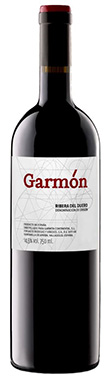

Mocha, toast, raspberry and plush plummy aromas. Full-bodied with dusty tannins, tea leaf, liquorice and a smoky finish.
2018
Garmón ContinentalRibera del Duero

Marta Maté, Ribera del Duero, Castilla y Léon, Spain, 2016
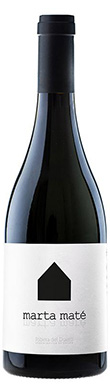
This stunning, mould-breaking red is arguably the closest you can get to the flavours and structure of a top Pinot in Ribera del Duero. Predominantly...
2016
Marta MatéRibera del Duero
Valdaya, Mirum, Ribera del Duero, Castilla y Léon, Spain, 2018
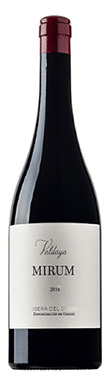
Valdaya's top wine, Mirum, keeps improving with every vintage and is now among the very best wines in Ribera del Duero. Made with Tinto Fino...
2018
ValdayaRibera del Duero
Vivaltus, Ribera del Duero, Castilla y Léon, Spain, 2016
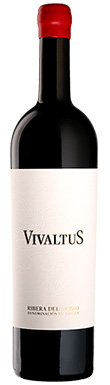
What a debut! Even given the distinguished track record of Bordeaux-based consultant Jean-Claude Berrouet, this is a remarkable wine that is part of a welcome...
2016
VivaltusRibera del Duero
Ausàs Bodegas y Viñedos, Ausàs Interpretación, Ribera del Duero, Castilla y Léon, Spain, 2018
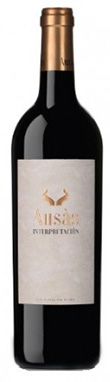
Ribera benefited from regular seasons and a very cold winter in 2018, according to Xavier Ausàs, which is why he's such a fan of the...
2018
Ausàs Bodegas y ViñedosRibera del Duero
Legaris, Alcubilla de Avellaneda, Ribera del Duero, Castilla y Léon, Spain, 2016
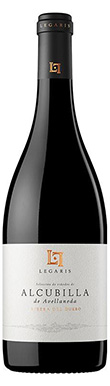
The pick of a brilliant and highly encouraging series of 'village' wines from this Codorníu-owned bodega, Alcubilla de Avellaneda comes from a vineyard at 926m...
2016
LegarisRibera del Duero
Legaris, Moradillo de Roa, Ribera del Duero, Castilla y Léon, Spain, 2016
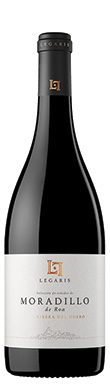
Now into its second vintage, Legaris' collection of 'village' wines has taken the bodega to a new level, confirming the talent of Jorge Bombín. The...
2016
LegarisRibera del Duero
La Loba Wine, Ribera del Duero, Castilla y Léon, Spain, 2017
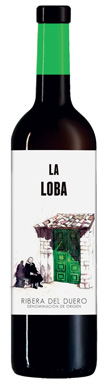
Ana Carazo's bijou operation in Matanza de Soria is well worth tracking down, as her wines are among the best in the sub-region and are...
2017
La Loba WineRibera del Duero
Valdaya, Ribera del Duero, Castilla y Léon, Spain, 2018
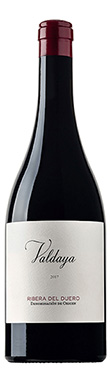
Marta Ramos and Miguel Fisac are two young oenologists who are making some of the best wines in Ribera right now and are fast acquiring...
2018
ValdayaRibera del Duero
Marta Maté, Viñas del Lago, Ribera del Duero, Castilla y Léon, Spain, 2018
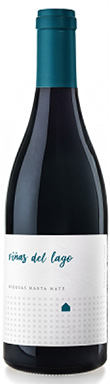
Cesár Maté and Marta Castrillo's wines are among the hidden gems of Ribera del Duero, deliberately picked earlier in cool Tubilla del Lago to produce...
2018
Marta MatéRibera del Duero
Valdemonjas, Abri Las Alas, Ribera del Duero, Castilla y Léon, Spain, 2017
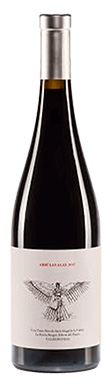
The frosts in 2017 didn't do as much damage in La Horra as they did at Valdemonjas' home vineyard in Quintanilla de Arriba, so yields...
2017
ValdemonjasRibera del Duero
Valdemonjas, El Patio, Ribera del Duero, Castilla y Léon, Spain, 2019
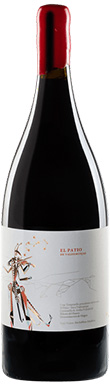
El Patio is only sold in magnums, but that won't be a problem if you have a few friends nearby. Made without sulphur dioxide, it's...
2019
ValdemonjasRibera del Duero
