Get our daily fine wine reviews, latest wine ratings, news and travel guides delivered straight to your inbox.
You are now subscribed
Your newsletter sign-up was successful
An account already exists for this email address, please log in.
Richebourg vs Romanée-St-Vivant: Comparing two of Burgundy’s famous grands crus
Following a visit to Domaine de la Romanée Conti, Decanter’s Burgundy correspondent Charles Curtis MW unpicks the similarities and differences between two of the most famous grands crus in the world, from their soils to their fragmented history.
In the centre of Burgundy’s Côte de Nuits lies a jewel: the village of Vosne-Romanée.
There are a remarkable six grands crus within this village, not to mention Echézeaux and Grands-Echézeaux in the neighbouring village of Flagey-Echézeaux.
Each of the grands crus in Vosne-Romanée proper – Richebourg, Romanée-St-Vivant, Romanée-Conti, La Tâche, La Grande Rue and La Romanée – is famous in its own right.
Four of the six are monopoles – wholly owned by a single proprietor – yet the neighbours Richebourg and Romanée-St-Vivant, split among several owners, make for perhaps the most intriguing comparison.
The two vineyards share common points. The most obvious of these is their proximity – much of Richebourg lies directly up the slope from Romanée-St-Vivant.
The bedrock under the topsoil of both is almost all from the Bajocian stage of the Middle Jurassic.
For the most part, the vineyards also face the same direction.
Decanter newsletter
Get our daily fine wine reviews, latest wine ratings, news and travel guides delivered straight to your inbox.
They share a further common point, which can be just as important: Domaine de la Romanée-Conti is the largest owner of each, with 43.7% of Richebourg and 56% of Romanée-St-Vivant.
The courtyard at the winery of Domaine de la Romanée-Conti looks out over the Romanée-St-Vivant vineyard. From this vantage point, it is difficult to tell where one grand cru ends and the other begins, although there is in fact a small vineyard road that divides them.
Despite the similarities, a tasting with the directors of Domaine de la Romanée-Conti suggested that the differences between the two were perhaps even more important than the superficial likeness.
Opposing orders
Let’s go back to the beginning. From the earliest surviving records we can see that each vineyard was originally tended by different sets of monks.
The base of the slope was jealously guarded by the Benedictine monks of the Abbaye St-Vivant de Vergy for centuries, while the vines further up the slope were made famous by the Cistercian monks of Cîteaux.
Deep dive: Romanée-St-Vivant
Working the soils in Romanée-St-Vivant. Photo
(Image credit: Per Karlsson/Alamy Stock Photo)
Manassès I, count of Chalon and Beaune, and one of the powerful lords of Vergy, granted the Abbaye St-Vivant de Vergy its first vineyards, endowing the vineyard of Romanée-St-Vivant to the monks in 900AD.
Two hundred years later, his initial donations were confirmed and expanded by Hugues II, Duke of Burgundy, between 1103 and 1143.
The Abbey eventually owned most of the vineyards of Vosne and neighbouring Flagey.
The most important though were the four adjoining clos originally granted to the abbey: Cloux (or Clos) des Neuf Journaux (a ‘journal’ being a medieval unit of land measurement equivalent to 34 ares or 340m²), Clos du Moytan, Clos des Quatre Journaux, and Clos des Cinq Journaux.
This last clos, which the abbey sold off in 1584, would later become Romanée-Conti when it was acquired by the Prince of Conti in the 18th century.
The other three clos remained with the monks and came to be known, collectively, as Romanée-St-Vivant (the first mention of the name dating to 1765).
The abbey’s vineyards were confiscated during the French Revolution, and Romanée-St-Vivant was sold to Nicolas-Joseph Marey.
Marey, a local politician and deputy to the Assemblée Nationale, married Jean-Charlotte Monge of Pommard, and the couple amassed one of the most significant vineyard holdings in Burgundy in the 19th century.
The majority of Romanée-St-Vivant (5.29ha) remained with Domaine Marey-Monge until it was leased to Domaine de la Romanée-Conti in 1966. Domaine de la Romanée-Conti was able to purchase these vines in 1986, and today owns more than 56% of the entire appellation in one large block.
Other owners
The fragmentation of the vineyard began much earlier, however. Madame Marey-Monge sold the southern part known as the Clos des Quatre Journaux to the Latour family in 1898. They would, in turn, sell some of those vines as well, though the family still owns a portion which is labelled as such.
Over time, the rest of the vines from Quatre Journaux were subdivided into smaller parcels and are now owned by Domaine Arnoux-Lachaux, Domaine de l’Arlot, the investor Wilf Jaeger (sharecropped by Domaine Dujac) and Domaine Sylvain Cathiard.
LVMH recently purchased a portion that had belonged to Domaine Poisot.
Meanwhile, Marey-Monge sold a further two hectares at the northern end of the vineyard to Domaine Charles Noëllat.
Half of this was then sold to Lalou Bize-Leroy in 1988, making Domaine Leroy the second-largest proprietor of the appellation.
The remainder was then split between Domaine Hudelot-Noëllat and their in-laws at Domaine JJ Confuron.
Deep dive: Richebourg
Engraved stone plaque on the boundary wall of the Grand Cru Richebourg vineyard of Domaine de la Romanée-Conti. Photo
(Image credit: Ian Shaw/Alamy Stock Photo)
The origins of adjoining Richebourg, just up the slope, are not quite as venerable as those of Romanée-St-Vivant but the name is attested to much earlier, with a reference in 1512.
Historian Jean-François Bazin relates that it was known as La Gueuppe in the 16th century, while it was the property of the Abbaye St-Vivant de Vergy.
The abbey sold portions of these vineyards to several other monastic orders, including the Cistercian order based at nearby Cîteaux, who worked the vines themselves and made the wine in their château at Clos de Vougeot.
According to Bazin, Richebourg’s later renown was due to the efforts of the Cistercians, and during the French Revolution, the vines were appraised at nearly the same price as adjacent Romanée-Conti and La Romanée.
The ownership of Richebourg has always been much more fragmented than that of Romanée-St-Vivant, and plots were sold throughout the 19th century.
In the early 20th century, there was a brusque expansion of the vineyard just as the Appellation d’Origine Contrôlée laws were put in place.
The original nucleus of the vineyard was the 5.05ha lieu-dit called ‘Les Richebourgs’, bordered by Romanée-Conti and La Romanée to the south and Romanée-St-Vivant to the east.
The Vérroilles ‘controversy’
To the north, it is bound by another lieu-dit originally called ‘Les Vérroilles-sous-Richebourg’.
Les Vérroilles is steeper, and the slope turns to face slightly northeast, making it slightly cooler and later-ripening.
Unlike Les Richebourgs, it is also exposed to the cool air delivered by the valley called the Combe Brulée.
For this reason, some observers have wondered if the wine is of the same level as Les Richebourgs.
In fact, in the 1920s, several producers (including Domaine de la Romanée-Conti) sued the owners in Les Vérroilles to prevent their wine from being sold as Richebourg.
However, they lost their case, and Vérroilles was subsequently fused to Richebourg at the creation of the appellation in 1936.
The majority of Domaine de la Romané-Conti’s Richebourg holdings are in Les Richebourgs and were assembled by Jacques-Marie Duvault-Blochet, founder of the domaine, in the 19th century.
The domaine also owns one plot in Les Vérroilles, acquired after Duvault-Blochet’s death. This plot, however, has recently been replanted, and the grapes are not included in the most recent vintages; which some say has resulted in a more focused and concentrated wine.
Most of the other proprietors in Les Richebourgs acquired their vines in the 19th or early 20th century, including Domaine Thibault Liger-Belair, Domaine Charles Noëllat (now divided between Domaine Hudelot-Noëllat and Domaine Leroy), Domaine Jean Grivot and Domaine Mongeard-Mugneret.
In the 19th century, ownership of Les Vérroilles passed to the Camuzet and Gros families, who still own most of it (with Domaine Gros now split into three separate domaines by inheritance).
Slopes and soils
This being Burgundy, when we begin to examine the character of the wines of each site, key points of difference are the soil and the gradient of the vineyards.
In Richebourg, the soil is seldom more than 30cm in depth, whereas in Romanée-St-Vivant, it is nearly 90cm deep in some sections.
Romanée-St-Vivant is also relatively flat. The vineyard ranges from 247m to 265m in altitude, with a gradient of 2%-7%.
The slope is more pronounced in Richebourg, ranging from 265m to 290m, with an average gradient of 12%.
When we look at Burgundian vineyards, those on flatter gradients with deeper soils tend to be more fruit-forward and approachable, while those from the steeper slopes have more structure and take a little longer to unfurl in both the bottle and glass.
This is why the best Burgundian crus tend to be found on the mid-part of the slopes of the Côte d’Or, striking a balance between fruit and tannins.
Tasting the differences
Lo-and-behold, this truth is demonstrated by the distinct taste of the wines produced from Romanée-St-Vivant and Richebourg.
Some differences can be chalked up to winemaking, but there is a distinctive style for each grand cru that cuts across all producers.
Wines from Romanée-St-Vivant are often aromatic and forward, displaying red and black fruit characters, floral notes and occasionally a hint of spice. The texture is fleshy and mouth-filling, with a full body, supple tannins and generous extract.
Wines from Richebourg, by contrast, can be a bit shy. They often take longer to reveal their charms, which can be hidden in their youth by a wall of minerality. The body is less supple and generous, but more concentrated, tannic and deep.
The nearest parallel for Richebourg is often Romanée-Conti. As with its noble neighbour, wine lovers will be rewarded by a wait of 20 years from the vintage before opening and then enjoyed over the next 50.
Romanée-St-Vivant at its best can evoke La Tâche. If it sometimes lacks the longevity of Richebourg, it can frequently be enjoyed earlier – try it after 10 years in the cellar.
Pinot Noir at its finest
Both Richebourg and Romanée-St-Vivant are sublime terroirs for Pinot Noir, yet the wines they produce are distinctly different.
Although they sit nearly one on top of the other, the individuality of each vineyard makes its way through the winemaker into the glass and on to the taster.
One forward, voluptuous and sensual, the other reserved and concentrated, almost imperious.
Both are to be supremely enjoyed, each in its own time.
At a glance: Richebourg vs Romanée-St-Vivant
Richebourg
Size: 8.03ha
Number of domaines with holdings: 11
Aspect: East, slightly northeast for Les Vérroilles
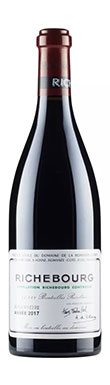
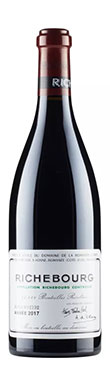
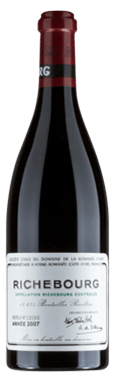
Domaine de la Romanée-Conti, Richebourg Grand Cru, Burgundy, France 2010
My wines
This is much more open and accessible than the 2015, with lovely aromas of ripe cherry and blackcurrant, a peppery anise spice and firm minerality. The...
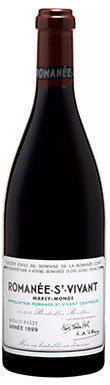
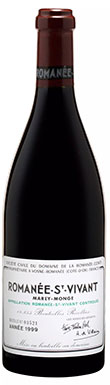
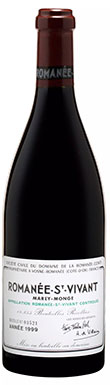
Domaine de la Romanée-Conti, Romanée-St-Vivant Grand Cru
My wines
A wine that has impressive reserves, but it is more forthcoming than the Richebourg from the same vintage and should be enjoyable sooner. The initial attack...
2015
BurgundyFrance
Domaine de la Romanée-ContiRomanée-St-Vivant Grand Cru