Rioja: Beyond the classics
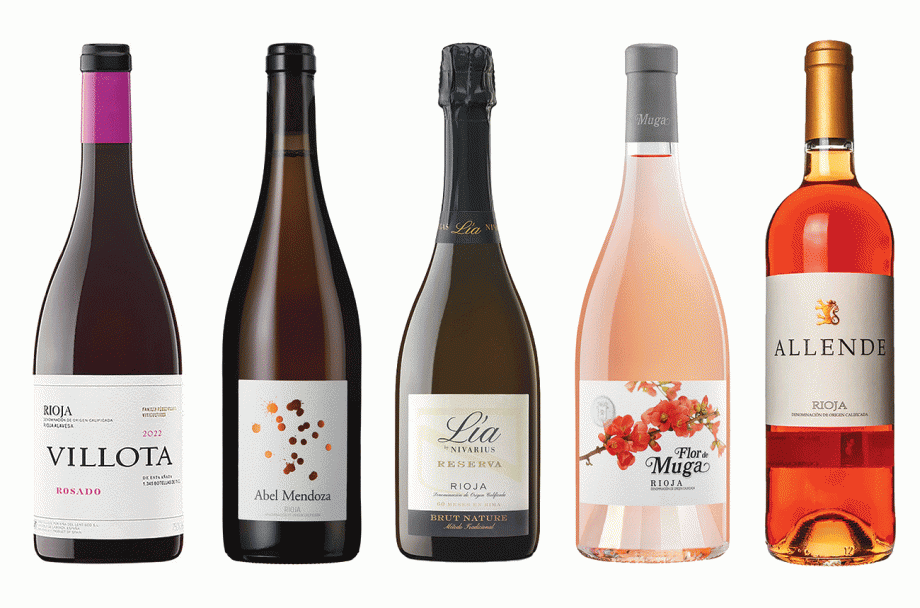
Rioja’s reputation may have been built on its red wines, classified by ageing, but there’s much more to the region than these styles. An increasing number of rosé, orange, sparkling and cosechero wines are adding diversity to the vinous landscape.

Appellations of origin are regulated under a common law in the EU. You might think that they’re therefore very similar across the member states, but this is far from true. Italian appellations, for example, tend to designate specific wine styles, and their territories are often shared with other DOCs.
For example, ‘Brunello di Montalcino’ is a Sangiovese-based aged red wine, but the territory is also home to other appellations with different specifications.
In contrast, most Spanish appellations represent an individual territory, within which many different styles of wines can be made – and Rioja is a leading example of this philosophy. Under the Rioja DOCa, producers can make white, red, rosé, sparkling and sweet wines.
Scroll down to see notes and scores for 12 diverse and delicious Riojas
In addition to this, 14 different grape varieties (five red and nine white) and any possible method of ageing are also permitted within Rioja. From a technical point of view this makes sense, since such a large and diverse region holds the potential for many different wine styles. However, for wine lovers, so much variety can be confusing. So let’s explore some of the different styles…
To help you understand what’s on offer, I’ve looked beyond red and white Riojas to the four most exciting Rioja ‘alternatives’: orange, cosechero, sparkling and rosé. I’ve summarised each of these styles, and I’ve also carried out a blind tasting of wines in each style, to find the best examples for you to try at home.
Orange
Strictly speaking, orange wine is not a category of Rioja wine, since there are no appellation regulations for these skin-contact wines. Technically, orange wines fall under the category of ‘white’, though they differ from white wines in their production. In the simplest terms, orange wines are white wines that are made like red wines.
In other words, they are produced from white grapes, but instead of pressing the fruit quickly and fermenting the juice, the winemaker adds the skins, seeds and sometimes the stems of the grapes to the juice. This is then left to soak for anything from 24 hours to several months, allowing the juice to absorb colour and flavour from the skins and seeds.
I blind-tasted seven orange Riojas and found that the winemaking method can often dominate the origin. Personally, I would have preferred to find more Riojan identity – although the Malvasía-based wine from Abel Mendoza that I’ve recommended does have a clear Rioja Alavesa identity. Mendoza is a fiery defender of his land’s distinctive character, expressing it in all his wines.
He calls this wine ‘fermented with its skins’ rather than orange, to make this difference quite clear. He got the idea for this wine after visiting Domaine Overnoy in Jura. ‘This is the third year I have made this wine,’ he says. ‘I wanted a wine from the vine to the glass, with no SO2 added. I know it keeps very well in the bottle.’
Cosechero
The prevalent style of winemaking in Rioja before the Marqueses of Riscal and Murrieta brought Bordeaux methods to the region in the 19th century, was ‘cosechero‘. The word cosechero means grape-grower, and these young red wines were produced by growers who didn’t have controlled fermentation equipment or ageing facilities.
The wines are made using a carbonic maceration style: the whole berries are left in an open-top fermenter and fermentation actually begins inside the grapes until the pressure causes the skins to break, then regular fermentation occurs. This style is very similar to Beaujolais Nouveau; both are made for early drinking.
Cosechero wines are very enjoyable in their youthful fruit and freshness, but again for me, the winemaking tends to take precedence over distinctive Riojan identity. The wine I’ve recommended from Remírez de Ganuza is a great example of innovation in this style. José Ramón Urtasun, the winery’s owner, is adamant on the crucial difference between this cosechero and most others: it comes from the best vineyards, selected for his famous reserva.
For each grape bunch, Remírez de Ganuza keeps the ‘shoulders’ for the reserva wines, and earmarks the bottom part, with fresher and less concentrated grapes, for the cosecheros. As Urtasun says, ‘This is a cosechero from top vineyards, our luxury.’
Sparkling
Rioja has a very long tradition of producing sparkling wines using the traditional method. Indeed, a sparkling Malvasía 1848, made by General Baldomero Espartero – boss of Marqués de Murrieta at the time – received an award at an agricultural fair in Madrid in 1857. There was no continuity to this exploit, but the merit is there.
Many years later, sparkling production revived, but Rioja sparkling was made under the Cava banner. However, in 2017, the Consejo Regulador DOCa Rioja included sparkling wines in the appellation. It introduced quite demanding technical specifications for the style – and although a small number of wineries moved their sparkling wines from Cava to the new framework within Rioja, the most significant result of the creation of this new category has been the launch of brand new wines.
Today, wineries continue to research and experiment with sparkling wine, so there’s no signature Rioja style. But from my blind tasting of 10 wines, two common features stood out. First, wines are ambitious in terms of site and grape selection, ageing periods and organoleptic profiles.
All wines were aged well in excess of 15 months, the minimum regulatory period. Second, they use native grape varieties, which shows that producers are genuinely looking for identity.
Rafa Vivanco, one of Rioja’s leading sparkling wine producers, has a clear vision around what he is seeking to achieve with his wines. ‘I could have produced Cava, but I decided to go for Rioja sparkling when the new regulation allowed the use of the indigenous varieties Maturana and Tempranillo Blanco,’ he explains. ‘I also believe in long ageing times, before and after disgorgement,’ he adds. His sparkling wines are not yet available in the UK, unfortunately.
For now, only a few sparkling Riojas exist, but more wines are likely to join this category, which in my opinion looks poised for success. Some very good sparkling wines made in the region are still labelled as Cava, however, and some producers staying with Cava are using the new sub-zone ‘Valle del Ebro’ on the label.
Rosé
In my opinion, the most exciting category of ‘alternative’ Rioja is rosé, or rosado, wine. Rioja is definitely a region for top rosé wines, though with several styles being produced, there’s no single regional identity for these wines.
First of all, there are the wines from Cordovín, a village in Rioja Alta distinguished by the quality of its cool-climate Garnacha grapes. These rosés, a modern take on Rioja’s traditional ‘clarete’ style, are often top-quality wines with ageing potential and uniqueness – that rarest wine attribute.
They benefit from both lees contact and oak ageing. Honorio Rubio, 220 Cántaras, Valcuerna and Florentino Martínez are names to keep in mind.
Then there are the rosés aged for a number of months or years in oak barrels, made in Rioja Alta and Rioja Alavesa. This style is almost exclusive to Rioja, with its distinctive and elegant oxidative character, more or less subtle oak influence and, in the best cases, extremely long finish.
These wines are made to improve in bottle, and with their idiosyncratic, love-it-or-hate-it profiles, are absolutely unique. R López de Heredia is the historic leader in this category, but some newer producers are seriously competing with it.
A third style is inspired by Provence: delicate, with suave fruit and lots of freshness, and very pale in colour. The best are delicious: they are made to be drunk young and tend to be pure Garnacha, or blends of Garnacha and Viura. For producers to succeed with this style requires plenty of winemaking know-how as well as top equipment in the winery.
Across these three styles there is a crucial quality requirement: the best wines are made with grapes from vineyards exclusively dedicated to rosé production. There are no shortcuts to quality here, nor are there cheap solutions.
Producers know this, so most top wines refer to a particular vineyard. Other wines will be positioned quite high in a producer’s portfolio, demonstrating the cost and the effort required to produce a great Rioja rosé.
Marqués de Murrieta winemaker María Vargas found a genial solution to the issue of regional identity when she dedicated a Mazuelo vineyard at the winery’s Ygay site to rosé. The result was an extremely original wine. Now, other producers, including Lalomba, also have dedicated rosé vineyards.
A dynamic future
In conclusion, there is so much more happening in Rioja than oak-aged reds made with Tempranillo. Some categories, such as rosé, have already established themselves and others are on their way, notably sparkling. The quality of the first cohort is very good, but it would be good to see more producers come on board.
Cosechero wines, in the meantime, are seeing something of a revival, given consumer demand for young unoaked wines.
Orange wine is a newcomer in Rioja. There is good potential in this category, since some Rioja white grape varieties have demonstrated excellent qualities in their skins, but there is not yet a strong push for it.
While many of the orange wines produced here tend to lack Riojan identity, a few producers have found a way of expressing genuine Rioja orange wines: Abel Mendoza is one of the best examples.
Something new: different Rioja wines to try at home
Related articles
- Rioja Viñedos Singulares: Panel tasting results
- Rioja fine wine market report
- Aragón: Exploring Spain’s wild frontier plus the wines to seek out
Palacios Vinos de Finca, Nivarius Lía Reserva, Rioja, Northern Spain, Spain, 2017

Extremely dry and precise expression, very clean, poised and long. Serious, with a clear identity. This is an ambitious but also exemplary wine. A very...
2017
Palacios Vinos de FincaRioja

Bodegas Valdemar, Finca Alto Cantabria Viñedo Singular, Rioja, Viñedo Singular, Northern Spain, Spain, 2017
The first viñedo singular sparkling wine in Rioja, this is a pure Viura with some signs of oak contact, and a subtle fruit and brioche...
2017
Bodegas ValdemarRioja
Abel Mendoza, Blanco Fermentado con Pieles, Rioja, Northern Spain, Spain, 2022
Abel Mendoza’s Malvasía wines look completely different to most other Malvasías in Rioja. They are expressive, with lovely floral notes and a touch of apricot...
2022
Abel MendozaRioja
Bodegas Bhilar, Phinca Hapa Blanco, Rioja, Northern Spain, Spain, 2020
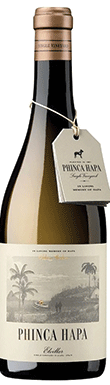
Strictly speaking a white wine, but as it spends two months on its lees it is listed here with the orange wines. This is an...
2020
Bodegas BhilarRioja
Macrobert & Canals, Laventura Viura, Rioja, Northern Spain, Spain, 2022
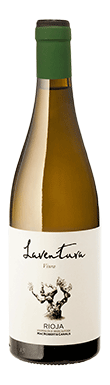
Also strictly speaking a white, this is an extremely original wine that’s surprising at first, with slightly oxidative notes that then open up in a...
2022
Macrobert & CanalsRioja
Hacienda López de Haro, Classica Gran Reserva Rosado, Rioja, Northern Spain, Spain, 2012
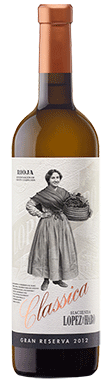
In a style first developed by Viña Tondonia, this is a rosé aged in oak for a long time, developing many distinctive nuances.The wine perhaps...
2012
Hacienda López de HaroRioja
Bodegas Manzanos, 1890 Manzanos Rosé, Rioja, Northern Spain, Spain
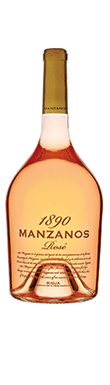
A distinctive style, lying in-between rosé and blanc de noirs, characterised by deft ageing in oak, with lovely fruit from a dedicated vineyard and a...
Bodegas ManzanosRioja
Muga, Flor de Muga Rosé, Rioja, Northern Spain, Spain, 2022
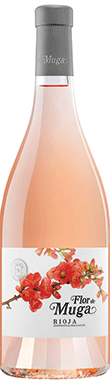
Deceptively pale colour, giving way to amazingly refined Garnacha fruit, with a very precise aromatic definition. Delicate but complex and persistent, with a surprising spicy...
2022
MugaRioja
Finca Allende, Allende Rosado, Rioja, Northern Spain, Spain, 2019
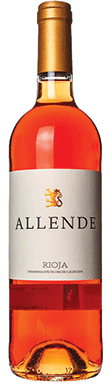
A rare rosé wine made for the long run, with a slightly oxidative but very appealingly fruity and spicy aromatic expression, followed by a rich...
2019
Finca AllendeRioja
Marques de Murrieta, Primer Rosé, Rioja, Northern Spain, Spain, 2022
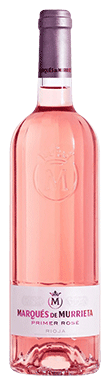
Made exclusively of Mazuelo (Carignan), a grape variety that in principle is particularly tricky for rosé wines, given its shy expression and harsh tannins when...
2022
Marques de MurrietaRioja
Villota, Rosado, Rioja, Northern Spain, Spain, 2022
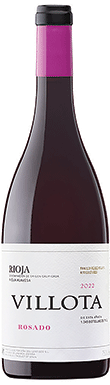
This is a resounding success: it keeps a classic rosé profile, but offers red wine aromas and a round structure. To my knowledge, this is...
2022
VillotaRioja
Bodegas Remírez de Ganuza, Erre Punto, Rioja, Northern Spain, Spain, 2023
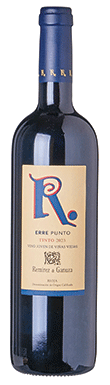
Round, open, long and intensely fruity, with something that goes beyond the classic ‘bubblegum’ in most carbonic maceration wines. A really original improvement on the...
2023
Bodegas Remírez de GanuzaRioja
