
Rioja’s Bodegas Lan and nine wines rated
Making wines for more than five decades, Bodegas Lan is one of the best-known names in Rioja. Sarah Jane Evans MW reviews its top wines, including Culmen and Viña Lanciano.


The name of Bodegas Lan, so the story goes, stands for the three main provinces that make up Rioja: Logroño (now La Rioja), Alava and Navarra. The winery was founded in 1972 by a group of men from Bilbao looking to set up a txoko, a traditional Basque dining club. Lan was not alone; Beronia, also launched in the 1970s, was similarly based on a group of friends meeting in a txoko.
The Ebro river meanders through Rioja on its journey eastwards to the Mediterranean. It’s in one of the most obvious of those meanders that Lan has the 74 hectare ‘Lanciano’ vineyard. This is border country, on the very edge of Rioja Alta, just across the river from Rioja Alavesa.
Scroll down to see Sarah Jane Evans MW’s nine Bodegas Lan wines to seek out
The vineyard lies at an altitude of 400m, sloping down to 380m. It has a protected microclimate, sheltered by the Sierra Cantabria range, as well as the influence from the river. As a result the vineyard is rarely frosted, though instead it is susceptible to mildew and odium.
The soils are Quaternary – including clay, sand and gravel – and the vineyard is divided into 22 plots. Tempranillo dominates, with some Garnacha, Graciano and Mazuelo. Currently, 15ha are organic, with 9ha in conversion in the area close to the bridge. The plan is that 24ha will be certified organic this year.
Lanciano and Culmen

This vineyard produces two, very different, wines. The first is ‘Viña Lanciano’, which is a fresh take on the classic Rioja style, according to Bodegas Lan. The Gran Reserva won a gold medal at Decanter World Wine Awards (DWWA) 2023. By contrast, ‘Culmen’ was launched as a ‘vino de autor’, a distinctive winemaker wine, at a time when there were US critics looking for dense, plush, concentrated styles; the opposite to the Riojan classics.
As the name suggests, Culmen is one of the top wines from Lan – and it is a definite change of gear. It comes from a subset of the Lanciano vineyard, known as the ‘Pago el Rincón’ (‘the parcel in the corner’). It consists of 15ha of 50- to 60-year-old bush vines at almost 500m at the foot of the El Rincón hill.
Both Viña Lanciano and Culmen are fermented in small, truncated cone-shaped stainless steel vats. Both wines are distinctly deep in colour, which is achieved by long macerations and regular pumping over.
The winemaking of Lanciano under technical director María Barúa is evolving to good effect. Where the 2017 Reserva saw 20 months in a mix of French and Russian oak, followed by 18 months bottle age, the 2019 saw 16 months in part new, part one-year-old French oak and nine months in concrete tank, before 12 months ageing in bottle. This is not just a matter of finessing – there’s a difference between the two. The tannins are finer in 2019, the fruit more expressive, the finish more explosive.
Winemaking style
By contrast, the winemaking for Culmen has changed little since 2001 which was the third vintage after 1994 and 1995. There is a double selection table; fermentation follows, with post-fermentation maceration for 20 days. Malolactic fermentation is in new French oak, with ageing for 26 months in the same barrels. No wonder the wines are sumptuously full and fleshy, with spice, black pepper and intense blackcurrant fruit.
The 2001 vintage has definitely developed well; by contrast the 2019 is very young and needs time to grow into itself. As befits a concentrated style, the yields from the vineyard are low: 3,500 kg/ha in 2001 and 3,100 kg/ha in 2019. In 2017, the year when the vineyard just escaped the punishing frost, the yield went down to 2,800 kg/ha.

Graciano and Garnacha
Lan also has a 100% Graciano, which has not yet been released. In this regard it is following the practice of that other winery in a meander of the Ebro: Contino, which makes a 100% Graciano called ‘Viña del Olivo’. As for Garnacha, Lan has planted 5ha, but is not yet happy enough with the results to release it.
There’s more to Lan than Viña Lanciano and Culmen. The total production is five million bottles, and the winery buys in grapes from another 400ha of vineyards. Since 2012, Lan has been owned by Sogrape, the Portuguese company founded in 1942 that produces Mateus Rosé.
Just over 80 years later, Sogrape has 19 wineries in its portfolio and its reach now extends far beyond Portugal, not only throughout Spain including properties in Rueda, Ribera del Duero and Rías Baixas, but also to Argentina, Chile and New Zealand.
See notes and scores for Sarah Jane Evans MW’s nine Bodegas Lan wines to seek out
Related articles
- Expert’s Choice: Navarra’s native Garnacha rises once more
- Spanish indigenous whites: Panel tasting results
- Premium Rioja crianza: Panel tasting results
Bodegas Lan, Culmen Reserva, Rioja, Alta, Northern Spain, Spain, 2001
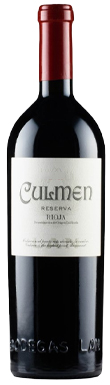

This was just Culmen’s third vintage after 1994 and 1995. It’s a contrasting style from the Viña Lanciano. A deep garnet colour – even after...
2001
Bodegas LanRioja

Bodegas Lan, Culmen Reserva, Rioja, Alta, Northern Spain, Spain, 2017
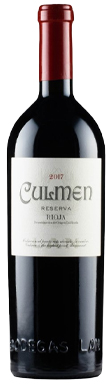
2017 was the earliest harvest in Rioja’s history to that date – and Culmen’s 10th. This deeply coloured wine is lively and approachable in aromas,...
2017
Bodegas LanRioja
Bodegas Lan, Gran Reserva, Rioja, Northern Spain, Spain, 2016
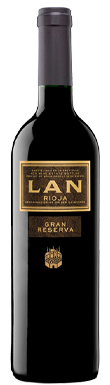
The fine, floral, smoky aroma of a gran reserva. The palate is supple, with ripe tannins, piquant acidity, medium body and a long, elegant finish...
2016
Bodegas LanRioja
Bodegas Lan, Viña Lanciano Reserva, Rioja, Northern Spain, Spain, 2019
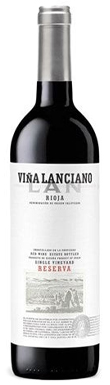
Bright garnet hue with purple edges. Aromas of rose and violet alongside expressive redcurrant freshness. The youthful palate is full-bodied and fleshy, with red plums...
2019
Bodegas LanRioja
Bodegas Lan, Culmen Reserva, Rioja, Alta, Northern Spain, Spain, 2019
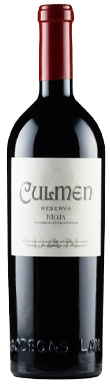
Deeply coloured, with aromas of light cedar, herbs and red fruits. In the mouth the wine is very powerful, piquant, full-bodied, with citrus acidity and...
2019
Bodegas LanRioja
Bodegas Lan, A Mano Edición Limitada, Rioja, Alta, Northern Spain, Spain, 2019
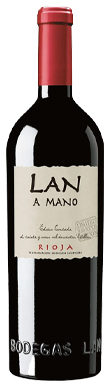
On the nose there are aromas of black fruits, with sweet spices and a suggestion of menthol. In the mouth the wine is intense, laden...
2019
Bodegas LanRioja
Bodegas Lan, Viña Lanciano Gran Reserva, Rioja, Northern Spain, Spain, 1970
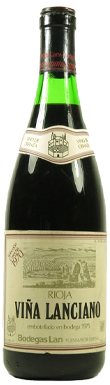
A light garnet colour paling to a watery rim, typical for its years. Aromas of forest floor, lifted by notes of redcurrant and citrus. In...
1970
Bodegas LanRioja
Bodegas Lan, Viña Lanciano Reserva, Rioja, Northern Spain, Spain, 2017
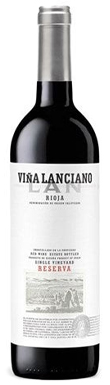
Bright garnet hue and a lively aroma of brambles layered with smoky oak. Vivid flavours: spicy, with red fruits, piquant acidity and textured tannins. Oak...
2017
Bodegas LanRioja
Bodegas Lan, Xtrème Ecológico Crianza, Rioja, Northern Spain, Spain, 2019
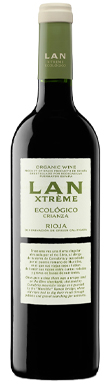
Lan has a 5ha plot that's organically farmed, from which this wine comes. It’s 100% Tempranillo and shows blackcurrant and dark cherries on the palate,...
2019
Bodegas LanRioja
