
Rioja’s next generation: The talented winemakers to look out for
The wine scene in one of Spain’s most traditional regions, Rioja, is being propelled forward by both newcomers and dynamic descendants of established producers. We meet some of the talented winemakers who are making waves.


At a little over 66,000ha, Rioja isn’t Spain’s largest wine region by some way, but it is unquestionably its most famous. Traditionally, Rioja wines have been largely defined by their ageing regimes, classified from joven (young) to gran reserva in an ascending scale of time spent in both barrel and bottle – a scale that still has relevance today, despite an increasing focus on terroir and fresher wines.
History and tradition are incredibly important in Rioja, as you might imagine for a region with its official designation dating back to 1925. But now a younger generation of winemakers, keen to explore the terroir of Rioja, is producing some spectacular wines.
Scroll down to see tasting notes and scores for six spectacular wines from Rioja’s new generation of winemakers
There are two worlds here in Rioja: the larger, more traditional producers, and the smaller, more artisanal producers.’ As introductions go, it’s a bold one – but you wouldn’t expect anything less from a trailblazer such as Sandra Bravo.
Her statement is hard to refute; the reformation of the rules of the Consejo Regulador in 2017 was largely brought about by pressure from smaller producers who were unhappy with their inability to express individuality under the DOCa Rioja appellation at the time. The previous rules largely favoured wineries blending between regions and producing at volume. ‘The smaller producers need visibility for Rioja to grow as a region; we’re only just getting started,’ adds Bravo.
This is a sentiment that’s increasingly shared across the region and is gathering momentum. The producers in this article are some of the most exciting talents in Rioja today, hailing from a variety of backgrounds and making wine across the three major sub-regions of Rioja: Rioja Alta, Rioja Alavesa and Rioja Oriental.
Some have a long, family tradition of grape-growing and winemaking, while others are first- generation producers with experience in other regions and industries. All, however, share the same drive and passion for their projects and bring a new energy to Rioja, which goes some way towards explaining the recent stylistic changes in this, Spain’s most iconic wine region.
Javier Arizcuren (pictured main)
‘My family has been growing grapes for as long as I can remember,’ says Javier Arizcuren. ‘Both my father and my grandfather were wine-growers, and I would play in the vineyards as a child, but it isn’t something I wanted to do when I was a young man.’ Indeed, Arizcuren came into the wine industry later on, after a successful career as an architect, taking over his family’s 16ha of vineyards in 2011. ‘I spent lots of time in wineries and even designed some as an architect. I suppose it’s inevitable that I came home.’
Arizcuren is based in his hometown, Quel, in Rioja Oriental, though the wine is currently made in Logroño. His family owns an old cellar in Quel, but, as Arizcuren puts it, ‘new projects allow for new directions’. New directions can also mean revisiting the past, and in the case of Arizcuren, it’s about rediscovering traditional varieties. The majority of the company’s vineyards are planted with Tempranillo but, like many in Rioja Oriental, Arizcuren also plants drought- resistant grape varieties – and Garnacha features heavily, as do small plots of Mazuelo. ‘We started producing Mazuelo in 2013, but the vineyards were first planted by my grandfather,’ he explains. ‘We believe these monovarietal wines made from old vines show a side of Rioja Oriental that was previously missing.’
The wines are transparent and deliciously wild, particularly the monovarietal wines produced in amphorae, a very new direction for winemakers in Rioja. All production takes place in the last urban winery in Logroño; a small, open-door project, designed to maximise a small space. ‘Rioja has so many sides to it, and the world is only just discovering them,’ reminds Arizcuren. ‘It will take a while but we’ll be here; we’re passionate about what we do.’
Ricardo and David Fernández, Bodegas Abeica

Currently into its fourth and fifth generation of ownership, Bodegas Abeica is a family affair. The grandfather of cousins Ricardo and David Fernández began operations in the 1970s, and now six members of the family manage various roles across the winery. ‘We look back to what our grandfather did and try to take the next step,’ says Ricardo. ‘We want to make sure we represent our village well and also produce wines from individual, unique vineyards.
‘Our goal now is to capture individual expressions of place. We’re moving away from ageing classifications and more into village wines and single-vineyard wines.’ As with many other winemakers looking to the future, this includes monovarietal expressions of historically important grapes; Abeica produces Viura, Garnacha, Mazuelo and Tempranillo as varietal expressions, alongside its more ‘classic’ wines. ‘It’s important to us not to use any herbicides or synthetic fertilisers in the vineyards,’ remarks David. ‘As a smaller producer, we want to make sure that our efforts are transmitted into the wine itself.’
The Fernández family is betting on quality leading the way in the future of Rioja. ‘The world of wine is overcrowded with cheap wines produced at volume; you can only move forward if you have quality and a clear identity,’ Ricardo asserts.
Miguel Merino

‘The dream is to make great wine at fair prices, that allow us to work and for everyone involved to live a good life.’ Miguel Merino, only the second generation to make wine in the family, is a man with a vision. Having taken over the family winery in 2021 after the death of his father, Merino and his partner Erika have injected a new energy into an already vibrant production. A trained journalist, Merino studied oenology at the age of 26 in order to help out his father, following a successful period working for Freixenet in London and learning about the world of wine.
‘My father made classic wines, whereas mine are more modern,’ says Merino. ‘I’m particularly inspired by regions like Burgundy, Piedmont and the Loire Valley.’ This international exposure has certainly had its impact, and a new addition has been single-vineyard wines, such as the superb La Quinta Cruz Mazuelo. ‘I like to drink elegant wines, and I believe we’re able to make them in Rioja.’
Merino farms 14ha of vineyards, mostly in the village of Briones, across 40 separate plots. ‘Historically, Rioja has been known as a region of good-value wines, but I think we’re finally starting to understand how diverse it really is,’ he says.
Despite a small production of 50,000 bottles annually, the wines are shipped to more than 30 markets throughout the world, a testament to the exporting connections of Miguel Merino Snr. ‘This is a fantastic time for the world to discover Rioja; the wines have never been better – and there’s more to come,’ declares Merino.
Jose Gil

‘I worked for 10 years with my father and my uncle at Bodegas Olmaza in my hometown, San Vicente de la Sonsierra in La Rioja Alta,’ says Jose Gil. ‘I learned a lot from my time there and I took those experiences with me. The wines are simple, delicious and transparent.’ Gil started his own project in 2011 as the third generation of his family to do so, on the outskirts of the village and with only two small parcels of land. ‘I spent more time in the vineyards than anywhere else; I’m always looking for unique plots of land.’
Gil farms 6ha of vineyards across the villages of San Vicente, Labastida and Briones. ‘Small, interesting plots of land that are close to us and well tended is our secret,’ remarks Gil. ‘We see it as a celebration of not only the land, but our family and community working together in harmony. It’s important that we transmit our values through our wines.’
The wines are based on the early-ripening Tempranillo, with small amounts of Viura blended in for additional freshness, fermented at low temperatures and without any new oak. ‘Excessive winemaking obscures any chance of expressing the terroir,’ he explains. ‘I want our wines to be more floral, fruity and pure-fruited.’
According to Gil, this focus on small producers is the future for Rioja. ‘We have to shout about our best wines, define styles and put the names of the villages on the map.’ Gil states. ‘It will take time but we have the raw materials and the ability; there’s huge potential here.’
Carlos Mazo, Vinos en Voz Baja

Vinos en Voz Baja is a delightful play on words. It means ‘wines in a low voice’, which pays tribute to the more restrained, delicate nature of its wines, while referencing the former name of the sub-region – Rioja Baja – where it’s based. ‘We don’t have many points of reference in Rioja Oriental,’ explains Carlos Mazo, ‘There isn’t a long history of fine wine production here, so we have something of a blank slate.’ Mazo is a quiet, thoughtful individual. ‘I want to make wines that are a true reference to Rioja Oriental; unpretentious wines that have a strong identity,’ he says. Mazo’s father grew grapes but didn’t produce wine, so discovering this identity is also something of an adventure.
The Mazo family owns 6ha of vineyards across nine different plots, with elevations ranging from 350m to 480m. Three-quarters of the vineyards are planted to Garnacha, the classic ‘workhorse’ grape of Rioja that Mazo believes holds the key to expressing the real identity of Rioja Oriental. ‘Lots of Garnacha was uprooted as it didn’t yield as highly as Tempranillo,’ he explains, ‘but the climate here suits it perfectly. Our Garnacha is fresh, fruity and spicy; bolder than the Garnacha of the Sierra de Gredos, yet lighter than the wines of the Mediterranean.’
Careful harvesting by hand is essential with these old bush vines, particularly as whole-bunch fermentation is a key element in retaining freshness and lightness in the finished wines. Large oak barrels are also preferred over new oak, to allow the red fruit and spice of the Garnacha to take the central role. White grapes are also sometimes co-fermented as part of field blends, to add an extra dimension and natural acidity to the wines. ‘Rioja has been transformed in the past 20 years and now it’s up to us to take the next step forward,’ says Mazo. ‘A clear vision of what we want to be is important not just to us, but to future generations as well.’
Sandra Bravo, Sierra de Toloño

‘When I started in 2012, it felt like all the doors were closed. A little over 10 years later and that’s all changed,’ Sandra Bravo reflects in response to my question about her time in Rioja as a winemaker. I say ‘as a winemaker’, because she comes from Logroño, the capital city of La Rioja. Her family is not involved with wine and her growth has been entirely of her own volition. She says: ‘Growing up in Rioja, you’re always surrounded by wine; I got a lot of my inspiration from the growers – more so than the producers.’
Bravo is behind the brilliant wines at Sierra de Toloño, in the foothills of Rioja Alavesa. ‘I studied in Rioja, but I left to get experience elsewhere,’ says Bravo, who can boast of working in Bordeaux, Tuscany, New Zealand and California. ‘These experiences of making wine in other parts of the world gave me a different perspective on things, and when I came back to Rioja in 2012, I knew the sort of wines I wanted to make.’ The wines at Sierra de Toloño are made from grapes from more than 20 individual plots of land, planted at altitude. ‘I’m always looking for interesting vineyards,’ says Bravo. ‘I think it’s key to making true, artisanal wine, as well as being in the vineyard doing things by hand, by feel.’
Bravo’s wines are fresh, elegant and incredibly expressive. She makes both red and white wines, with a particular affinity for Garnacha, of which there are some plots planted in the mid-20th century. With a combination of having vineyards at up to 650m and taking a hands-off approach in the winery, the crystalline fruit shines through. ‘Oak has a place here, but I use it very carefully,’ remarks Bravo. ‘I want people to taste the wines, not the wood.’
Sierra de Toloño produces a number of wines, including several from single vineyards and villages, an important evolution in Rioja. ‘We have some amazing vineyards here; the future is going to be more about showcasing the real beauty of our land.’
Six great wines from Rioja’s new generation of winemakers
Related articles
- Rioja’s village wines: The names to know and bottles to seek out
- Rioja 2000 – 2021: Drink now or keep?
- Rioja with food: Perfect pairings
Sierra de Toloño, La Dula Garnachas de Altura, Rioja, Alavesa, Northern Spain, Spain, 2021
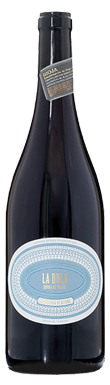

An evocative high-altitude Garnacha. Ripe, brambly fruits lead, balanced by savoury notes of white pepper, crushed slate and wild herbs. Grainy, fresh and effortlessly long;...
2021
Sierra de ToloñoRioja

Miguel Merino, La Quinta Cruz Mazuelo, Rioja, Alta, Northern Spain, Spain, 2020
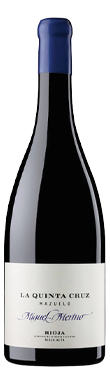
Bright and fresh, yet with exceptional depth. Plummy fruit sand fresh strawberry mingle with violet, cedar and iron-tinged earth. Soft and fluid on the palate,...
2020
Miguel MerinoRioja
Arizcuren, Solo Garnacha, Rioja, Oriental, Northern Spain, Spain, 2022
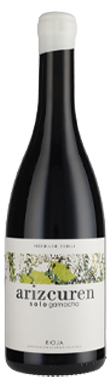
An utterly transparent, delightful Garnacha. Notes of ripe strawberry, cherry and red plums all tumble out of the glass, mingling with hints of rose petals,...
2022
ArizcurenRioja
José Gil, Viñedos en San Vicente de la Sonsierra, Rioja, Alavesa, Northern Spain, Spain, 2021
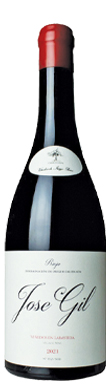
Youthful yet already expressive, with aromas of blackcurrant, strawberry and blackberry, dark chocolate, smoke and light hints of nutmeg. Densely layered with flavour and soft...
2021
José GilRioja
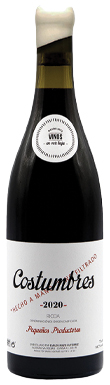
Vinos en Voz Baja, Costumbres, Rioja, Oriental, Northern Spain, Spain, 2020
92
A juicy, supple and pure fruited Garnacha. Restrained yet engaging on the nose, but full of sweet Garnacha fruit, whole-bunch spice, pepper and wet stones on the palate, with lovely, powdery tannins that caress rather than dry.
2020
Vinos en Voz BajaRioja
Bodega Abeica, Colección de Viñedos, Rioja, Alta, Northern Spain, Spain, 2022
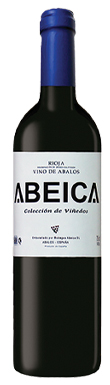
Balanced and supple, with notes of fresh plum, blackberry, tobacco leaf and liquorice. This is a juicy, fresh wine with bright acidity and a dry,...
2022
Bodega AbeicaRioja
