
Rioja’s rising stars: the winemakers to watch out for
The winemaking scene in Spain’s leading region is evolving rapidly. Decanter profiles seven exciting winemakers who are driving change.


Rioja thrives on tradition, on an image of immutability. There’s some truth to this perception. Many of the region’s wines are made in pretty much the same way today as they were in the 1970s, give or take the incontrovertible influence of climate change. Rioja is very good at producing large volumes of reliably drinkable wine: supple, perfumed, sweetly oaked with immediate appeal but enough acidity to age.
Scroll down to see tasting notes and scores for seven wines from the rising stars of Rioja
Yet Rioja is also capable of rapid change. It happened in the boom years of the second half of the 19th century, when merchants from Bordeaux came to Spain looking for wine to replace what they’d lost in their phylloxera-ravaged region; it happened in the 1990s as a response to demand for the bigger, bolder, more concentrated wines that were in vogue in the US and elsewhere at the time; and it’s happening again right now.
It’s not widely appreciated, but Rioja is making the greatest reds and whites in its history.
Many people believe that the pan-regional model, blending grapes and vineyards across a vast area, has always been dominant, but the opposite is true. There was a time when Rioja talked about vineyards, villages and soil types, and that’s increasingly so once more.
This piece focuses on seven of the region’s rising stars, some better known than others. I could easily have written about another 20, many of them young winemakers who have taken over from their parents or set up on their own using grapes purchased from growers. They are all part of the ‘new Rioja’, but they are also descendants of an older tradition. In their way, they are every bit as focused on terroir, on expressing the unique properties of their sites, as are great producers in Burgundy and Piedmont. That, increasingly, is the company in which they belong.
David Sampedro & Melanie Hickman

The light was guttering, but David Sampedro was insistent. He simply had to show me his new plantings. We jumped into the 4×4 and a few minutes later, after a vertiginous, switchback ascent, we were sitting in a 1.2ha block of echalas-trained Garnacha at 650m called El Vedao. There was more to come. David and his American wife Melanie Hickman, who also makes wines under her own Phinca Hapa label (see strugglingvines.com), wanted to show me a plot of bare land they’ve acquired in Kripan called Cerro Gallego, located just below the Sierra de Cantabria mountains at a highly marginal 900m. ‘We need to combat climate change,’ says Sampedro. ‘That’s why I’m planting more and more Garnacha and Graciano. In the future, we should be thinking about varieties like Monastrell, Nebbiolo and Rufete Blanco.’
Sampedro is a revolutionary who works hard and likes to do things his own way, even if it brings him into conflict with Rioja’s rule-obsessed regulatory council. He’s a vigneron, or wine-grower, rather than a simple oenologist, who knows every inch of the 16ha he farms in Laguardia, Kripan, Viñaspre and, most important of all, his native village of Elvillar. Old vines – the average is 52 years – and altitudes between 500m and 710m are what they have in common. ‘Each parcel expresses a different personality,’ he says. ‘And that changes with every vintage.’
At the most recent count, the Bodegas Bhilar range runs to around a dozen wines, five of which (Phincas Abejera, El Vedao, Lali, La Revilla and San Julián) are single-vineyard bottlings. The winemaking style here is low-intervention, with a focus on what Sampedro calls ‘honesty’, reflecting his fondness for whole-bunch fermentation in his reds, and skin contact and occasional ageing under flor for his whites. All in all, these are some of the most daring, unusual, terroir-focused wines in Rioja, made by a man who is not afraid to push boundaries.
Bodegas Bhilar, Blanco 2020
Sandra Bravo

Sandra Bravo has what she calls a ‘good instinct for vineyards’. It’s a sixth sense, if you like, an ability to look at a landscape and see what it will give her in the bottle. Spend a few hours in her company, driving between the dozens of tiny plots that make up the 10ha she owns or rents in the villages of Villabuena de Alava and Rivas de Tereso, and you can sense the connection between this young winemaker and her vines.
After an apprenticeship that took her to Bordeaux, California, New Zealand and Priorat, she returned to her native Rioja in 2012 to begin her own project, Sierra de Toloño. From the start, her focus was on venerable, low-yielding vines – Bravo’s parcels are aged between 45 and 101 years old, although she has planted some new vineyards this year. Her aim is to express ‘purity with no make-up’. Farming is organic and biodynamic; vinification is mostly in concrete, old wood and clay amphorae. ‘I want to preserve the scents of the Sonsierra mountains in my wines, the Mediterranean herbs and the incredible freshness. In the winery, I’m a total minimalist.
I touch the wines as little as possible.’
Bravo makes a total of nine wines in her small, artisanal bodega in Villabuena de Alava, including two whites and a rosé. Four of the nine contain Tempranillo – either as a varietal wine (Camino de Santa Cruz, Nahikun and Sierra de Toloño) or as part of a blend (Raposo and Rosado Sierra de Toloño) – but she’s at her best working with Garnacha and her white field blend Nahikun Blanco. The two Garnachas, both from high-altitude sites in Rivas de Tereso planted with very old vines, are Tereseño and La Dula, and these have played a significant role in the renaissance of the variety in the Rioja Alta sub-region. The white is a classic Rioja medley of Viura, Malvasía, Calagraño and Rojal, this time from a small, bush-vine parcel in Villabuena, a testament to the days when such varieties were co-planted with red grapes to add freshness to blends. @sierradetolono
Sierra de Toloño, La Dula Garnachas de Altura 2020
José Gil & Vicky Fernández

‘They look so young,’ said a friend of mine, contemplating a recent photo of José Gil and Vicky Fernández. In fact, the first time I met Gil, not long after he’d released the initial wines under his own label in 2016, he was only 26. What he’s achieved in the subsequent six years, four of them alongside his Uruguayan partner, is remarkable. It’s no exaggeration to say that he’s one of the most talked about winemakers in Rioja.
Born into a family of growers in San Vicente de la Sonsierra – they still own Bodegas Olmaza, where Gil started working after he’d graduated – he was inspired by trips to the Mosel valley and Burgundy to do his own thing. ‘Burgundy touched my heart,’ he says. Gil spent three years trying out different viticultural and winemaking techniques before he was ready. The initial wines – a village red and La Cóncova, an old-vine Tempranillo – were revelations.
Since then, the couple have expanded their portfolio, working with 7ha (two of which are rented) in Briones, Labastida and San Vicente. All the vines are located at 500m-600m and were planted between six and 130 years ago. The couple now have their own bodega in Briones and age their wines across the Ebro river in the cool medieval tunnels below the imposing castle of San Vicente de la Sonsierra. The current range includes a further three single-parcel wines – El Bardallo, La Canoca and El Fugas – all made in a style that favours finesse and balance. ‘We’re trying to return to the model that Rioja used in the 18th century,’ he adds. ‘Ours is a human-scale winery, where we tend our own vineyards and make and sell our own wines. Just like in Burgundy.’
Gil is a key member of a group of young Rioja winemakers called Martes of Wine (@martesofwine), which also includes Miguel Merino Jr; the group meets for a dinner and a blind tasting of global wines every Tuesday, and are constantly learning from each other. And then there are the holidays, always to other regions in Spain and the rest of Europe. A superstar in the making. @josegilvignerons
José Gil, Viñedos en San Vicente 2019
Arturo de Miguel

‘He’s here every day during the vintage,’ says Arturo de Miguel, introducing me to his dad Roberto, who shows me his cracked, wine-stained hands with pride. And so he should, as Artuke wouldn’t exist without him. His sons, Arturo and Kike, may have taken the bodega to giddy heights, but it was Roberto, a fourth-generation grape-grower, who decided to start bottling his own carbonic maceration, ‘cosechero’ style red in 1991.
After a degree in agricultural engineering and a masters in oenology, Arturo started working with his father in 1997, taking over full-time 12 years later. He admits that the relationship wasn’t always easy – they disagreed about lots of things in the bodega, especially new barrels and maceration times, less so in the vineyard – but they seem to get on pretty well today. Arturo came to accept that maybe the traditional ways weren’t so bad after all. ‘Now I work the same way my father and grandfather worked,’ says Arturo, ‘using cement tanks and large wooden tanks.’
The change in his thinking occurred in 2013, one of the wettest vintages in the region. ‘I decided that we should try to make more delicate wines,’ he says, ‘seeking to reflect the terroir and the growing seasons, even in a cool year like 2013.’
The strength of this family winery has always been its vineyards, spread over 40ha in the neighbouring villages of Abalos, Baños de Ebro, Samaniego, San Vicente de la Sonsierra and Villabuena. The basic wine, simply called Artuke, is still made as it was in 1991 (and long before that), and is one of the best-value reds in Rioja. But it’s the single-parcel reds that have propelled the bodega into the region’s equivalent of the Premier League.
These are Escolladero, Finca de los Locos, Paso Las Mañas and, best of all, La Condenada. This last vineyard, given a new lease of life by the de Miguel family after it was abandoned by the previous owners, is a 1920 field blend of Tempranillo with 20% Garnacha, Graciano and Palomino and is one of the greatest Spanish reds. La Serna 24, 01307 Baños de Ebro, Alava
Artuke, Paso Las Mañas 2019
Javier Arizcuren

He is almost certainly the only top winemaker in Rioja who’s also a qualified architect. You can appreciate Javier Arizcuren’s aesthetic taste at the stylish urban winery he runs in the backstreets of Logroño, as well as at the Hotel Bodega Finca de los Arandinos in Entrena, southwest of Logroño. His focus is entirely on the Rioja Oriental village of Quel, where his family has grown grapes for five generations. When he took over the family vineyards in 2009, he realised that he had inherited some fantastic mountain vineyards that merited a wider audience.
Owner of 20ha on the Monte Yerga – he sells grapes from 14ha and keeps the best for his own brand – Arizcuren is a passionate advocate of low-yielding old vines and an equally vehement critic of the vast plantings of irrigated Tempranillo that have damaged the image of the hottest and most easterly of Rioja’s three sub-regions. Located between 530m and 770m, altitudes that make Quel so special, some of the parcels he works with are more than 130 years old, with pre-phylloxera vines the size of triffids.
Arizcuren makes nine wines, all red: a village blend called Monte Gatún, six varietal wines (two Mazuelos, two Garnachas, a Graciano and a Maturana), three of which are vinified in amphorae, and two single-parcel wines, called Barranco del Prado and Finca El Foro. The former is from a unique site, co-planted with Garnacha and 3% Tinto Velasco and Calagraño; it produces a red that bears comparison with the very best of the Rioja Oriental.
The bodega’s winemaking approach is a reaction to the local grapes as well as a stylistic choice. ‘We’re working with traditional Mediterranean varieties, most notably Mazuelo and Garnacha, that can be powerful and a little rustic if they’re handled in the wrong way,’ he says. ‘That’s why we try to emphasise elegance and subtlety in our wines.’
Arizcuren thinks that Rioja is living through an important period of change. ‘You can’t call it a revolution because we’re going back to our roots. There are more and more producers using their own grapes and expressing the character of their vineyards. It’s very exciting.’
Arizcuren, Sologarnacha Anfora 2019
Víctor Ausejo

Winemakers who focus on a single variety in Rioja are rare, unless it happens to be Tempranillo. I know of only one, Víctor Ausejo, whose entire production is dedicated to Garnacha Blanca, a minority white grape that as of this year accounts for just 0.34% of the region’s total area under vine. It’s a story of bravery, persistence and unlikely success.
Ausejo started his working life as a plumber before moving into the wine business. He toiled in vineyards and wineries such as Vivanco, Gómez Cruzado and Puelles, pruning vines, pulling hoses and labelling bottles before resolving to create his own brand. His family owned 2ha of Tempranillo that had belonged to his grandfather Fermín, situated at 546m in the village of Clavijo. On a hunch, he decided to replant them with Garnacha Blanca in 2016. ‘It was pretty risky,’ he admits.
Two years later, Ausejo made 400 bottles of his inaugural Fermentado en Barrica white in his bodega in Alberite, south of Logroño, selling them to local restaurants. ‘We flogged a case here and a case there, and suddenly it was all gone,’ he says. Production more than doubled to 900 bottles in 2018 and then 5,000 in 2020, with a second, lees-aged, unoaked wine called Parcela 333 joining the range.
It’s no surprise that Ausejo thinks Garnacha Blanca is undervalued. ‘There’s so little planted, but it’s an indigenous grape with a lot of personality.’ It seems ideally suited to the young vineyard that he’s converted in Clavijo, with its red clay soils and limestone bedrock. ‘We farm sustainably,’ he says, ‘and the vines respond.’
For the time being, Ausejo’s project is a ‘modest’ one. He still has a day job at Bodegas Puelles in Abalos, but the idea is to live from his own wines in the future. In 2024, he’s planning to release two reds – a Garnacha from Sojuela and a Mazuelo from Villamediana – which are made with grapes purchased from growers. But for the time being, he’s a Garnacha Blanca specialist, making two brilliant whites at very affordable prices. @victorausejoviticultor
Víctor Ausejo Viticultor, Parcela 333 Garnacha Blanca 2020
Miguel Merino Jr

It was a sad way to say goodbye. Miguel Merino Sr was terminally ill and came down to the cellar in Briones for a last farewell. ‘The wines will speak more eloquently than I can,’ he told me in a whisper. For all the sadness of his death in 2021, Merino has left the bodega he founded in 1994 in the best possible hands. His son, Miguel Merino Navajas, is making some of the finest wines in Rioja, and the pride was glowing in his father’s features.
The Merinos source grapes from a total of 14ha – eight of their own and six rented – in the village of Briones, working without herbicides or pesticides across 36 different plots. The idea is to be 100% organic in the near future. ‘The bedrock is always calcareous,’ says Merino, ‘but we’ve got vineyards on sand, gravel and red clays, with a variety of exposures, altitudes and planting dates. Terroir is essential to our project.’
There are two lines at Miguel Merino – a classic one consisting of a reserva and gran reserva – and a more modern range that’s less dependent on new oak. The two have been moving closer in style, but they are aimed at different consumers. No prizes for guessing which I prefer. The blended white and the young vine cuvée (Viñas Jóvenes) are well worth seeking out, but the stellar wines are the three single-vineyard releases. These are La Quinta Cruz (an unusual, standalone Mazuelo), La Insula (an ungrafted Garnacha from a 110-year-old site) and La Loma (a spectacular cuvée of Tempranillo and 10% Garnacha on ferrous soils). All three are very subtle, ethereal reds.
Merino credits David González of Gómez Cruzado, where he worked for four years before taking over the winemaking at his family’s bodega, as a key influence on his style. ‘Most of what I know about winemaking is thanks to him.’ But he also reserves a special mention for his dad. ‘My father was the most intelligent and intuitive person I’ve ever met. He always knew the right path to follow. Every day we try to follow his example.’
Miguel Merino, Viñas Jóvenes 2019
The wines from the rising stars of Rioja
Related articles
- Expert’s choice: White Rioja
- Rioja vintage guide 2000-2020: drink now or wait?
- The diversity of Rioja in six wines
Víctor Ausejo Viticultor, Parcela 333 Garnacha Blanca, Rioja, Oriental, Northern Spain, Spain, 2020
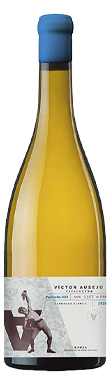

Made with Garnacha Blanca from his family’s vineyard between the Iregua and Leza valleys, Víctor Ausejo’s brilliant white is entirely aged on its lees in...
2020
Víctor Ausejo ViticultorRioja

Bodegas Bhilar, Blanco, Rioja, Alavesa, Northern Spain, Spain, 2020
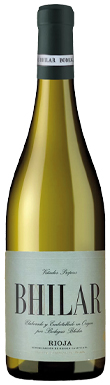
Remarkable value from one of the best white wine producers in Spain, this is a complex, effortlessly stylish blend of Viura with 20% Garnacha Blanca....
2020
Bodegas BhilarRioja
Sierra de Toloño, La Dula Garnachas de Altura, Rioja, Alavesa, Northern Spain, Spain, 2020
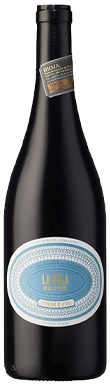
From an old-vine Garnacha plot at 700m altitude, this is highland Rioja Alavesa winemaking in its most graceful and elegant form. It's sculpted and pure,...
2020
Sierra de ToloñoRioja
Arizcuren, Sologarnacha Ánfora, Rioja, Baja, Northern Spain, Spain, 2019
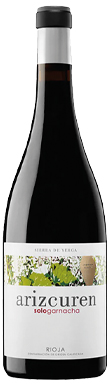
Fermented and aged in amphorae in Javier Arizcuren’s urban winery in Logroño, this is the best Garnacha release yet from this Quel producer. Fresher, brigher...
2019
ArizcurenRioja
Artuke, Paso Las Mañas, Rioja, Alavesa, Northern Spain, Spain, 2019
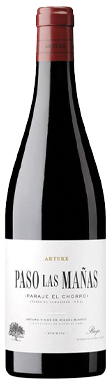
A vineyard doesn’t have to be old to make great wines, as demonstrated by this 3.9ha parcel, planted at 720m in Samaniego, in 2013. It’s...
2019
ArtukeRioja
José Gil, Viñedos en San Vicente, Rioja, Alavesa, Northern Spain, Spain, 2019
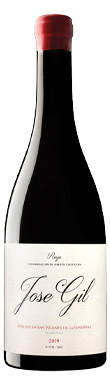
This is José Gil and Vicky Fernández’s village wine, made with Tempranillo and 10% Viura from four parcels in his native San Vicente de la...
2019
José GilRioja
Miguel Merino, Viñas Jóvenes, Rioja, Alta, Northern Spain, Spain, 2019
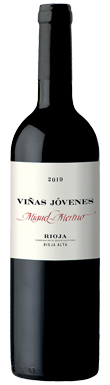
No pretensions,' says Miguel Merino Jr of this youngvine cuvée, made with fruit from four vineyards in the El Rincón sub-zone of Briones. And yet...
2019
Miguel MerinoRioja
