
A rising star of French wine: Caroline Frey interview


This environmentally focused young winemaker is putting her stamp on some of France's top wine estates, says Jane Anson. Read her exclusive interview and wine ratings, just published in Decanter magazine and currently available to Premium members online.
Only 24 when she was handed the keys to Château La Lagune in 2004, Caroline Frey managed to incur three strikes with local observers before she even began.Young, a woman, and taking over a classified château – you don’t need me to tell you that’s a plum job in Bordeaux – without having sufficiently earned her stripes.La Lagune had been bought four years earlier by her father Jean-Jacques Frey, one of the major shareholders in Billecart-Salmon. Oh yes, make that four strikes; she was from Champagne, not Bordeaux.Today she is one of the most exciting and respected winemakers in France, working organically and biodynamically at acclaimed properties in Bordeaux, the Rhône, Burgundy and Switzerland, and recipient of a Légion d’Honneur ‘order of merit’ for her services to winemaking. And she’s still not even 40.

None of this was a foregone conclusion. Her father was looking elsewhere for a general manager to run La Lagune when his eldest (of three) daughter came to plead her cause, fresh out of oenology school and two years working with professor Denis Dubourdieu at his home properties in the Côtes de Bordeaux and Barsac.
Frey had graduated top of her class and had fallen in love with Bordeaux, but there was no guarantee that she was the right person to restore the reputation of what was at the time a third growth with an image problem – and then repeat the trick two years later when the family bought one of France’s most iconic wines in the shape of Paul Jaboulet Aîné’s Hermitage La Chapelle.
And besides, although it was her father who bought the château, it was her mother who had always believed in her potential as a winemaker.
Frey at a glance
- Born Reims, Champagne, 1980 Training Oenology degree at Institute of Oenology Bordeaux, 1999-2001
- Career Took over Château La Lagune aged 24, after an early career as a showjumper in France’s junior jumping team, and two years working with Denis Dubourdieu’s properties in Bordeaux 2001-2002
- Family Daughter Elise (6). Two younger sisters: Céline works in the family property business in Switzerland; designer Delphine has a clothes line, 8Js, with her husband Nico Prost (son of Alain)
- Hobbies Horse-riding, skiing, mountain marathon runner, pianist
Outdoor life
‘My mother has always said a parent should simply observe what their children enjoy doing when they’re young, and try to encourage them to pursue that as they get older,’ says Frey.
‘She knew I always liked being outdoors. I rode horses in the French team until I was 18, but didn’t want to continue it as a career. She helped me see that I might still like to find a job where I could be close to nature, and in the end I made a decision between oenology or arboriculture.’
By working organically and concentrating on biodiversity, she no longer has to make that choice.
Frey has just set aside 40ha of forest outside Château La Lagune as a biodiversity zone, in addition to one she has set up near Tain l’Hermitage in the Rhône. This focus on the environmental impact of her work is something she came to gradually, and is an approach that has allowed her to tackle these iconic wines from the soil up, vine by vine.
‘There is no recipe for any of the properties. My approach is simply to be out in the vines, getting to know them. It’s why I have not wanted to buy estates further afield in Chile or Australia, for example.
‘Not because I don’t like the wines that are produced there, but because I don’t want to delegate the work that would be involved in running them. And I want to be close to one base for my family.’
Respect for the soil
She hasn’t always got it right. When the Freys first arrived in the Rhône region in 2006 – again to an iconic estate that had suffered from recent quality issues – they were criticised for taking an overly ‘Bordeaux’ approach with too much oak in the wine (yes, it seems she had a different three strikes in each part of France).
Today she says she worked the soils too hard at first and subsequently the vines needed time to recover.
The Burgundy purchase, in contrast, came in 2015 when she had a far clearer vision for her wines. Again these were vines that needed some attention lavished on them, but this time the first thing she did was to stop all use of herbicides and start working the vineyard manually, giving it time to slowly regain its equilibrium.
She then created a small cellar kitted out with cement vats, ‘open, for manual punching down, all as simple as possible’.
‘I’ve learned a lot over the last 10 years and have more confidence. I know not to hurt the micro-flora of the soil. It’s really about working the surface layer and being respectful.’
She pauses before adding, ‘At this point I would rather stop making wine than farm with chemicals – that’s how strongly I feel about it. No system is perfect of course, but for me organics and biodynamics is a way to bring freshness and vitality into a wine, which is increasingly important as a counterbalance to the impact of global warming. And vineyards are a heritage to be passed on. If I were not farming them in the most respectful way possible, I wouldn’t feel comfortable.’
It was this approach that led to her being awarded the national order of merit, although she is quick to say that it could only have been achieved with a great team around her, and that the recognition was for all of them.
And that: ‘Funnily enough, I received the award on the same day that President Trump stepped back from the Paris climate agreement. It made these small actions seem more important than ever’.
Frey lives full-time in Tain l’Hermitage, and spends her weeks travelling between the estates, usually spending the longest in the Rhône and Burgundy, where the plots of vines are split over many different areas and each vinified separately. In the Rhône she works diverse soils across Côte-Rôtie, St-Joseph, Hermitage and Cornas, most on terraced slopes and sitting at differing altitudes.
In Burgundy the holdings comprise 7ha of vines, from which Frey makes 15 different wines, including a monopole in Savigny and a Corton-Charlemagne white. Bordeaux is ‘easier, geographically speaking’ because all the vines are around Château La Lagune in a few large blocks spread over 80ha, except for another large parcel up in AP Médoc that goes into a separate wine, Mademoiselle L.
Tailored approach
‘Each region functions differently at a human as well as viticultural level,’ she says. ‘You need to be open to learn and adapt. What works in the Rhône doesn’t always work in Bordeaux. For example, there are 10,000 ways to do biodynamics and each of these regions needs something different.
Working organically in Bordeaux is particularly complicated – not only the climate but the system, where selling through négociants puts you at a remove from consumers and your ability to explain your wine. But the results in the glass make it worthwhile.
The climate in the Rhône makes it less complicated, she adds: ‘There we have been organic since 2006 and biodynamic for six years, working with consultant Vincent Masson since 2016. Burgundy is somewhere between the two in terms of challenges for organics – so it’s great to have worked on the other two first.’
Personal project
While Frey concentrates on the vineyard and winemaking, her father remains the force behind much of the long-term planning and business strategy, and running the three properties is clearly an intellectual and logistical challenge that they both enjoy.
Switzerland, in contrast, is all for her. Her parents live there, and her wine press and barrels are at their house, where she presses by gravity from one floor to the next. But the choice to make the wine in Switzerland, tracking down the tiny plot of land with its old-vine Chasselas, Pinot Noir, Sylvaner and now Petite Arvine, all came from her – and a passion instilled by Professor Dubourdieu many years before.
‘He always told me that Petite Arvine was a fabulous grape, and tasting the best examples was a revelation for me. I am so sorry that he died (in 2016) before we could discuss and taste the wines I am making there. But it’s a project where I can truly experiment and be creative. Everything is small-scale, handcrafted, and on a tiny scale. It’s extremely satisfying to feel so free.’
Frey family estates and wines
- Château La Lagune Haut-Médoc, third growth, 80ha
- Paul Jaboulet Aîné In the Rhône: 120ha across Côte-Rôtie, St-Joseph, Hermitage including La Chapelle, Crozes-Hermitage, Cornas, Châteauneuf- du-Pape, Côtes du Rhône
- Château de Corton-André 7ha of vines in Burgundy across Corton, Savigny, Pommard, Volnay and Meursault
- Champagne Billecart-Salmon 45% of shares; 100ha of vines from which grapes are sold to Billecart
- Valais, Switzerland 1,200m2 of vines
Frey’s first vintage in Burgundy will be 2015, Switzerland 2017
Best of the Frey Estates: Rhône & Bordeaux
Paul Jaboulet Aîné, Le Chevalier de Sterimberg Blanc, Hermitage, Rhône, France, 2014
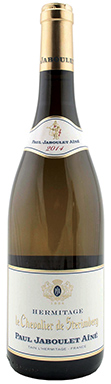

A Marsanne / Roussanne blend that floats above the palate, tightly stitched but elegant; will age very well. Fleshy stone fruit and honeysuckle with clear...
2014
Paul Jaboulet AînéHermitage

Paul Jaboulet Aîné, La Chapelle, Hermitage, Rhône, France, 2013
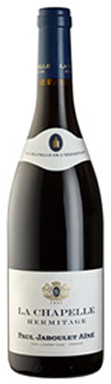
Tasted at Château La Lagune, owner Caroline Frey's Bordeaux outpost. One of the legendary wines from Hermitage Hil, La Chapelle comes from pretty much the...
2013
Paul Jaboulet AînéHermitage
Paul Jaboulet Aîné, Domaine de Thalabert, Crozes-Hermitage, Rhône, France, 2013
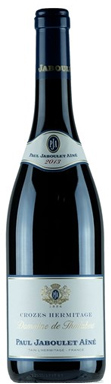
Inscrutable style, rather tannic, yet lean at the same time, but does not lack for fruit potential. Decanting will coax out more.
2013
Paul Jaboulet AînéCrozes-Hermitage
Château La Lagune, Haut-Médoc, 3ème Cru Classé, Bordeaux, France, 2016
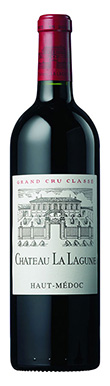
Classic in style, with savoury and spicy notes of leather, grilled meat and tobacco, countered by cherry, plum and pomegranate. Slightly chunky and dry, with...
2016
Château La LaguneHaut-Médoc
Château La Lagune, Haut-Médoc, 3ème Cru Classé, Bordeaux, France, 2015
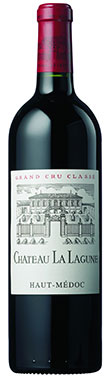
This showcases just how well the Margaux (or Margaux-adjacent) area did in 2015. The finessed quality of the tannins stands out as a signature of...
2015
Château La LaguneHaut-Médoc
