
Roagna: Producer profile & 11 wines tasted
Aldo Fiordelli visits the cellar of Roagna, 'one of the best examples of post-modern winemaking in the Langhe' and tastes several new releases including two 100-point wines.


An old, worn wooden stool appears from the darkness of the cellar, upon which Luca Roagna arranges a perfectly rinsed pair of Zalto Burgundy glasses, a corkscrew and a glass spittoon. Then he walks through the tunnels of the cellar in search of the latest vintages of his prestigious crus, yet to be released: the 2016 and the 2006 Riserva; an outstanding combination.
Scroll down to see tasting notes and scores for 11 new Roagna releases
No label, no capsule, no DOCG strip. Not yet at least. Only the corks marked with the vintage and the vineyard name allow us to identify the wines, illuminated by a spotlight which makes the old stool appear as if an altar.
This is the austere, respectful, passionate and consistent style of Roagna, a family estate of rural origins now in its fourth generation with Luca at the helm, preceded by his father Alfredo, and his father before him, Giovanni, and dating back to Vincenzo and Rosa who at the end of the last century were among the first ever to produce Barbaresco.
Access to the estate is almost hidden below the road to Castiglione Falletto by Rocche di Castiglione’s steep vineyards. The last cru vinified at the estate, 2016 marks its inaugural release.

Roagna’s vineyards
Roagna owns or manages some of the top MGA of both Barolo and Barbaresco, including Pira (a monopole of the estate, whose ‘Vecchie Viti’ parcel was last planted in 1937), Pajé (purchased in 1953), Asili (purchased in 1961), Montefico (purchased in 1929) and the famed Crichet-Pajé. The age of these vineyards helps to explain the historical depth of this winery.
‘The authenticity of each unique expression comes from small differences in the subsoil. It is easy to understand how a fifty-year-old grapevine with roots growing down into many different sedimentary layers can draw unique nutrients and trace specific elements that give that vine distinct characteristics,’ says Luca.
These MGAs all share a common denominator of elegance, the style of the vineyards matched with a fiercely traditional winemaking style for the Nebbiolo grape, intended to produce powerful wines meant for the long haul. This, in my opinion, is the Roagna ‘equation’ for the outstanding quality of their wines.
There are, however, several other details which Luca Roagna considered the essence of his viticulture and winemaking. ‘I embrace the idea of the forest. Where all creatures living in the vineyard are allowed to play a unique role in the biodiversity of the terroir,’ he says. Roagna manages a total of 20 hectares of land of which 12ha are planted to vines. ‘We believe in allowing a completely natural cover crop without any mowing, which allows for many varieties of plants to coexist.’
The soil of the vineyards around the cellar in Barolo has barely been touched since 2001. It is not fertilised, and the winery promotes the idea of ‘lazy vines’: ‘We believe that the beauty of a wine begins with a concert played by thousands of unique grapevines, where each individual vine interprets their own personal subsoil.’ Luca uses a massal selection, but 10 years ago he also began trials replanting using seeds from an old vineyard.
Harvest time is dictated by the ripeness of the seeds. ‘When the seeds are mature, the grapes are mature: never before, never after. The seeds should be brown, woody and crispy.’ One-hundred kilograms of grapes are picked before the harvest for a pied de cuvée, which provides the indigenous yeasts for the fermentation.

In the cellar
The crushing is very gentle. ‘We don’t want to extract the green part of the grapes, so we prefer a kind of long infusion with which we could achieve all the complexity of Nebbiolo.’ The post-fermentation maceration lasts as long as two to three months, using the submerged-cap technique in neutral, untoasted oak vessels.
Luca ages his wine for at least two (Barolo) and three (Barbaresco) years longer than the minimum required by law, for a total of between five and eight years, depending on the wine. After maceration, his wines mature for between 30 and 48 months in the neutral oak barrels before being racked off to concrete tanks for the final stage of maturation. They are then bottled, with low levels of sulphur, no fining and no filtration.
Now Luca Roagna is ready to sell his 2016s from both appellations, plus his flagship long-aged Crichet Pajé Barbaresco, which is now on the 2013 vintage, and his Pira Riserva, now on the 2006 vintage. The name is derived from the Piemontese for ‘little hill’. Pajé is a south-southwest-facing vineyard, and the soil contains a particularly high content of calcareous marl and active limestone in the Crichet Pajé portion of the hill.
Along with his top bottlings (don’t underestimate Pajé ‘Vecchie Viti’ 2016, or Pira Riserva 2006), these great vineyards also provide the fruit for Luca Roagna’s ‘best buys’. His Langhe Rosso is made with two-thirds Pira and one-third Pajé, partially obtained from the press wine from his top wines – although his use of long macerations means there is not much press wine available. He produces around 10,000 bottles of Langhe Rosso at a relatively affordable price.
There is also a hidden gem produced by Luca Roagna: a Timorasso. His latest 2015 vintage is quite ripe, but the 2014 is an exceptional example of the tight minerality this rare white grape can achieve.
Roagna’s wines are sometimes criticised for a lack of precision, but Luca and his team have demonstrated their ability to make fine, ageable wines fiercely expressive of their surroundings while serving as one of the best examples of post-modern winemaking in the Langhe.
Roagna new releases tasted and rated:
Related content
Barolo in depth: Castiglione Falletto plus 10 wines worth seeking out
Barolo 2018 vintage report plus top-scoring wines
Borgogno’s makeover: A decade of change
Roagna, Pira Riserva, Barolo, Castiglione Falletto, Piedmont, Italy, 2006
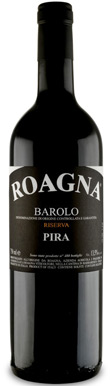

The black label ('etichetta nera') from Pira is a Barolo Riserva, and this 2006 is the latest release. Muscular and reductive at first, it is...
2006
RoagnaBarolo

Roagna, Pajé Vecchie Viti, Barbaresco, Barbaresco, Piedmont, Italy, 2016
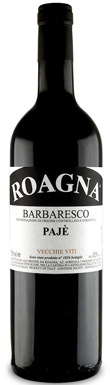
The term 'vecchie viti' is not officially recognised by the law but is displayed on some labels to indicate the use of old vines -...
2016
RoagnaBarbaresco
Roagna, Pira Vecchie Viti, Barolo, Castiglione Falletto, Piedmont, Italy, 2016
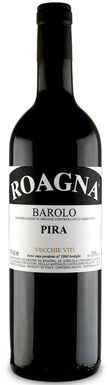
From a 1.5 hectare in the Pira MGA, just below and adjacent to the winery in Castiglione Falletto, this wine is produced from old vines,...
2016
RoagnaBarolo
Roagna, Crichet Pajé, Barbaresco, Barbaresco, Piedmont, Italy, 2006
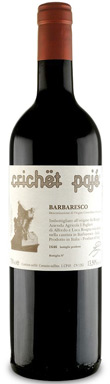
There's an intoxicating intensity on the nose here of prunes and earthy tones with a smoky character and some Parma violet notes. The wine is...
2006
RoagnaBarbaresco
Roagna, Crichet Pajé, Barbaresco, Barbaresco, Piedmont, Italy, 2013
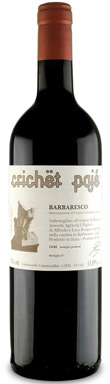
Crichet-Pajé has been produced since 1978 but the vineyard was planted back in 1958. From this plot Roagna produces 10 to 15 hectolitres, which it...
2013
RoagnaBarbaresco
Roagna, Pajé, Barbaresco, Barbaresco, Piedmont, Italy, 2016
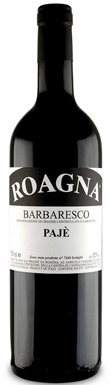
From 50-year-old vines in an amphitheatre on white soil, with a southwest exposure. The wine is focused on freshness, with a restrained mintiness and earthy...
2016
RoagnaBarbaresco
Roagna, Asili Vecchie Viti, Barbaresco, Barbaresco, Piedmont, Italy, 2016
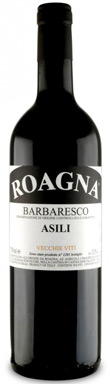
Famed for its elegance, Roagna farms just 0.22 hectares in Asili, producing 1,100 bottles in this fantastic vintage. Delicacy of citrus leaf, fresh violet and...
2016
RoagnaBarbaresco
Roagna, Pira, Barolo, Castiglione Falletto, Piedmont, Italy, 2016
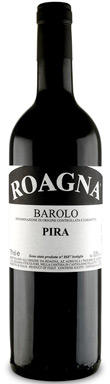
Pira is a selection from relatively young vines - in the context of Roagna - of 45 years, 'with a splash of older vines,' according...
2016
RoagnaBarolo
Roagna, Rocche di Castiglione, Barolo, Castiglione Falletto, Piedmont, Italy, 2016
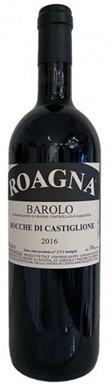
Luca Roagna has bottled Rocche di Castiglione for the first time in 2016. He manages 0.49 hectares beside the winery in Castiglione Falletto, from which...
2016
RoagnaBarolo
Roagna, Montefico Vecchie Viti, Barbaresco, Barbaresco, Piedmont, Italy, 2016
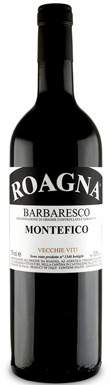
In Montefico, to the north of Barbaresco town, there are more blue marls compared to other sites. Here, the vines come from the slope facing...
2016
RoagnaBarbaresco
Roagna, Langhe, Piedmont, Italy, 2016
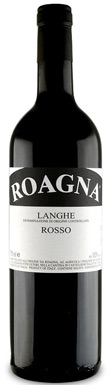
Produced with two-thirds of fruit from Pira and one-third from Pajé, this Langhe rosso is partly obtained from press wines. It's not hefty but shows...
2016
RoagnaLanghe
