Sachsen and Saale-Unstrut: Unearthing Germany’s exciting eastern regions
In the 35 years since German reunification, the wine regions of Saale-Unstrut and Sachsen have occupied little more than a footnote in the story of German viticulture. On a recent trip, Anna Lee Ijima found a young, bold new cadre of winemakers coming in from the cold.
Get our daily fine wine reviews, latest wine ratings, news and travel guides delivered straight to your inbox.
You are now subscribed
Your newsletter sign-up was successful
Far-flung from the western heartland of Germany’s better-known wine regions, Saale-Unstrut and Sachsen are respectively, its most northerly and easterly wine regions.
Saale-Unstrut, stretching above the northern 51st parallel – alongside London and Astana, the capital of Kazakhstan – teeters at the northern limits of quality viticulture. Sachsen, just two hours east and a touch south by car, extends as far east as Brandenburg at Germany’s border with Poland.
Together, these two small and isolated regions account for less than 1% of Germany’s total annual wine production.
Anna’s pick of nine wines to try from Sachsen and Saale-Unstrut below
Even Germans tend to express scepticism when asked about the wines here. There’s this narrative of the east that’s still shaded by the darkness of Communism, explains Matthias Hey, the winemaker of the family-owned Weingut Hey in Saale-Unstrut.
This is why visitors to these regions may be surprised to find that today, Saale-Unstrut and Sachsen are perhaps one of Germany’s most evocative and even avant-garde wine regions.
Certainly, not everything produced is exceptional. Combined, the regions boast only six members of the Verband Deutscher Prädikatsweingüter (VDP), the exclusive association of quality German wine producers.
But the overwhelmingly young, uniquely spirited generation of winemakers who lead Saale-Unstrut and Sachsen today are carving out an unexpectedly bold new chapter of German winemaking.
Get our daily fine wine reviews, latest wine ratings, news and travel guides delivered straight to your inbox.
A region both young and old
Despite the northerly extremes, winegrowing thrives on the steep, south-facing slopes that rise out from river valleys here. Saale-Unstrut is nestled in the valleys of the Saale and Unstrut rivers between Weimar and Leipzig. Sachsen extends along the Elbe River, centred around the towns of Meissen and Dresden.
The climate is deeply continental marked by extreme winter cold and deadly spring frosts. But vines that survive the winter are rewarded with sun-drenched growing seasons marked by cool nights and some of the lowest precipitation levels in Germany.
As throughout Europe, winemaking in these regions likely spans at least a millennium but repeated wars and upheaval took a heavy toll on its development. Whatever quality viticulture survived phylloxera in the 19th century was effectively erased under the Soviet-backed East German regime.
By 1945, privately owned wineries had been consolidated into state-run cooperatives. To satisfy the demands of the Eastern Bloc, viticulture shifted from ancient single vineyards on labour-intensive terraced slopes to high-yielding, mechanised production of workhorse grapes like Müller-Thurgau.
‘The German Democratic Republic [GDR, the official name for East Germany] destroyed much of our history,’ explains Alexander Hey, Matthias’ husband. ‘It’s why, unlike everywhere else in Germany, ‘we don’t have [many] wineries that were founded in the 14th century.’
But the erasure of the past has served, paradoxically, to liberate these regions from the constraints and obligations of tradition too. Indeed, nearly every winemaker in this part of Germany is only a first or second-generation producer. Many of the best are barely 30 years old.
Sachsen
It was the passion and grit of trailblazers like Dr. Georg Prinz zur Lippe of Schloss Proschwitz who set the stage for quality viticulture in Sachsen in the aftermath of reunification.
Vineyards surrounding Proschwitz Castle, the ancestral seat of the aristocratic Lippe-Weissenfeld family had been cultivated by monks as early as the 12th century.
In 1945, Prinz zur Lippe’s parents were arrested and later expelled by the Soviet Army to the west. His family’s holdings were expropriated with no compensation.
Prinz zur Lippe, born after his family’s exile, was a successful management consultant in Munich but returned to Sachsen after the fall of the Berlin Wall. Piece by piece, he bought back his family’s derelict property and succeeded in building a modern, high-quality winery, today the largest privately owned in the eastern part of Germany.
While Prinz zur Lippe’s reclamation of his ancestral past is remarkable, more impactful, perhaps, is the catalytic role his investment played in paving the path for the future.
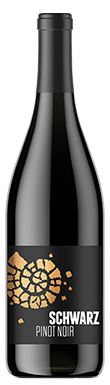
One of Sachsen’s most dynamic producers is Martin Schwarz who spent 16 years as Prinz zur Lippe’s winemaker. After obtaining a graduate degree at Geisenheim, he admitted a job in Sachsen wasn’t his first choice.
But Schwarz fell in love with the region’s steep granite slopes, its hidden single vineyards and the opportunity, ‘to start something new out of virtually nothing’.
Granite freshness
Historically, Sachsen and Saale-Unstrut were known predominantly for delicate white wines, sometimes quite thin, the product of much cooler climates and grapes like Müller-Thurgau, Traminer, Goldriesling or Elbling.
Hints of that classic style, crisp and easy drinking with bright acidity and delicate fruit flavours can still be evidenced to good effect in high-quality producers like Karl Friedrich Aust or Frédéric Fourré in Sachsen, explains Silvio Nitzsche, a sommelier and podcast producer in Dresden who has followed the evolution of these regions’ wines closely.
But Sachsen’s granite soils, a rarity in most of Germany, is expressive terroir for stylish, increasingly opulent expressions of varieties like Riesling, Pinot Blanc, Pinot Gris or Chardonnay.
And while limited in quantity, red varieties like Pinot Noir and Blaufränkisch have proven successful, and even some Nebbiolo thanks to Schwarz. Tasted blind, there’s always a distinct minerality, said Schwarz, ‘a smokiness of firestone’ and an expression of acidity that’s weightless yet stirring.
Despite rising temperatures, Sachsen produces wines of longevity and complexity without high alcohol or dense extraction – ‘it’s the freshness of granite’ – explains Matthias Schuh, the second-generation winemaker of Weingut Schuh, established by his father in 1990.
Schuh, who returned to Sachsen after extensive work abroad, most notably at Te Whare Ra, the biodynamic New Zealand producer, stands out as one of the region’s most visionary young winemakers.
His flagship wines, fine, filigreed expressions of Chardonnay and Pinot Blanc, are sourced in yields as low as 30 hl/ha from Klausenberg, a historic granite monopol restored and cultivated organically by his family.
Saale-Unstrut
Situated between the tourist-heavy cultural anchors of Dresden and Meissen, winemakers in Sachsen have little trouble selling their wines, even at prices above those from other German regions, notes Nitzsche.
Saale-Unstrut doesn’t benefit from as robust a ready-made market. Yet this challenge seems to have pushed its winemakers towards a greater degree of innovation and dynamism.
Weingut Hey is one of eight members of Breitengrad 51 (Latitude 51), a ‘kind of think tank,’ as Matthias Hey describes it, for like-minded winegrowers in Saale-Unstrut to connect, exchange ideas and innovate.
Wines from members like Hey, Böhme & Töchter, Weingut Born or Winzerhof Gussek are diverse but share a riveting sense of exuberance and clarity. Tasting their wines collectively, it’s hard not to recall the kinetic energy of associations like Message in a Bottle that transformed Rheinhessen just a generation or two ago.
The diverse make-up of soils in Saale-Unstrut – large proportions of shell limestone mixed with sandstone, loess and loam – is reminiscent of its closest neighbour to the west, Franken. While Müller-Thurgau is still the most planted variety here, it’s rapidly being replaced with varieties like Pinot Blanc and Riesling.
With consistently warmer climates, Chardonnay, Pinot Gris and Pinot Noir are what many of Saale-Unstrut’s quality producers claim will best represent this region’s future.
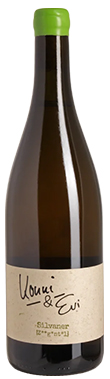
Silvaner too is uniquely suited to Saale-Unstrut, explains Konrad Buddrus, whose saline, earthen expressions of Silvaner have become a calling card for Konni & Evi, the tiny winery he operates with his wife, Eva-Maria Wehner.
Ripening consistently in cool vintages while maintaining acidity in hot ones, ‘Silvaner here is more filigreed than what you find in Franken, brighter and more acid-driven,’ he said.
Unfolding stories
Buddrus, a native to Saale-Unstrut, trained in Franken and abroad in New Zealand and Austria before returning to farm an abandoned single vineyard on steep slopes he purchased on eBay.
Since 2016, the couple has focused almost exclusively on similar plots of old, low-yielding Silvaner and Riesling planted before the GDR, some as early as the 1930s.
The challenging terrain makes for backbreaking work, but for Buddrus, it’s the purest expression of Saale-Unstrut. Their slim, minimalist wines contrast the increasingly polished style of their peers, but their uniqueness has established Konni & Evi as the region’s most recognisable ambassadors abroad.
Indeed, 80% of their wines are sold outside of Germany, largely in Japan, the UK, Denmark, Canada and the United States.
With the exception of wines from producers like Konni & Evi or Schloss Proschwitz, few wines from Saale-Unstrut or Sachsen have been exported outside their local market. Indeed, with such limited production and robust local demand, there’s been little financial impetus to do so.
Yet as Saale-Unstrut and Sachsen continue to shape their own, distinct identities, honing in on their unique terroir and rewriting their own viticultural heritage, it’s clear that the stories unfolding are too compelling to remain a secret much longer.
Sachsen and Saale-Unstrut: Nine wines to try
Related articles
- German Riesling: A buying guide for beginners
- German Grosses Gewächs releases 2024
- Maximin Grünhaus: Producer profile and wines to try
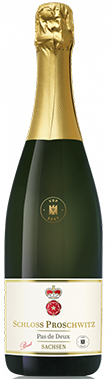
Weingut Schloss Proschwitz, Pas de Deux, VDP Sekt, Sachsen, Germany, 2020

Quality sekt is no longer an anomaly in Sachsen and it seems to be a speciality among the diverse offerings at Schloss Proschwitz. The Pas...
2020
SachsenGermany
Weingut Schloss ProschwitzVDP Sekt
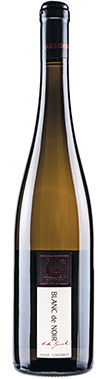
Winzerhof Gussek, Blanc de Noir, Saale-Unstrut, Germany, 2023

<p>André Gussek, the last cellar master of the state-owned cooperative in Naumburg, is a pioneering figure and mentor for many young winemakers in Saale-Unstrut. Today,...
2023
Saale-UnstrutGermany
Winzerhof Gussek
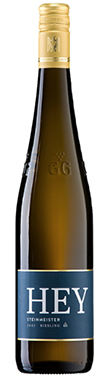
Weingut Hey, Steinmeister GG Riesling, Grosses Gewächs, Saale-Unstrut, Germany, 2022

This is a perfumed, lavishly floral wine packed with ripe, penetrating flavours of yellow plum and tart tangerine. Voluminous and textured yet held taut by...
2022
Saale-UnstrutGermany
Weingut HeyGrosses Gewächs
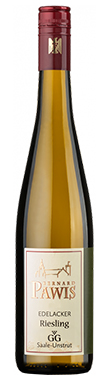
Bernard Pawis, Edelacker GG Riesling, Grosses Gewächs, Saale-Unstrut, Germany, 2022

A rich, ripe, powerful Riesling backed by the distinctly saline, chalky intensity of shell-limestone soils. Full bodied and steely in tone, it juxtaposes bright lemon...
2022
Saale-UnstrutGermany
Bernard PawisGrosses Gewächs
Konni & Evi, Zeigental Silvaner, Saale-Unstrut, Germany, 2021

Sourced predominantly from vines planted in the 1930s, this is a uniquely slim, piercing expression of Silvaner grown on the limestone soils. It's a remarkably...
2021
Saale-UnstrutGermany
Konni & Evi
Weingut Klaus Zimmerling, GG Riesling, Grosses Gewächs, Sachsen, Germany, 2022

Klaus Zimmerling is another trailblazer of Sachsen, who, with his sculptor wife created an enchanted garden paradise of wine and art at the foot of...
2022
SachsenGermany
Weingut Klaus ZimmerlingGrosses Gewächs
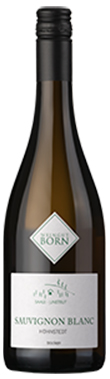
Weingut Born, Höhnstedter Trocken Bio Sauvignon Blanc, Saale-Unstrut, Germany, 2023

Sauvignon Blanc is a rarity in Saale-Unstrut but the chalky, saline edges on this floral, lime-kissed white suggest an aptitude for this variety in this...
2023
Saale-UnstrutGermany
Weingut Born
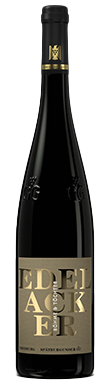
Böhme & Töchter, Edelacker Freyburger GG Spätburgunder, Grosses Gewächs, Saale-Unstrut, Germany, 2022

Marika and Sandro Sperk are the second generation at the helm of this winery founded by Marika's father in 1986. They're most known for opulent...
2022
Saale-UnstrutGermany
Böhme & TöchterGrosses Gewächs
Martin Schwarz, Friedstein GG Spätburgunder, Grosses Gewächs, Saale-Unstrut, Germany, 2020

Whiffs of struck stone and freshly dug beetroot meld into sweeter tones of cherry blossom, blackberry and plum in this fragrant, supple wine sourced from...
2020
Saale-UnstrutGermany
Martin SchwarzGrosses Gewächs
Weingut Schloss Proschwitz, Pas de Deux, VDP Sekt, Sachsen, Germany, 2020

Quality sekt is no longer an anomaly in Sachsen and it seems to be a speciality among the diverse offerings at Schloss Proschwitz. The Pas...
2020
SachsenGermany
Weingut Schloss ProschwitzVDP Sekt
Winzerhof Gussek, Blanc de Noir, Saale-Unstrut, Germany, 2023

<p>André Gussek, the last cellar master of the state-owned cooperative in Naumburg, is a pioneering figure and mentor for many young winemakers in Saale-Unstrut. Today,...
2023
Saale-UnstrutGermany
Winzerhof Gussek
Weingut Hey, Steinmeister GG Riesling, Grosses Gewächs, Saale-Unstrut, Germany, 2022

This is a perfumed, lavishly floral wine packed with ripe, penetrating flavours of yellow plum and tart tangerine. Voluminous and textured yet held taut by...
2022
Saale-UnstrutGermany
Weingut HeyGrosses Gewächs
Bernard Pawis, Edelacker GG Riesling, Grosses Gewächs, Saale-Unstrut, Germany, 2022

A rich, ripe, powerful Riesling backed by the distinctly saline, chalky intensity of shell-limestone soils. Full bodied and steely in tone, it juxtaposes bright lemon...
2022
Saale-UnstrutGermany
Bernard PawisGrosses Gewächs
Konni & Evi, Zeigental Silvaner, Saale-Unstrut, Germany, 2021

Sourced predominantly from vines planted in the 1930s, this is a uniquely slim, piercing expression of Silvaner grown on the limestone soils. It's a remarkably...
2021
Saale-UnstrutGermany
Konni & Evi
Weingut Klaus Zimmerling, GG Riesling, Grosses Gewächs, Sachsen, Germany, 2022

Klaus Zimmerling is another trailblazer of Sachsen, who, with his sculptor wife created an enchanted garden paradise of wine and art at the foot of...
2022
SachsenGermany
Weingut Klaus ZimmerlingGrosses Gewächs
Weingut Born, Höhnstedter Trocken Bio Sauvignon Blanc, Saale-Unstrut, Germany, 2023

Sauvignon Blanc is a rarity in Saale-Unstrut but the chalky, saline edges on this floral, lime-kissed white suggest an aptitude for this variety in this...
2023
Saale-UnstrutGermany
Weingut Born
Böhme & Töchter, Edelacker Freyburger GG Spätburgunder, Grosses Gewächs, Saale-Unstrut, Germany, 2022

Marika and Sandro Sperk are the second generation at the helm of this winery founded by Marika's father in 1986. They're most known for opulent...
2022
Saale-UnstrutGermany
Böhme & TöchterGrosses Gewächs
Martin Schwarz, Friedstein GG Spätburgunder, Grosses Gewächs, Saale-Unstrut, Germany, 2020

Whiffs of struck stone and freshly dug beetroot meld into sweeter tones of cherry blossom, blackberry and plum in this fragrant, supple wine sourced from...
2020
Saale-UnstrutGermany
Martin SchwarzGrosses Gewächs
Anna Lee Iijima is a Japanese and American journalist and wine critic based in New York City. For 13 years she was the contributing editor for Germany, the Rhône Valley, Burgundy and New York for Wine Enthusiast Magazine. In addition to Decanter, she writes frequently for the Chicago Tribune, Philadelphia Inquirer and Food & Wine Magazine, among other publications. Anna Lee holds a WSET Diploma as well as a certification in Viticulture and Vinification from the American Sommelier Association. She is a certified sake professional of the Sake Education Council and a senior judge for the International Wine Challenge Sake Competition. In a previous life Anna Lee was a corporate lawyer.