
Jefford – Saperavi: Hoodlum or Hero?
Andrew Jefford travels to Tbilisi to judge in Georgia’s first International Saperavi Competition...


The antiquity of its wine culture, the genetic diversity of its indigenous varieties and the uniqueness of its native wine-making techniques: those three calls on our attention make Georgia a wine magnet.
It’s easy to forget, in the enthusiasm for all of this, that it is still a wine-making nation in recovery. The country has 48,000 ha of vines, according to the OIV, but that is only just over a third of the plantings it had as recently as 1976; in its pre-phylloxera glory days, too, it had around double the current total. Most of us know that the country nurtures 525 indigenous varieties, but you have to scour the country’s key grapevine collections to meet this extended family; in practice, a handful of varieties dominate today’s Georgian vineyards, notably the white Rkatsiteli (around 20,000 ha; over 80 per cent of Georgian production is of white wine and most of that is Rkatsiteli) and the red Saperavi (almost 4,000 ha). The two other major varieties are the white Tsolikouri (6,000 ha) and the white Tsitska (almost 3,000 ha).In mid-December 2018, I had the chance to head back to Tbilisi to help judge the Georgian Wine Association’s first Saperavi International competition, alongside a distinguished array of Georgian wine-makers and wine tasters, as well as international winemakers working in Georgia (such as Patrick Honnef of Ch Mukhrani) and Georgian expert Lisa Granik MW, currently writing a book on Georgian wine.I was nervous. I’d discovered on previous visits to Georgia just how showy a variety Saperavi could be – but could it be subtle, fine and intricate? How well might its wines age? Might it have global potential outside its current range (there are also significant plantings in Ukraine, Moldova and Russia)? The organizers had solicited samples from elsewhere, including Saperavi from Australia, the Finger Lakes and Russia; these were judged separately.
When you first meet Saperavi, it can seem hoodlum-like, as if it has a superfluity of everything: colour, fruit, acid, tannin, character. It is a semi-teinturier variety, with pink juice; the name means ‘dye’ in Georgian. Like Pinot Noir, it occurs in different forms and variants, which in itself suggests antiquity. The first references to the variety come in the C17, but there is some archival evidence that it was known in Georgia as long ago as the C11. According to researcher David Maghradze, it has long been considered “the best” red variety in Georgia – and never better than in Georgia’s key wine-producing region of Kakheti, which is where it produces its most powerful and long-lived wines.
I compared notes with my Georgian co-judges. They tended to be suspicious of the young wines which I liked, regarding them as astringent and undrinkable; they much preferred the older, more mature wines in the competition (which explains why some of my choices below did not receive gold medals). Qvevri Saperavi wines were judged separately to conventionally vinified versions. Remember, though, that qvevri red wines are less radical a departure from the norm than qvevri whites; they are worked with skins during fermentation, as all red wines are, and may after fermentation pass to wood ageing rather than undergoing long post-fermentation maceration in a qvevri. Whole bunches are not always used for reds (though they may be, in whole or in part).
What might you expect from your first Saperavi? Look out for amazing density and texture when young, but note that this polyphenolic ferocity is capable of evolving swiftly. You’ll find an astonishing repertoire of fruit characters, principally black fruits — blackcurrant, plum, blackberry, sloe, damson; there’s always high fruit drama in a Saperavi. You’ll find spices too, and citrus peel, and incense in the more exotic versions. Acidity can be very prominent, but it’s usually fruit-saturated, not raw; it can be the main structuring element in some wines. Yet acidity can also be low, too, in the riper wines, which rely on tannins for structure. If the tannins are soft – and Saperavi can be vinified in that way — then the wine can become toffeed and (if given expansive oak) very ‘New World’ in style: lots of sweetness without structure. I noted that Saperavi seems to absorb oak better on its palate than in its aromatic profile: oaky noses weren’t always followed by excess oak on the palate… but in general seems to me that discreet oaking is much to be preferred for Saperavi. Saperavi is prone to reduction, and the qvevri reds in particular can have strange characters of all sorts. When successful, though, they’re the most profound Saperavi wines of all.
By the end of the competition, my nervousness had gone. The best wines eclipsed my expectations, without any indulgence on my part. I came to realise that the fruit quality of this variety can have intricacy and resonance as well as flamboyance; that its exuberant tannins in youth settle relatively swiftly with age; that it doesn’t necessarily need the help of oak. Because of its characterful, confronting and supremely energetic nature, though, it will take the wine world several decades to learn to ‘read’ the variety — just as lovers of literature need time to learn how to read Joyce, Beckett or Eliot. Eventually we may come to view it as one of the world’s great red varieties, on a par with Nebbiolo, Pinot Noir or the Cabernets.
The tasting
The tasters were divided into two panels, so I had the chance to taste half of the 185 wines in competition. Here is a selection of ten of the best on my score sheets.
The first four wines below are non-Qvevri styles. The next six wines are Qvevri style wines.
Buneburi Wine Cellar, Saperavi, Kakheti, Georgia, 2017
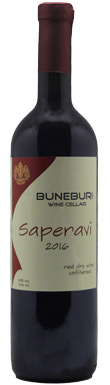

This unfiltered, gold-medal winning Saperavi comes from just a single hectare of vines, planted at 540m and cultivated with minimum intervention, close to the village...
2017
Buneburi Wine Cellar

Khareba, Premium Saperavi, Kakheti, Georgia, 2014
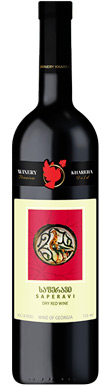
This wine, from the mid-sized Khareba, was a silver-medal winner in the Saperavi International competition. The fruit is sourced from Kakheti, and despite four years...
2014
Khareba
Archil's Wine, Telavi Old Cellar Saperavi, Kakheti, Georgia, 2016
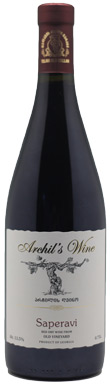
This wine from viticulturist and wine-maker Archil Utiashvili is made from 30-year-old Saperavi growing in the Tsinandali zone of Kakheti (Tsinandali is an appellation of...
2016
Archil's Wine
Mildiani Family Winery, Tsinandali Old Cellar Reserve Saperavi, Kakheti, Georgia, 2013
This 2013 wine from the Mildiani Family illustrates Saperavi’s ability to soften and transform with age over a medium timeframe. It’s still deep black red...
2013
Mildiani Family Winery
Katchiuri Vineyards, Damarchine-Bevrnairi Saperavi, Kakheti, Georgia, 2018
The qualities of this very young, qvevri-fermented Saperavi sing out so clearly that even those judges sceptical of youth were won over sufficiently to see...
2018
Katchiuri Vineyards
Shermadini Winery, Saperavi, Kakheti, Georgia, 2017
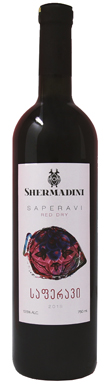
Shermadini is based in Gurjaani, another white-wine appellation of origin in Shida Khakheti. This silver-medal-winning qvevri-fermented Saperavi is a dense, saturated purple black-red in colour,...
2017
Shermadini Winery
Vakhtang Beruashvili Family Wine Cellar, Vakhtanguri Kvareli of Qvevri Saperavi, Kakheti, Georgia, 2017
This silver-medal winning qvevri-fermented wine comes from a small Kakhetian winery which also won a gold medal in the 2018 International Qvevri Wine Competition. It’s...
2017
Vakhtang Beruashvili Family Wine Cellar
Kakhuri Gvinis Marani, Qvevri Saperavi, Kakheti, Georgia, 2017
This Gurjaani winery won a bronze medal for its 2017 and a silver-medal for its 2014 – though I scored the two wines equally, and...
2017
Kakhuri Gvinis Marani
Hugh Hamilton Wines, Oddball The Great Saperavi, McLaren Vale, South Australia, Australia, 2016
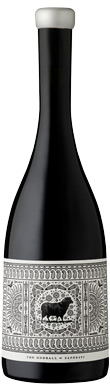
It was no surprise that one of the two gold-medal winning Saparavis came from enthusiast Hugh Hamilton in McLaren Vale: he’s been following the variety...
2016
Hugh Hamilton WinesMcLaren Vale
Chateau Tamagne, Kuban Vino Reserve Saperavi, Taman Peninsula, Russia, 2011
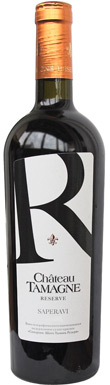
The second international gold-medal winner was the 2013 vintage of this wine, and the 2015 was awarded a silver medal, but my favourite version was...
2011
Chateau Tamagne
