
Sincere Sancerre: A Loire revival and eight wines to seek out
A focus on terroir has raised the white wines of Sancerre, this special part of the Loire valley, to new heights.


The sign nailed to the wall outside François Cotat’s cellar looks pretty permanent: Fermé.
But soon enough, the man himself comes out to greet me. ‘I hope you’re not going to write about me,’ he says, shaking my hand. ‘I get too many visitors as it is.’
Scroll down for notes and scores of eight terroir-focused Sancerre wines
Global resurgence
And there’s a reason why wine buyers are beating a path to the doors of the best growers: the top wines of Sancerre now rival some of the finest whites in France.
The wine equivalent of the Little Black Dress, Sancerre is an understated French classic that has never gone out of fashion. Its popularity is understandable.
Fresh, fruity and affordable, it’s the perennial favourite of Parisian bistros and one of those rare French wines that anglophone tourists can order with a reasonable hope of being understood.
It’s also an excellent traveller, and most is drunk outside France (about 60% of wine from Sancerre is exported, with about half of that going to the US). Sancerre has, in recent years, become the go-to white for many wine lovers, especially in the US.
Jon-David Headrick, an American importer who specialises in Loire wines, says: ‘Sancerre has become the de facto shorthand for “a good French wine” in the American imagination, with its reputation often eclipsing even the specifics of grape variety or origin.’

Tourist draw
The appellation is centred on the hilltop village of Sancerre.
Considered to be one of the most beautiful villages in France, with its medieval jumble of narrow streets and picture-postcard vineyard views in all directions, it has long been a popular destination for wine tourists thanks to its relative proximity to the capital.
Looking out from the top of the village, a sparkling stretch of the Loire river contrasts with the undulating emerald sea of Sauvignon Blanc vines that extends as far as the eye can see.
Reds and rosés are the sideshow here: Sancerre is all about its distinctive, mineral whites.
Today, there’s evidence that Sancerre is moving beyond reliable everyday whites to something rather more special.
Among the top growers, there has been a proliferation of cuvées focusing on individual sites.
François Dal, a technical consultant for the appellation’s winemakers, recalls: ‘Twenty years ago, each producer made just one or two cuvées – and the second was often just an oak-aged version of the first. Some vignerons isolated certain terroirs, but it was not the norm.’
According to Dal, change was accelerated by a new generation of winemakers who trained in Burgundy and drew inspiration from the focus on terroir that they saw there.
Both wine regions lie within the Paris basin, so they have the same underlying geology.
Known locally as ‘terres blanches’, the Kimmeridgian marls (a mix of limestone and clay) of Sancerre are barely 100km away from those of Chablis to the northeast.
High-quality wines grown from these soils can express remarkable similarities in the glass: the taste is of the terroir, not Chardonnay or Sauvignon. This notion is reinforced by the attitude of the growers to their signature grape.
Arnaud Bourgeois, of Domaine Henri Bourgeois (pictured, below), says: ‘In Sancerre, we have no interest in the variety. We don’t want to make varietal wines.’

Some of Sancerre’s better-known single-vineyard sites (lieux-dits)
Sancerre • Belle Dame • Les Romains • Pieuchaud (near Thauvenay)
Chavignol • Le Cul de Beaujeu • Les Chasseignes • Les Monts Damnés
Bué/Amigny • Chambrates • Chêne Marchand • Grand Chemarin • Guigne-Chèvres • La Moussière • Le Paradis • Petit Chemarin
Well grounded

Of far more interest to the vignerons these days is understanding the growing environment of their vines. And this is where the excitement lies.
While wine-growers everywhere rhapsodise over the qualities of their terroir, in Sancerre they have more to talk about than most, with their very own geological fault running north-south through the appellation (see map).
This fracturing of the Earth’s crust has generated a complexity of soils that’s as interesting for Sancerre’s wines as it is for students of geology.
Harnessing the value of these terroirs has become the focus of today’s growers looking to produce wines that are a true reflection of place, and tasting these differences can be fascinating.
Clément Berthier, owner and winemaker of Vignobles Berthier and president of the Sancerre growers’ association, explains: ‘We are not making Sauvignon Blanc; we are working with Sauvignon Blanc.’
This move towards greater precision and understanding of site marks a qualitative shift in the wines of Sancerre and is good news for growers and wine lovers alike.
Headrick says: ‘There’s still a lot of classic Sancerre made by blending across different soils, but the new wave of site-specific bottlings has really taken things to another level. The terroir here is incredibly complex, and the best wines are finally getting the attention they deserve.’
Domaine Vacheron, a family winery that goes back four generations, was an early adopter of bottling terroir-specific wines. ‘It was intuitive for us,’ says winemaker Jean-Laurent Vacheron (pictured, above). ‘The lieux-dits were identified hundreds of years ago: nothing has changed.’
While the domaine makes a fine Sancerre from grapes blended from different sites, most of the Vacheron wines come from individual parcels that are typically reflected in the name of the wine, for example Guigne-Chèvres and Les Romains.
These wines, all produced in the same way, provide an insight into the differences between the lieux-dits, from the powerful mineral tension of flinty Les Romains to the richer, floral fruitiness of the stony-clay Guigne-Chèvres.
In his book Les Terroirs Sancerrois (Loubatieres, 2020), Thibaut Boulay quotes from a 1679 text in which the author advises: ‘Fifty steps more or less from one vine to another is enough to make a difference.’
Anyone visiting the vineyards today can clearly see these differences, so it’s hardly surprising that there can be such a wide array of styles. It’s almost more surprising that grapes from such different soils have been blended for so long.

When to drink top Sancerre
Sancerre is usually drunk on release or very soon after. Simple Sauvignon, with fresh, grassy fruit in the green spectrum of flavours, is likely to lose its youthful appeal quickly and risk developing vegetal characters if kept more than a couple of years.
However, the finest wines of Sancerre, often from single-vineyard sites, are quite different.
For one thing, they’re usually older on release, having been aged on lees for up to 18 months before bottling. While most are approachable young, many will improve significantly in bottle.
At Henri Bourgeois, the library of wines shows conclusively that Sancerre can age deliciously for 30 years or more.
But is this the best time to drink them? Most Sancerre vignerons advise drinking their wines when they are ‘young’, but by this they rarely mean as soon as they are released.
‘There is a sweet spot after a few years when the wines taste their best,’ says Jennifer Denizot, of Domaine Denizot.
Alphonse Mellot suggests that for his wines, ‘it’s best to wait four to five years’. Other growers agree.
François Cotat, whose wines have legendary ageability, bottles his production quickly, ‘to keep energy and youth in the bottle so it can age for a long time’. His advice? ‘Wait five years before opening, and then carafe the wine.
Quality divide
So can it be said that Sancerre’s status in 2025 has risen from bistro quaffer to fine wine? In some cases, the answer is a resounding ‘yes’.
There are wines of mineral depth and complexity from domaines such as Claude Riffault, François Crochet, Jean-Philippe Agisson, Lucien Crochet, Paul Prieur, Vacheron, Vincent Pinard and many more.
The parcel-by-parcel approach to winemaking has given growers a greater understanding of their land and resulted in more expressive wines.
But although the overall quality of Sancerre wines has risen considerably, there is still a divide between the best and the rest.
There are about 300 growers in Sancerre, and some are undoubtedly trading on the well-known name with little justification in the bottle for the premium it attracts.
A lot of Sancerre wine is safe, predictable and drinkable. But to produce thrilling wines that really speak of their origins requires a lot of work.
Precise picking

Sauvignon Blanc needs careful handling. The use of machine harvesters is a sensitive topic here.
Most Sancerre is picked by machine, and the results can be perfectly good – especially if the grapes need to be picked in a hurry. But for virtually all the top wines, the grapes are hand harvested.
At Domaine Serge Laloue in Thauvenay, Franck Laloue (pictured, above) cautions: ‘If you harvest by machine, you risk having wines that are more varietal because of the broken skins [because the machines shake the fruit from the vines].’ He uses machines for many of his sites, but not for his single-vineyard wines.
The best vignerons verge on obsessive in the care they lavish on their grapes and the lengths they go to in the cellar to craft their wines.
This precision wine-growing results in higher prices but, compared to the quality, great Sancerre still offers value.
Unlike in Burgundy, there is no official hierarchy of vineyard sites in Sancerre. Some lieux-dits have long been known to produce superior wines, although (as in Burgundy) the site’s name is no guarantee of quality.
The best advice for discovering the complexities of Sancerre’s terroir is to find a good producer and explore their range.
And if you have the chance, why not do it in situ? Call it research.
Blanning’s best: Eight sincere Sancerres
Related articles
- Decanter cellar: 15 must-try Sauvignon Blanc
- The 20 best rosés from beyond Provence this year
- Loire wine exports hit highest value in 24 years
Henri Bourgeois, Les Ruchons, Sancerre, Loire, France, 2020
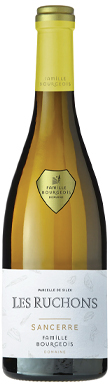

A classic expression of flint ('silex') soils, it's full-bodied, with an intensely mineral personality and a compelling, almost-sour lemony, stony acidity. Structured and simply delicious....
2020
Henri BourgeoisSancerre

Paul Prieur & Fils, Monts Damnés, Sancerre, Loire, France, 2023
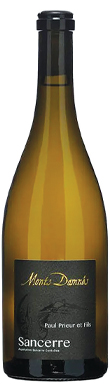
This opens with an expressive nose of elderflower, spring meadow scents and mouthwatering minerals. On the palate, it's gorgeously bright, with effortless fruit, juicy acidity...
2023
Paul Prieur & FilsSancerre
Alphonse Mellot, Génération Dix-Neuf, Sancerre, Loire, France, 2020
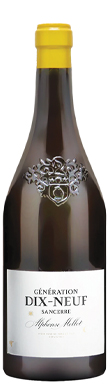
From a part of the lieu-dit of La Moussière where the oldest vines date back to 1912 and grow on Kimmeridgian marls, this super-ripe wine...
2020
Alphonse MellotSancerre
Domaine Claude Riffault, Monoparcelle 538, Sancerre, Loire, France, 2023
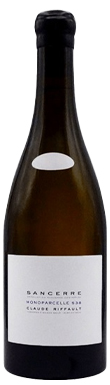
One of Stéphane Riffault's micro-cuvées, sourced from a tiny, windy site of less than half a hectare with shallow limestone soils. The nose offers lemon,...
2023
Domaine Claude RiffaultSancerre
François Crochet, Le Chêne Marchand, Sancerre, Loire, France, 2022
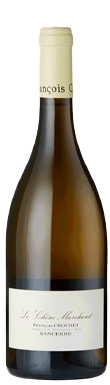
The nose is bright and citrusy, with honey and elderflower notes. On the palate, the fruit is pristine and refreshing, with pronounced minerality. Powerful and...
2022
François CrochetSancerre
Jean-Max Roger, La Côte de Bué, Sancerre, Loire, France, 2018
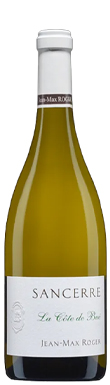
Tasted alongside the 2017 and 2019 vintages, this was my pick of the trio. On the nose, it's open and fruit-forward, with bright citrusy notes....
2018
Jean-Max RogerSancerre
Domaine Vacheron, Guigne-Chèvres, Sancerre, Loire, France, 2023
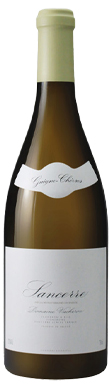
The 2023 is open, rich and fruity, with concentration and density, vinous in the mouth. The combination of clay and limestone gives a wine of...
2023
Domaine VacheronSancerre
Daniel Chotard, Les Coutones, Sancerre, Loire, France, 2022
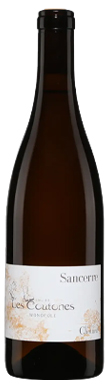
The lieu-dit of Les Coutones is wholly owned by the Chotard family. A steep, south-facing slope lends a natural ripeness to this wine, but freshness...
2022
Daniel ChotardSancerre
