Sonoma Cabernet Sauvignon: Producers, styles & wines to try
It may be surprising to learn that there are nearly an equal number of hectares planted (approximately 5,260) of Cabernet Sauvignon as Pinot Noir in Sonoma County. But attention to this Bordeaux variety is often eclipsed by the region’s reputation for Pinot Noir and the Cabernets made nearby in Napa.


With a changing climate, new appellations defining nuances in terroir, and ever-growing insights into soil-vine interplay, more attention is paid to Cabernet Sauvignon in Sonoma than ever before.
Cabernet Sauvignon has been planted in Sonoma since the late 19th century. In the early 1970s, wineries such as Jordan and Silver Oak made the variety central to their portfolio. After the Judgement of Paris in 1976, attention shifted to the Cabernets of Napa, but the grape’s popularity still carried on in Sonoma.
Scroll down to see tasting notes and scores for 12 Sonoma Cabernet Sauvignon wines worth seeking out
Cabernet plays a vital role in the mosaic of Sonoma varieties. It is often described as savoury and mineral-driven, with a darker fruit profile and more austere tannins in its youth. Warmer appellations such as Alexander Valley, Knights Valley, and Dry Creek Valley AVAs contain the most significant plantings.
Still, a smattering of vineyards can be found in cooler appellations, such as the Waterhorse Ridge Vineyard in the foggy coastal area of Fort Ross-Seaview AVA. And as the climate changes, producers continue to explore the potential for Cabernet.
Here’s a snapshot of some of the region’s producers focusing on Cabernet:

Anakota
If Verité is Pierre Seillan’s homage to Bordeaux, then Anakota is his nod to the Grand Crus of Burgundy. Cabernet Sauvignon is expressed through two different vineyard bottlings: Helena Montana and Helena Dakota.
Knights Valley is one of the warmest appellations in Sonoma and is known for Bordeaux varieties. Cool breezes from the ocean temper the heat but the Mayacamas mountain range block the fog intrusion or marine layer that blankets other areas.
Contrary to the common belief that a climate gets warmer the further south you go, the opposite is true in Sonoma. South leads to the cooling winds through Petaluma Gap and the San Francisco Bay. But venture north, and vineyards, landlocked by the mountain ranges, see more heat.
For Anakota, it’s a tale of two terroirs: the Montana Vineyard, at about 24 hectares, is predominately sandstone and volcanic ash, while the Dakota Vineyard, a mere 4.8 hectares, attributes the red hue of its soils to the high iron content. Both vineyards were planted in 1997.
Harvest usually wraps up by the second week in September. ‘It could be a long growing season if our goal were to force maximum ripeness in the fruit,’ says Trey Christy, marketing brand manager. ‘But Pierre’s always looking for that balance, that tension in the wines. He wants the natural acidities, he wants the firm tannins, and the fruit in the wine to balance that, not outpace it.’

Hamel Family Wines
Half of a hectare of Cabernet Sauvignon on the Kenwood property purchased by the Hamels in 2006 led to their winemaking odyssey.
Cabernet comes exclusively from two sites. Nuns Canyon Vineyard resides at 366 to 488 meters on the western slopes of the Mayacamas, while Hamel Family Ranch sits at a lower elevation. Both contain volcanic soils dating back three to five million years, with some variations at each site, but the soils overall provide great drainage and are rich in iron.
Hamel Family farms biodynamically and implements dry farming. Typically, the estate sees 700mm of rain from November through April, then drought conditions in the growing season. ‘Cabernet Sauvignon is well-suited to Sonoma because it is a drought tolerant cultivar that can stay balanced in a warm and dry environment and make elegant wines in those conditions,’ says John Hamel II, director of winegrowing.
When it comes to Cabernet’s future, Hamel sees potential in the eastern part of the county and around the Mayacamas. ‘Sonoma’s proximity to the Pacific Ocean to the west and the bay on the southern end allows for a moderation of the heat accumulation and provides excellent diurnal shifts throughout the growing season,’ Hamel says. ‘With conditions becoming more erratic with climate change, and in general warmer and drier patterns compared with historical averages, the proximity to the coast will hopefully continue to be an asset for moderating heat peaks and providing refreshing humidity.’
Skipstone
Skipstone sits on 81 hectares, 11 of those under vine, in the proposed Pocket Peak appellation in Alexander Valley. Originally planted in 1993, grapes were sold to other wineries before entrepreneur Fahri Diner bought the estate in 2001. The first Skipstone vintage was bottled in 2005.
Philippe Melka has served as consulting winemaker since 2006, and in 2022, Laura Jones, who previously worked at Aubert, Cliff Lede, and Domaine Armand Rousseau, among others, joined as head winemaker.
Part of the terraced vineyard sits on a 50% gradient slope, a level of steepness that can’t be planted today, according to Sonoma County of Agriculture rules. Due to their placement, the backside of the vine sees more morning sun. ‘We love the exposure, and the shallow soils on the hillsides really make the vines work and help concentrate the fruit,’ says Jones. Sophia’s Vineyard Cabernet Sauvignon, a barrel-select wine, comes from blocks of old vines on this portion of the property.
The lower portion of the slope called the Faultline Vineyard, is planted with Cabernet Sauvignon, Merlot, Cabernet Franc, and Malbec. Between 2003 – 2009, about half the vineyard was replanted with clones and rootstocks better suited for the site.
Certified organic in 2008, Skipstone received its sustainable certification in 2018 while simultaneously began implementing biodynamic practices.

Skipstone Vineyard in the fog. Credit: Skipstone
Stonestreet Estate Vineyards
‘I think people who truly understand Sonoma County world-class expression, Bordeaux varieties, understand that in many cases, time is your ally,’ says second-generation proprietor of Stonestreet Estate Vineyards Chris Jackson. Thus, the foundation for the ambitious program to hold back the release date of wines by ten years.
The native flora and fauna give the wines a distinct herbaceous character, which unfurls over time, according to Stonestreet’s winemaker Kristina Shideler.
‘I think part of the ageing of the Cabernets, in particular, is how they start to reveal, aromatically, parts of the mountain,’ she says. The Rockfall Vineyard, for example, reveals notes of violets, Shideler describes, along with blue fruits and aromas of tea.
Fruit comes from mountain vineyards within Alexander Valley, which sits as high as 731.5 meters above sea level. At this elevation, a marine inversion layer means vineyards are generally warmer at night than the valley floor. At the same time, exposure to the sun creates thicker skins with a higher tannin content. This is steep, rocky terrain battered by coastal winds.
The specific characteristics of the terroir spurred winemakers from Aperture Cellars, Foley Family Wines, Stonestreet Estate, and others to petition for a new AVA called Pocket Peak, further solidifying Cabernet’s place in the Sonoma grape canon.
Verité
Founded by Jess Jackson of Jackson Family Wines and French vigneron Pierre Seillan, the focus has always been on Bordeaux blends as expressed through three cuvées: La Joie, Le Desir, and Le Muse.
Now at the helm of the next generation – Chris Jackson and Helene Seillan, who is slowly taking over from her father – the estate continues to follow the philosophy set by the previous generation of creativity and freedom of expression.
Fruit comes from four sub-appellations in Sonoma County—Alexander Valley, Knights Valley, Chalk Hill, and Bennett Valley—sourced across approximately 50 lots. Within these sites, they farm by what they call the ‘micro cru’ concept.
‘There are blocks that are literally divided into two or three sections, where the row goes all the way down, but we actually stop halfway,’ says Seillan of their harvesting techniques.
Seillan compares the vinification of each cru to raising a child just to be themselves, allowing each’s unique qualities to stand on their own. Lots are then blended, and the ratio changes every vintage in order to create their signature wines. ‘What’s so amazing is we don’t have any limits,’ says Seillan. ‘It’s a very Old World way of making wine and of viticulture. But at the same time, we have so much liberty to create.’

Verité’s Alexander Valley Vineyards. Credit: Jackson Family Wines
Waterhorse Ridge Vineyard
Fort Ross-Seaview AVA on the Sonoma Coast is primarily Pinot Noir country. Still, Waterhorse Ridge Vineyard boasts 0.8 hectares of Cabernet Sauvignon and serves as the source of fruit for Enfield Wine Co. and Unturned Stone. Sitting at 518 meters in elevation, the vineyard was planted in the late 1990s and, to this day, is farmed organically. It’s somewhat of an outlier geographically, but vintners say stylistically, it aligns with the markers of great Cabernet.
‘The high-elevation, coastal climate produces Cabernet that has the fullness of colour, flavour, and mouthfeel at a moderate level of ripeness,’ says Erin Mitchell at Unturned Stone. ‘Grown here, it can show off the powerful fruit that California Cabernet is known for, along with bright acidity and a herbal character similar to what you might find in a classic Bordeaux wine.’
Is this the future of Sonoma Cabernet? John Enfield believes interest in cool sites like this is on the upswing. ‘As the climate continues to warm, medium to cooler climate sites that were previously considered marginal for Cabernet will begin to thrive,’ he says. ‘A broader range of styles, both in winemaking and vineyard sites, and a meaningful uptick in quality as some of these sites will become more celebrated.’
12 Sonoma Cabernet Sauvignon wines worth seeking out
Related articles
- Greatest vineyards: Decanter names 12 ‘to rule them all’
- Into the future of American wine
- Producer profile: Trothe, plus seven wines tasted
Vérité, La Joie, Sonoma County, California, USA, 2019
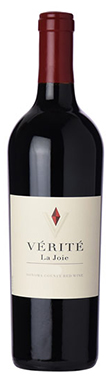

This wine is exciting. Its inception came when Jess Jackson asked Pierre Seillan to experiment with Cabernet Sauvignon after finding success with Verité's Merlot-based La Muse wine. The cuvée, sourced for numerous plots throughout four appellations, yielded what Seillan called ‘La Joie’ - joy on his nose and palate. Every whiff and every sip reveals something new: violets, tobacco, white pepper, dried herbs, raspberry, and so much more. No matter how many layers you peel back, another one is underneath. Wildly fresh with grippy tannins that grab your attention in a good way, this wine is multi-dimensional. Simply excellent.
2019
VéritéSonoma County

Anakota, Helena Dakota, Sonoma County, Knights Valley, California, USA, 2019
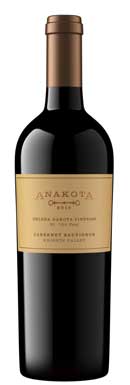
Anakota changes its oak regimen based on what the vintage directs, and the 2019 vintage, with an above-average growing season and heat spikes in July, August, and September, commanded a higher use of new French oak. The fruit leans toward the purple end of the spectrum: think plums and blackberry jam. But fruit almost takes a backseat to the leather, bay leaf, and iron qualities of the aromas and flavours. Full-bodied and structured, this is a wine with presence but still a freshness that makes it approachable in its youth. There are layers to this wine that keep bringing me back for another taste.
2019
AnakotaSonoma County
Anakota, Helena Montana, Sonoma County, Knights Valley, California, USA, 2019
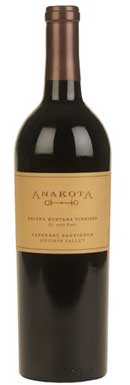
Powerful but still approachable upon release, the nose reveals blackberry, cherry, black tea, and white pepper. Notes of rich mocha and dried herbs show up shortly after. On the palate, flint and minerals give a savoury edge to the wine, while acidity breathes freshness into this full-bodied wine. The texture is expansive across the palate with supple tannins and a long finish.
2019
AnakotaSonoma County
Skipstone, Oliver's Blend Cabernet Sauvignon, Sonoma County, Alexander Valley, California, USA, 2019
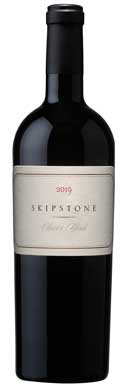
This Cabernet was Skipstone’s sole red wine from 2005 until 2010, when they launched the Faultline Vineyard cuvée. Juicy raspberry and blackberry aromas and flavours meet white pepper, tobacco, crushed rose petals, and creme de cassis notes. It spreads broadly across the palate with plump, velvety tannins. Powerful yet structured, it has good ageing potential.
2019
SkipstoneSonoma County
Stonestreet, Christopher's Vineyard Cabernet Sauvignon, Sonoma County, Alexander Valley, California, USA, 2014
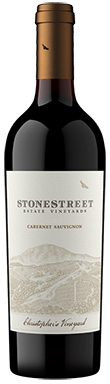
‘Great nose’ was the first thing that came to mind with this wine. First whiffs reveal raspberry, cassis, and mocha, but beef jerky barbecue spice rub aromas quickly emerge. There’s also a mineral, almost saline tinge to both the nose and palate. There’s a great energy to the wine as it moves across the palate, leaving a long, juicy finish in its wake.
2014
StonestreetSonoma County
Vérité, Le Désir, Sonoma County, California, USA, 2019
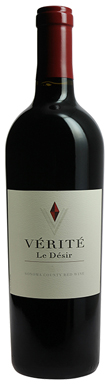
Such a beautiful fragrance to the nose, you can really tell the three wines apart and identity the aromatic Cabernet Franc on this one. Chewy and ripe fruit on the palate, this has grip and flesh from the start but also a nice liquorice spiced aspect which combines well with the pink rose, cherry, blackcurrant and cinnamon aspects. Tannins are fine and powdery, just a touch dry and chalky but this has nice detail and vibrant acidity. 4% Cabernet Sauvignon completes the blend. Ageing 16 months in French oak (95% new).
2019
VéritéSonoma County
Hamel Family Wines, Isthmus, Sonoma County, Sonoma Valley, California, USA, 2019
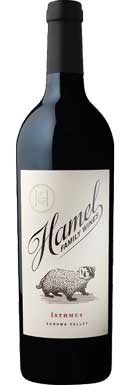
Hailing from Nuns Canyon and Hamel Family Ranch Vineyards, this Cabernet-dominant Bordeaux blend shows aromas and flavours of blueberries and blackberry, plus a hint of violet and cassis. But underneath these more delicate characteristics lies strata of iron, minerals, and dried herbs. The wine is juicy, with fine-grain tannins, good acidity, and lots of concentration on the mid-palate.
2019
Hamel Family WinesSonoma County
Stonestreet, Estate Cabernet Sauvignon, Sonoma County, Alexander Valley, California, USA, 2018
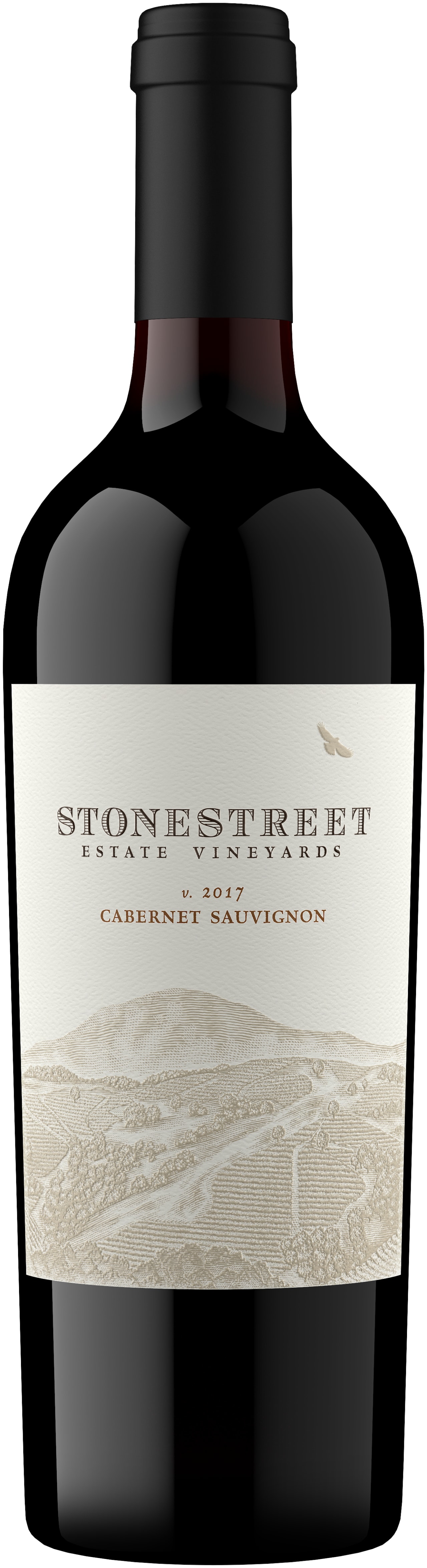
A blend of various vineyard sites, ranging from 122 to 732 meters in altitude. Raspberry and blueberry meet tart red berries and creme de cassis on the nose and palate. It’s a rather floral Cabernet, with rose petals and violets, which gets counterbalanced with dried herbs, graphite, and mineral notes. Tannins read as sweet and voluptuous but acidity itself throughout.
2018
StonestreetSonoma County
Enfield Wine Co, Waterhorse Ridge Cabernet Sauvignon, Sonoma County, Fort Ross-Seaview, California, USA, 2021
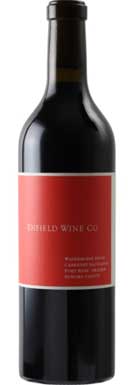
It’s very youthful with grippy tannins but shows excellent potential. Gunpowder, slate, and brambly berries give the essence of rocky coastal terrain, while the volcanic soils offer a saline tinge to the wine. A pop of cherry fruit on the finish hints at the potential brightness that could come through with time. It will be released in September 2023.
2021
Enfield Wine CoSonoma County
Hamel Family Wines, Nuns Canyon Vineyard, Sonoma County, Moon Mountain District, California, USA, 2019
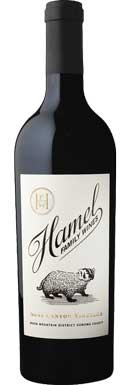
Powerful and brooding, the wine reveals dark blue fruits and crushed stones immediately, but give it a little time, and the floral notes and dried herbs start to bloom. This full-bodied wine relies on its bright acidity to girdle some of the intensity. Quite youthful now, should mature nicely.
2019
Hamel Family WinesSonoma County
Skipstone, Sofia's Vineyard Cabernet Sauvignon, Sonoma County, Alexander Valley, California, USA, 2019
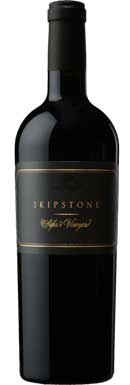
Comprised of the oldest blocks from the steep slope, this wine shows intense concentration across the board. The nose reveals blackberry and plum pie filling, mocha, black pepper, and sweet baking spices. Ultra-velvety and ripe tannins give texture to the very dense midpalate, but there’s still a good amount of acidity to give this wine a lift. It’s a big wine that needs a bit of time.
2019
SkipstoneSonoma County
Unturned Stone, Spider Chase Waterhorse Ridge Vineyard Cabernet, Sonoma County, Fort Ross-Seaview, California, USA, 2018
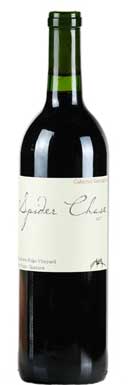
A linear and precise Cabernet. Deep garnet in colour, with aromas and flavours of plum and blackcurrant, mocha, cedar, and thyme. A striking minerality gives a saline quality to this coastal wine — the vineyard is 8km from the ocean. The tannins feel astringent and could potentially use a little more oak, or time, to soften just a bit.
2018
Unturned StoneSonoma County
