
South America’s next icons
With a better understanding of global trends and a willingness to embrace change, South America’s winemakers have cast off the parochialism of the past and are producing an increasing number of critically acclaimed wines. Alistair Cooper MW picks out 10 that he feels have great iconic potential...


The South American wine industry is riding a swelling tide; as momentum grows, the excitement is palpable. What started as a quiet, underground revolution driven by a select band of passionate winemakers is now capturing the attention of consumers and wine professionals all over the globe. The self-belief and direction that winemakers are showing, alongside the sense of comradeship and community, have been fundamental in achieving this.
Yet there are other factors that have been, and continue to be, crucial for the long-term success and prosperity of the industry: innovation and experimentation. Innovation is fundamental in driving change as well as mindset. The vast, diverse landscape of this continent has for years remained an untapped playground for winemakers. The past decade has seen a pioneering and explorative movement pushing the geographical frontiers of viticulture. Partly driven by climate change, partly by curiosity, South America’s vinous landscape is changing and redefining what is possible. Exploration of the deep south of the Southern Cone, an expansion in cooler coastal vineyards and an escalation of plantings at altitude have been key.
Scroll down for Alistair Cooper MW’s pick of 10 South American wines with iconic potential
Experimentation in both vineyard and winery is yielding some fascinating results. Traditionally, many winemakers here have been guilty of parochialism, more through geographical isolation and lack of exposure than innate stubbornness. Yet today’s younger generation of winemakers is globally savvy, well-travelled and has greater knowledge and context of global trends and styles as well as heritage. This, coupled with the intrepid spirit of innovation, is reshaping the future of South America’s wine scene.
So, what constitutes an icon wine? There will be differing opinions on this – factors such as price, proven pedigree, scarcity and critical acclaim all come into play. Yet in this article the term ‘icon’ is used broadly and perhaps interchangeably with ‘pioneering’ or ‘groundbreaking’. Also of great importance is the word ‘upcoming’ – all the wines I have chosen are exactly that: wines that are relatively new on the scene; in some cases only one or two vintages have been made.
Largely these are not wines that have been made with the expressed intention of being an icon or flagship wine by their producers. They are wines that I believe may, with time, come to represent something iconic, and in future we may look back and see the impact they have had. Of course, this is totally subjective and only time will tell how these wines progress and develop, and if they truly deserve the often-overused title of ‘icon’.
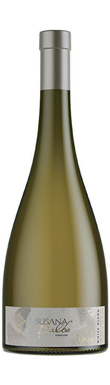
Susana Balbo, Signature White Blend, Argentina
Susana Balbo is one of the true powerhouses of the Argentinian wine industry. Not content with being one of the country’s finest winemakers, she has held the position of head of Wines of Argentina three times and is also a national congresswoman.
Susana Balbo Wines is located in Agrelo, with the main focus of production being the Uco Valley and projects at altitude. Historically, Chardonnay has undoubtedly been Argentina’s strength when it comes to white wines, which makes this one even more impressive, being a blend with no Chardonnay included. The Signature White Blend combines two of Argentina’s emblematic stalwarts, Torrontés and Semillon, along with the new kid on the block: Sauvignon Blanc. All the grapes are sourced from high-altitude vineyards in Gualtallary and Altamira. The first vintage was 2015, and it has already established itself as one of Argentina’s finest whites.
Semillon was once widely planted, but lost favour after the 1980s and only 3,000ha remain. Thankfully, Balbo is one of a handful of producers reviving and reinventing this wonderful grape. The grapes are hand harvested, with carefully protective winemaking using inert gas to avoid any oxidation and preserve the delicate freshness of the grapes. The Torrontés is fermented in new oak barrels while the Semillon and Sauvignon Blanc go into concrete eggs. After the final blending the wine is stored in first-use barrels. This is a wine that has it all: excellent purity of fruit, beautifully judged oak, and supreme freshness and delicacy. All of these attributes mean it should age wonderfully.
Casa Silva, Lago Ranco Sauvignon Blanc, Chile
Casa Silva has been producing wines for more than 100 years, and it owns about 800ha of vineyards, predominantly in Colchagua. It is also the owner of one of Chile’s most exciting estates, located 804km south of Santiago, in Futrono – deep in the heart of Chilean Patagonia.
The property was purchased by the Silva family in 2002, initially to breed polo ponies, but they decided to plant an experimental vineyard in 2006. Following further plantings in 2012 and 2014, there are now a total of 14ha planted to Sauvignon Blanc, Chardonnay, Pinot Noir and Riesling.
Since 1997 the winemaking team has been led by Mario Geisse, who also owns the superb Cave Geisse in southern Brazil. ‘The soils are volcanic ash and are deep and free-draining, with low pH and high in organic matter,’ explains Geisse. Being so far south, one might expect problems with frost in the vineyard, but Lago Ranco is just 100m from the vineyard and moderates the temperature, helping to protect the vines.
The winemaking process is extremely gentle, as the skins are fragile in this cool climate. After manual picking, the grapes are whole-bunch pressed and fermented in stainless steel before three months’ ageing on the lees, which are stirred three times weekly.
This Sauvignon Blanc represents a totally different style to those from established coastal versions further north, with its crisp acidity, precise citrus fruit palate and wonderful concentration. As Geisse says: ‘The most important thing is that Lago Ranco demonstrates the huge potential for high-quality winemaking in Chilean Patagonia.’
Alto Las Gredas, Gran Reserva Chardonnay, Chile
Sometimes you come across a wine that takes your breath away: step forward Alto Las Gredas. Owner María Victoria Petermann was born in 1946 in the depths of Araucanía (Patagonia), but educated in Santiago, Chile. However, her heart was firmly rooted in the south, and in 1982 she returned to run the family agricultural estate, following a successful career as a designer. ‘The earth gets under your fingernails and it’s like opium!’ proclaims Petermann.
While on a trip to Israel in 2000 to sell lupin beans, she saw vines growing in the Golan Heights and was inspired by how they managed to thrive in such adverse conditions. The following year, she planted 1.5ha of Chardonnay vines, founding what was for many years the most southerly vineyard in Chile.
Being so climatically marginal, things haven’t always been easy, and there have been several vintages with zero production due to frosts as well as disease. The grapes are harvested at the end of April and are taken to Santiago, where Felipe de Solminihac, the esteemed winemaker at Viña Aquitania, receives them in his winery. The grapes are fermented in stainless steel before being aged in old French oak barrels.
All too often great Chardonnays of the world are compared with those from their spiritual heartland of Burgundy – and this ranks up there alongside grand cru Chablis. Piercing acidity is supported by subtle stone fruits, plus superb concentration and minerality. Production varies greatly depending on vintage conditions, but peaked in 2018 at 4,000 bottles.
Familia Deicas, Extreme Vineyards Suelo Invertido Tannat, Uruguay
Adaptation and innovation abound in this fascinating Tannat from Familia Deicas. For those who know Santiago Deicas, it will come as no surprise that he is behind something this crazy. A man who never seems to sit still, he has played rugby for Uruguay, is a qualified food engineer, has a MBA, founded a craft brewery and has worked with the likes of Paul Hobbs and Michel Rolland.
Suelo Invertido translates as ‘inverted soil’. Deicas explains further: ‘In the area of Progreso, there is fertile soil on the surface and a calcareous clay subsoil with increased concentration of calcium carbonate in the deeper areas. In 2004, we wondered what would happen if we had the limestone part on the surface and the fertile soil in the depth. So that’s what we did!’ With the soil in the vineyard inverted, the roots explore a hefty volume of chalky, mineral-laden soil in search of the fertile layer now buried deep down. So what has this achieved in the final wine?
‘There are two aromas that stand out every year in this plot: grapefruit and mango. These are two very difficult aromas to find in red wines and we are excited to find them each vintage. Another hallmark is the tension of the wine, with huge concentration yet softness of tannins.’ Production in 2017 was 1,200 bottles, with the possibility of increasing volumes to 2,500 bottles. I look forward to seeing how this wine progresses, both as the vines get older and as the wine ages in bottle.
Estancia Uspallata, Malbec, Argentina
American Jeff Mausbach is no stranger to the Argentinian wine industry. Arriving more than 25 years ago, he spent 13 years managing international business for Catena Zapata. It was there that he met current business partner and co-founder of Estancia Uspallata, Alejandro Sejanovich, who was working as vineyard manager. In 2010, the pair decided to leave Catena and joined forces to establish several winemaking projects, including Manos Negras, TintoNegro and Bodega Teho.
Uspallata is a sleepy desert town on the old Incan trade route between Santiago in Chile and Mendoza. It is home to a 4ha vineyard plot, planted in 2008 by fellow business partner and vineyard owner Ariel Saud. ‘At 2,000m we have an extreme combination of very cool temperatures – especially cold mountain nights – together with high levels of sunlight intensity,’ explains Mausbach.
Currently there are 2ha planted to Malbec, of which just one is in production. So what is it that makes this site so special? ‘We have a unique soil profile of shallow sand with porphyry stone mixed with limestone. This imparts a singular character to the wine.’
The winemaking is an intriguing and painstaking affair, with about seven to 10 different micro-vinifications and various proportions of whole-cluster, ranging from 0% to 60%. Natural yeasts and manual punchdowns are used, with the wines seeing 12 to 14 months in French oak, of which only 25% is new. The first vintage made was 2015, and annual production is 4,000 bottles. The wines have received acclaim from wine critic Luis Gutiérrez as well as Tim Atkin MW, and tasting them it is easy to see why. This is an estate to keep a very close eye on, especially considering just how young these vines are.
PerSe, La Craie, Argentina
Friends and business partners Edy del Popolo and David Bonomi met in 1995 while working for a small winery in Mendoza. Del Popolo is now CEO of Susana Balbo wines and Bonomi is chief winemaker at Norton, yet the wines the two are crafting together under their personal brand PerSe are arguably their finest creations.
The vines are planted at 1,500m in Gualtallary, Tupungato, in the Uco Valley, and La Craie is a blend of Malbec and Cabernet Franc. Del Popolo firmly believes that site trumps variety: ‘This is a wine that speaks of Gualtallary Alto, not about Malbec and Cabernet Franc. Here we have extremely poor soils that are shallow and covered with chalk. The amount of calcareous deposits is the highest in the area.’ The non-certified organic vineyard is planted in gobelet (bush vine), and is very low yielding, with minimal irrigation required.
The two varieties are co-fermented with native yeasts, and undergo a 35- to 40-day maceration followed by 16 months’ ageing in neutral old French barrels. They are bottled without fining or filtration.
In a very short space of time, La Craie has become known as one of Argentina’s finest wines, both domestically and by international critics such as Luis Gutiérrez and Tim Atkin MW. This is a wine that stopped me in my tracks when I first tasted it, as it transported me to the vineyard with its intense chalky, mineral-laden palate and astonishing purity.
Carmen, Florillón, Chile
It may be somewhat presumptuous to flag a wine as an upcoming icon after just one vintage, but Florillón demands recognition. Carmen, founded in 1850, is one of Chile’s oldest wineries and, under the direction of supremely talented winemaker Emily Faulconer, its wines are some of Chile’s most exciting and innovative. She joined Carmen in 2017, following time as head winemaker at Arboleda and a spell at Viñedos de Alcohuaz.
Florillón is part of Carmen’s DO range. ‘In 2015, we decided that there was a very important part of Chilean viticulture that we were not supporting – Chile’s traditional viticulture,’ explains Faulconer. ‘We are now working with small growers who own small vineyards that have a heritage value. This project is to help these vineyards carry on existing, and add value to them through quality wines.’
Florillón is a truly fascinating wine: a Semillon aged under flor for six months. Located in Colchagua’s Apalta, the vineyard was planted in 1958 on granitic soils. The grapes are pressed in a vertical press and fermented in five-year-old barrels with full malolactic fermentation. The wine is aged under a veil of flor before being bottled by hand.
There were once 30,000ha of Semillon planted in Chile, but just 900ha remain. Only 220 bottles of this first release were made, but plans are to increase production to between 1,500 and 2,500 bottles. This is a cutting- edge wine, unlike anything I have tried from Chile. I can’t wait for the second vintage.
Viñedos de Alcohuaz, Rhu, Chile
The vineyards of Alcohuaz truly are something special: they crackle with an energy and vibrancy that mirrors the surrounding landscape in the heart of Chile’s Elqui Valley.
Co-founder Marcelo Retamal is widely considered to be one of Chile’s finest winemakers. Unlike most of his peers, Retamal has only ever worked at one winery, De Martino, where he remains head winemaker. ‘I have been very lucky. My contract allows me to travel for three weeks every year to different regions of the world. I have had over 22 trips, to places such as Slovenia, Georgia, France, Australia, Greece and many more. This has been key; without knowing other realities, you have no comparison.’
Alcohuaz was founded in 2006, when Retamal and co-founder (and landowner) Alvaro Flaño planted vines at between 1,700m and 2,200m, making it the highest commercial vineyard in Chile. ‘We have altitude, therefore we have acidity. These are the clearest skies in the world,’ explains Retamal. ‘The grape skins are thick, giving an important concentration of colour and aromatic intensity. We have decomposed granite, which gives a true reflection of the site. There is also considerable snow in the winter, allowing complete vine dormancy, which is important.’
Rhu blends Syrah, Grenache and Petite Syrah, the proportions depending on harvest conditions. Retamal does not believe in phenolic maturity, instead harvesting manually when he believes the grapes are balanced. Fermentation takes place with wild yeasts in granite lagars, foot-trodden twice daily. Wines are then stored in concrete and large wooden foudres for at least three years. Retamal only releases the wine when he believes it is ready to drink; the current release is 2014.
Casa Valduga, Sur Lie Nature 30 Meses, Brazil
Brazil’s current trump card is undoubtedly the fine sparkling wines from the southern climes of Serra Gaúcha. In my opinion this intriguing release from Casa Valduga is the pick of the bunch. Sur Lie Nature is a non-vintage blend of Chardonnay and Pinot Noir, which undergoes secondary fermentation in bottle and is then aged on its lees for 30 months.
Unlike other traditional-method wines, however, it does not go through disgorgement or dosage, but is released while still on its lees. ‘This is sparkling wine in its crudest form,’ explains winemaker Daniel Dalla Valle.
‘The wine continues to age and develop for an indefinite period, and the decision to interrupt that is unique and exclusive, and should be made by the consumer.’
Sur Lie Nature was initially conceived as a quirky, limited-edition project of just 3,000 bottles, with the aim of selling it directly from the winery to visiting tourists – Valduga welcomes 200,000 visitors a year. It is now on its third release of Sur Lie Nature, and has sold more than 30,000 bottles.
Dagaz, Tierras de Pumanque, Chile
Following 12 years as chief winemaker of San Pedro, Marco Puyó’s latest venture is Viña Dagaz. While still working for San Pedro, Puyó and his founding partners planted a 40ha site in Pumanque in the Colchagua Valley. Four varieties were chosen: Cabernet Sauvignon, Petit Verdot, Carmenère and Syrah.
‘In 2009, I started to make small quantities of just one or two barrels,’ explains Puyó. ‘For the first time, I had the opportunity to make wines on a personal scale – for myself and friends and family.’
Viña Dagaz was officially founded in 2015, with the 2016 vintage being the first wine made under the Dagaz name. Located 34km from the Pacific coast, the estate is considered as ‘Colchagua Costa’ or Coastal Colchagua, which Puyó believes brings real freshness and acidity. ‘These are wines with real energy as well as minerality which comes from the granite soils that contain a high percentage of quartz,’ he says. ‘These factors allow the wines to age extremely well; we have wines from 2009 that are in amazing condition and really express the site.’
There are currently two releases, the 2016 and 2017, both of which are Cabernet- dominant – 44% and 71% respectively. ‘The wine will always be Cabernet-dominant, with the balance varying depending on conditions,’ says Puyó. It is aged in French oak barrels with the emphasis on used oak and just 10% new wood. These are wines that have an elegance and freshness that many producers here find elusive. They have fantastic ageing potential, and I look forward to seeing them develop and blossom over the years.
See Alistair Cooper MW’s pick of 10 South American wines with iconic potential
You may also like
Patagonia: South America’s new frontierBrazil wineries to visit – Serra GaúchaOld vines in Latin America: The gift of timePremium South American red blends: Panel tasting results
Susana Balbo, Signature White Blend, Uco Valley, Mendoza, Argentina, 2017
92
Equal parts Torrontés, Semillon and Sauvignon Blanc. Gorgeous nose of white flowers, tangerine skin and pink grapefruit, with beautifully judged oaking. Light and glassy with a brittle palate, saline acidity, subtle floral and lanolin character.
2017
Susana BalboUco Valley
Casa Silva, Lago Ranco Sauvignon Blanc, Futrono, Austral, Chile, 2017
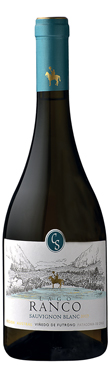

A wine crying out for oysters and seafood! Citrus and lime-led aromas are followed by razor-sharp acidity that tantalises the palate. With wonderful stony minerality,...
2017
Casa Silva

Alto Las Gredas, Gran Reserva Chardonnay, Malleco Valley, Chile, 2016
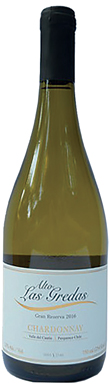
A pure and precise nose, with stone fruits and the slightest hint of mango. Intense minerality and freshness with very subtle oaking and a chalky...
2016
Alto Las Gredas
Familia Deicas, Extreme Vineyards Suelo Invertido, Domaine Castelar Tannat, Progreso, Canelones, Uruguay, 2017
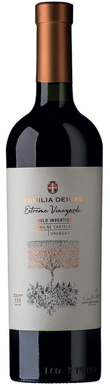
Not your average Tannat, for sure! Distinct tropical aromas of mango and dried pineapple alongside dark fruits and spices. Tannins are smooth and silky; the...
2017
Familia DeicasProgreso
Estancia Uspallata, Malbec, Uspallata, Luján de Cuyo, Mendoza, Argentina, 2017
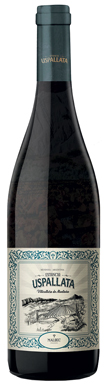
Has a gorgeous vibrant kirsch colour, and an intense but elegant nose with such subtleties: dried cranberry, rose petal and cool, dark blue fruits. A...
2017
Estancia UspallataLuján de Cuyo
PerSe, La Craie, Uco Valley, Gualtallary, Mendoza, Argentina, 2015
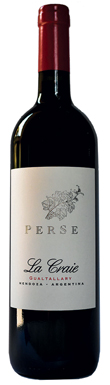
A blend of 80% Malbec with 20% Cabernet Franc. A beguiling and complex nose; stony and chalky with a flinty edge, damp tobacco and vibrant...
2015
PerSeUco Valley
Carmen, Florillón, Apalta, Colchagua Valley, Chile, 2017
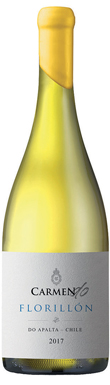
Beautiful flor-led nose, with bready, weighty and saline notes. Just such stunning intensity with a direct palate and only 13% alcohol. Textured and savoury with...
2017
CarmenApalta
Viñedos de Alcohuaz, Rhu, Elqui Valley, Chile, 2012
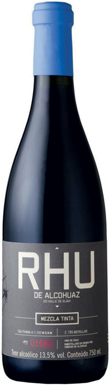
This blend of 73% Syrah with 18% Garnacha and 9% Petite Sirah has a stunningly intense nose of dark fruits, fig, dark chocolate and mulberry....
2012
Viñedos de Alcohuaz
Casa Valduga, Sur Lie Nature 30 Meses, Serra Gaúcha, Vale dos Vinhedos, Serra Gaúcha, Brazil
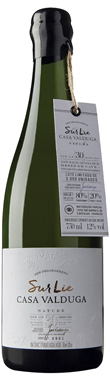
A Chardonnay and Pinot Noir blend, revealing a delightful nose of pear, cashew and toasted brioche. Roasted hazelnuts and freshly baked bread on the palate...
Casa ValdugaSerra Gaúcha
Dagaz, Tierras de Pumanque, Colchagua Valley, Chile, 2016
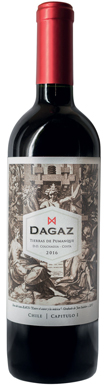
Bright, vivid and intense with classic cigar box, cassis and violet aromas. This blend of Cabernet Sauvignon, Petit Verdot, Carmenère and Syrah has a beautiful,...
2016
Dagaz
