
South America’s new flying winemakers plus 12 wines to try
Across the continent, an outdated ‘one size fits all’ approach to wine has given way to a detailed regional focus, with terroir expression the top priority. These are the worldly winemakers charting South America’s new path of self-discovery.


Winemakers in South America are embarking on a new era – one of quiet self-confidence and curious self-discovery, bringing forth some of the most exciting and individual wines yet.
Distinctive regional personality is at the core of this new movement and it highlights a strong departure from the varietal- and style-driven wines that dominated the South American wine scene in the early 2000s. As the role and influence of foreign consultants diminishes, there’s a new breed of ‘flying winemakers’ on the ascent – natives who are shaping the wines and industry in South America, and beyond.
Scroll down for notes and scores of 12 top South American wines
Early lessons learned
South America’s wine industry has been moulded by immigration and intercultural exchange for centuries, but the 1990s and early 2000s witnessed a seismic shift in winemaking technology and viticulture which brought it up to speed with the modernisation happening worldwide. Winemakers, advice, technology and investment poured in from France, Italy, Australia and California, and the wine styles dramatically changed.
The white wines became fresher and fruitier; and the red wines became denser, riper and far richer than ever before. The proliferation of the first small oak barriques in the 1990s quickly overtook the larger – often colossal – foudres and toneles, and the wines soon compared with the richly fruited, fragrantly oak-spiced styles gathering pace elsewhere in the New World and Old.
The formula for sweet, ripe fruit and toasty oak worked, and it is no coincidence that Argentinian Malbec, Chilean Cabernet Sauvignon and Uruguayan Tannat became kings of their respective realms in that same period. ‘The early 2000s were a moment of globalisation,’ says Argentinian winemaker Héctor Durigutti. ‘There was no talk of terroir [then]. We didn’t talk about different valleys, we just talked about Malbec and its recipe at the time: it needed colour, sweet tannins and oak.’

At the hand of numerous international flying winemakers, some being more prolific than others, foreign technology in the vineyard and winery had a monumental impact, and largely one for the better. But this uptake of outside advice was a double-edged sword: ‘In terms of viticulture, the Europeans knew nothing about ungrafted vineyards and we got all kinds of bad advice,’ admits Catena Zapata managing director Laura Catena, whose father Nicolás was a driving force for bringing in some of the first flying winemakers in a bid to elevate Argentina’s wine to compete on the world stage. ‘We were told to remove lots of leaves and advised against our traditional guyot vine training… The results were terrible! Eventually we realised that, for viticulture, you can’t really apply what works elsewhere.’
In Chile the shift was similarly dramatic. Although some positive gains were made in the wineries, as Casablanca winemaking pioneer Pablo Morandé points out, nuances of traditional viticulture and many of the country’s old vines were also lost: ‘I now realise we were wrong about that, and we lost a lot of the wisdom and knowledge of these old vineyards and our traditional, older viticulture techniques.’
The end of the noughties ushered in another shift in thinking – catalysed by the foreign travel experiences of Argentina and Chile’s winemakers and agronomists. South America’s geographical isolation in combination with the almost non-existence of wine imports meant that these trips abroad offered producers an invaluable insight into the greater world of wine.
The difference between being told how their wines fit in a global perspective by others, and the experience of tasting and witnessing the global perspective first-hand was transformative.

Global perspective
There are few winemakers who had a role quite as pivotal or who are quite as well-travelled as Chile’s Marcelo Retamal. Reta, as he is known, has taken an annual month-long sabbatical to visit new wine regions since 1996. ‘I would go to different regions to observe and taste,’ he explains, ‘not to copy from others but to learn about other wines and other traditions.’
After more than a decade of tasting wines in different regions all over the world, he realised that the prevailing trend of wine styles in Chile now left an insipid taste in his mouth.
‘We were making wines that were riper, with lots of alcohol and lots of oak. Even though we were spending more time in the vineyards and looking for new terroirs it didn’t matter – all the wines tasted the same. ‘By 2009, I wasn’t drinking any of the wines I made! I couldn’t bring myself to finish a bottle.’
Reta spearheaded another great shift in Chilean wine styles – one towards dialling down the oak, harvesting earlier for more varietal and regional definition, and interpreting each vineyard with a different understanding. Today, now under his own labels of Reta and Viñedos de Alcohuaz, his wines show incredibly distinctive expressions of Chile’s unique terroirs – from the rugged intensity and brightness in his red wines from high-altitude Alcohuaz to the saline tang and chalky minerality of Chardonnay from the cool coastal desert of Limarí.
Deeper exploration
The lightbulb moment for Catena Zapata also came through their own experiences abroad. ‘We had been advised to make Malbec in the same way as traditional Bordeaux winemaking, using long macerations,’ Laura Catena reflects. ‘But actually it was on a trip to Burgundy when it occurred to us that cool-climate Malbec, with all these floral aromas and soft tannins, was more like Pinot Noir.’
Catena Zapata winemaker Alejandro Vigil not only moved towards using gentler macerations and whole clusters for building complexity, but also restored older traditions and vessels in the cellar. ‘Ever since that trip to Burgundy, I’ve been experimenting with fermentations in neutral oak, so we don’t get any oak sensation in the wines,’ he explains. ‘In fact, I had a local cooper restore 100-year-old [Argentinian] toneles to be used again to make wine in.’

Today, many of the new generation of winemakers approach their wines with an entirely different vision from that offered by foreign consultants in the 1990s and early 2000s. The use of more-neutral vessels including foudres, toneles and concrete has come back into fashion – a far cry from the 200% new French oak (moving the wine from one new oak barrel to another) which was à la mode in the early noughties.
The new tendency towards lower alcohol and higher acidity levels – eschewing the previously widespread trend for achieving concentration through hydric stress of the vines, or the saignée method of ‘bleeding off’ a fraction of the wine during maceration – also harks back to pre-1990s.
The greater exploration that South American winemakers have made in other wine regions around the world has conversely initiated a deeper exploration of their own home terroirs and wine history. It also set the scene for a new wave of South American wine consultants.
On the road & in the air
If there were a prize for winemakers producing wines in the most extreme situations and vineyards in South America, it would surely go to Argentina’s Alejandro Sejanovich. Known as ‘Colo’, he can be found chewing grapes across the most diverse spectrum of Argentina’s vineyards – from the incredible heights of Humahuaca at 2,700m elevation in Jujuy, in the far north, to the virgin terroir of Uspallata just a stone’s throw from mount Aconcagua in Mendoza, to the many micro-terroirs of the Uco Valley. His latest chapter has taken him beyond Argentina to make wines in Spain’s Navarra and between the sand dunes of Ica, Peru. The name of his wine brand, Mil Suelos – meaning ‘a thousand soils’ – is certainly apt, if not an understatement, for the number of different terroirs he works in.
Today Sejanovich is a leading proponent of Argentina’s contemporary wine styles, consulting to projects across the country. Like the team at Catena Zapata, he had a lightbulb moment at the end of the noughties. After almost two decades making what he describes as ‘New World-style wines, where bigger was better’, he tired of style trumping regionality. When he started his own label with business partner Jeff Mausbach in 2010, he focused on a different approach. ‘We wanted to show the different places through the wines; to make wines that reflected places not grape varieties,’ he says.

When showing those first vintages, Sejanovich made a point of never talking about the vinification, only about the vineyard. ‘Buyers and journalists thought I was mad… they wanted to know if I had achieved concentration through saignée, or about the time spent in which type of barrel. But it wasn’t about that – it is all about finding the balance for the wine in the vineyard.’
Finding that balance is a combination of intuition, experience and regional wisdom. The 2023 vintage marked his 30th, but Sejanovich is humble about his journey of discovery on his home turf, clarifying that each vineyard demands a unique approach and teaches you something new. ‘To make high-quality wines we need detail,’ he explains, adding that he only makes wine somewhere if he has a local partner with eyes and ears constantly on the ground. ‘We need to know what’s happening with the climate every single day to make the right decisions together.’
His winemaking philosophy is about maximising the expression of the terroir in each wine. For him that means adding more from the vineyard and less from outside it. ‘The terroir is expressed in the grapes but also in the stems,’ he says. ‘When you have high-quality vineyards you get very high-quality grape stems, and the flavour of those stems changes depending on the place and the vintage. Each year I will make a decision about the proportion of the stems to include based on the flavours and aromas. It isn’t about following a recipe, it is about taking time to understand places and vineyards. And we have an advantage here in that we have some amazing terroirs to show.’
The focus on regionality is driving the wine scene in Argentina, and to a lesser extent Chile and Uruguay, today. Winemakers such as Sejanovich, Alejandro Vigil, Sebastián Zuccardi, Matías Riccitelli, Daniel Pi, Edy del Popolo and Martin Kaiser are at the forefront of distinguishing particularities of single plots. A cru, rather than château, concept is rising.

Philosophy of place
While the winemakers of this South American new wave are travelling more than ever before, it is much more than a game of collecting passport stamps. The thrilling project of Michelini i Mufatto – wines made by Andrea Mufatto and Gerardo Michelini with their son Manuel Michelini in Argentina, Uruguay and Spain – is a great reflection of this growing movement. Their philosophy to make wines in different countries is not about flying visits, but about feeling connected to each place and living there for part of the year. ‘Our philosophy as winemakers is the same as our philosophy as a family,’ explains Mufatto. ‘We live through the whole process – and so we choose only to make the wines in the places that we can comfortably live in, and be part of.’
Each of their three ‘homes’ – Tupungato in Argentina’s Uco Valley, Garzón in Maldonado, Uruguay, and Bierzo in León, northwest Spain – is in a rural area with a strong village life steeped in tradition and culture. ‘It isn’t really about the quality of the grapes, but about the quality of the life – the climate, the surroundings, the culture, the people,’ says Michelini. ‘We have to be there to be present and take the pulse of the place each year, to feel how the rain and weather has been and see how the flowering and vine leaves are.’

Since 2015, the family has been spending almost half the year in Bierzo and the rest in the Uco Valley. In 2020, they started making wines in Uruguay, too, as they were frequently there on summer holidays and fell for the ‘strength of the sea, and making saline, coastal wines’.
Michelini i Mufatto conveys a deep sense of intuition. Winemaking is stripped back and simple, using combinations of cement, oak barrels and foudres. They follow a minimal intervention philosophy in the cellar, relying on the quality of the grapes, moment of harvest and patience of ageing to lend character to the wines.
The experience of making wine abroad has profoundly changed them, and they credit the fine-tuning of their processes in each region to conversations with locals. ‘We never work to a formula,’ insists Mufatto. ‘Instead it is like a constant school of learning, through participating in and being part of the place, and talking to everyone in the village. We are learning from the older generations, who can teach you so much about their terroir.’
Looking back to go forward
Learning from elders in the village is also a concept Chilean winemaker Leo Erazo has taken at the core of his work. After several years of working on harvests and studying in Spain, France, Germany, Australia, New Zealand, California and South Africa, Erazo returned to South America and has been a winemaker on both sides of the Andes for more than 15 years. Although his work in Mendoza, now under his own label Tutu, has largely been with new vines and wine regions, in Itata it is the reverse – with vines that date up to 225 years old.
‘We used to learn or get taught a recipe for viticulture and winemaking – a “one size fits all” model,’ reflects Erazo. ‘But today I realise you can learn most from the people living in the vineyard. They are an incredible source of information.’ Combining local wisdom with his experience and research, Erazo is mapping out what he believes to be the top old-vine ‘crus’ in Itata. As reflected in his A Los Viñateros Bravos, though the winemaking can be the same, certain crus – whether planted to País or Cinsault or as field blends – have a certain finesse that stands out.

Erazo is one of a handful of South American winemakers inspiring a renaissance in artisanal wines from the plethora of old vines. Along with the likes of Marcelo Retamal, Pablo Morandé, Héctor and Pablo Durigutti, Eduardo Jordán, Roberto Henríquez, Lucas Niven, Germán Masera and Christian Sepúlveda, to name a few, it is South America’s own winemakers who have inspired a new appreciation of these long-overlooked wine regions and varieties. Lessons from ancestral viticulture are being reintegrated into the status quo, with a revival of ancient field blends and polyculture yielding particularly interesting results.
Whether it is in exploring old vines and historic regions, or pioneering new varieties and virgin terroirs, there is a self-confidence rippling through the South American wine scene which is scintillating. This era of intrepid introspection, with winemakers adventuring further to learn lessons from afar, but also foraging deeper in their own terroirs and history, is making the wines soar to new and thrilling heights. Perhaps most importantly of all, these wines taste like they couldn’t come from anywhere else.
New era, new wines: Amanda Barnes’ mixed dozen from South America
Related articles
- High-altitude Malbec: Top 20 to seek out
- My top 20 South American Syrahs
- Chilean Sauvignon Blanc £10-£30: Panel tasting results
Reta, Quebrada Seca Chardonnay, Limarí Valley, Chile, 2020
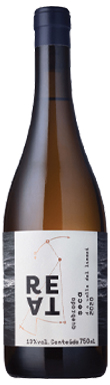

Reta shows why Limarí is a world-class Chardonnay terroir with this complex, mouthwatering and refined wine. Distinctively maritime with a saline edge and flinty, smoky...
2020
Reta

Michelini i Mufatto, Certezas Semillon, Uco Valley, Mendoza, Argentina, 2020
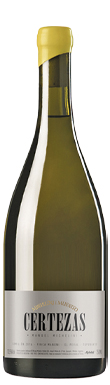
With its own unmistakable personality, this impressive Semillon from 120-year-old vines is a mille-feuille of mineral, pastry, floral and orchard fruit aromas with a fine...
2020
Michelini i MufattoUco Valley
Buscado Vivo o Muerto, El Limite Las Pareditas, Uco Valley, Mendoza, Argentina, 2020
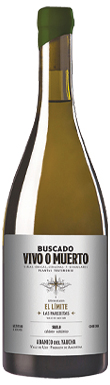
A fascinating unoaked co-ferment of Chardonnay with Semillon, Chenin Blanc, Riesling and Sauvignon Vert created by Alejandro Sejanovich. From a cool southern Uco sub-region, this...
2020
Buscado Vivo o MuertoUco Valley
Vinos de Mar, Ter Admirabilis Albariño, Maldonado, Uruguay, 2021
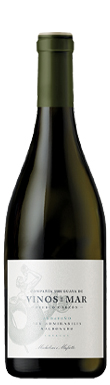
The impressive debut from the Michelini and Mufatto family in Uruguay, from a vineyard just 400m from the sea, in the upcoming region of Maldonado....
2021
Vinos de Mar
Catena Zapata, Fortuna Terrae Malbec, Uco Valley, Gualtallary, Mendoza, Argentina, 2020
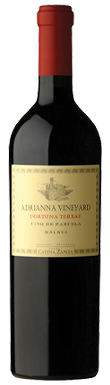
A 'Burgundian' wine that pulsates with tension and yet has finesse, lifted perfume and effortless elegance. The epitome of Catena Zapata’s quest to unlock the...
2020
Catena ZapataUco Valley
Michelini i Mufatto, La Cautiva Malbec, Uco Valley, Gualtallary, Mendoza, Argentina, 2020
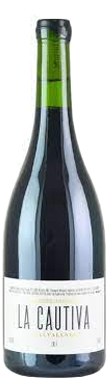
From vines growing on the chalky soils of Monasterio in Gualtallary – one of the coolest climates for Malbec. A wine that sizzles with tension...
2020
Michelini i MufattoUco Valley
Huichaira Vineyard, Cielo Arriba, Jujuy, Argentina, 2020
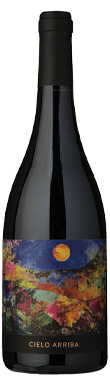
Reining in the intensity of Jujuy’s breathtaking high-altitude (2,750m) climate, yet showing its beautifully untamed nature, this is a juicy co-ferment of Malbec, Syrah and...
2020
Huichaira Vineyard
Reta, Romelio, Maule Valley, Chile, 2020
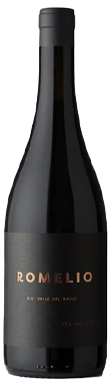
A field blend from 75-year-old vines – predominantly Malbec, with more than a dozen other varieties including País, Carignan and Semillon. These ungrafted vines were...
2020
Reta
A Los Viñateros Bravos, Las Curvas Cinsault, Itata Valley, Chile, 2019
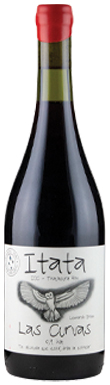
Produced from one of the most elegant parcels of old-vine Cinsault in Itata – bush vines planted in 1940 on red granite soils in the...
2019
A Los Viñateros Bravos
Estancia Uspallata, Igneo, Mendoza, Argentina, 2020
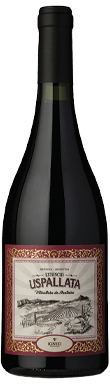
One of the most exciting wines to come from the Estancia Uspallata project to date, this Malbec co-fermented with Cabernet Franc and Pinot Noir is...
2020
Estancia Uspallata
A Los Viñateros Bravos, Hombre en Llamas Carignan, Itata Valley, Chile, 2019
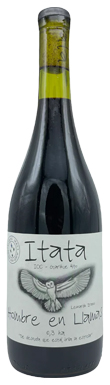
Leo Erazo shows Carignan with a distinctive Itata personality. From a 0.3ha micro-plot of old vines in Guarilihue Alto, with a lighter body than its...
2019
A Los Viñateros Bravos
Intipalka, Syrah, Ica Valley, Peru, 2021
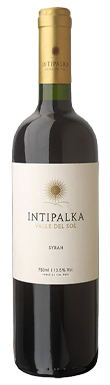
Alejandro Sejanovich consults on the wines of Intipalka – one of the leading estates in Peru. This punchy Syrah shows all the sunny intensity of...
2021
Intipalka
