
Spanish Icons: Dominio de Pingus, Pingus
Peter Sisseck saw from day one that Ribera del Duero had both the history and potential for true fine wine – the result was Pingus.


Dominio de Pingus, Pingus, Ribera del Duero
First vintage: 1995
‘It’s almost a damnation to produce a wine that becomes an icon from day one,’ says Peter Sisseck when describing the attention and pressure that fell upon him with the release of Pingus’ first vintage.
It all started with few expectations and a lot of wonder; the Danish winemaker was working at Hacienda Monasterio and felt Ribera del Duero, with its wealth of old vines, deserved a true ‘vineyard wine’.
See below for one recommended vintage of Peter Sisseck’s Pingus to try
‘It came quite naturally to me: to make a wine from old vines, at a friend’s garage, without much technique, very artisanal. There was a lot of innocence about it and no [long-term] projects, or business plans.’
However, he still needed to sell the wine. He took it to friends in Bordeaux (where he worked before joining Monasterio) and it was offered, en primeur, through the La Place system; it sold out in days and was received enthusiastically by leading critics.
‘It ended up in the right hands and the right market,’ Sisseck says, adding that it filled a gap for a terroir-driven Ribera, for which there was clearly an appetite. Indeed, Pingus’ success has arguably underpinned an ongoing transformation in the region, a reappreciation of its vineyard stock and renewed confidence among producers.
Pingus – produced from 4.2ha of old Tinto Fino (Tempranillo) vines – gave birth to Dominio de Pingus. The winery, which was finished in 2004, now houses the production of the flagship wine alongside two younger siblings: Flor de Pingus (‘our village wine’) and Psi (in partnership with local growers, part of an effort to save old vines that are at risk of abandonment).
According to Sisseck, this all forms part of an ongoing journey. About the wine itself, he says: ‘I haven’t changed anything; and I’ve changed everything. I don’t stick to a recipe. If anything, we are more and more precise (in winemaking and viticulture), because we need to respond to challenging conditions.’
And it’s precision, along with a distinctively framed depth, that makes Pingus a chapter of its own in the long history of Ribera del Duero.
The wine to try before you die
Dominio de Pingus, Pingus, Ribera del Duero, 2018 – 98pts
£642 (ib)-£925 Berry Bros & Rudd, Brunswick, Corney & Barrow, Crop & Vine, Farr Vintners, Harrods, Ideal Wine Co, Latimer Vintners, VinQuinn US$1,300-$1,400 Benchmark, Jungle Jim’s, Naples Fine Wine, Sunfish Cellars
100% Tempranillo, aged for 22-24 months in second-use 225L and 500L French oak barrels, with a portion in 2,500L vats.
Impressive depth and focus, with dense bramble, plum, black olive and mulberry at the core. The firm, well-honed tannins have a distinct earthy bite of liquorice root, perfectly offset by refreshing thyme, oregano and macerated sage.
An elegant veil of sweet spice and toast adds depth of field, keeping the finish in focus with lingering freshness and vibrancy. Organic.
Drink: 2025-2045 Alcohol: 14.5%
Spanish Icons: Dominio de Pingus, Pingus
Related articles
- Spanish Icons: Muga, Prado Enea Gran Reserva
- Spanish Icons: Marqués de Murrieta, Castillo Ygay Blanco
- Spanish Icons: Alvaro Palacios, L’Ermita
Dominio de Pingus, Pingus, Ribera del Duero, Northern Spain, Spain, 2018
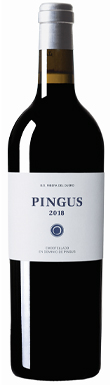

Impressive depth and focus with dense bramble, plum, black olive and mulberry at the core. The firm, well-honed tannins have a distinct earthy bite of...
2018
Dominio de PingusRibera del Duero

