
Spanish Icons: La Rioja Alta, Gran Reserva 890
One of Spain's original fine wine labels, it's taken a while for collectors to latch on to just how good La Rioja Alta Gran Reserva 890 is.


La Rioja Alta, Gran Reserva 890, Rioja
First vintage: 1890
The Gran Reserva 890 remains La Rioja Alta’s flagship and most symbolic wine, produced only in vintages deemed of sufficient quality, from selected plots of bush-trained vines in Rioja Alta, aged no less than 50 years.
The wine flew under the radar of collectors and investors until recently.
Scroll down for one vintage of Gran Reserva 890 all wine lovers should try
’A few years ago we started seeing it in auctions, private collections and in vertical listings of top restaurants,’ says Guillermo de Aranzabal, president of La Rioja Alta.
Ageworthiness, powerful classicism and scarcity (as an example, between 2005 and 2015, only four vintages – 2005, 2010, 2011 and 2015 – were produced) are among the reasons that collectors and investors finally caught up with it.
The wine’s name is a nod to the producer’s origins: the Sociedad Vinícola de La Rioja Alta was founded in 1890 as a partnership between five families from Rioja and the Basque Country.
The first wine produced by the company, released that same year, was the Reserva 1890, precursor of today’s Gran Reserva 890 (the first digit was dropped during the 1890s to avoid confusion with the vintage).
Since then, La Rioja Alta has grown to become a prominent wine group, with four wineries in Rioja, Rías Baixas and Ribera del Duero, producing exclusively from its own 800ha of vineyards.
The style of 890 remains very much its own, marked by the signature influence of American oak, imparted by barrels produced at La Rioja Alta’s in-house cooperage from outdoor-aged wood.
Still, there have been slight adjustments. ‘We’ve replaced the last two rackings [done every six months] with top-ups, to avoid excessive oxidation and release the wines fresher and a little less evolved,’ explains Aranzabal. ‘We’ve also reduced the time in barriques from eight to six years.’
But he’s quick to clarify that, when producing wines such as 890, the work requires ‘the differentiation between fashions and trends – the former are transient, while the latter endure’. So, he says: ‘If a wine ages for a total of 15 years in the winery, you need to avoid following fads and be mindfully aware of trends.’
This stance, and the uncompromising style of 890, is somewhat courageous, definitely against the zeitgeist, making one feel the privilege of tasting a slice of history. Even sceptics of American oak (and traditional Rioja) will appreciate the confident ability shown by 890.
The wine to try before you die
La Rioja Alta, Gran Reserva 890, Rioja, 2010 – 95pts
£170-£200 Widely available via UK agent Hallgarten Wines / US$230-$300 Widely available
Tempranillo with 2% Mazuelo (Cariñena) and 3% Graciano fermented separately, with the best batches selected and left to rest in American oak barrels, 20% new, for six years; the best 236 barrels were bottled, unfiltered, in March 2017.
True to itself – and the character of the 2010 vintage – this combines lovely fruit purity, sweet spiciness and elegant smokiness. Plum, red cherries and redcurrant jam are infused with vanilla, toasted coconut, cinnamon, nutmeg and cocoa nibs. Powdery, firm tannins widen the mid-palate, but there’s lovely focus and sharp linearity throughout.
Drink: 2025-2045 Alcohol: 14%
Spanish Icons: La Rioja Alta, Gran Reserva 890
Related articles
- Spanish Icons: Marqués de Murrieta, Castillo Ygay Blanco
- Spanish Icons: Alvaro Palacios, L’Ermita
- Spanish Icons: Vega Sicilia, Unico
La Rioja Alta, 890 Gran Reserva, Rioja, Alta, Northern Spain, Spain, 2010
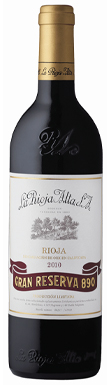

True to itself – and the character of the 2010 vintage – this combines lovely purity of fruit, sweet spiciness and elegant smokiness. Plum, ripe...
2010
La Rioja AltaRioja

