
Spanish Icons: Muga, Prado Enea Gran Reserva
Muga's Prado Enea Gran Reserva has stood the test of time as one of the best value fine wine labels Spain has to offer.


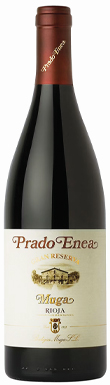
Muga, Prado Enea Gran Reserva, Rioja
First vintage: 1969
Only produced in exceptional vintages, Prado Enea uses a selection of the best and later-harvested grapes from Muga’s plots on the northwestern edge of Rioja Alta, at around 500m-600m.
Its ageworthiness and laidback classicism have made it – vintage variation notwithstanding – one of the safest and best-valued options among investment-worthy Spanish wines. It strikes an interesting balance between classical and more modern Rioja, and this makes it a good entry point, both stylistically and budget-wise, for budding collectors.
Winemaker Manuel Muga explains that the age of the vines, in tandem with climate change, will further limit the quantity of Prado Enea produced in the future, adding that ‘the most important [thing] is that quality will always prevail over quantity’.
Scroll down for a must-try recommendation of Prado Enea
Prado Enea is also a symbol of the continuity and evolution of Bodegas Muga, which was founded in 1932 in the centre of Haro by Isaac Muga and Aurora Caño. Second-generation Manuel, Isabel and Isaac took the helm in 1969, following their father’s passing.
The siblings moved the winery’s headquarters to sprawling stone barracks – built in 1862 and purchased by Muga in 1967 – in the historical Barrio de la Estación, in Haro’s outskirts. Formerly owned by Dionisio de Prado, the building was known locally as Prado Enea (a Basque influenced designation akin to ‘the house of Prado’).
The family decided to pay homage to this heritage by thus naming its new Gran Reserva.
‘Although we will never lose the essence of Prado Enea, we are aware of the need to adapt,’ Manuel explains. In recent years, freshness and elegance have gained more prominence, without sacrificing depth and complexity.
‘This challenge [to adapt], extends to the winery team, which has been able to combine oenological tradition with the technical innovations that improve the wine’s quality without changing its identity. Evolution is not just a product of [the conditions of each] vintage, but also of the team’s ability to learn and adapt without losing sight of what makes us unique.’
The wine to try before you die
Muga, Prado Enea Gran Reserva, Rioja, 2005 – 94pts
£55 (ib)-£90 Berry Bros & Rudd, Bordeaux Index, Burnett & Herbert, Crop & Vine, Fine & Rare, Lay & Wheeler, Seckford, Vintage Drinks US$180-$245 Maison Mura, The Spanish Table, Total Wine & More
80% Tempranillo with Garnacha, Mazuelo and Graciano, picked late then native-yeast fermented in 10,000L oak vats with no temperature control; the wine was aged in 16,000L oak vats for 12 months, then a minimum of 36 months in oak casks and a minimum of 36 months in the bottle.
Showing beautiful, balanced development two decades on, with enduring vibrancy on the palate and a mineral quality to the tannic framework.The juicy blueberry, bramble and mulberry fruit is heavily but elegantly cloaked in tobacco leaves, dried rose petals, mushrooms, black olives and chestnuts.
Fragrant wet soil notes lift the nuances of mountain herbs, and it has a very long finish with lingering sweet spice and poached plums.
Drink: 2025-2027 Alcohol: 13.5%
Spanish Icons: Muga, Prado Enea Gran Reserva
Related articles
- Spanish Icons: Marqués de Murrieta, Castillo Ygay Blanco
- Spanish Icons: Alvaro Palacios, L’Ermita
- Spanish Icons: Vega Sicilia, Unico
Muga, Prado Enea Gran Reserva, Rioja, Alta, Northern Spain, Spain, 2005

Showing beautiful, balanced development two decades on, with enduring vibrancy on the palate and a mineral quality to the tannic framework.The juicy blueberry, bramble and...
2005
MugaRioja

