St-Emilion & Pomerol: Six big name side projects worth knowing
If you can’t afford the Right Bank’s starriest names, seek out smaller châteaux under the same ownership. You’ll often find first-rate wines, priced at a considerably more affordable level.


Stumped by the price of a particularly famous château in St-Emilion or Pomerol? Attracted by the style and execution but know the wine is out of reach? There may be a solution.
A number of these grand estates also own properties in less exalted appellations, often using the same team and work practices as they do at the top estate. The wines, therefore, have a defined quality, but the bonus is they sell at a much more affordable price.
See tasting notes and scores for six top St-Emilion and Pomerol ‘second site’ picks
The most usual reasons for the acquisition of a secondary estate (or estates) are diversification and expansion into a more affordable region, land-wise.
With prices per hectare popping in St-Emilion and Pomerol, the likes of Castillon, Lalande de Pomerol, the St-Emilion satellites and even parts of Entre-deux-Mers can look highly attractive.
There can also be a sentimental stimulus and, when it comes to a key figure running the great estate, the motivation of a more personalised project.
Come what may, the ‘other’ property, which, geographically speaking, is rarely situated far from its celebrated stablemate, is an interesting option for the discerning consumer.
No, it won’t have quite the pedigree and gravitas of the top estate (the element of terroir does come into play), but it will have the same winemaking philosophy and rigour, the desire for quality and authenticity uppermost.
Château Haut-Simard – St-Emilion Grand Cru
This is one of several properties owned by the Vauthier family, the jewel in the crown being Château Ausone. And yes, it is also located in St-Emilion, not that far from Ausone but lower down on the sand and clay soils at the foot of the hill, or pied de côte, below the town itself.
In the 1860s, the Simard vineyard was split in two by the construction of a railway line, creating two separate properties, Simard and Haut-Simard. They were later reunited and are now both owned by the Vauthier family.

The present identity of Château Haut-Simard, though, dates from the early part of the new millennium, when Alain Vauthier selected specific parcels to be planted to a density of 12,000 vines/ha with a majority Cabernet Franc (60%). The vineyard now comprises 10ha producing 35,000-40,000 bottles a year.
The same team, headed by Alain’s daughter Pauline, works Ausone and Haut-Simard (as well as the other properties), applying similar techniques: care in the vineyard, refraining from overripeness, gentle extraction and a light touch with oak ageing.
With relatively young vines, Haut-Simard has already acquired added depth and structure and, at about £20-£25 a bottle, looks an attractive buy compared to Ausone’s £600.
Château Les Cruzelles – Lalande de Pomerol
The late Denis Durantou acquired 11ha Château Les Cruzelles in 2000. ‘Denis always wanted to make wine in Lalande de Pomerol as his great-grandfather used to own a property there, but it was sold to keep L’Eglise-Clinet in our family hands,’ explains Denis’ daughter Noëmie.
By then, Durantou had already made something of a reputation, elevating L’Eglise-Clinet into the higher echelons of the Pomerol appellation. Needless to say, he embarked on the conversion of Les Cruzelles in the same fastidious manner.

The vineyard was replanted in 2004 and 2009, allowing the vines to be aligned north-south and at a density of 8,333 vines/ha, with massal selection Cabernet Franc from L’Eglise-Clinet (propagated by taking cuttings from the best-quality existing vines on a given site) used for some of the plantings.
Les Cruzelles is now produced from the older vines (on gravelly soils), while La Chenade comes from the younger plantings and those on sandier soils. ‘We apply the same approach as for the grands crus, but want the wines to remain affordable to the consumer,’ says Noëmie, who has now taken over the winemaking alongside long-time cellar master Olivier Gautrat.
Château d’Aiguilhe – Castillon Côtes de Bordeaux
The von Neipperg family owns an enviable hierarchy of properties on the Right Bank: Châteaux Canon La Gaffelière and La Mondotte (both St-Emilion 1GCCs), Clos de l’Oratoire (St-Emilion GCC) and, finally, Aiguilhe in Castillon. The latter may be last in the pecking order, but with a total of 150ha including woods, pasture and 85ha of vineyard, it is anything but insignificant.
When Stephan von Neipperg acquired Aiguilhe in 1998, there were three things that attracted him to the site: ‘The clay-limestone soils indicated a promising viticultural terroir, the price of the land was attractive and there was an interesting historical aspect as the property, whose château dates from the 13th century, had a strategic importance during the Hundred Years’ War,’ he recounts.

Methods of vinification have been adapted to the terroir, a new circular cellar baptised in 2003 and since extended, but Aiguilhe also benefits from the cohesion with the other estates. All are managed by the same team, with Aiguilhe supplying the compost for all and acting as a conservatory for the massal selection vines. The wine itself, which hasboth fruit and power and an ageing potential of 20 years, is one of the best-value inBordeaux today.
L’ Hêtre – Castillon Côtes de Bordeaux
This is the latest venture of Jacques Thienpont of Château Le Pin in Pomerol. In 2016, he and his sister, Anne De Raeymaeker, acquired what was then called Château Goubau at Gardegan-et-Tourtirac and changed the name to L’Hêtre (‘beech tree’) to perpetuate the tree-inspired moniker – apart from Le Pin (‘pine tree’),there’s also L’If, or ‘yew tree’, in St-Emilion. What attracted them was the 10ha vineyardon a limestone plateau.

The project has since evolved, with the acquisition of neighbouring land and other parcels at St-Genès-de-Castillon. All told, there is the potential for 30ha of vineyard here, with 15ha currently in production, so in size the domaine is well beyond the scale of Le Pin’s 2.8ha. The vineyard, though, has been well maintained and was already certified organic under the previous ownership.
The philosophy remains the same, with gentle extraction and attention given to barrel selection. Jacques’ nephew Maxime Thienpont, who grew up at Château Labégorce-Zédé in Margaux, now manages the property.
It’s early days yet, but this is one to keep an eye on. There are plans for a new cellar and there’s no disputing the quality of the terroir or the pedigree of the ownership and management.
Château Grand Village – Bordeaux Supérieur
In this instance, the ‘other’ wine predates the grand cru. Château Grand Village has been in the same family hands since 1650, Jacques and Sylvie Guinaudeau taking over the running in 1980.

Five years later they took on another family property of a different standing, Château Lafleur in Pomerol, becoming sole owners from 2002.
The 1980s were a learning curve at both properties, but by the 1990s Jacques had a better understanding of Grand Village’s clay-limestone terroir at Mouillac, north of Fronsac, and had started restructuring and replanting the vineyard.
With his son and daughter-in-law, Baptiste and Julie, on board from 2001, the type of precision viticulture that was already driving Lafleur to greater fame was also implemented at Grand Village.
There’s a natural symbiosis between the two properties. The same viticultural team works both vineyards, and come the harvest everything is picked by hand.
A programme of massal selection Bouchet (the local name for Cabernet Franc), Merlot and Sauvignon Blanc across the two properties sees Grand Village as the nursery.
It’s an approach not generally permitted at this level, hence the appeal of Grand Village at about £15-£20 a bottle compared to recent (2015, 2016) Lafleur prices of above £1,000.
Château Marjosse – Bordeaux
Pierre Lurton’s day job is managing Château Cheval Blanc and Château d’Yquem. Somehow, though, over the past 30 years, he has also found time to create and develop his own property, Château Marjosse.
Located in the north of the Entre-deux-Mers at Grézillac, Marjosse seems a far cry from the hallowed soils of Cheval Blanc and St-Emilion, but Pierre Lurton has always believed in the potential. ‘The clay-limestone soils have regularly offered promise. What was needed was qualitative viticulture,’ he explains.

Over the years he has built up the property, first by rental agreement and then by purchasing parcels, all the time restructuring and replanting the land. A modern cellar was completed in 2000, and in 2013 he had the satisfaction of acquiring and moving into an 18th-century chartreuse located on the land.
The red and white Marjosse have long been accepted as wines of quality and value, their drinkability proven. Now Lurton is embarking on a complementary project (first vintage 2018), the production of limited-edition, single-vineyard wines from specific grape varieties.
There are eight in the Anthologie collection, including a Cabernet Franc, a Malbec from vines planted in 1949 and Merlots from three different terroirs, along with a Muscadelle and a Chardonnay. ‘The terroir merits the effort, even if financially it’s a gamble,’ he says.
Affordable alternatives
In addition to the six wines profiled here, look out for others of this nature owned by top St-Emilion and Pomerol estates, including:
Clos Badon, St-Emilion Grand Cru
Owned by Jean-Luc Thunevin of Château Valandraud (St-Emilion 1GCC). Good value St-Emilion but a little more expensive than the others mentioned here.
Vieux Château Saint André Montagne, St-Emilion
Owned by former Petrus winemaker Jean-Claude Berrouet (44 vintages), and managed by his son Jean-François. Elegance and precision, of course.
Château Alcée Castillon, Côtes de Bordeaux
Owned by Nicolas Thienpont, who manages Châteaux Larcis Ducasse and Pavie Macquin (St-Emilion 1GCCs). Good value.
Château Joanin Bécot, Castillon Côtes de Bordeaux
Owned by Juliette Bécot of Château Beau-Séjour Bécot (St-Emilion 1GCC). More fruit and freshness from 2017.
L’Aurage Castillon, Côtes de Bordeaux
Owned by Louis Mitjavile of Château Tertre Roteboeuf in St-Emilion. Similarly opulent and gourmand in style.
See James Lawther MW’s top St-Emilion and Pomerol ‘second site’ picks
Related content
Bordeaux 2020: Release prices and scores
Best Bordeaux 2020 wines: top-scorers
Bordeaux 2011: The top-rated wines tasted 10 years on
Château Haut-Simard, St-Émilion, Grand Cru, Bordeaux, France, 2015
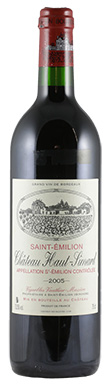

There’s plenty of depth and concentration here and a well-defined tannic structure, but the tannins are smooth and there’s harmony and balance as well. The finish is long and firm. Approachable now, it will be better in a couple of years.
2015
Château Haut-SimardSt-Émilion

Château Les Cruzelles, Lalande-de-Pomerol, Bordeaux, France, 2016
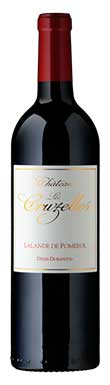
Another success from Denis Durantou. How many times does this man need to prove that he can deliver in every vintage? His wines are just so utterly drinkable, that's the key to Durantou. This was a little tighter and more serious, then we changed samples to a younger one which is more expressive, and you feel the juice catching the tannins in that wonderful way where there are two tracks happening - the top frame of fruits and wet stones, and then the juice bubbling underneath, filling out the mid-palate. Love this. 90% Merlot and 10% Cabernet Franc on gravel-clay soils yielding 40hl/ha, aged in 50% new oak. The Merlot was picked between 22nd and 29th September while the Cab Franc was picked on 6th October.
2016
Château Les CruzellesLalande-de-Pomerol
Château d'Aiguilhe, Côtes de Castillon, Bordeaux, France, 2016
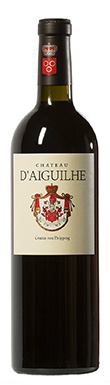
Still at a youthful stage, the wine has a meaty, ferrous nuance but is packed with dark fruit behind. The palate is dense and structured with fine but firm tannins and there’s a fresh, saline finish. The power is there but in a subdued manner. Experience tells me it will age.
2016
Château d'AiguilheCôtes de Castillon
L’Hêtre, Côtes de Castillon, Bordeaux, France, 2018
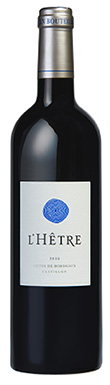
Initially a little reserved, the nose opens to plum and red fruit notes with a hint of oak. There’s a touch of sweetness on the palate, the fruit just reining back from overripeness, a freshness from the chalky limestone soils lending balance. The tannins are powerful, the finish firm and chewy.
2018
L’HêtreCôtes de Castillon
Château Grand Village, Bordeaux Supérieur, Bordeaux, France, 2018
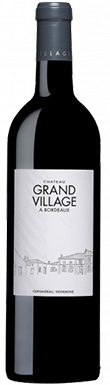
The Lafleur family of 2018 wines shows you why it pays to go to a safe pair of hands in years where you need real attention to detail in the vineyard. This was a season that was extremely wet for the first half, and then extremely dry for the second half - meaning the vines went from comfort to discomfort extremely quickly and needed to be handled accordingly. This is AOC Bordeaux on the label, but it has texture and fruit quality that offer interest and personality which really makes it stand out in the appellation. There is depth of flavour and intensity to the blackberry and black cherry fruit, and a salt-lick finish to slow things down. Enjoyable, from clay limestone soils, and a value pick.
2018
Château Grand VillageBordeaux Supérieur
Château Marjosse, Anthologie de Marjosse, Cuvée Les Truffiers, Entre-Deux-Mers, Bordeaux, France, 2018
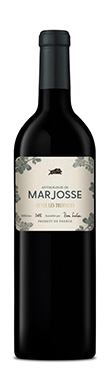
A beautifully structured Merlot that is fine, fresh and linear in style. The limestone terroir is clearly marked and the tannins present but refined. There’s also balance and length. It would clearly outshine a number of wines from St-Emilion grands crus classés. Aged in new 400-litre barrels.
2018
Château MarjosseEntre-Deux-Mers
