
St-Estèphe’s unsung heroes
Widespread investment and innovation across this northerly appellation has seen both its fame and wine quality increase. Panos Kakaviatos highlights the stars beyond the classed growths, and recommends wines to buy…

Much has been written about recent cellar renovations at Châteaux Calon Ségur, Cos d’Estournel and Montrose. These three great estates from the northern Médoc appellation of St-Estèphe – along with fellow classified growths Châteaux Lafon Rochet and Cos Labory – serve as ‘motors’ for the appellation.
Scroll down for Panos Kakaviatos’ top wines from St-Estèphe
But savvy wine buyers should be aware of the appellation’s plethora of less-heralded estates, sometimes referred to (officially or not) as crus bourgeois. Such estates are crafting wines that can score 90+ points and cost less than £15 a bottle in-bond – the market hasn’t quite caught up with the improved quality.More precise viticulture and winemaking have helped. Climate change, too, according to Henri Duboscq of Château Haut-Marbuzet. ‘The absence of deep gravels here led to a less noble image for the appellation, but the evident heating of the planet – generating Senegal-like summers and late Indian summers – means sunny harvests for better ripening,’ he explains.
Located about 50km north of Bordeaux, St-Estèphe is home to 1,250ha of vines. Proximity to the sea and the Gironde estuary results in a mild climate with regular temperatures, sunshine and breezes that benefit nearly 60 independent and some 15 cooperative winegrowers. The vineyards extend over soils that include sand, heat-retaining gravel, limestone and plenty of clays, which protect vines from hydric stress in very dry years such as 2018. At their best, the wines are powerful, racy, fresh and long on the finish. ‘Sometimes a little austere in their early youth, they gain softness with cellar ageing,’ remarks Jean-Charles Cazes of Château Ormes de Pez.
To some extent, its distance to the north has been a weakness, believes Marine Lemmens of Château Meyney. ‘In the collective unconscious, the one-hour drive to Pauillac from Bordeaux poses a psychological limit,’ she says. This may also explain why, for many years, the less well-known wines did not gain much traction in the market.
‘We have long been in the shadow of other communal appellations,’ adds Alexis Angliviel de La Beaumelle of Château Petit Bocq. But he stresses the architectural beauty of many cellars in St-Estèphe – at Montrose and Cos d’Estournel, for example (see ‘Producer profile: Château Montrose’). ‘Summer tourists heading for the beach will soon have more incentives to stop and discover the appellation, as plans for high-end wine tours are coming to fruition,’ he notes.
United front
Earlier this year, the St-Estèphe winemakers union purchased the St-Estèphe Maison du Vin with a view to offering more tours and tastings. It will open in July 2020, according to Bernard Audoy, who is both union president and owner of Château Cos Labory.
Some estates featured here seek official cru bourgeois ranking, in a return to the historical hierarchy of the Crus Bourgeois du Médoc, with three categories: cru bourgeois, cru bourgeois supérieur and cru bourgeois exceptionnel. These terms should be appearing again on wine labels starting with the 2018 vintage. Philippe Castéja of Château Beau-Site, a 35ha château that neighbours third-growth Château Calon Ségur, explains the rationale: ‘If the best Médoc wines were unable to participate for one reason or another in the 1855 classification, which is the case for Beau-Site, then participating in this new ranking will lend them more lustre.’
Better-known estates – including Haut- Marbuzet, Meyney, Ormes de Pez, Phélan Ségur and Tronquoy-Lalande – will not be seeking cru bourgeois ranking, given what they see as the power of their brands, or because endless contestations led to the previous official ranking, in 2003, being cancelled. ‘Re-establishing the hierarchy is a positive initiative, but we consider ourselves to be more at the level of a classified growth,’ explains Lemmens.
In any case, the appellation is known for solidarity; most château owners I talk to heap praise on Audoy’s leadership. Château Le Crock director Sara Lecompte Cuvelier explains that the high level of solidarity was proven when fire damaged her château in August last year. ‘Château Haut Marbuzet loaned us equipment, Château Pomys opened up a hangar for us to store tractors in over the winter, and Château Léoville Barton (St-Julien) lent us cellar space to store our bottles,’ she notes.
The unified team spirit is accentuated by rising wine quality, with good to great price-to-quality ratios. As Lemmens explains: ‘The wines here have long had the reputation of being virile, muscular, not to say firm and rustic, but this era is now largely gone, and that’s happy news.
Château Beau-Site
The transformation of this 35ha estate has been discernible since 2006 when, among other initiatives, owner Philippe Castéja acquired new thermo-regulated stainless steel vats, which he says have ‘allowed us to improve our harvesting by plot, according to maturity and grape varieties.’ He adds: ‘Denis Dubourdieu’s team – today Valérie Lavigne and Axel Marchal – have also counselled fermenting at cooler temperatures of 23°C-26°C, to protect the expression of fruit and freshness.’
Château Capbern
The 38ha vineyard here has undergone restructuring identical to that of the famous third growth Château Calon Ségur, which shares the same ownership. As director Laurent Duffau says: ‘We are increasing the proportion of Cabernet Sauvignon and the density of plantation to 8,000 or 10,000 vines per hectare. Since 2010, the new vat room has helped to improve quality and, as of this year, a cooling tunnel after de-stemming will enable us to better control cold extractions before fermentation.’
Château Le Crock
This 32ha estate is owned by the Cuvelier family, known for Château Léoville Poyferré in St-Julien. Organic viticulture – currently 20% of the vineyard – with less sulphite use and more precise winemaking has been a goal. It obtained HVE Level 3, France’s highest level of certified sustainable viticulture in 2018, requiring reduced pesticide and fungicide use, high standards for water and fertiliser management, and a biodiversity programme.
Château Haut-Marbuzet
Long known for its 100% new-oak ageing, the château has seen its vineyards, on soils of gravel over clay and limestone, grow to 75ha after recent purchases. It had been planted to 50% Cabernet Sauvignon, 40% Merlot and 10% Cabernet Franc, but Petit Verdot planted in 2005 has now replaced half of the Cabernet Franc in blends, according to owner Henri Duboscq. A new cellar space has helped to make vinification more precise, and a future focus is on more organic viticulture.
Château Lilian Ladouys
Just as wine lovers no longer dub Pauillac’s Château Pedesclaux ‘Château Pedestrian’, Château Lilian Ladouys is no longer lacklustre. The inspired ownership of Jacky Lorenzetti has led to improved quality in both the vineyard and vat room. Last year, the estate grew in size from 46ha to 80.5ha, following the purchase of selected vineyards from Châteaux Clauzet and Tour de Pez, according to director Vincent Bache-Gabrielsen. His goal was to consolidate the vineyard, which was previously too fragmented. Now the estate has 80% gravel and 20% clay and limestone soils, and plantings of Cabernet Sauvignon have been increased.
Château Tour de Pez
Recent ownership shake-ups have resulted in the property losing 10ha of its 30ha to Château Lilian Ladouys. Its owner since January this year, Vignobles de Larose – known for Haut-Médoc brands Châteaux Arnauld, Larose Perganson and Larose- Trintaudon – is planning major improvements. These include increasing vineyard density for nearly half the vineyard, from 6,800 to 10,000 plants per hectare, setting up a vat room that’s adapted to cold pre-fermentation maceration, and the use of optical grape sorting at harvest. Pauillac-based oenologist and consultant Christophe Coupez says that the new owners will make the wine ‘much more precise’ for the terroir, which he calls a ‘sleeping beauty’.
Château Petit Bocq
A trend at the 20ha Château Petit Bocq has been a gradual increase in the proportion of Cabernet Sauvignon in the wine, over the last decade, either through replanting or the acquisition of high-quality vineyard parcels. In addition, Petit Verdot was introduced in 2009. Goals for the near future include obtaining HVE Level 3 certification.
Château Ormes de Pez
The recent focus at this 35ha estate – under the same ownership as Château Lynch-Bages in Pauillac – has been on greater precision through soil analysis, supplemented by satellite cartography, which has enabled precise parcel division. A move towards green viticulture is evidenced by recent HVE Level 3 certification, and the abandonment of weeding throughout the vineyard to promote biodiversity. Optical sorting was recently introduced, along with a more careful selection of oak barrels, explains director Jean-Charles Cazes.
Château Tronquoy Lalande
Out of some 30ha, more than half the vineyard is planted with Merlot on deep clay soils, distinguishing it from many of its neighbours. The wine has improved since the acquisition by Bouygues Group, more than 10 years ago, with Hervé Berland as director. The revamped cellar is equipped with 16 compartmentalised vats, enabling more precise vinification. The past three years have also seen a transition to organic viticulture: more than one third of the estate is now organic, with plans to turn to 100% organic viticulture in the next five years.
Château Meyney
The 51ha Château Meyney neighbours Château Montrose, and has a similar slope of vines reaching down to the Gironde estuary. From a programme to increase planting density in the vineyard, to the acquisition of variably sized fermentation tanks that match reconfigured vineyard parcels, the estate has improved its wines in recent years. In 2016, Château Meyney obtained HVE Level 3 certification. The 2019 harvest will be more gentle, says estate representative Marine Lemmens, as new ‘vibrating bins’ will transfer grapes to sorting tables more carefully.
Château Phélan Ségur
Since the 2017 purchase by Philippe Van de Vyvere, vineyard renewal has taken centre stage at this 70ha estate, whose parcels adjoin the vineyards of Châteaux Montrose and Calon Ségur. ‘We are increasing the share of Cabernet Sauvignon (now 58%), but also adjusting Cabernet Sauvignon plots that would suit Merlot (39%) better, as clay soils are colder and more suitable for Merlot,’ explains director Véronique Dausse. The acquisition in 2011 of an optical sorting machine and smaller vats to reflect the inter-parcel vineyards have helped to improve precision.
Château de Pez
Together with its neighbour Calon Ségur, Château de Pez is the oldest St-Estèphe estate, its 26ha under vine dominating a high plateau at 18m, with well-exposed slopes that descend to 12m. Under the same ownership as Château Pichon Comtesse in Pauillac, recent changes here include uprooting and replanting, and a new cellar space is in the pipeline. Softer pressing and an advanced reflection on plot-by-plot extraction in the vat room have already yielded a more refined wine.
See Panos Kakaviatos’ top wines from St-Estèphe
You may also like
Top St-Estèphe 2018 wines: ‘A year for hedonists’Top St-Estèphe 2017 en primeur winesTop St-Estèphe 2016 wines: Re-tasted in the bottleAnson: Top St-Estèphe 2014 wines
Château Beau Site, St-Estèphe, Bordeaux, France, 2016
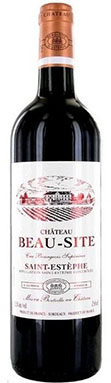

With fine oak integration, this wine is a tasty combination of torrefaction, finesse and iron richness. ‘A fine glass of red, if not the most...
2016
Château Beau SiteSt-Estèphe

Château Capbern Gasqueton, St-Estèphe, Bordeaux, France, 2016
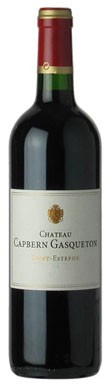
Quite tannic in expression – and a contrast to the more ‘modern’-style estates. Fine mid-palate grip; compared to the 2010, which was also tasted, the...
2016
Château Capbern GasquetonSt-Estèphe
Château Le Crock, St-Estèphe, Bordeaux, France, 2016
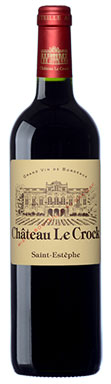
Clearly standing out in this line-up, an impressive, well-crafted wine with great tannic hold; a wine you would be thrilled to own. Cassis, bilberry, blackberry,...
2016
Château Le CrockSt-Estèphe
Château Haut-Marbuzet, St-Estèphe, Bordeaux, France, 2016
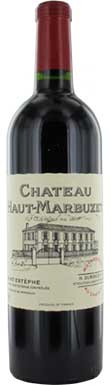
Arguably too soft for the vintage and for a St-Estèphe, but I like the elegance and finesse as the tannins are refined. Even if the...
2016
Château Haut-MarbuzetSt-Estèphe
Château Tour de Pez, St-Estèphe, Bordeaux, France, 2016
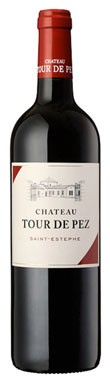
A more commercial style marked by vanilla notes that seem to efface terroir. The palate is enjoyable enough, but the overall impression is lacking vigour...
2016
Château Tour de PezSt-Estèphe
Château Petit Bocq, St-Estèphe, Bordeaux, France, 2016
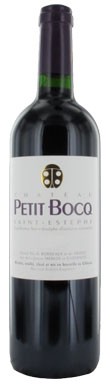
Bargain alert! While lacking the dimension of, say, Ormes de Pez, this costs half as much and delivers elegant tannins and fine new oak integration....
2016
Château Petit BocqSt-Estèphe
Château Ormes de Pez, St-Estèphe, Bordeaux, France, 2016
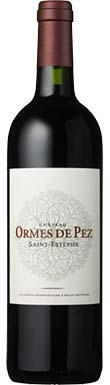
A real standout wine. The gorgeous, fruit-driven nose is followed by a broad, focused palate, seamlessly integrating oak, fruit, acidity and alcohol, achieving veritable racy...
2016
Château Ormes de PezSt-Estèphe
Château Tronquoy-Lalande, St-Estèphe, Bordeaux, France, 2016
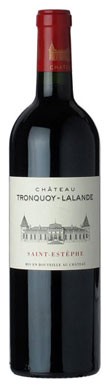
The wine shows much palate depth and richness, with Merlot coming to the fore. Impressive body but with freshness too, if not among the top...
2016
Château Tronquoy-LalandeSt-Estèphe
Château Meyney, St-Estèphe, Bordeaux, France, 2016
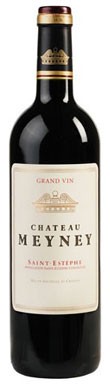
Cool blueberry fruit aromas, with some creamy, round qualities. The palate is smooth and pleasurable. ‘A more modern style,’ said wine buyer Jean Haudy, ‘but...
2016
Château MeyneySt-Estèphe
Château de Pez, St-Estèphe, Bordeaux, France, 2016
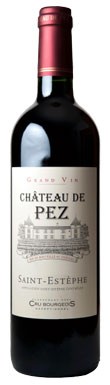
Another bargain alert! At this price level, perhaps the most subtle and elegant of all wines tasted. Not as expressive as Ormes de Pez, but...
2016
Château de PezSt-Estèphe
