
SuperTuscans at 50
These superstar wines, created as a reaction against restrictive Chianti Classico rules, took on near-mythical status and began to command very high prices. As the SuperTuscans celebrate their half-centenary, how are they faring today?


Fifty years since their inception, the wines known widely as SuperTuscans represent some of the top expressions of Italian winemaking today.
Produced outside Tuscany’s most reputable denominations, sometimes using grapes not authorised within those DOC or DOCG regions, often – in a wider region well known for the typical large Italian botti – aged in small French barrels, and always having been sold at incredibly high prices, SuperTuscans have faced something of an uphill battle.
Scroll down to see tasting notes and scores for six top SuperTuscan top six recent releases
Defying authority
The term SuperTuscan was first coined in the mid-1980s by the English journalist and Master of Wine Nicolas Belfrage and was then adopted by the English and American press.
‘Super’ – literally ‘above’ – referred to their superiority in both concentration and quality over other Tuscan wines at the time.
Just as a supernova is a nova with exceptional energy, or superstar a leading protagonist, SuperTuscan wines exceeded Tuscan traditions. The category first came about in the previous decade and brought with it ‘a great stir’, as Marchese Piero Antinori describes it, ‘because the first Tignanello was labelled as “vino da tavola”, which would have been at the bottom of the pyramid of quality, whereas this was proposed on the market at a higher price than the DOCs’.
It was a kind of anarchy against the authorities and their winemaking regulations. Not by chance, one of the most prominent proponents was Luigi Veronelli, an Italian gastronome, wine journalist, philosopher – and wine anarchist.
‘I must say, it was thanks to Veronelli that I produced Tignanello in 1971,’ says Antinori. ‘In 1973, I let him taste the wine blind. He was enthusiastic but I was filled with doubt: I told him I couldn’t have bottled it as Chianti Classico since it was produced with 100% Sangiovese, and at that time “Gallo Nero” [Chianti Classico’s official black rooster logo] required the inclusion of white grapes. He responded, “Who cares about the appellation, call it Tignanello after the vineyard and this will be its origin”. Then I made up my mind to label it as vino da tavola.’
Another big change had taken place in Tuscan viticulture and winemaking which convinced Antinori to release Tignanello 1971: his uncle Mario Incisa della Rocchetta was producing a wine in Bolgheri from Cabernet Sauvignon, distributed by Antinori and labelled vino da tavola under the name of the vineyard: the now much-vaunted Sassicaia.
These two wines are essential in understanding the nature of SuperTuscans and the birth of the whole category.
Sassicaia comes from Alta Maremma where, at that time, there was no appellation for wines, while Tignanello reigns from the heart of one of the most important DOCG territories in Italy, Chianti Classico. The Gallo Nero identity stems from Baron Bettino Ricasoli’s work in the 1870s, which in part recognised that the inclusion of some white grapes such as Malvasia and Trebbiano could be warranted for softening the firm acidity of Sangiovese in wines meant for everyday drinking.
Antinori maintains that the Chianti Classico identity (the ‘Classico’ suffix being added in 1932 to identify the original wines from within its defined territory) still had merit in the early 1970s, and he wanted to use the appellation. However, he hoped to produce a wine of improved quality, using 100% Sangiovese, and avoiding the required use of white grapes, so in the end he was forced to bottle it as a vino da tavola. ‘Our enemy was not Ricasoli’s laws,’ he maintains, ‘it was the degeneration of them due to certain growers who were searching for profit through shortcuts, operating a viticulture focused on quantity rather than quality. Our aim was to bypass the lean and dilute character of the [typical] wines of that era, in order to promote more concentrated and balanced reds.’
International impetus
In 1962 in the Chianti region, at Castello di Poppiano near Montespertoli, Prince Alberto Dimitri Kunz (who died in 2008) produced Tegolato ‘vino vecchio’, labelled as a vino da tavola. Based on Sangiovese, it is not possible to say whether it was blended with Cabernet Sauvignon, but it was certainly produced without white grapes and intended as a great wine for the long haul. It had been a big success up to the 1980s in Italy, but today is no longer produced.
The birth of the SuperTuscans is considered to be shared among the three wines – Tignanello, Sassicaia and Tegolato – though in 1969, Agricola San Felice also began production of a new wine, Vigorello, thanks to the efforts of Sangiovese specialist Enzo Morganti (d. 1994), who was at that time working with talented winemaker Giulio Gambelli (d. 2012), a legendary figure behind celebrated labels such as Montevertine, Poggio di Sotto, Soldera and others. Vigorello was another 100% Sangiovese and would remain that way for its first 10 vintages. Tignanello, by comparison, introduced a small proportion of Cabernet Sauvignon from 1975.
The arrival of international grape varieties on the Tuscan scene had a crucial impact – central to the development of wines with more body, more concentration, more balance and more consistency from vintage to vintage. And the use of such varieties also attracted some of the wine world’s most prominent technicians to Italy.
André Tchelistcheff (d. 1994), known as ‘the dean of American winemakers’, travelled from California to Bolgheri and in the 1980s encouraged Piero’s brother Marchese Lodovico Antinori, at Tenuta dell’Ornellaia, to plant Merlot on the blue clay of the Masseto hill, producing what today is the most expensive SuperTuscan: the 100% Merlot Masseto.
Professor Emile Peynaud (d. 2004), known as the ‘forefather of modern oenology’, advised Tignanello winemaker Giacomo Tachis (d. 2016) to ‘avoid using oak casks that are too large, for too long, too many times’. The contribution of new French oak was critical to the refinement of these Tuscan wines, enhancing complexity, concentration and thus the identity of SuperTuscans.
The result was nothing less than outstanding, as Sangiovese-based wines aged in small French barrels, including Cepparello, Flaccianello, Fontalloro, Il Carbonaione, Le Pergole Torte and San Giusto a Rentennano’s Percarlo all attest.
Promising position
Despite the wines sharing general characteristics, an official definition for SuperTuscans doesn’t exist. However, it is widely accepted that they are wines produced in Tuscany using the grape varieties allowed to grow within the region – including international varieties – mostly aged in French barrels and labelled today under the regional IGT Toscana umbrella.
According to the Consorzio Vino Toscana group, based on analysis by Nomisma Spa, total average wine production in Tuscany is 2.4 million hectolitres per year, of which 637,000hl is labelled as IGT Toscana, representing 27% of the total production. The average surface area cultivated for IGT Toscana is 12,500ha, with 1,400 producers accounting for 90 million bottles released per year, of which 74% are red, 21% white and 5% rosé wines.
IGT Toscana therefore represents the second biggest ‘appellation’ within the region, after the wider Chianti DOCG in terms of both volume and area (just topping 14,000ha in 2020), but of course not all of these Toscana wines are SuperTuscans. ‘Of those 90 million bottles, at least 30 million are sold at €20 and higher, reaching mid-premium to super-premium levels, so about one third could be considered SuperTuscans,’ explains Cesare Cecchi, president of Consorzio Vino Toscana.
The consorzio is not officially recognised yet. Although it meets the legal requirements by representing 54% of production (minimum requirement 51%), it only represents 105 wineries – 20% of producers, while the minimum requirement is 35%. The production value of IGT Toscana amounts to €495 million; 31% from domestic sales and 69% from export, of which 33% goes to the US, 46% to Europe, 6% to Asia and 15% to other markets. Going by the estimations of Consorzio Vino Toscana, the value of the SuperTuscan category equates to approximately €163 million annually. In the last 10 years, IGT Toscana has increased by 126%. ‘In 2021, production has grown by 5% above the average production levels over recent years, while during the 2020 pandemic we lost just 10% of the production,’ explains the consorzio’s managing director Stefano Campatelli.
These are great figures, though they possibly don’t paint the whole picture.

Shift of emphasis
Several factors are changing the appeal of SuperTuscans. The dry or hot vintages of the past 20 years, such as 2003, 2007, 2012 and 2017, have imparted a certain lack of tension to some wines based on international grape varieties. But the SuperTuscan style really took a plunge when full-bodied, muscular wines fell out of fashion. At the point when consumers began looking for red wines focused on freshness and finesse, SuperTuscans’ concentration and the strong presence of new oak – as advocated by Peynaud and as previously used to improve Chianti-style wines of the past – became a hindrance.
But not all wines were affected in the same way. For example, both climate change and the maturing tastes of informed consumers triggered a rediscovery of Sangiovese as a grape on its own, at the expense, for example, of early-ripening Merlot. In March of 2017, Ella Lister, founder and CEO of market analyst Wine Lister, launched an in-depth regional study on the greatest wines of Tuscany, in which 100% Sangiovese wines such as Fontodi’s Flaccianello della Pieve and Le Pergole Torte from Montevertine appeared in the first eight places of her classification.
According to the Bolgheri regional consorzio, since 2018 Cabernet Franc plantings here (on the Maremma coast, south of Cecina) have increased by almost 55%, from 158ha to 244.6ha. Cabernet Franc is in demand because of the fresher character and late-ripening quality of the variety. The previously mentioned Vigorello was reinvented in 2011 with the inclusion for the first time of indigenous Pugnitello in the blend with Bordeaux varieties, ‘to give back to the wine its Tuscan blood’, notes Leonardo Bellaccini, head winemaker of the estate.
The rediscovery of indigenous grape varieties has dampened, for example, the development of white SuperTuscans. Just a few exceptions remain, such as Querciabella’s Batàr and Ornellaia Bianco.
Looking at the sub-regions, Tachis used to say Cabernet Sauvignon in Tuscany is ‘Chianti-esque’, underlining the tension of fruit and acidity which it expresses within the region. Not by chance, one of the reasons for launching the ‘Gran Selezione’ upper level [above Riserva] of Chianti Classico was to entice a few celebrated SuperTuscans back into the consorzio’s fold – with a new stipulation that all fruit must be estate-grown aiming to encourage producers to use the Chianti Classico designation rather than labelling their wines as IGT Toscana – as was confirmed by past president Sergio Zingarelli when launching the new category of Gallo Nero back in 2014.
Powerful ambition
If the Chianti Classico region should be considered the cradle of SuperTuscans, it was coastal Maremma that attracted huge investments between 1997 and 2001. Ezio Rivella was the first with Tenuta Fertuna at Grilli, northwest of Grosseto. The Terra Moretti group (of Bellavista in Franciacorta, Lombardy) sought advice and put some €30 million into its venture near Suvereto, for the Petra winery; Paolo Panerai (Castellare di Castellina) and Baron Eric de Rothschild collaborated in a joint venture investing an estimated €20 million in Rocca di Frassinello (winenews.it, August 2006). And seventh-generation, Veneto-based wine giant Zonin has stated it invested at least €20 million in Rocca di Montemassi.
By the end of the 1990s, the pull of the Maremma as a potential El Dorado for SuperTuscans was clear in the arrival of other top-flight producers, including Frescobaldi (Tenuta La Capitana, for DOCG Morellino di Scansano), Jacopo Biondi Santi (Castello di Montepò, north of Scansano), Antinori (Le Mortelle estate, Castiglione della Pescaia), Cecchi (Fattoria Val delle Rose, Grosseto), Mazzei (Belguardo estate, Grosseto), and Rocca delle Macìe (Tenuta di CampoMaccione, also in DOCG Morellino di Scansano).
However, results were possibly different from expectations. ‘We invested there to produce Sangiovese-based SuperTuscans,’ explains company vice-president Francesco Zonin. ‘But then we abandoned the idea of this grape, because the result fell short of what we expected. The core question was, how would you distinguish a SuperTuscan [brand] that comes from Maremma, when you have [to compete in the market with] Chianti Classico, Bolgheri and Montalcino which lie only an hour away?
Zonin adds that over the last two decades the Maremma climate has become too hot for Sangiovese to perform at its best, while at the same time, market trends changed too fast for long-term vineyard planting programmes to keep up. ‘What we have discovered in Maremma is a great land for white wines,’ he argues. ‘And Vermentino is an emerging grape for most of the producers on the Costa Toscana.’
The Santa Margherita group, which in 2000 purchased Tenuta Sassoregale in the Ombrone valley northeast of Grosseto, recently announced a further acquisition in this coastal region, now the third largest DOC in Tuscany in terms of surface area. ‘With the acquisition of Pieve Vecchia,’ stated Beniamino Garofalo, CEO of Santa Margherita Gruppo Vinicolo, ‘Tenuta Sassoregale makes a further qualitative leap,’ adding a further 42.4ha to the group’s Maremma holdings.
It’s clear, therefore, that the extensive Maremma region as a whole still holds its appeal, and the potential for top-quality wines does exist – witness the exceptional Saffredi Le Pupille 1996, their last vintage by Giacomo Tachis. But SuperTuscan wines originating in so many different appellations do need their own specific identity.
SuperTuscan hotspots
Close to the border of the Livorno and Grosseto provinces, Suvereto has had its own DOCG since 2011, and is home to Tua Rita’s Redigaffi and Gabbro from Montepeloso, both wines to be taken seriously – each comes from an area with higher altitude and leaner soils. To the north of Bolgheri, Bibbona and Riparbella are emerging villages for SuperTuscans. Bibbona is home to the famed Tenuta di Biserno, which produces the outstanding Lodovico. In Riparbella, Luca D’Attoma, Tuscany’s most talented winemaker for Cabernet Franc, founded Duemani in 2001; while Caiarossa, founded in 1998, built its reputation here under the ownership since 2004 of the Albada Jelgersma family of Château Giscours in Margaux; and in 2002, Massimo Ferragamo founded Prima Pietra on the highest hill in coastal Tuscany, at 450m, just out to the commune’s north.
Further up country, near Volterra, Giusto alle Balze from Podere Marcampo, a 100% Merlot that grows on blue clay at about 250m altitude, shows stunning consistency. To its southwest, in the Val d’Arno di Sopra DOC, and also worthy of note is the Petrolo estate, where Luca Sanjust produces Galatrona. Petrolo is managed by one of the artists of SuperTuscan winemaking, Carlo Ferrini, who also makes Siepi in Chianti Classico and Lupicaia at Castello del Terriccio.
All of these examples are useful to highlight the identity of the best SuperTuscan wines today in terms of terroir, grape varieties and style.
After their first 50 years, there remains little doubt around what a SuperTuscan has the potential to be. However, the idea of exploiting the whole Tuscan region to produce them is no longer valid. When Piero Antinori underlines the importance of the category’s birth in central Tuscany within appellations including Chianti Classico, or the fact that they contributed to the establishment of denominations such as Bolgheri, he draws specific boundaries. We can spot new sub-zones such as Bibbona, Montepeloso or Riparbella as ones to watch in the future. However, these ‘grands crus’ of SuperTuscans are mostly within Chianti Classico itself or in Bolgheri.
This realisation led to the foundation of the new Historical SuperTuscans committee in December 2021, with Piero Antinori as honorary founder and Paolo Panerai (Castellare di Castellina) as president – the defined goal being to represent the great SuperTuscan wines produced over the last 50 years. Experimentation with grape varieties is no longer widespread. Giuseppe Mazzocolin of Fèlsina, who produces Fontalloro, argues: ‘The value of SuperTuscans was confirmed by their ability to restore importance to Sangiovese following its debasement as part of the old Chianti recipe, which saw a decline in the quality of the region itself. Bottling these wines as vino da tavola could not be dismissed as a shrewd attempt to circumvent the law: it was the determination of a few producers to fight against the bureaucracy to improve the quality of Tuscan wines.’
Just the beginning
Today, Sangiovese is the flagship grape of the most representative SuperTuscans of the central Tuscan region, while Bordeaux blends are commonly seen in Bolgheri. In my opinion, the coastal zone could experiment more with grapes from the south of France such as Mourvèdre, Carignan or Grenache. At the same time, the trend for Pinot Noir in the Apennines could be further developed here. Last but not least, the SuperTuscan style is no longer defined by concentration, extraction and new oak, nor is it exemplified by bold or muscular wines. Nonetheless, this continues to be the main threat to the image of SuperTuscans. Wines such as Solaia, Sassicaia, Masseto or Flaccianello demonstrate that the style is best represented by ageworthy yet graceful wines of great Mediterranean elegance.
SuperTuscans: investment potential
According to global wine trading platform Liv-ex, in 2020 three of the world’s top 10 wines [based on Liv-ex trading data from 1 October 2019 to 30 September 2020] were from Tuscany: Sassicaia, Ornellaia and Masseto. With the exception of Piedmont-based Gaja, the other Italian wines in the top 50 were Solaia and Tignanello.
Liv-ex notes: ‘Italy saw the largest gain in brands in the Power 100 [list of ‘most powerful brands in the fine wine market’], adding nine, to reach a total of 17, cutting Italy’s deficit to Burgundy by half.’
The average trade price [for the full year to 30 September 2020] for Sassicaia was £1,305 (+9.31%); Ornellaia £1,171 (+9.56%); Masseto £5,457 (+5.71%); Solaia £1,908 (+14.98%); Tignanello £850 (+8.92%).
‘SuperTuscans are great investments,’ says Mattia Tabacco, head of buying at consultancy Oeno, ‘but they must be interpreted. Exit strategy is crucial. Solaia and Tignanello are great products, but margins are low as they are primarily targeted at restaurants – you need quantity to make a profit.
‘We suggest buying the fresher vintages and looking at small producers. Consider, for example, Montevertine’s Pergole Torte, despite its market volatility; or Fontodi’s Flaccianello, as well as Tenuta di Trinoro due to the consistency of [the late] Andrea Franchetti’s wines in terms of ageing potential. Masseto, of course, has seen severe speculation, while Sassicaia is always a good investment as a blue-chip, but it ultimately depends on the primary or secondary market.’
Taste of the top: Fiordelli’s SuperTuscan top six recent releases
Related content
DFWE London masterclass featuring Ornellaia: Four Decades of a Tuscan IconOrnellaia: a masterclass in eleganceFirst taste: Sassicaia 2018
Antinori, Solaia, Toscana, Tuscany, Italy, 2018
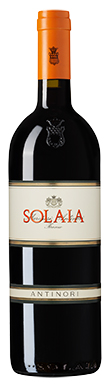

Produced since 1978, Solaia comes from a 20-hectare vineyard with a southwestern exposure at around 350-400 metres above sea level. The soil is the typical...
2018
AntinoriToscana

Masseto, Toscana, Tuscany, Italy, 2018
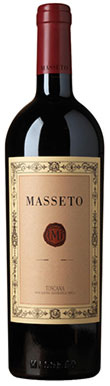
In 2018, the bright intensity of both aroma and flavour here is intoxicating. The wine is dark crimson in colour with savoury aromas of plums,...
2018
MassetoToscana
Antinori, Tignanello, Toscana, Tuscany, Italy, 2018
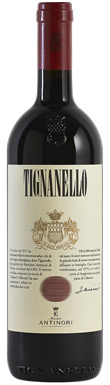
Today producing 300,000 bottles annually, Tignanello was refined and refined through the years: blended with Cabernet Sauvignon since 1975, aged using less obvious oak management...
2018
AntinoriToscana
Fontodi, Flaccianello della Pieve, Toscana, Tuscany, Italy, 2018
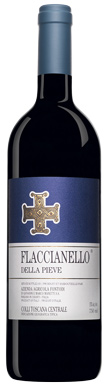
Produced since 1981, Flaccianello was a single-vineyard wine up to 2003, then a selection of the best grapes of the estate. Guyot-trained Sangiovese is fermented...
2018
FontodiToscana
Montevertine, Pergole Torte, Toscana, Tuscany, Italy, 2018
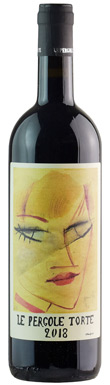
Owner Martino Manetti describes the 2018 vintage as a truly Radda style, which means fierce acidity and reluctance of the wine to open up, while...
2018
MontevertineToscana
Tenuta di Trinoro, Toscana, Tuscany, Italy, 2019
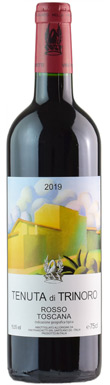
The Merlot was picked on 4-5 October during cool weather, before it warmed up in advance of the Cabernet Franc harvest, which commenced on 14...
2019
Tenuta di TrinoroToscana
