
Sweet like chocolate: Boekenhoutskloof and the creation of a South African icon
Tracing its roots back to 1776, Boekenhoutskloof is a pioneer of South African Syrah and its cult Chocolate Block has played a key role in driving global awareness of the modern Cape wine scene. Julie Sheppard pays a visit and tastes latest releases and back vintages, including The Journeyman.


The proverb says that mighty oaks grow from tiny acorns.
For South Africa’s Boekenhoutskloof, it’s a different type of tree… The boekenhout (pronounced book-n-howed) is an indigenous Cape beech.
Literally translated as ‘ravine of the boekenhout’, Boekenhoutskloof was named for these beeches, growing in the furthest southern corner of scenic Franschhoek Valley. The pretty Cape Dutch farmstead, founded in 1776, butts up against the Hottentots Holland Mountains.
The stunning waterfall of clouds pouring over the mountaintop, snapped in a photo on my first visit to the winery in 2006, is an enduring memory.

See below for notes and scores of eight wines from Boekenhoutskloof
The property was bought and restored in 1993. At the time Marc Kent, now managing partner and technical director, oversaw the planting of new vineyards.
‘We grubbed up all the vineyards that I planted in the 1990s. I did such a shit job that we replanted,’ he says with typical frankness.
The pioneer spirit
What he claims to lack in viticultural nous, Kent more than compensates for with winemaking vision. An undeniable innovator, he was a pioneer of sorting tables in the Cape, bought the first Bucher JLB automated basket press into South Africa in 2000 and installed the country’s first OXOline barrel system (see below) in the same year.
Kent’s winemaking philosophy is imprinted across the range of Boekenhoutskloof wines, which has expanded since the release of its first Cabernet Sauvignon vintage in 1996, to include Cabernet Franc, Grenache and most importantly Syrah.
The release of Boekenhoutskloof’s now-legendary 1997 Syrah established the variety as a serious contender in South Africa and marked the winery as a Syrah specialist.
Boekenhoutskloof also made its first Semillon in 1997. ‘Way before it was fashionable,’ says Kent. ‘No-one at that time was talking about old vines.’

Hot chocolate
The premium Boekenhoutskloof range – whose labels feature seven wooden chairs; a nod to the use of Cape beech for making fine furniture – is a sell-out on release each vintage.
However one wine has become pivotal to the winery’s success: The Chocolate Block. This Syrah-based blend, which changes every year, has established a cult following. Arguably it’s the most recognisable red blend to emerge from the modern era of South African winemaking.
Kent gives credit for naming the wine to Tony Allen, then senior buyer at Oddbins.
‘In 2000 I was at Lord’s Cricket Ground with Tony for a South Africa event and Tony said, “Marc, I’d like you to make an own-label Shiraz for Oddbins, and call it The Chocolate Block”. And I said to him: “Tony, forget about it. I’m not doing any own-label business. It’s not our gig.”
This was the era of ‘beautiful, big, bold South Australian Shiraz’ as the name implied. The following year Kent took a road trip through Roussillon and into the Costa Brava, which proved inspirational.
‘The traditional Syrah and Garnacha guys – particularly in the southern part of Roussillon – some of them were planting Cabernet to give the wine a bit more structure. You know, I’m always stealing with my eyes, listening, tasting…’

First blend
Back at Boekenhoutskloof the following year, 2002, was ‘a decidedly poor vintage’, which prompted Kent to experiment. ‘I put this concept wine together based on Syrah with Grenache and some Cabernet, but it also included Cinsault and a splash of Viognier to give the wine perfume.’ In 2003 it was time to bottle the wine, but it didn’t have a name.
‘So I went to see Tony and I said, “I’ve got this idea. Remember that name Chocolate Block? He said, “Of course, I do. I created it.” I said, “Well, do you mind if I use it?” And I told him what I’d done. He said, “Deal – as long as you give Oddbins exclusivity on the first vintage.” Which is what we did.’
That initial 2002 vintage of The Chocolate Block used Syrah, Viognier and Cinsault sourced from fruit grown in Wellington; while the Cabernet came from Malmesbury and the Grenache from an old block in Citrusdal.
Varieties were fermented separately, with malolactic fermentation in used French casks, and left on lees for 15 months before the final blend was created.

Evolution of style
Unsurprisingly given Kent’s innovative character and restless pursuit of quality, winemaking for The Chocolate Block has been constantly fine-tuned over the years. Developments in the winery and cellar have reflected changes in how the fruit is sourced and grown.
The quest for quality Syrah grapes led to Porseleinberg near Riebeek-Kasteel in Swartland, which was purchased in 2009. The estate’s 90ha of hot, dry-farmed, low-yielding vineyards stretch across a stony range of hills with granite soils.
Callie Louw grows grapes for the Boekenhoutskloof Syrah, plus Syrah and Grenache for The Chocolate Block, alongside producing his own in-demand Porseleinberg Syrah, with labels he prints himself on an antique letterpress.
Goldmine, a second Swartland estate, was acquired in 2014. Seeing the quality of the Swartland grapes, in 2015 Kent decided to shift from making The Chocolate Block as appellation Western Cape to Wine of Origin Swartland.
‘The significance is that we can directly manage the majority of the fruit being vinified for The Chocolate Block and farm the vineyards using our sustainable approach to viticulture,’ he explains.
Chocolate Block is now blended from 100% Swartland fruit. ‘Notably, we can see that the wines have changed stylistically. With our acquisition of Partnership Vineyard in 2022, we have further expanded our footprint in the Swartland and our goal of eventually filling our fermenters with our own, sustainably farmed vineyards,’ he adds.

In the winery
A second crucial change in 2015 was the appointment of Gottfried Mocke as chief winemaker.
With experience in the Rheingau and Oregon, Mocke had previously been winemaker at Chamonix Wine Farm in Franschhoek before joining the Boekenhoutskloof team.
He shares Kent’s questing, experimental approach. ‘We are very open to new and different things. We don’t mind taking a bit of risk, we enjoy that,’ he says, as we tour the Boekenhoutskloof winery, discussing changes in winemaking over the past decade.
Concrete eggs were introduced in the early 2000s, enabling plot-by-plot fermentation. ‘If we do Boekenhoutskloof Syrah blending, we do an average of 50 different parcels,’ says Mocke. ‘And Chocolate Block has a lot of parcels.’
Although there is no set recipe for creating Chocolate Block, Mocke has established best practice for fermenting the many parcels of fruit that might make up the blend.
‘The first pickings I do always go to concrete. When it comes to the riper fruit, we will then go into French barriques,’ explains Mocke.

South African identity
‘I think for us in the last 10 years, we’ve been trying to understand our vineyards and sites better – and to understand the strong correlation between a vineyard and the decision in terms of what your winemaking must be,’ continues Mocke.
Converting to organic farming was part of this change. ‘For us, organic farming was interesting because it just fitted so well into our winemaking philosophy. If we’re embracing spontaneous ferments, and we don’t use the ammonium phosphates and enzymes, it’s all part of the story,’ he explains.
It’s also about capturing a South African identity. ‘We all base our passion for wine on the traditional wine regions of the world. I love Burgundy and Marc has always been obsessed with the Northern Rhône,’ explains Mocke.
‘But I think now we also understand that we must make wines and styles that really express what makes South Africa unique and different.’
His Syrahs have a distinctive spicy profile. ‘That pepperiness, it’s like you smell a bit of the veldt, the fynbos and the characters around us. In a good vintage of Chocolate Block, I always taste rooibos tea in the wine. And I know if I taste that, we’ve got a great vintage coming!’

In the cellar
In 2009, the same year as the acquisition of Porseleinberg, Boekenhoutskloof bought the Helderberg Winery, a 9m-litre facility, which became home to the production of Chocolate Block.
I visit two weeks before much of the site is due to be demolished and rebuilt ‘to give a really modern facility where all elements of our business will come together. All the time, we’re just upgrade, upgrade’ says Kent.
He’s keen to point out that this is not an expansion of size. ‘Our volume is actually declining,’ he says. ‘But our business is better for it because we’re focusing on premium wines.’
Inside you get an idea of the scale of Chocolate Block production, with row upon row of pristine barrels stored in an OXOline system.
Barrels are placed on a set of rollers, with the space above each bung free, allowing for work to be done on each barrel independently, in place.
This means it’s possible to open, rinse, fill, rack, clean, sample, rotate, and remove any barrel in the stack without touching any other barrels.
‘Before, we stacked the barrels on cradles and then on top of each other. We had 4,000 barrels, but to get to the one barrel in the corner, it took days,’ remembers Kent.
‘Now this is all done in place. So it’s a hell of an efficient system. It’s done an incredible amount for wine quality, because every barrel is accessible at any time. What we’ve seen is incredible improvement.’

Barrel business
The barrels themselves are tailored to Chocolate Block. Kent works with French cooper Tonnellerie Sylvain, based just outside St-Emilion. ‘I asked Jean-Luc Sylvain if he could work on a barrel for the Chocolate Block,’ says Kent.
‘His barrels all have a designation – the premium barrels are called Jean Luc Reserve. So I said: “I want to have my own barrel and I’m going to call it Spectacular.”’
Why French oak? ‘We just know what works for us,’ explains Kent. ‘We work primarily with barrels from the East of France – Alliers and Vosges – more spice and aromatic than the centre of France, with a lot more structure and grip,’ he adds.
‘Oak is a very important part of all of our wines. People like to “terroir” this, but for me, it’s also what we do in the cellar that makes a very, very big contribution,’ continues Kent. When the cellar reaches a capacity of 6,000 barrels, he will replace 600 barrels a year. ‘We’re the biggest purchaser of new wood in South Africa,’ he adds.
This level of attention to detail is one of many factors that have allowed Kent to scale up volume production of The Chocolate Block, while fastidiously maintaining the quality of the wine.
Just 15 barrels of the inaugural Chocolate Block were produced in 2002. Today it makes up over 50% of the Boekenhoutskloof business, with 4,000 barrels made of the latest 2023 vintage.
‘It’s a nice position to be in – as long as we protect that,’ notes Kent.
Those acorns have indeed proved to be mighty.

Boekenhoutskloof wines to try
Related articles
- South Africa’s next generation: Six brilliant winemakers forging a new scene
- South Africa gets serious about great Grenache
- South Africa’s winemakers seek out new signature varieties
Boekenhoutskloof, Semillon, Franschhoek, South Africa, 2022
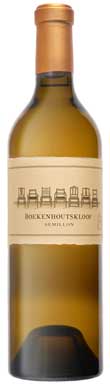

This stunning Sém is made from some of South Africa's oldest vines: two vineyards planted in 1902 and 1942 in the ancient Franschhoek riverbed and...
2022
Boekenhoutskloof

Boekenhoutskloof, Semillon, Franschhoek, South Africa, 2017
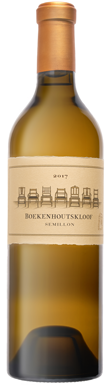
Boekenhoutskloof has been producing its old vine Sémillon since 1997 and older vintages such as this 2017 demonstrate just how well it can age. Fruit...
2017
Boekenhoutskloof
Boekenhoutskloof, Syrah, Swartland, South Africa, 2022
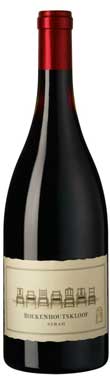
This serious – and seriously good – Syrah is made from Swartland fruit, grown on the schist-dominant soils of Porseleinberg estate (90%) and Goldmine estate (10%) near...
2022
Boekenhoutskloof
Boekenhoutskloof, The Journeyman, Franschhoek, South Africa, 2020
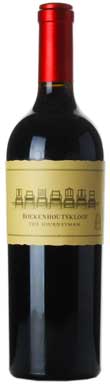
Only made in top years, The Journeyman was inspired by Right Bank Bordeaux Château-Figeac and is named after the grandfather of Marc Kent, technical director...
2020
Boekenhoutskloof
Boekenhoutskloof, The Journeyman, Franschhoek, South Africa, 2017
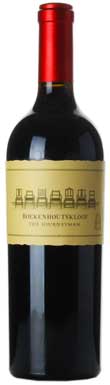
A rarity, Boekenhoutskloof's Journeyman is produced only in top vintages and in very limited quantities. Previous bottlings were 2005, 2007, 2009, 2011 and 2015, with...
2017
Boekenhoutskloof
Boekenhoutskloof, Cabernet Sauvignon, Franschhoek, South Africa, 2022
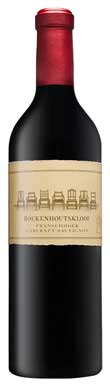
A blend of fruit from two Franschhoek growers and Boekenhoutskloof's own organic estate vineyards – also home to the 10% Cabernet Franc included in the blend....
2022
Boekenhoutskloof
Boekenhoutskloof, Cabernet Sauvignon, Stellenbosch, South Africa, 2022
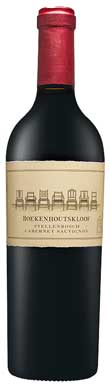
One of two Cabs made by Boekenhoutskloof; the other is sourced from Franschhoek. This is made from selected parcels of vines planted on the slopes...
2022
Boekenhoutskloof
Boekenhoutskloof, The Chocolate Block, Swartland, South Africa, 2023
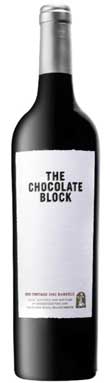
This top South African red blend consistently delivers. The 2023 vintage is 74 %Syrah, 11% Grenache, 8% Cabernet Sauvignon, 6% Cinsault and 1% Viognier, with...
2023
Boekenhoutskloof
Boekenhoutskloof, Semillon, Franschhoek, South Africa, 2022
This stunning Sém is made from some of South Africa's oldest vines: two vineyards planted in 1902 and 1942 in the ancient Franschhoek riverbed and...
2022
Boekenhoutskloof
Boekenhoutskloof, Semillon, Franschhoek, South Africa, 2017
Boekenhoutskloof has been producing its old vine Sémillon since 1997 and older vintages such as this 2017 demonstrate just how well it can age. Fruit...
2017
Boekenhoutskloof
Boekenhoutskloof, Syrah, Swartland, South Africa, 2022
This serious – and seriously good – Syrah is made from Swartland fruit, grown on the schist-dominant soils of Porseleinberg estate (90%) and Goldmine estate (10%) near...
2022
Boekenhoutskloof
Boekenhoutskloof, The Journeyman, Franschhoek, South Africa, 2020
Only made in top years, The Journeyman was inspired by Right Bank Bordeaux Château-Figeac and is named after the grandfather of Marc Kent, technical director...
2020
Boekenhoutskloof
Boekenhoutskloof, The Journeyman, Franschhoek, South Africa, 2017
A rarity, Boekenhoutskloof's Journeyman is produced only in top vintages and in very limited quantities. Previous bottlings were 2005, 2007, 2009, 2011 and 2015, with...
2017
Boekenhoutskloof
Boekenhoutskloof, Cabernet Sauvignon, Franschhoek, South Africa, 2022
A blend of fruit from two Franschhoek growers and Boekenhoutskloof's own organic estate vineyards – also home to the 10% Cabernet Franc included in the blend....
2022
Boekenhoutskloof
Boekenhoutskloof, Cabernet Sauvignon, Stellenbosch, South Africa, 2022
One of two Cabs made by Boekenhoutskloof; the other is sourced from Franschhoek. This is made from selected parcels of vines planted on the slopes...
2022
Boekenhoutskloof
Boekenhoutskloof, The Chocolate Block, Swartland, South Africa, 2023
This top South African red blend consistently delivers. The 2023 vintage is 74 %Syrah, 11% Grenache, 8% Cabernet Sauvignon, 6% Cinsault and 1% Viognier, with...
2023
Boekenhoutskloof
