
First taste: Vega Sicilia’s new releases, including Único 2009
Sarah Jane Evans MW has tasted the latest releases from Vega Sicilia. Here, she gives some insight into the winery and rates the wines...


Earlier this month I was a guest at the Salón de Gourmets Fair in Madrid, where Vega Sicilia’s technical director of winemaking, Gonzalo Iturriaga, showed Vega Sicilia’s new releases from Rioja and Ribera del Duero.
These ‘new’ releases seem something of a misnomer, given that the youngest Único on sale is now the 2009, 10 years old already.
Fine-tuning
The tasting revealed the effect of the subtle adjustments to the wines provided by a programme of extensive investment. Vega Sicilia’s own new winery came on-stream in 2008, while Macán’s winery in Rioja was completed for the latest 2016 vintage, and Alión and Pintia have also both seen investment in production facilities.
This has resulted in many more options available to the teams: ‘no winemaker has as many resources as I have’, says Iturriaga.
Learning curve
Overall there is a judicious transition to less new oak, together with more choice between French and American oak, depending on the vintage. There is also greater diversity in the material and size of large-format vats for ageing.
The wines are also released with more bottle age, where necessary. Thus, Macán is now released with five years of ageing rather than four.
Iturriaga reflects that working outside Ribera del Duero has been a learning process. ‘In Rioja, you have to be very careful with extraction. I was surprised just how gentle you have to be.’
‘We have to be really on top of the fruit as it ripens in all our vineyards. For instance, in Toro I like to harvest when the grapes are “al dente”, otherwise you get jammy, low acid wines.’
The estates
At Macán they have also changed the profile of some of the barriques, brought in more large-format vats, and are reducing the level of new oak to 50%. The completion of the new winery means that the styles of extraction for Macán and little brother Macán Clasico can now be more clearly separated.
At Pintia in Toro, new oak is being reduced from 90% to 80%, and malolactic fermentation in barrique is also being cut back to 50%.
At Alión in Ribera del Duero, they have been using concrete vats during the ageing process since 2016, and are increasing the percentage of American oak used, as opposed to French.
Único has seen its own transformation, with less time spent in new oak, and less time in barrique, replaced by a few more months in 220hl vats. This makes the wine much more approachable young, though it should retain its power for the long term.
A key feature of the winemaking here is the potential to add from 3% up to 15% of other vintages. ‘This is what helps the wine age so well, and enables us to balance the pH, the acid and the alcohol from vintage to vintage’, declares Iturriaga.
Vega Sicilia new releases rated (plus some older gems):
About Vega Sicilia
Vega Sicilia, founded in 1864, built a global profile for the Ribera del Duero region decades before the creation of the denomination in 1982. That same year current owners, the Alvarez family, purchased the property. The Tempos Vega Sicilia group produces around one-million bottles a year.
Ribera del Duero is renowned for its reds from Tinto Fino (Tempranillo), but Vega Sicilia’s founder also introduced Bordeaux varieties. Today, Cabernet Sauvignon and Merlot still play a part in the wines, along with a certain Bordelais approach to winemaking.
What Sarah Jane Evans said about last year’s releases:
‘Evolution not revolution’ is the mantra at Vega Sicilia. There were promising signs of the implementation of the gradual development across the wines at the first international launch of the Vega Sicilia new releases for 2018.
Reserva Especial, the traditional NV blend across three vintages, was the star. It makes the case for blending being more than just the sum of the parts.
The new winery at Vega Sicilia opened in 2010, so the Reserva Especial does not yet reflect the changes to the technology.
Technical director Gonzalo Iturriaga joined in September 2015, and is working on a number of fronts.
‘For instance, with Valbuena we’re looking at going back to stainless steel for the second year, after that important first year in oak. We are trialling a number of different coopers. We are also playing with the size of the vats. In the future we are working more with the concrete; and with Alion we are starting to bring in a little American oak. Overall our work is moving from wood to velvety tannins.’
The tasting certainly revealed brighter wines, moderated oak, less tough tannin. The subtle changes don’t alter the signature of the wines, but they do provide freshness, and some more fruit. This work has been echoed in Rioja, where the focus has been on suiting the appropriate oak and winemaking to Tempranillo.
See all of Decanter’s Vega Sicilia tasting notes
See all of Decanter’s Benjamin de Rothschild & Vega Sicilia Macan tasting notes
You may also like:
Bordeaux 2018 wines: Our en primeur verdict
Great white Rioja wines for summer
Quality Rioja 2010: Panel tasting results
Wine Legend: Vega Sicilia, Unico 1964
Benjamin de Rothschild & Vega Sicilia, Macan, Rioja, Northern Spain, Spain, 2016
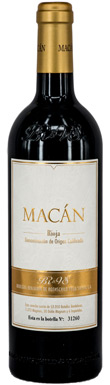

This is the first Macán, the top wine from this project, to be made in the newly completed winery. Oak usage is being toned down...
2016
Benjamin de Rothschild & Vega SiciliaRioja

Vega Sicilia, Pintia, Toro, Castilla y Léon, Spain, 2014
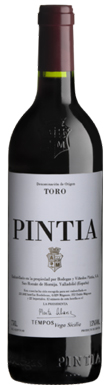
2014 was a good vintage, not excessively hot, and this is a really elegant expression of Toro that will continue to develop - Pintia showing...
2014
Vega SiciliaToro
Vega Sicilia, Alión, Ribera del Duero, Castilla y Léon, Spain, 2015
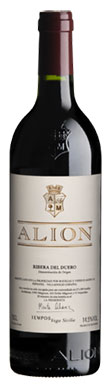
Alión was intended to be the more ‘modern’ wine from Ribera del Duero, and it takes younger grapes from Vega Sicilia, as well as some...
2015
Vega SiciliaRibera del Duero
Vega Sicilia, Valbuena 5, Ribera del Duero, Castilla y Léon, Spain, 2014
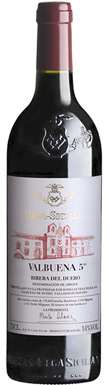
After 12 months in 70% French and 30% American barriques, this 2014 underwent a pre-blend prior to 16 months in large-format vats. The wine was...
2014
Vega SiciliaRibera del Duero
Vega Sicilia, Valbuena 5, Ribera del Duero, Castilla y Léon, Spain, 2004
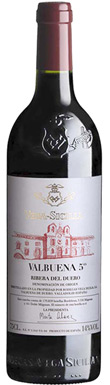
In almost reverse proportions to the 2014, the 2004 spent 16 months in 60% American and 40% French oak barriques - 100% new - which...
2004
Vega SiciliaRibera del Duero
Vega Sicilia, Único, Ribera del Duero, Castilla y Léon, Spain, 2009
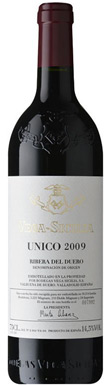
The great eternal Unico, with a touch of extra fruitiness and spiciness. Made after very long ageing in different oak vats and barrels, from selected...
2009
Vega SiciliaRibera del Duero
Vega Sicilia, Único, Ribera del Duero, Castilla y Léon, Spain, 1999
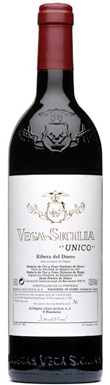
In this mini-vertical of 2009, 1999 and 1996, the Único 1999 emerges as a wine entering its best moments. On the nose there are alluring...
1999
Vega SiciliaRibera del Duero
Vega Sicilia, Unico, Ribera del Duero, Castilla y Léon, Spain, 1996
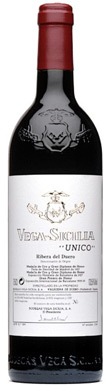
In the glass, Único 1996 looks to be showing its age. Certainly on the nose too, where the notes of truffle and woodsmoke reveal its...
1996
Vega SiciliaRibera del Duero
