
Ted Lemon and his 30 year winemaking journey at Littorai
New York-born and Dijon-trained, Ted Lemon's influence on today’s California wine scene belies his modest nature. The vineyard-centric doctrines of this Sonoma-based wine-grower (the term he prefers) are setting a benchmark for the decades ahead.


This is a story about Ted Lemon and how, 30 vintages in at Littorai, near Sebastopol in California’s Sonoma County, he’s showing us what it looks like to build something genuine that lasts, telling a story worth listening to in one of the most challenging sectors of the American economy.
This isn’t, and can’t be, just another wine story. It is a story about a life lived with intention. About staying when it was hard and shifting when it mattered. About purpose and dedication – because, as psychotherapist and author Esther Perel puts it, ‘purpose is the essential dimension of meaning’.
Ted has been making wine for more than four decades and growing grapes for just as long. Having attained an oenology degree at Dijon University in 1981, he worked until 1984 with some of Burgundy’s most prestigious domaines – Dujac, Roumier, Roulot, Parent – before consulting in New Zealand and eventually returning to California.
A selection of Littorai wines from the 2022 vintage listed below
He has undeniably been a key player in bringing some of northern California’s most celebrated vineyard sites into the spotlight. He’s been nominated for a James Beard Award, credited as the godfather of modern California wine, and has been profiled and praised a multitude of times.
And yet, it still feels like there’s something about the way Ted thinks about sustainability and life in general that hasn’t fully been captured.
Firmly grounded

Ted Lemon’s perspective stretches far beyond the vineyards. What often gets overlooked is his attention to how we, humans and nature, might live in true solidarity, not just in farming, but in being. Ted is one of those people who makes you smile the moment you meet him.
There’s kindness – something good that radiates effortlessly. But alongside the warmth is discipline. Focus. A calm, deliberate assertiveness that can catch you off-guard – not pretentious, just commanding enough to make you sit up straighter.
As one should. I have sat down to taste with Ted one-on-one a few times now, and recently attended a retrospective tasting of Littorai in San Francisco, held to celebrate the estate’s 30-vintage milestone. In every conversation, he has made sure to highlight his role as a farmer first.
‘As I watched people my age and younger sell their businesses because of burnout, the ability to farm really kind of saved me,’ confesses Ted, on what keeps him motivated after 30 years.
And, specifically, biodynamic farming. ‘Suddenly you’re turning all your ideas on their head. I was raised in the Western tradition, believing in Western science, and then I decided to try a completely different paradigm.’
Balance of needs

Ted was 42 years old when he took the leap – in the early 2000s. ‘All of a sudden it was like, okay, everything I think I know… I’m going to challenge myself.’
That’s how he stepped into a system that goes beyond organics – one that treats the vineyard as a living organism, guided by lunar cycles, compost preparations and a deep commitment to biodiversity.
That willingness to pivot – to unlearn, to start over – shows as a form of resilience rooted in integrity. It’s staying true to yourself, even when the map disappears. But what also struck me is Ted’s acknowledgement of the human side of farming – what he calls the ‘social goal’ of his work.
‘It’s how we treat the land,’ he explains, ‘and how we treat the people who work for us and with us. It sounds simple. But the kind of social responsibility Ted speaks to – that balance between the financial needs of the business and the wellbeing of the people behind it – is something we’re collectively failing at, across industries.
‘If you’re serious about biodynamic farming,’ he says, ‘those are the things I think you should be deeply engaged in. You have to be asking yourself those questions: am I treating people correctly? Are things in balance?’
Nothing in excess

Ted’s belief in crafting wines of balance and restraint, with remarkable ageing potential and a true ‘sense of place’, is inseparable from the way he farms and lives responsibly, sustainably and with patience.
When asked about his concerns around climate change, he replies, without hesitation: ‘I think there’s still too much wine in the world, and I think there will be too much wine in the world for a while. We will need to innovate, adopt and adapt in many ways. Rethink our priorities as a society, even.
‘The biggest challenge going forward is the one that nobody wants to talk about in the wine business,’ he continues, ‘which is the excess of wealth. The wine business is very appealing to wealthy people who have made money in other walks of life, and that’s fine.
‘But when that kind of massive wealth enters a business, on the scale that it has in the fine wine business, it distorts everything.’
Massive wealth, he believes, when paired with a mindset of speed and scale, can quietly erode the very sustainability the wine world claims to value. Big money almost always demands fast results: more vineyards, more bottles, more market share.
But wine doesn’t work that way. It’s a craft rooted in patience and humility from the ‘vine up’. When the cost of glass doubles overnight, for example, a billionaire-backed project shrugs while a family-run estate gasps.
‘You know, if you’re a small family winery that doesn’t have other resources, you’re going out of business,’ Ted reflects.
Lasting impact

For Ted, sustainability isn’t just about farming without chemicals – it’s about building a business and a culture that can last. But culture is not a static thing; it’s shaped and sustained through shared experiences.
In speaking with Ted Lemon, it’s evident how much he values mentoring, exchange and ongoing learning. Those who’ve spent years with him – in the cellar, in the vineyard, in life – can attest to that.
Daniel Estrin worked alongside Ted for nine vintages and is now vineyard manager and winemaker at Cristom Vineyards in Oregon. He speaks of Ted not just as a boss but as a role model – the kind of man, father and leader he aspired to become.
‘Someone deeply attuned to the land, to people and to doing the right thing, even when it’s the harder choice,’ he says. ‘Ted doesn’t function like a normal winemaker. There’s no separation between farming and winemaking – they’re one and the same. The wine is just a consequence of the farming. And the people are an extension to all of that.
He adds: ‘He farms the way he does because he wants to leave the land better than the way he found it. It’s a human obligation to him.’
Click here for more Littorai wines from the 2022 vintage
Spiritual dimension

Ted’s relationship with the land is something even he admits is hard to put into words. Critics and even some fellow farmers often dismiss biodynamic farming as unscientific or a little too ‘woo-woo’.
‘The biodynamic community has always struggled between those who were afraid of the spiritual dimension and the population that almost embraced it to a fault,’ he explains.
He adds that to farm biodynamically, one must believe there’s more out there than what we can see. ‘I believe that the spiritual world exists, and I’m always looking for its manifestations – because I believe it shows up in all things. And if you become sensitive, trained and attentive to this other world, you find it in ours.’
When asked the question, ‘Do the vineyards speak to you? What would they say after 30 years of working “together”?’, he jokes: ‘Do better!’
But it’s clear that, for Ted, improvement is not simply a punchline – it’s his guiding principle. I ask whether Ted believes that his biodynamic approach results in better wines.
‘It’s not for me to say whether biodynamic wines are better than organic ones,’ he says. ‘For me, it’s the agroecological effects of farming that matter, and we see those more profoundly in biodynamic vineyards. That they’re contributing to the long-term health of their region – that’s what I care about.’
A taste of Littorai: The 2022 vintage
Related articles
- Sonoma County: 2022 vintage report
- Napa Cabernet 2022: Vintage report and buyer’s guide
- How Thacher Winery uncovered a lighter side to Paso Robles
Littorai, Heintz Vineyard Chardonnay, Sonoma County, West Sonoma Coast, California, USA, 2022
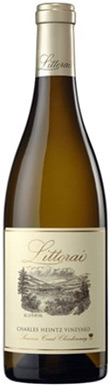

Ted Lemon has worked with the Heintz Vineyard since 1997 and was an early advocate for organic farming there, encouraging Charlie Heintz to make the...
2022
LittoraiSonoma County

Littorai, BA Theriot Vineyard Chardonnay, Sonoma County, Sonoma Coast, California, USA, 2022
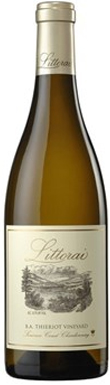
The 2022 B.A. Thieriot Chardonnay has a distinct savoury quality—salty, lemony, and driven by a sense of linearity that stands out. It’s ripe yet restrained,...
2022
LittoraiSonoma County
Littorai, The Haven Chenin Blanc, Sonoma County, Sonoma Coast, California, USA, 2022
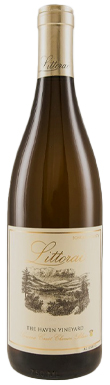
The 2022 vintage of this Chenin is bright and elegantly expressive. It was aged for 12 months on the lees, entirely in stainless steel, and...
2022
LittoraiSonoma County
Littorai, Mays Canyon Chardonnay, Sonoma County, Sonoma Coast, California, USA, 2022
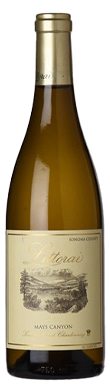
Ted Lemon has been making Chardonnay from Mays Canyon since 1993—Littorai’s inaugural vintage—and the 2022 release shows the site’s signature mix of richness and lift....
2022
LittoraiSonoma County
Littorai, The Haven Vineyard Pinot Noir, Sonoma County, West Sonoma Coast, California, USA, 2022
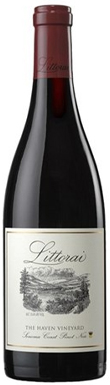
The Haven is a wine that leads with pure deliciousness. It comes from Littorai's original estate vineyard, close to the town of Occidental at a...
2022
LittoraiSonoma County
Littorai, Hirsch Vineyard Pinot Noir, Sonoma County, West Sonoma Coast, California, USA, 2022
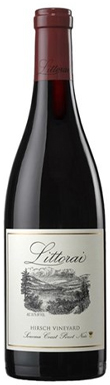
Ted Lemon has been working with Hirsch grapes longer than anyone - longer even than Hirsch themselves - starting back in 1994. His fruit comes...
2022
LittoraiSonoma County
Littorai, The Return Pinot Noir, Mendocino County, Anderson Valley, California, USA, 2022
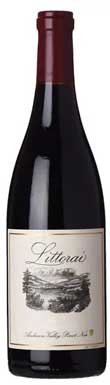
The Return is the Lemons’ ode to re-exploring the One Acre vineyard, a site they acquired in 2016 that was originally farmed by Richard Savoy....
2022
LittoraiMendocino County
Littorai, Cerise Vineyard Pinot Noir, Mendocino County, Anderson Valley, California, USA, 2022
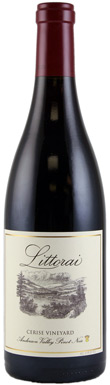
The 2022 vintage marks the final bottling of Cerise Pinot Noir for Littorai - a long-standing relationship with this Anderson Valley site that began in...
2022
LittoraiMendocino County
Littorai, Mays Canyon Pinot Noir, Sonoma County, Sonoma Coast, California, USA, 2022
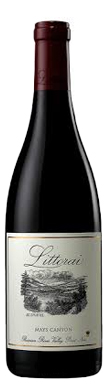
The 2022 Mays Canyon Pinot Noir comes from the Porter-Bass Vineyard, tucked along Mays Canyon Road in the far western reaches of the Russian River...
2022
LittoraiSonoma County
Littorai, One Acre Pinot Noir, Mendocino County, Anderson Valley, California, USA, 2022
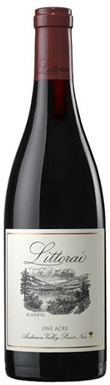
The One Acre was Littorai’s first vineyard-designated Pinot, going back to 1993. It comes from the top of the hill of this Boonville site, where...
2022
LittoraiMendocino County
Littorai, The Pivot Vineyard Pinot Noir, Sonoma County, Sonoma Coast, California, USA, 2022
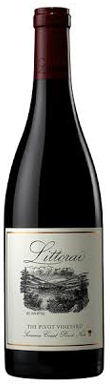
The Pivot Vineyard is located right where Littorai’s winery and tasting room are in the Sebastopol area. This 2022 Pivot Pinot Noir offers a graceful...
2022
LittoraiSonoma County
Littorai, Wendling Vineyard, Block E, Pinot Noir, Mendocino County, Anderson Valley, California, USA, 2022
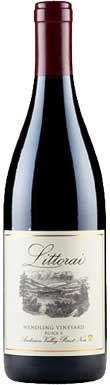
The Wendling Vineyard Pinot Noir comes from Block E of this cool site in the deep end of Anderson Valley. Block E spans five acres...
2022
LittoraiMendocino County
Littorai, Richardson Ranch Pinot Noir, Sonoma County, Sonoma Coast, California, USA, 2022
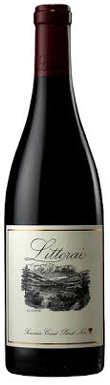
The 2022 vintage is only the second release of the Richardson Vineyard Pinot Noir for Littorai. The site is in the West Sonoma Coast, Annapolis...
2022
LittoraiSonoma County
Littorai, Roman Vineyard Pinot Noir, Mendocino County, Anderson Valley, California, USA, 2022
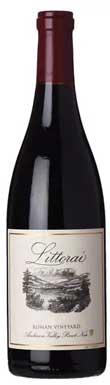
The Roman Vineyard is another high-elevation site, sitting between 900 and 1,150 feet and shaped by strong coastal winds. Located right above the Deep End...
2022
LittoraiMendocino County
