
Tenuta Sette Cieli: tasting Indaco and Scipio
Sette Cieli is an exciting winery driven by the young minds of Ambrogio Cremona Ratti and Elena Pozzolini. James Button compares the estate's two top wines from the 2016 and 2017 vintages.


Situated in Monteverdi Marittimo in the province of Pisa, Tenuta Sette Cieli is one of the highest estates in the area, and named as such with the translation meaning ‘estate of the seven skies’.
A winding three-mile dirt track leads up to a hilltop at around 400 metres above sea level, overlooking the plain leading to the Tyrrhenian coast just eight miles away.
Scroll down for tasting notes and scores of Tenuta Sette Cieli’s Indaco and Scipio 2016 and 2017 wines
It’s situated close to the border with Bolgheri – you can see Sassicaia’s original vineyard as well as one of Ornelliaia’s vineyards from this lofty viewpoint – and the wines display plenty of Bolgheri typicity, informed by the cool coastal breeze and dazzling sunlight.
History
The hill had lain abandoned since the 1940s until Erika Ratti purchased around 80 hectares to breed horses in 1995. After realising that the rocky terrain and exposure to sea breezes made it suitable for growing grapes, four hectares of Cabernet Franc, Cabernet Sauvignon, Malbec and Merlot were planted here in 2001 on dry stone wall terraces surrounded by forest.
A further three hectares were planted the following year next to the original plot, and then another three hectares in 2016 including one hectare of Sangiovese – the estate’s first Italian variety.
Sette Cieli has so far only produced experimental wines from the plot of Sangiovese but hopes to release a wine in the future. ‘Sangiovese is produced in Bolgheri but there’s not much of it,’ said Erika’s son, Ambrogio Cremona Ratti who took over management of the estate in 2012.
‘We think we have a shot at making something great. The rocky soil, the altitude, the clay is reminiscent of some great spots in Tuscany.’

In 2018, the estate planted five hectares of Cabernet Sauvignon, Cabernet Franc and Merlot across the border in Castagneto Carducci within the Bolgheri DOC, close to the vineyards of Grattamacco and Ca’ Marcanda. A new winery was also built within the DOC.
Tenuta Sette Cieli’s wines
Sette Cieli produces four wines. Its finest are Indaco and Scipio, produced from the grapes hand-harvested from the estate’s original hilltop vineyards.
Indaco is the original wine of the estate, with around 13,000 bottles produced every year. It’s an equal-parts blend of Malbec, Cabernet Sauvignon and Merlot. ‘We wanted Malbec because we wanted to reproduce how they originally did it in Bordeaux,’ said winemaker and CEO Elena Pozzolini, referring to the traditional Bordeaux wines which incorporated a portion of Malbec – rarely seen these days.
Planting Malbec isn’t without its challenges in coastal Tuscany, however, as the variety is susceptible to botrytis caused by humidity. ‘The skin is very thin,’ explained Elena. ‘We spent a lot of hours on this varietal and we found that planting barley among the rows helps as it competes for water with the vines.’
Scipio – named after the Roman general who defeated Hannibal – is Sette Cieli’s 100% Cabernet Franc with a production of 8,000 bottles. It’s only produced in the best years, when the weather is clement into October, as the cool breeze and altitude delays Cabernet Franc’s ripening.
Both Indaco and Scipio are fermented in temperature-controlled stainless steel using indigenous yeasts identified in collaboration with the University of Pisa.
There’s a small difference in ageing: Indaco spends 18 months in French oak barriques (35% new) and Scipio spends up to 22 months in 40% new barriques, but both spend a further two years or so in bottle before release.
There’s certainly a family resemblance: both wines are vibrant and concentrated, yet given elegance by the large diurnal temperature variations and cooling sea breeze. Indaco is a fantastic wine to drink in the near to mid-term, while Scipio has more cellaring potential.
Tasting Tenuta Sette Cieli: Indaco and Scipio 2016 and 2017
You may also like:
Bolgheri 2017 vintage report: Experience counts
Tuscany’s best recent vintages plus the top wines to try
Best Chianti Classico Gran Selezione 2018 plus late releases
Tenuta Sette Cieli, Indaco, Toscana, Tuscany, Italy, 2016
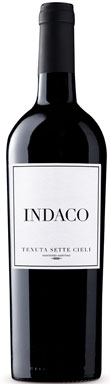

Ripe, leafy red and black berry aromas are accompanied by a sweet creamy note. Focused berry flavours and juicy fine-grained tannins develop some wood and...
2016
Tenuta Sette CieliToscana

Tenuta Sette Cieli, Indaco, Toscana, Tuscany, Italy, 2017
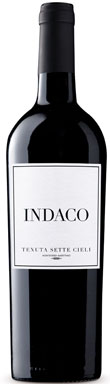
The 2017 Indaco has a slightly richer, darker nose than the 2016, with a plush character reminiscent of blueberry and maple waffles. It has more...
2017
Tenuta Sette CieliToscana
Tenuta Sette Cieli, Scipio, Toscana, Tuscany, Italy, 2016
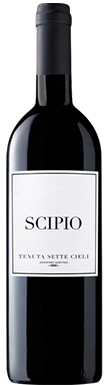
The 2016 Scipio combines leafy Cabernet Franc and breezy coastal Tuscany with great results. It has a delicious nose of black fruits, damp earth, a...
2016
Tenuta Sette CieliToscana
Tenuta Sette Cieli, Scipio, Toscana, Tuscany, Italy, 2017
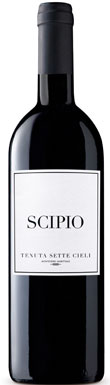
Marked nutmeg and cedar notes over blueberry and blackberry aromas. Quite concentrated, round and soft. Very juicy and well-layered.
2017
Tenuta Sette CieliToscana
