
The Bordeaux vintage guide to years ending in 4
Some numbers are considered 'lucky' for Bordeaux vintages – '4' isn't one of them. But Gareth Birchley breaks down which wines break the mould and rival their more auspiciously-numbered cousins.


Numbers have power in wine.
Chinese buyers are well known to have drunk deep of Bordeaux’s 2008 vintage when it was released in the spring of 2009. Eight is the luckiest number in China, linked to wealth and prosperity.
Some estates played to the gallery. Château Lafite Rothschild engraved the Chinese character for eight on its bottles, sealing its fame and reputation in China and reaping huge demand as a result.
Scroll down to see notes and scores for Gareth’s pick of wines from vintages ending in ‘4’
All’s well that ends in…
It is not just buyers in China that fixate on a vintage’s final digit, however. A winemaker mentioned to me, ahead of the 2020 vintage, that he was supremely confident about the vintage, before the grapes were even on the vine.
‘Well the vintage ends in “0” and everyone knows that Bordeaux never fails in 5s and 0s,’ he declared.
It is tough to argue when you consider the relative merits of 2015, 2010, 2005, 2000, 1995, 1990 and 1985.
But, in stark contrast to the aforementioned ‘symbol of prosperity’, the number ‘4’ in Chinese culture is considered to be the omen of misfortune, largely due to its phonetic similarity to the Mandarin word for ‘death’.
Surely though it is just a coincidence that Bordeaux has experienced so many difficult vintages ending in ‘4’?
Despite its reputation, there are still some great wines from vintages ending in ‘4’ worth buying from this lauded region for any anniversaries coming up this year.
2014
2014 is the vintage that shows the most promise from all recent harvests tarnished with this numerical misfortune. It was a welcome relief following the challenging 2013 crop, arguably the most difficult in the last two decades.
The wonderful thing about this year is that, because collectors paid more attention to the ‘legendary’ pair that followed, 2014 has remained incredibly fairly priced to this day. Moreover, the quality from top to bottom, Left Bank and Right, whites and reds are incredibly consistent.
At 10 years old this is a vintage you can buy across the board that will not only give pleasure now but will keep well for years to come.
2004

After the extreme conditions of 2003, the Bordelais had hoped for a ‘more normal’ vintage which, qualitatively, is exactly what they got. The wines of 2004 are more classic in style than many in the modern era, and wholly overlooked in favour of the ‘vintage of the century’ that followed in 2005.
If I had to split hairs I would probably pick the Cabernet Franc heavy wines on the Right Bank such as Vieux Château Certan and Château Cheval Blanc. That being said, I have always had a soft spot for Château La Mission Haut Brion, Château Margaux, Château Grand Puy Lacoste and, most of all, Château Palmer, on the Left Bank.
The whites in 2004 really shine if you err on the side of stylistic restraint. The dry wines from Graves are fresher and better composed than most others in the decade and Sauternes and Barsac are wonderfully drinkable. A wine like Château Climens or Château Coutet in 2004 is the perfect summer’s day aperitif with a couple of satsumas in the afternoon sun.
1994
1991, 1992 and 1993 were troublesome times on both banks and so 1994, while only marginally superior in quality, was heralded as a success. That, however, was short lived due to the emergence of the genuinely exceptional pair of vintages that followed.
The wines, in general, are less angular than the two years that preceded it and some made very good examples of ‘classic claret’.
Château Pichon Longueville Comtesse de Lalande and Château Latour stick fondly in the memory. Further north, Château Montrose is the pick of St-Estèphe, and Château Rauzan-Ségla in Margaux produced one of the better wines. My tip here, for 30th birthdays particularly, is to buy in big bottles, double magnums and larger (if you can find them).

1984
Continuing the poor run of ‘4s’, 1984 served up the worst vintage in what was otherwise a hugely successful decade for Bordeaux, both qualitatively and economically. While it would be churlish to say you will no longer find anything of interest, I would suggest that everything produced from this fateful crop is past its peak and should be sought for sentimental or educational purposes over hedonistic.
1974
Unlike 1973, a vintage of incredible surprises (particularly on the Pomerol plateau), I have been distinctly underwhelmed by the year that produced a number of the finest Napa Cabernets of the century.
Just two years later Steven Spurrier would pit the finest wines of California against the best of Bordeaux in the infamous Judgement of Paris tasting.
While the French were famously toppled by Stag’s Leap Vineyards 1973, many forget that positions two, three and four were claimed by a trio of 1970 clarets. I suspect that, if they had relied on 1974 to ‘bring home the bacon’ it would have been a complete whitewash.
1964
Although the year Mary Poppins first graced our screens was not unanimously recognised as a great vintage in Bordeaux, I would argue that those that did succeed almost warrant an entire article of their own, which seems fitting given its half century birthday this year.
The Left Bank is sporadic, with Latour the outstanding performer, a wine that is still consistently great at 50 and will see in state pension age effortlessly if well stored. A nod should be given to its neighbour, Pichon Comtesse, which also made a notable wine under difficult conditions. Far less grand but worth seeking out.
By contrast to the Médoc, the Right Bank was an outrageous success. Petrus is understandably the standard bearer, producing a wine that many believe has surpassed those produced at this address in both 1961 and 1945, the two most iconic vintages of the century.
It will surprise few to know that, in the wake of such a great Petrus, its neighbours Château Lafleur and Cheval Blanc also produced world-beating wines.
Further afield in Pomerol the embarrassment of riches continued at so many estates but two spring to mind. Château Latour-à-Pomerol followed the success of its legendary 1961 and, slightly less famous 1962, a purple patch for this now overlooked Moueix property.
To a slightly lesser extent due to its perceived consistency a bottle of Château L’Evangile 1964 served blind over lockdown was mistaken for Petrus. That wine, on that day, would have, I suspect, pushed any produced in this lauded appellation… ever.

1934
The unfortunate years of 1954 and 1944 are not worth the mention, but the nonagenarian 1934 is.
I have to confess a slight case of favouritism here, but will attempt to remain objective, loathsome as that is when reminiscing over the history and stories around great wines at this kind of age.
Cheval Blanc 1934 was the first ancient wine of this calibre I ever encountered, nearly 20 years ago. It was then, and remains today, a perfect wine.
Two wines stand out from the Left Bank. Latour (again, of course!) has been great on the handful of occasions I have encountered it; a half bottle served recently at 67 Pall Mall was flawless.
Slightly further south, Château Gruaud Larose produced a wine on par with Latour that recently needed a four hour decant and continued to evolve effortlessly over dinner. While I would exercise caution in paying big numbers for wines hitting 90 this year, if the opportunity to drink one arises, do not hesitate.
Gareth’s pick of wines ending in ‘4’
Wines are listed by vintage: youngest to oldest
Related articles
- Château La Mission Haut-Brion: Second to none
- Bordeaux 2014 revisited 1o years on
- Bordeaux 2023: En primeur verdict and top-scoring wines
Château Clinet, Pomerol, Bordeaux, France, 2014
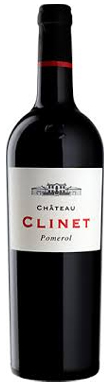

The 2014 Clinet is rich and round but slightly more refined than the 2012, which is arguably its qualitative peer. Lots of black cherry fruit...
2014
Château ClinetPomerol

Château d'Armailhac, Pauillac, 5ème Cru Classé, Bordeaux, France, 2014
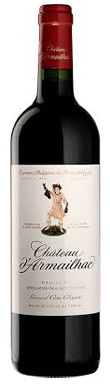
A beautiful black fruit laden Pauillac that, even at this early stage, exhibits an essence of sister estate Mouton. The wine is starting to open...
2014
Château d'ArmailhacPauillac
Château Lafon-Rochet, St-Estèphe, 4ème Cru Classé, Bordeaux, France, 2014
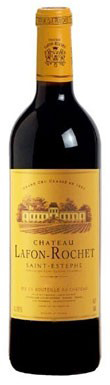
I feel like this is the kind of vintage that really suits Lafon Rochet. It sometimes does not possess the weight of some of its...
2014
Château Lafon-RochetSt-Estèphe
Château Pichon Longueville Comtesse de Lalande, Pauillac, 2ème Cru Classé, Bordeaux, France, 1994
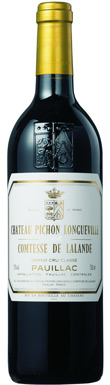
Beautiful mature Pauillac notes of cedar and tobacco on the nose. Elements of black fruit remain. Fully mature, classically seductive but slightly foursquare compared to...
1994
Château Pichon Longueville Comtesse de LalandePauillac
Château d'Issan, Margaux, 3ème Cru Classé, Bordeaux, France, 1984
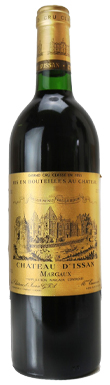
A property that is entrenched in history, and I was fascinated to see how it had held up in this most difficult vintage. Initially it...
1984
Château d'IssanMargaux
Château Lafleur, Pomerol, Bordeaux, France, 1964
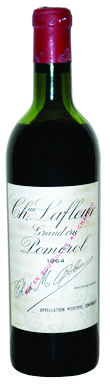
Tasted alongside 1964 Latour à Pomerol and Petrus. Unlike in youth, mature Lafleur of this period is often far more flamboyant than its neighbours. This...
1964
Château LafleurPomerol
Château Latour, Pauillac, 1er Cru Classé, Bordeaux, France, 1964
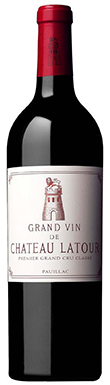
Tasted alongside Latour 1962 which, on this day, is a whisker away from its legendary predecessor 1961 in quality. That being said, 1964 is holding...
1964
Château LatourPauillac
Petrus, Pomerol, Bordeaux, France, 1964
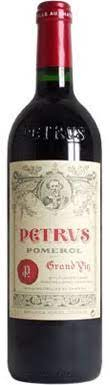
Tasted alongside 1964 Latour à Pomerol and Lafleur. Incredibly complex, it is unmistakably Pomerol. Still the faintest concentration of red fruit, intertwined with wild herbs...
1964
PetrusPomerol
Château Latour, Pauillac, 1er Cru Classé, Bordeaux, France, 1934
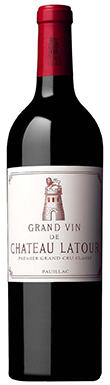
From a half bottle. Sadly the half bottle of Mouton 1934 alongside was dead on arrival. I have encountered this wine a few times in...
1934
Château LatourPauillac
Château Gruaud-Larose, St-Julien, 2ème Cru Classé, Bordeaux, France, 1934
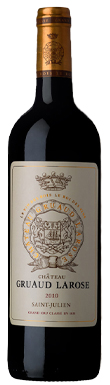
A reconditioned bottle. I was recommended by a friend who had drunk this recently to be brave with the decant - three or four hours...
1934
Château Gruaud-LaroseSt-Julien
