
The brilliance of Piedmont Barbera wines
A hugely flexible grape variety, producing approachable yet often complex and food-friendly wines from diverse terroirs.


A talent contest of Piedmont’s native grape varieties might well see the top prize going to Nebbiolo. It’s Barbera, however, that gets my vote for congeniality.
Grown throughout Italy, Barbera is among the country’s top 10 most planted grapes. It is also one of the few indigenous Italian varieties succeeding in international soil.
Nevertheless, Barbera’s most significant plantings are in the northwestern region of Piedmont, which provides benchmark examples.
Scroll down to see tasting notes and scores for Michaelas’ top Piedmont Barbera wines
Believed to have existed since the Middle Ages, Barbera originated in Alessandria province.
During the 1900s, this easy-to-grow, vigorous variety established itself as Piedmont’s reliable workhorse. ‘It was a very productive grape and ripeness was rarely fully achieved,’ states Stefano Almondo of Giovanni Almondo in Roero. The resulting wines were mouth- puckeringly tart, painfully skinny and often slightly spritzy. At best, Barbera was prized as a blending partner with Nebbiolo, lending colour and tempering the latter’s fiercer tannins.
Barbera’s prospects began to improve in the 1980s as producers started shifting their focus from quantity to quality. A significant turning point was the first release of Giacomo Bologna’s Bricco dell’Uccellone in 1985. Bologna refused to accept Barbera’s fate as an ‘everyday’ wine. He crafted a single-vineyard Barbera from low-yielding, super-ripe grapes and aged it in new oak barriques. A seminal wine, it demonstrated that Barbera was capable of producing rich, concentrated and soft reds.
Bricco dell’Uccellone also spawned a new style of Barbera as more producers introduced oak barrels to impart roundness, structure and complexity. In truth, many were over-zealous, with toasty vanilla and chocolate notes taking over any varietal or terroir expression.
Mercifully, in recent years the wood has been reined in and oaked versions demonstrate better balance. There have also been improvements to Barbera in stainless steel, which highlights this variety’s bright and frisky, fruity charms.
Barbera wines: great recent vintages
2017 Barbera responded well to this exceptionally dry, hot year. Surprising balance despite opulence and high alcohol.
2016 Though not as warm as surrounding vintages, long, slow ripening allowed Barbera to reach sufficient ripeness. Exceptional elegance and freshness.
2015 A very warm year, giving plenty of ripeness, power and supple fruit.
Compact and consistent
Barbera’s range of expression is further captured in its various appellations, the best known of which are Barbera d’Asti and Barbera d’Alba.
Barbera d’Asti is from the Monferrato region, southeast of Turin, extending across the province of Asti and into neighbouring Alessandria.
Barbera d’Alba is produced further south, in Cuneo province, which includes the Langhe hills (home to Barolo and Barbaresco), as well as Roero. Monferrato’s sandy soil gives lighter, linear wines and accentuates Barbera’s perky acidity. In contrast, the Langhe’s calcareous clay yields fuller, fleshier reds. This, however, is a broad generalisation as soils in both areas are convoluted.
Furthermore, in Monferrato, Barbera reigns and is planted on the best sites, while in the Langhe it plays second fiddle to Nebbiolo, which is typically awarded the warmest spots. ‘Barbera is to Asti what Nebbiolo is to the Langhe,’ proclaims Stefano Chiarlo at Michele Chiarlo in Asti. It is no coincidence that Barbera d’Asti brags DOCG status, whereas Barbera d’Alba does not.
This isn’t to say that there aren’t excellent examples of Barbera from the Langhe, or that it doesn’t have respect among producers there. ‘We adore Barbera,’ asserts Luisa Rocca at the Bruno Rocca estate in the Barbaresco zone. ‘The first piece of vineyard that my father bought was Fausoni – an extremely desirable plot precisely because it also included a small amount of Barbera.’ This cru is characterised by Barbaresco’s famous Sant’Agata fossil marls and the soils are much older than at the estate’s Asti vineyard – while Bruno Rocca’s Barbera d’Asti is vibrant and elegant, the Barbera d’Alba reveals darker fruit and less marked acidity.
The most powerful examples of Barbera hail from the Barolo area. Giacomo Conterno’s renowned Cerretta and Francia bottlings take on the formidable structure that characterises the Barolos from these Serralunga d’Alba crus.
‘To make good Barbera, you have to sacrifice some Barolo vines,’ says Luca Currado at Vietti, in Cuneo. Not only did he and his father preserve a now 100-year-old plot of Barbera vines in the Scarrone cru, they pulled up some Nebbiolo to plant more. Other widely known Barberas from the Barolo zone include Roberto Voerzio’s Vigna Pozzo from Rocche dell’Annunziata and Elvio Cogno’s 120-year-old pre-phylloxera Barbera above La Morra.

The soil speaks
Across the Tanaro river, Roero’s Barbera d’Albas are more lissom than those from the Langhe. ‘Here, the soil is richer in sand, giving finesse, sapidity and readiness to drink,’ explains Ornella Correggia at Matteo Correggia. According to cartographer Alessandro Masnaghetti, who has mapped out many of Piedmont’s zones, Roero possesses the same ‘Astiane’ sand as Monferrato. ‘This is why Barbera does well there,’ he says.
Nevertheless, Roero’s Barbera d’Albas often demonstrate greater concentration and body than most Barbera d’Astis.
On the lighter soils of Monferrato, Barbera d’Asti is a wonderful source of lovely unoaked, juicy Barbera. It also includes a Superiore category, which captures more robust oaked examples, as ageing requirements include a minimum of six months in barrel.
The vast denomination stretches over 167 communes, along with inevitable variations in soil. ‘Not all of Monferrato is Astiane sand,’ Masnaghetti explains. There are pockets of calcareous marls that are rich in calcium carbonate, giving deeper, sturdier wines. Extensive studies have led to the recognition of three distinct sub-zones: Colli Astiani, Tinella and Nizza. While the first two are rather obscure, Nizza is undoubtedly Barbera’s greatest success story.
Promoted from being a sub-zone to its own separate DOCG in 2014, Nizza sits south of the Tanaro river in Alessandria. It encompasses 18 villages historically recognised for producing exceptional Barbera. The region boasts a critical mass of quality-minded producers and has also attracted prominent Langhe estates, including Gianni Gagliardo, Oddero and Vietti.
Among all the Barbera denominations, Nizza has the most stringent production regulations. Maximum yields are 49hl/ha, as opposed to 63hl/ha for Barbera d’Asti. To compare, Barolo’s maximum yields are 56hl/ha. Nizza’s vineyards sit between 150m-350m above sea level and only those with a south, southwest or southeast exposure are permitted to use the Nizza name for their wines. It is also the only denomination to require 100% Barbera – the rest stipulate a more flexible 85%-90% minimum.
Nizza’s wines will necessarily demonstrate some wood influence as the mandatory ageing period of 18 months requires at least six to be in barrel. For Nizza Riserva, this increases to 30 and 12 months respectively. Terrific examples from Bersano, Michele Chiarlo and Olim Bauda prove it is possible to manage the oak deftly.
Barbera wines: standout producers
Accornero Palpably committed to making complex and characterful Monferrato Barbera.
Giacomo Conterno Undeniably the reference for powerful, ageworthy, Barolo-esque Barbera.
Michele Chiarlo Veteran champions of Barbera as well as the Asti zone, the Chiarlo family has been an important driver of quality.
Olim Bauda Fantastic quality, from entry level to top of the range.
Vietti Making consistently excellent Barbera from the Alba and Asti regions, Vietti has significant holdings of old vines in both.
Styles to explore
To add to the litany of Barbera appellations, Barbera del Monferrato DOC overlaps the Barbera d’Asti zone. It allows for frizzante or lightly sparkling (vivace) versions, which account for almost one-third of the production (according to the Consorzio Barbera d’Asti e Vini del Monferrato). The separate DOCG of Barbera del Monferrato Superiore is exclusively for still reds and has similar wood-ageing requirements as Barbera d’Asti Superiore.
At the Accornero estate in Vignale, where the Barbera d’Asti and Barbera del Monferrato DOCs converge, the Accornero family chooses to label its wines as the latter. ‘Vignale is the capital of Monferrato,’ says Patrizia Accornero. ‘Our soil is rich in marine sediment from older geological eras and identified as pietra da cantone.’ The calcareous clay gives deeply coloured, structured Barbera that need a bit of time to come around.
‘Barbera is a flexible and wide-ranging variety,’ says Chiarlo. It produces a serviceable wine even at generous crop levels, which supported its reputation as a workhorse grape. But quality is another story. ‘Only with limited production does Barbera give wines with complexity and structure,’ says Gianni Bertolino at Olim Bauda. He crops his Barbera to no more than 49hl/ha, even for young, unoaked wines.
For the finest Barbera, old vines have long been prized as they naturally curb this variety’s prolific tendencies. More recently, low-vigour rootstock, and new high-quality clones with smaller bunches, have significantly improved results with younger vines. Yet some argue that low yields have resulted in excessively opulent and alcoholic Barbera lacking elegance. Chiarlo disagrees. ‘It gives more character, length and terroir expression – provided that the grapes are picked at the right time,’ he asserts.
Approachable in youth
Maintaining balance is an ongoing challenge for Barbera. Though it prefers the heat, rising alcohol levels are a factor with vintages that are hotter than ever. Bertolini remains undaunted, despite alcohol levels of 14.5%-15%. ‘The acidity is also increasing, and this allows the wines to preserve their drinkability,’ he claims.
This is one of Barbera’s signature attributes – because it doesn’t have masses of tannins in need of softening, it is generally approachable from day one. Nevertheless, its bracing acidity can keep it fresh and exuberant for two or three years, and those wines built with more structure and concentration can be tucked away for five to eight years.
When considering Barbera for the cellar, choose the best vintages: typically, warmer years from moderate-yielding, superior vineyard sites. Even then, only very few will last out a decade. Of course, there are always surprises.
When I had the opportunity to try it recently, Giacomo Bologna’s Bricco dell’Uccellone 1989 was still remarkably deep in colour. It was a savoury mix of macerated fruit, forest undergrowth and tar – and the oak had retreated. Nevertheless, I still prefer to drink my Barbera younger.
While Barbera’s suitability for the cellar may be up for debate, its place at the table is not. ‘Barbera is the most gastronomic wine of Italy,’ declares Currado. I have spent countless trips in Piedmont tasting Nebbiolo all day and drinking Barbera with dinner.’
‘You put it on the table and finish the bottle,’ says Rocca, listing off her favourite matches: tajarin (the Piedmont version of tagliatelle), ravioli al tovagliolo, risotto with Castelmagno cheese, rabbit, roast sausages, a barbecue…
Barbera is as food-friendly as it is hunger-inducing, and that’s a badge of honour it wears with pride.
Michaela Morris’ top Barbera wines
Related content
Barolo 2017 vintage report: 120 wines tastedBarolo Riserva 2015 vintage report: 30 wines tastedBarbaresco 2018 vintage report: 40 wines tastedLanghe Nebbiolo 2019 and 2018: top-scoring wines
Olim Bauda, Riserva, Barbera d'Asti, Superiore Nizza, Piedmont, Italy, 2016
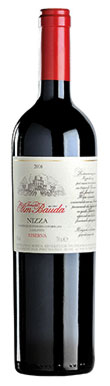

After working with barriques for a number of years, the Bertolini brothers switched to 25hl casks of French Allier oak in order to achieve a...
2016
Olim BaudaBarbera d'Asti

Accornero, Bricco Battista, Barbera del Monferrato, Piedmont, Italy, 2016
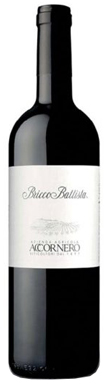
The Accornero family are fourth-generation winemakers and own 20ha in Vignale Monferrato. Bricco Battista is a selection of three southeast-facing parcels planted in 1970 with...
2016
AccorneroBarbera del Monferrato
Bruno Rocca, Barbera d'Asti, Piedmont, Italy, 2018
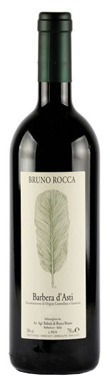
Though not labelled as such, this hails from a site within Nizza boasting sandy soil with reddish marl and marine fossils. The dark purple hue...
2018
Bruno RoccaBarbera d'Asti
Vietti, Vigna Scarrone, Barbera d'Alba, Piedmont, Italy, 2017
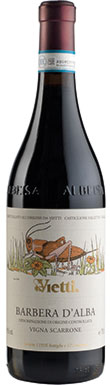
This bottling from Barolo’s Scarrone cru comes from 30-year-old plantings. Garden herbs, liquorice, lavender and clove infuse plum and black cherry. It’s creamy in texture...
2017
ViettiBarbera d'Alba
Bruna Grimaldi, Scassa, Barbera d'Alba, Superiore, Piedmont, Italy, 2017
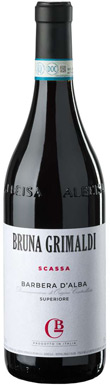
Grimaldi's Scassa is blended from the estate's low yielding Barbera holdings in the townships of Roddi, La Morra, Diano d’Alba and Sinio, and aged in...
2017
Bruna GrimaldiBarbera d'Alba
Elio Grasso, Vigna Martina, Barbera d'Alba, Piedmont, Italy, 2017
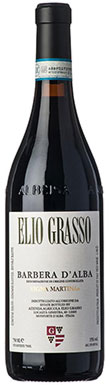
Vigna Martina is crafted like a Barolo, with a long fermentation under a submerged cap and 18 months in wood, which is 50% new. Oak...
2017
Elio GrassoBarbera d'Alba
Matteo Correggia, Marun, Barbera d'Alba, Piedmont, Italy, 2015
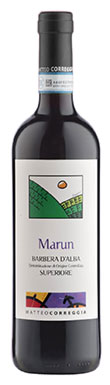
Previously aged exclusively in barriques, this now sees a combination of small barrels and 30hl casks. It opens with a subtle toastiness and touch of...
2015
Matteo CorreggiaBarbera d'Alba
Roberto Voerzio, Pozzo dell’Annunziata, Barbera d'Alba, Piedmont, Italy, 2016
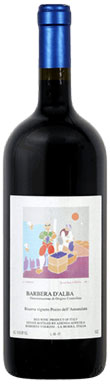
Voerzio’s Barbera bush vines are planted at high density and strictly cropped to give a mere half-kilo of fruit per vine. The resulting densely layered,...
2016
Roberto VoerzioBarbera d'Alba
Braida, Bricco dell’Uccellone, Barbera d'Asti, Piedmont, Italy, 2015
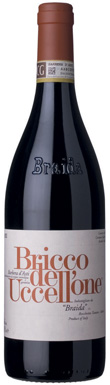
Braida’s pivotal barrique-aged Barbera hails from a single vineyard owned by the estate. The 2016 vintage reveals mellowed aromas of leather, blackberry, smoke and chocolate....
2015
BraidaBarbera d'Asti
Giovanni Almondo, Valbianchèra, Barbera d'Alba, Piedmont, Italy, 2018
Almondo’s Valbianchèra vineyard is particularly rich in calcareous clay and has a gentle eastern exposure. This is youthful and almost grapey from the off, revealing...
2018
Giovanni AlmondoBarbera d'Alba
Scarpa, La Bogliona, Barbera d'Asti, Superiore, Piedmont, Italy, 2013
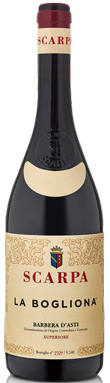
La Bogliona sits right on the border between the provinces of Asti and Alessandria and is made up of three adjacent plots boasting sandy soil...
2013
ScarpaBarbera d'Asti
Michele Chiarlo, Le Orme, Barbera d'Asti, Piedmont, Italy, 2018
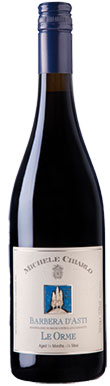
From a selection of vineyards throughout Asti, Le Orme is refined in stainless steel and ages for at least 16 months. The bright, cheerful cherry...
2018
Michele ChiarloBarbera d'Asti
