
The elegance of Bertani: From ‘cru’ Valpolicella to legendary Amarone
A sold-out audience at Decanter’s Italy Experience in London last month had the opportunity to taste the wines and learn the history of legendary Amarone estate Bertani, with Andrea Lonardi MW, chief of winemaking and COO of the Angelini Wine & Estates group, and Michelle Cherutti-Kowal MW, a Decanter World Wine Awards Regional Chair specalising in Italian wine.


‘If you like off-dry, rich Amarones you are in the wrong place but if you like dry, terroir driven Amarones you are in the right place,’ stated Andrea Lonardi MW drily.
From its foundation in Valpolicella in 1857 by brothers, Gaetano and Giovan Battista Bertani, the Valpolicella estate has followed a different path. The inspiration? Burgundy, where Gaetano spent time in the 1850s training under Jules Guyot.
Scroll down to see tasting notes and scores for the eight wines in the Bertani masterclass
In 1860, when the tradition in Valpolicella was to produce sweet sparkling red wines, Bertani created a ‘secco’ dry red unique for its time. By 1870, Bertani was being awarded top medals at various wine shows, and by 1880, the wine was exported around the world. So atypical was this dry style that Bertani’s techniques were showcased at an Italian symposium in 1889.
The reputation for quality wine continued into the next century. At that time, Lonardi explained: ‘Bertani – both a grower and négociant – made white and red wines. Their Soave, well known for its quality, was served at the coronation lunch for King George VI of England in 1937.’ The estate did not rest on previous successes, however, and the desire to innovate remained strong.
The Tenuta Novare property, at Arbizzano di Negrar in Valpantena, was purchased in 1957, and in 1958, the first ‘secco’ Bertani Amarone della Valpolicella was made using natural appassimento.
‘The style at that time was still red wines with sugar,’ noted Lonardi, referring to the traditional Recioto wines. As a result, sales of this dry red wine were challenging, and consequently the estate accumulated many bottles, inadvertently creating what is, according to Lonardi, ‘one of the most extensive wine libraries in the world.’

The masterclass wines
The tasting began with three wines from the pre-alpine valley of Valpantena, located northeast of Verona and known for its fertile soils and sunny exposition. We started with a straightforward Valpolicella, which Lonardi noted as having a ‘classic character of sour red fruit.’
This was followed by a Ripasso and an Amarone. ‘I don’t like Ripasso, I feel that wine style is manipulated,’ declared Lonardi. ‘I understand why it is popular given its fruity expression but for me it does not express terroir.’
All three wines showcase Bertani’s winemaking style – unadulterated, with minimal use of oak and residual sugar.
The second part of the tasting consisted of cru (single-vineyard) wines sourced from the winery’s Tenuta Novare estate. The first, Ognisanti di Novare, is from a 2.9 hectare vineyard which takes its name from the 13th century church on the property. This west-facing vineyard spans eight terraces and consists almost exclusively of the local grape, Corvina.
I related to the audience how Andrea had once told me that he wanted Valpolicella to taste like the wine his grandfather used to make. This cru (along with another, called ‘Le Miniere’) reflects Bertani’s desire to showcase the region’s terroir, and the audience’s positive reaction to the wine would indicate that it clearly has a place in the market.

The next wine was Catullo Valpolicella Ripasso. Andrea did admit that he would drink this wine, despite not being a fan of Ripasso in general. ‘This is a contemporary wine, it’s not overly sweet and it has the crunchy texture that I like in a wine I want to drink.’
The final three wines were the stars of the show: three vintages of Bertani’s Amarone della Valpolicella Classico, each consisting of similar blends of the local grapes and being matured for over eight years in Slavonian oak.
As Lonardi related, ‘to understand Amarone wine styles is to know that appassimento originally started due to the limited ripeness of Corvina – partly drying the grapes helped increase fruit, colour and body of the wines.’
By law, the grapes can be dried in humidity-controlled facilities scattered around the region, but at Bertani they are dried as they were 160 years ago, in drying rooms (‘fruttai’) on the property, on bamboo racks, with the windows open to the elements.
‘I feel that drying the grapes this way expresses vintage variation,’ said Lonardi. ‘They are exposed to the natural elements of the vineyards: heat, wind and damp, which contributes uniquely to each wine.’
Only made in the best years, Bertani’s Amarones have changed little, even with a change of ownership in 2011. One modification made by Lonardi was topping up the barrels during maturation (allowed, in small quantities, by law). For Lonardi, topping up ‘keeps the wines fresher and less oxidated and more stable in bottle,’ counteracting volume loss from evaporation and therefore minimising the air space in the barrels.
The latest release, the 2013 vintage, was tasted alongside the 2008 and 2005. We were privileged to not only have Lonardi commenting on the 2013, which he made, but by pure chance, the winemaker of the 2005 and 2008, Cristian Ridolfi (now chief winemaker at Cantina Santi), was in the audience and was invited to stand up to offer his comments.
Which was the favourite? According to Lonardi, you need a library of vintages in order to be able to taste and compare Bertani’s Amarones over the decades. Each wine showed differing characteristics and were at different stages of their evolution.
The 2013 was very young despite its age, and still needs time, but both the 2008 and 2005 were drinking well and would hold up over the next 20 years or more – according to both Lonardi and Ridolfi.
Dry, succulent Amarones have not always been fashionable, but despite trends, Bertani has held true to its ethos created over 160 years ago. Tasting all of these wines was a refreshing reminder of why Bertani’s wines are coveted around the world.
The Bertani masterclass: Elegance in eight wines:
Related articles
- Bertani Amarone della Valpolicella Classico: a 43 vintage vertical
- Amarone 2017: Vintage report
- Amarone for Christmas: 30 great bottles to try
Bertani, Valpolicella, Valpantena Superiore, Veneto, Italy, 2022
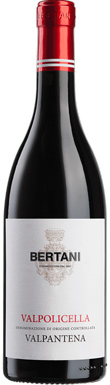

An aromatic nose of basil and rosemary along with red cherries introduces a wine with crisp acidity, fresh red berry fruit, and a hint of...
2022
BertaniValpolicella

Bertani, Valpolicella, Ripasso Valpantena Superiore, Veneto, Italy, 2020
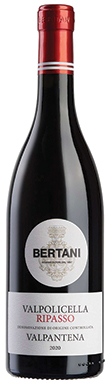
This Ripasso gives a sense of ripe red berries with dried herbs in the background. There's a bit more weight and fruit in the mouth,...
2020
BertaniValpolicella
Bertani, Amarone della Valpolicella, Valpantena, Veneto, Italy, 2020
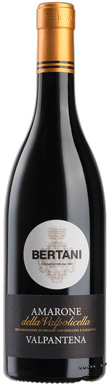
As expected, this Amarone displays even riper red berries than the Ripasso, with a hint of dried fruit. Wood spice and white pepper are more...
2020
BertaniAmarone della Valpolicella
Bertani, Ognisanti di Novare, Valpolicella, Classico Superiore, Veneto, Italy, 2020
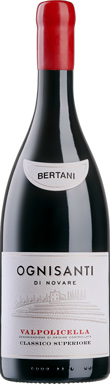
95
Ognisanti di Novare is a single-vineyard Valpolicella Classico Superiore offering a pungent nose with aromas of black pepper, fresh rosemary and red cherries. There's good concentration of red fruits, with wood spice adding complexity. Powdery tannins and taut acidity add to the overall tension of the wine.
2020
BertaniValpolicella
Bertani, Catullo, Valpolicella, Ripasso Classico Superiore, Veneto, Italy, 2019
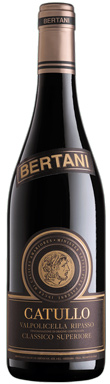
A Ripasso offering ripe red cherry aromas along with notes of dried herbs and wood spice. There's a sense of sweetness on the palate from...
2019
BertaniValpolicella
Bertani, Amarone della Valpolicella, Classico, Veneto, Italy, 2013
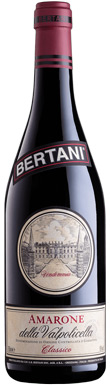
The current-release 2013 vintage features a nose of dried cherries combined with spice and smoke, adding a savoury element. The tannins are still tight but...
2013
BertaniAmarone della Valpolicella
Bertani, Amarone della Valpolicella, Classico, Veneto, Italy, 2008
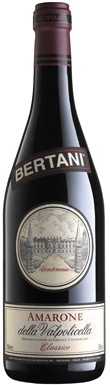
Pronounced with layers of complexity, the 2008 displays aromas of fresh and dried red cherries, cured meat, wood spice and dried herbs. It's dense in...
2008
BertaniAmarone della Valpolicella
Bertani, Amarone della Valpolicella, Classico, Veneto, Italy, 2005
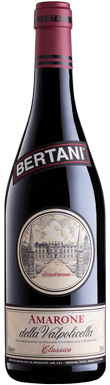
The wine of the tasting, this 2005 is more evolved than the 2008 and 2013, with aromas and flavours of dried cranberries, mushrooms, and a...
2005
BertaniAmarone della Valpolicella
