
The rise and return of Italy’s indigenous varieties
Italy’s lesser-known indigenous varieties could hold the key to coping with the challenges of climate change, while also bringing exciting new flavours and textures to wine lovers.


Growing enthusiasm on the part of consumers, retailers and critics for virtually anything distinctive and irreproducible – in wine as in any other field of culture – has reshaped the Italian viticultural landscape in recent years.
Winemakers have finally gained confidence in the potential of their country’s native varieties, reversing the decades-long tendency to mimic international styles and leading to a gilded age for Italy’s indigenous grape heritage.
Notes and scores for six wines made from Italy’s indigenous varieties below
Interregional grapes such as Sangiovese, Montepulciano, Barbera and Trebbiano Toscano, as well as others largely constrained to specific regions, including Glera, Primitivo, Nero d’Avola and Catarratto, account for some 40% of the national surface under vine (according to 2022 planting data from ISMEA).
Yet quantitatively less relevant varieties are grabbing greater attention than ever before.
Italy’s immensely varied range of grapevine varieties reflects the wide geological, botanical and climatic variability inherent to a peninsula nation nearly 1,200km north to south and positioned centrally within the Mediterranean basin.
Cultural fragmentation, too, deriving from the fact that Italy didn’t become a unified country until 1861, adds to the mix.
Beyond the 600-plus grapes currently listed in Italy’s Catalogo di Vite national registry of vine varieties (see box, below), there are at least dozens of others that still have to be identified and approved for propagation (as compared to France, which currently claims ‘more than 200’ authorised varieties, according to the vin-vigne.com database).
The rediscovery of indigenous varieties may be crucial to tackling future challenges, particularly climate change. Additionally, some varieties that previously suffered dismal reputations are also undergoing a major reassessment by producers, as well as consumers.
Workhorse grapes: A fresh look

Recent developments in Italian viticulture suggest that starting from scratch is often easier than changing the reputation of something already known, especially for white grape varieties.
Producers focusing on Timorasso, southern Piedmont’s increasingly popular white grape, often argue that ‘oblivion is a blessing’.
The fact that it was virtually unknown when local pioneer Walter Massa began rescuing it in the early 1990s proved a major competitive advantage over other grapes, such as Cortese or Verdicchio, that possess world-class potential but suffer reputational challenges because of pedestrian examples flooding international markets.
Nonetheless, for producers, reassessing the quality potential of workhorse white grapes is just as relevant as the rediscovery of forgotten ones. For instance, just a few years ago, nobody would have bet on the revival of Sicily’s most-planted white variety Catarratto.
The increase in plantings of its Lucido and Extra Lucido biotypes, which contain greater quantities of aromatic compounds such as thiols, is contributing to a radical shift in style and image.
In fact, even the more widespread Catarratto Comune biotype – which has not had the greatest reputation in the past – can give excellent results when the variety’s extremely vigorous nature is limited by the rather infertile soils of the mountainous areas of the island.
At 500m-1,000m above sea level, the vines yield high-acid, flinty and herbal wines that turn creamier and more complex with longer lees or bottle ageing.
Catarratto’s high performance in such environments is its calling card for the future. ‘To rethink viticulture, Sicilian producers will have to resort to higher and cooler areas,’ affirmed viticulture professor Attilio Scienza in an interview published by Giornale di Sicilia in May 2024.
Renewed impetus
Some varieties are making a comeback after having been marginalised in times when quantity was prioritised over quality. An excellent – if not especially productive – grape in an often overlooked region is Malvasia del Lazio, also known as Malvasia Puntinata.
Traditionally, it couldn’t account for more than 30% of wines such as Frascati, because regulators favoured higher-cropping grapes such as Malvasia di Candia. But a revision of the production requirements in 2011 finally changed its fate and today, most quality Frascati contains a major proportion of Malvasia del Lazio.
Single-variety examples sporting Lazio IGT or Roma DOC labels (the latter denomination covering almost the entire province of Rome) are also becoming notably more popular.
The wines shine for their delicate aromatics: floral and slightly peachy, but nothing like as exuberant as those from other Malvasia grapes, along with a viscous texture complemented by ripe acids and sometimes by a saline zing from volcanic soils.
Despite being mostly affordable and consumed young, these are wines that age surprisingly well, as demonstrated by those of Manfredi Stramacci (see tasting notes, p32) or Casal Pilozzo, which are regularly offered in multiple vintages by top restaurants in Rome.
Similarly, in the surroundings of Montefalco in Umbria, the rapid rise in popularity of Trebbiano Spoletino epitomises the resurgence of white varieties in areas that have long focused on red wine.
A region transformed

Montefalco is the most transformed among Italy’s successful wine-growing districts. Its historical flagship red grape Sangiovese has been partially replaced by Sagrantino, a deep-coloured and extremely tannic native variety that went from being nearly extinct to covering roughly 760ha, according to the local consorzio.
Now the shift towards white wine consumption is spearheading the rise of the once forsaken white variety, which was initially rescued by a now defunct winery in the surroundings of the city of Spoleto, lying a few kilometres south of Montefalco.
The variety was then propagated by local producers including Antonelli, Tabarrini and Tenuta Bellafonte.
‘The surface Trebbiano Spoletino covers is growing. Unlike other Umbrian white varieties, it lends itself well to producing different types of wine,’ explains Massimiliano Caburazzi, the resident winemaker at Antonelli. ‘We believe it will experience significant growth in the upcoming years.’
Different from other grapes sporting the Trebbiano prefix – which is said to derive from the Latin vinum trebulanum, implying a local wine – Spoletino boasts a distinctive herbal and exotic personality.
‘Studies on its aromatic compounds haven’t been conducted yet, but there are indicators to suggest it contains good quantities of thiols,’ says Caburazzi.
The grape is thick-skinned and high in acidity; its wines vary depending on the ripeness level: early picking achieves a citrussy and leafy style, somewhere between Sancerre and Chablis, while harvesting late makes for riper and more flamboyant wines, often undergoing skin contact and oak or amphora ageing and retaining noteworthy balance.
‘Regardless of the interpretation, the wines are always characterful and recognisable,’ remarks Caburazzi.
Italy’s indigenous varieties: How many are there?

To set the scene, the Registro Nazionale delle Varietà di Vite database (via crea. gov.it) currently shows 644 varieties in all, officially registered across Italy.
A number of these, however, won’t be found in wines produced for commercial sale, either because they’re not grown in sufficient quantity or not deemed stylistically suitable, or the grower has them only for personal use.
Establishing how many of these can be described as unequivocally native, or indigenous, is difficult, however, if not impossible. In his introduction to his uniquely authoritative work on the topic, Native Wine Grapes of Italy (University of California Press, 2014), awarded author, researcher and Italian wine expert Ian D’Agata states that, ‘numbers change from source to source’, and ‘collection of data is slow at best’.
Also, inconsistencies in identification and ‘inaccuracies in the National Registry only add to the confusion…’
On the basis, then, that Italy’s native grapes are essentially those that have ‘called Italy their home for centuries’, as D’Agata puts it, ‘my own count sits at over 500’ – though he concedes that there are likely to be many more out there to be found, in inaccessible or old and forgotten small vineyards.
It’s also worth bearing in mind that, through ongoing research, it has been established that many grape varieties in Italy were brought there in antiquity, often by Phoenician, Roman or Greek travellers in particular.
Yet, as D’Agata describes: ‘Many ancient grape varieties grown in Italy today bear minimal if any resemblance to grape varieties of their birthplaces, and can therefore be considered native to Italy for all intents and purposes.’
Reds: A quest for lightness

Whereas anthocyanin-rich red grapes producing opulent, glass-staining wines were the first to grab international attention, red varieties on the rise today share lightness as a common point.
Although the wines they yield usually display a pale colour, a midweight structure and either light or fine tannins, their aromatic profiles vary considerably: some of them sport an easygoing, fruit-forward, early-drinking personality, while others can achieve noteworthy complexity and finesse.
Rossese di Dolceacqua is probably the most underrated variety fitting into the latter category. Thriving on the far northwestern border with Provençal France, right behind the Ligurian riviera, it’s a grape that is notoriously difficult to grow, because of its thin skin.
Consequently, according to one local producer, no more than 80ha within three valleys surrounding the namesake town are planted with the variety.
Although these limited volumes make it difficult for the growers of the area to earn recognition, the best examples mix a reductive and slightly animal character with dazzling purity of fruit and seamlessness, recalling the most ethereal expressions of Grenache or even Pinot Noir.
Unoaked versions that undergo brief macerations on the skins boast terrific juiciness, while oak-aged examples from marl-rich sites display greater depth.
Most wineries producing wines from this variety already capture subtle shades of terroir by releasing site-specific examples, but the local consorzio has pledged for the introduction of 33 official single-vineyard mentions, called nomeranze.
Treasure trove

The stubborn attachment of Piedmontese producers to their roots is one of the keys to their recent successes. Thanks to their consistent refusal to follow internationalist trends, Nebbiolo, Barbera and Dolcetto are still the wines that draw most wine lovers to the region.
Nonetheless, niche bottlings from minor grapes such as Freisa, Nascetta, Pelaverga Piccolo, Ruchè and Vespolina are becoming increasingly popular.
Grignolino – a close relative of Nebbiolo mainly found in the northern portion of the Monferrato area – arguably possesses the greatest future development potential, mirroring the success it enjoyed during the early 20th century.
In the latter part of the century, the focus was on making simple, unoaked wines that sold well locally.
While such wines are arguably delicious, a group of producers that have adopted the Monferace trademark are today attempting to rediscover and recreate the original style.
‘We want to make wines that aren’t just meant for immediate consumption,’ says Luciana Biondo (pictured), agronomist and winemaker at Tenuta Santa Caterina. ‘The long-term goal is to transform it into an appellation devoted to oak-aged Grignolino.’
Probably derived from the word digrignare (‘grinding one’s teeth’), the name of the grape itself, Grignolino, hints at its puckering tannins, implying that oak must be managed carefully in order to avoid grittiness in the wine.
The best Monferace achieve Nebbiolo-esque aromatic elegance while retaining Grignolino’s distinctive spicy and slightly dusty allure.
Looking ahead

Restoring Italy’s indigenous vine heritage is the next challenge producers face: there are so many projects with the goal of restoring relic varieties it’s hard to keep track.
And some of those varieties that have only recently been rediscovered, or are waiting for regulatory approval, may prove useful in the future for some of the reasons that caused them to face extinction in the first place.
In no region is that more evident than in Sicily, where some of the grapes rescued by the IRVO (regional wine and oil institute) and the Sicilia DOC consorzio through the Bi.Vi.Si biodiversity project have proven exceptionally resistant to heat and drought.
‘The ampelographic selection in our region already occurred in the 19th century. Some grapes disappeared because they weren’t vigorous enough or struggled to accumulate high levels of sugar, making it difficult to produce fortified wine, the most popular style at the time,’ explains Massimo Padova, the owner of Riofavara.
He has planted the white Cutrera, Recunu and Rucignola varieties in the outskirts of Ispica in Val di Noto, in the island’s south.
The only commercial wine made solely from these grapes, Nsajár Vigna Miucia, boasts unbelievably high levels of acidity for such an extreme terroir, and weighs in at a mere 12.5% alcohol.
It’s a reminder that restoring long lost vine diversity is a way to apply ancient solutions to contemporary issues.
Raffaele’s pick of six Italian wines made with native grapes
Related articles
- Tuscany’s top tier: New vintage releases
- Cabernet vs Cabernet: Italy’s tale of two French grapes
- The heroic winemakers of Isola del Giglio
Antonelli San Marco, Vigna Tonda Trebbiano Spoletino, Spoleto, Umbria, Italy, 2022
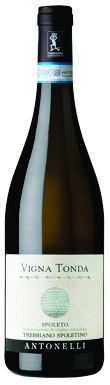

Undergoing extended skin contact and amphora ageing, Vigna Tonda embodies the more flamboyant side of Trebbiano Spoletino, sporting an amber colour and displaying aromas of...
2022
Antonelli San MarcoSpoleto

Riofavara, Nsajar Vigna Miuccia, Terre Siciliane, Sicily, Italy, 2022
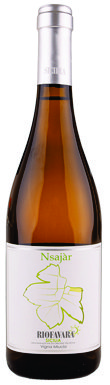
This unique blend of Rucignola, Recunu and Cutrera displays iodine, lemon zest and chlorophyll beneath a subtle veil of spicy oak. Taut and zingy on...
2022
RiofavaraTerre Siciliane
Tasca d'Almerita, Buonsenso, Sicilia, Sicily, Italy, 2023
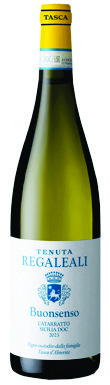
Candied lemon peel scents blend with medicinal herbs, white almonds, and subtle reminiscences of diesel fuel. Piercing acids and herbal hints shape its taut and...
2023
Tasca d'AlmeritaSicilia
Tenuta Santa Caterina, Monferace, Grignolino d'Asti, Piedmont, Italy, 2019
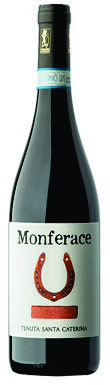
Sporting a transparent ruby colour, the hypnotising nose mixes rotundone-derived touches of cinnamon and nutmeg with Nebbiolo-esque aromas of wild strawberries, rose petals, and liquorice....
2019
Tenuta Santa CaterinaGrignolino d'Asti
Roberto Rondelli, Marne Blu, Dolceacqua, Liguria, Italy, 2023
A Rossese di Dolceacqua from the Migliarino vineyard, which is rich in blue marl. Aged in tonneaux for 10 months, its light ruby colour anticipates...
2023
Roberto RondelliDolceacqua
Manfredi Stramacci, Tellenae, Lazio, Lazio, Italy, 2023
This unoaked Malvasia di Lazio is deep straw in colour with golden hues. Balsamic and yeasty floral nuances mingle with candied ginger, nectarine and lanolin....
2023
Manfredi StramacciLazio
