
This underappreciated Italian wine is the perfect fireside red
While everyone else is reaching for a Napa Cabernet, Bordeaux or Barolo, this often-overlooked bottle offers the kind of warmth and spice that's perfect for winter sipping.


Umbria is the perfect winter escape: the only landlocked region in Central Italy, its quaint medieval villages acquire an enchanting aura when the air gets crisp while the sun keeps shining. A warming aroma of wood-fired delicacies often drifts through narrow alleys, preluding the cozy embrace of local trattorias and country houses.
While in the past this region was best-known for its whites, especially Orvieto, a bold red for chilly days has taken centre stage over the last two decades: Montefalco Sagrantino.
The red Sagrantino grape is almost exclusively grown within a five-township area centred on the picturesque town of Montefalco, in the heart of the region. Montefalco’s tidy, verdant hills mirror the backdrops of 15th century artworks by masters such as Benozzo Gozzoli and Perugino, still visible in the village church of San Francesco.
Yet Montefalco Sagrantino wines showcase intensity and heft rather than Renaissance-style serenity and poise. Almost extinct in the 1970s due to its hard-to-tame nature, the variety was rescued by the Caprai family of the namesake winery, who discovered that Sagrantino contains some of the highest levels of tannins and polyphenols of any grape anywhere in the world.
A rapid rise
Marco Caprai began conducting clonal selection, improved canopy management, and introduced ageing in small oak barrels, paving the way for the achievement of DOCG status for Sagrantino di Montefalco in 1992 (the name changed to Montefalco Sagrantino in 2009) – and its subsequent revival.
As the demand for brooding, powerful reds boomed from the late 1990s onwards, total plantings soared from only 66 hectares at the moment of the DOCG’s birth to over 380 in 2022 [according to Consorzio vini Montefalco], currently scattered among 65 small- to medium-size producers.
Innovative approaches
Most Sagrantino di Montefalco are deep-coloured, brimming with sweet red and black fruits, spice, chocolate, and distinctive balsamic or botanical touches.
With their high alcohol, noteworthy mid-palate concentration and dusty tannins requiring several years to soften, they convey a sense of warmth and exuberance – sometimes at the expense of finesse and detail.
Yet several producers are striving to achieve greater balance and finesse, often by adopting innovative approaches.
‘Sagrantino can be a beauty and a beast at once’, says Giampaolo Tabarrini, a cult vintner who crafts classically concentrated yet weightless expressions. Tabarrini believes high alcohol from late harvesting is unavoidable in order to obtain full tannic maturity.
Nonetheless, he collaborated with the oenology university of Perugia to create a custom fermentation tank that allows for extremely long and gentle macerations, contributing to an uncanny sense of elegance.
Marco Caprai, meanwhile, has worked together with globetrotting winemaking superstar Michel Rolland to conceive the methode integrale, consisting of a whole-berry fermentation in French oak barrels, also aimed at obtaining a softer texture.
Other producers rely on more conventional winemaking to emphasise the grape’s transparency of terroir. Filippo Antonelli, produces two single-vineyard Sagrantino with very distinct personalities; Chiusa di Pannone and Molino dell’Attone.
The latter represents an especially contemporary take: the schistous, east-oriented parcel shapes a wine that showcases noteworthy refinement and approachability without giving up on Sagrantino’s signature power.
Antonelli says: ‘In Montefalco, there has long been a tendency to make a single super-selection of Sagrantino. Instead, we should focus more on single-vineyard expressions, as different soils and expositions result in diverging profiles.’
A must-have in any serious cellar
Despite remarkable efforts to offer earlier-drinking styles, Sagrantino di Montefalco remains one of Italy’s most cellar-worthy reds.
Between eight and 15 years from its release is enough time for the tannins to soften without totally losing their enticing gripping effect. At this stage, a mix of earthy flavours and rich fruit makes it a perfect match for ground game or red meats seasoned with mushrooms or truffles in a typically Umbrian fashion.
Yet the best Sagrantino di Montefalco can hold up for even longer, entering the vini da meditazione category along with the likes of Amarone, as the high polyphenol content keeps the structure intact while the edges become rounder.
Although finding older vintages outside of cellar shops and a few top-tier restaurants in Italy can be challenging, late-release versions are increasingly widespread. Almost all producers wait longer than the 33 months mandated by the appellation’s regulations, with most examples currently on the market belonging to the 2019 and 2020 vintages.
A few wineries go even further: the 2018 Carapace Lunga Attesa by Tenute Lunelli – a Montefalco estate run by the namesake family of Ferrari Trento fame – is a prime example of ready-to-drink, fireside Sagrantino with a lovely balance between brightness and slowly rising tertiary complexity.
Beyond Sagrantino
Sagrantino isn’t the only key player in Montefalco: roughly two thirds of the appellation’s total production (roughly 35% of Umbria’s total output) are still represented by Montefalco Rosso, the area’s historical Sangiovese-based red with dollops of Sagrantino and other varieties.
While most Montefalco Rosso are simple and meant to offer an affordable alternative to Sagrantino, top-notch renditions like the 2023 Tenute Lunelli Ziggurat and the 2021 Tenuta Bellafonte Maestà Quattro Chiavi Riserva show greater breadth and depth, giving Sangiovese from the coveted Tuscany region a run for their money.
The white Trebbiano Spoletino variety is also on the rise. Tabarrini’s oak-aged 2023 Adarmando and Antonelli’s amphora-aged 2023 Vigna Tonda are just two of several high quality expressions, reflecting the grape’s noteworthy potential, both in terms of complexity and versatility.
As Antonelli says, ‘few areas in Italy excel with both white and reds’ – a testament to Montefalco’s evolving wine landscape.
Cosy up to these six Montefalco Sangrantino:
Italy newsletter: Sign up today
Get the best recommendations, vintage analysis, regional and cultural insights and more delivered to your inbox once a month, helping you to stay up-to-date with the latest in Italian wine.

Related articles
- Terre di Pisa: Bridging the coastal and continental styles of Tuscany
- 60 vintages ago the Prunotto winery did something revolutionary in Barolo
- Veneto’s viticultural riches
Tabarrini, Il Bisbetico Domato, Montefalco Sagrantino, Umbria, Italy, 2020
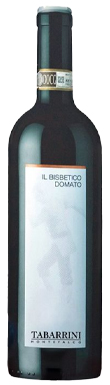

Il Bisbetico Domato translates into ‘The Taming of the Shrew’ and refers not only to the namesake play by William Shakespeare but also to the...
2020
TabarriniMontefalco Sagrantino

Bocale, Montefalco Sagrantino, Umbria, Italy, 2020
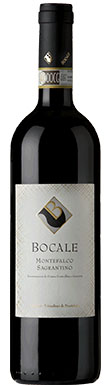
One of Montefalco’s rising stars, Bocale’s Valentino Valentini farms 6ha in the southeastern portion of the appellation organically. Spending roughly two years in oak casks...
2020
BocaleMontefalco Sagrantino
Antonelli San Marco, Molino dell' Attone, Montefalco Sagrantino, Umbria, Italy, 2020
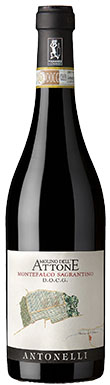
Molino dell’Attone originates from a 0.5ha parcel outside of Antonelli’s core property, benefitting from a cool east exposure and lying on schistous soils. Ageing occurs...
2020
Antonelli San MarcoMontefalco Sagrantino
Tenute Lunelli, Carapace Lunga Attesa, Montefalco Sagrantino, Umbria, Italy, 2018
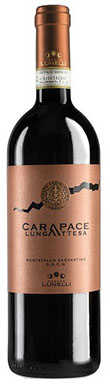
Lunga Attesa means ‘long wait’, hinting at the choice to wait seven years before releasing this wine. Skin contact is relatively short, lasting roughly a...
2018
Tenute LunelliMontefalco Sagrantino
Scacciadiavoli, Montefalco Sagrantino, Umbria, Italy, 2019
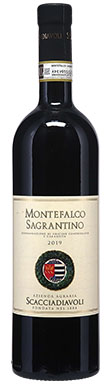
The signature wine of one of Montefalco’s leading wineries, spending 18 months in a mix of 30hl casks, tonneaux and barriques. It displays a relatively...
2019
ScacciadiavoliMontefalco Sagrantino
Arnaldo Caprai, 25 Anni, Abona, Umbria, Italy, 2020
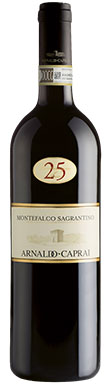
Montefalco’s most iconic wine, first released for the estate’s 25th anniversary, 25 Anni undergoes whole-berry fermentation in French oak barrels, then spends 24 months in...
2020
Arnaldo CapraiAbona
Romanelli, Terra Cupa, Montefalco Sagrantino, Umbria, Italy, 2020
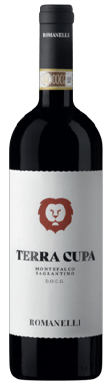
Up-and-coming vintner Devis Romanelli sources Sagrantino grapes from cooler, east-facing vineyards, then opts for traditional winemaking to craft classically-styled yet finessed expressions. While relatively deep-coloured,...
2020
RomanelliMontefalco Sagrantino
