
Super Tuscan evolution: Comparing Tignanello and Solaia


Michaela Morris compares several vintages of Antinori’s Tignanello and Solaia, looking at the stylistic evolution of two wines born several years apart in the 1970s but from the same Tuscan property.
One of Italy’s most famed wines, Tignanello is pushing 50. The vineyard was first referenced on a label of Antinori’s 1970 Chianti Classico Riserva and the following year Tignanello eschewed the denomination for the lowly Vino da Tavola designation. Its counterpart, Solaia was born soon afterward in 1978.
Both wines have gone through an evolution. In the early years, their blends modified gradually. Tignanello eventually landed at 80-85% Sangiovese, supported by Cabernet Sauvignon and Cabernet Franc, while Solaia’s 75% Cabernet Sauvignon is rounded out by Sangiovese and Cabernet Franc. With the wines’ identities well-established, Antinori has devoted the last 20 years to fine-tuning the styles.
To explore the transformation of the last two decades, I was invited to Antinori’s California-esque headquarters in San Casciano Val di Pesa, just within the limits of the Chianti Classico region.
CEO and chief winemaker Renzo Cotarello, who has worked with Antinori since 1990, holds forth. He has assembled comparative verticals including the same eight vintages of Tignanello and Solaia: 1997, 1999, 2001, 2005, 2007, 2010, 2011 and 2013. ‘These vintages represent our stylistic path of the last 20 years,’ says Cotarella.Refining the tannin profile has been the leitmotif at Tenuta Tignanello. To examine the extent of this undertaking, we make the five minute trek to this property from where both Tignanello and Solaia hail.
Scroll down to see Michaela’s tasting notes and scores for Tignanello and Solaia
The terroir
Even in February, the late afternoon sun shines like a spotlight on the adjacent parcels of 57ha and 20ha respectively. While Tignanello is positioned south to southwest versus Solaia’s south to southeast exposure, the two boast essentially the same terroir. The stony soil is predominantly galestro and albarese and the vines sit on steep, well-drained slopes between 350-400 metres above sea level in this windy corner of the Chianti Classico zone.
In 1997, Antinori began a complete replanting of the vineyards, which lasted until 2007. ‘It was essentially a massal selection of the best vines,’ says Cotarella. They also introduced pulverised albarese stones underneath the vine rows. This white limestone increases solar radiation and has been particularly effective for Sangiovese. ‘The grapes ripen sooner and more evenly with sugar and phenolic ripeness at the same time,’ explains Stefano Carpaneto who has been the managing director at Tenuta Tignanello since 2008. While Sangiovese used to be picked after the Cabernet Sauvignon, since the early 2000s it tends to be the other way round.
Upgrades
Upon completion of replanting, Antinori then set about renovating the winery. ‘Until 2005 we worked in a facilities that was born for Tignanello, but didn’t have the technology to best manage the grapes,’ states Cotarella. It was redesigned according to the specificities of the vineyard, with smaller tanks for separate vinifications of each plot.
Both wines are now fermented in conical wood vats. Carpaneto explains that the shape helps achieve a soft yet thorough extraction of sweet rather than green tannins while allowing grape skins to stay in contact with the juice longer for greater complexity.
For Cotarella, gentle extraction is key. ‘Sangiovese can be either vibrant, nervous or hysteric depending on how you handle it,’ he says, referring to the grape’s elevated acidity and tannins. When well-managed, these can be of value giving an integrated vertical sensation. However, if mismanaged the wine becomes aggressive and difficult to drink.
Maturation
Even the ageing of Sangiovese has morphed. For Tignanello, Antinori is moving away from all barriques and has introduced some larger tonneaux. Approximately 50% of the wood is new, but the provenance now includes Hungarian as well as French oak. ‘Because it is a more neutral wood, Hungarian oak is very adapted to varieties which have a strong varietal character like Sangiovese, imparting less vanilla and chocolate notes,’ describes Carpaneto.
As for Solaia, which is aged entirely in new French oak, Antinori is now working exclusively with the Taransaud and Seguin Moreau cooperages.
The tasting
Back at Antinori’s headquarters, we work our way through the two verticals separately, starting with the Tignanello. The tasting is organised from oldest to youngest to follow the chronological progress.
‘Each wine is the expression of a specific era,’ asserts Cotarella. He describes the stylistic route as starting in Australia in the 1990s, then transitioning to Bordeaux, followed by California, ending up in Burgundy. ‘Since 2001, we have strived to make more refined, vibrant and less powerful wines that still refer to place and, above all, are balanced and drinkable.’
I have been lucky enough to try older vintages of Tignanello on many occasions, though never in a format such as this. The leap from 2007 to 2010 clearly demonstrates the increased sophistication and polish of the tannin structure.
The biggest surprise in the lineup was the cooler, under-the -radar 2005, especially for drinking now. Though still in need of age, 2010 is living up to its reputation, and 2013 shows plenty of promise.
Conversely, while good wines, both the highly regarded 2001 and 2007 vintages were a bit disappointing within the context of their hype. In the world of collectible wine, Tignanello remains accessibly priced, making vintages like 2010, 2013 and 2005 relatively great value.
As for Solaia, most of my experience is tasting this wine just after its release. It is always far too young, needing time for the oak to integrate.
This vertical also demonstrated that after 10-12 years of age, Solaia starts to express its site. While there has been a finessing of tannins over the years, it is less obvious than the Tignanello as Solaia seems to be a more forgiving wine. It also tends to handle the warmer years better.
Above all, what stood out is the consistent high quality, confirming Solaia’s reputation as a cellaring classic. The 2010 is extraordinary in this regard but requires more time. I was smitten with the 1999 for drinking now.
When I share my excitement for the 1999 Solaia, Cotarella doesn’t hesitate, picking up the bottle to bring along for lunch. Truly with age and at the table is the best way to enjoy both Solaia and Tignanello.
Tignanello and Solaia vintages compared
1997
At the time, 1997 was considered one of the best vintages of the previous 50 years. The growing season was precocious throughout and hot sunny conditions continued right up until harvest. Cabernet Sauvignon was picked first for both wines. This was the last vintage before intensive replanting began. Comparing the two at almost 20 years of age, the Tignanello seems to have aged more harmoniously in terms of fruit and tannin balance.
1999
Less hyped, 1999 was a fresher year. It was also very productive requiring a lot of grape thinning. Harvest for Cabernet Sauvignon started on 25 September while the Sangiovese followed one week later. ‘It was always considered a great vintage for Solaia,’ says Cotarella aptly describing it as compact and savoury while the Tignanello is lighter.
2001
The 2001 vintage was another highly regarded vintage with cool nights offsetting high day time temperatures. However, Cotarella admits that it was just a bit too hot and the grapes ripened a bit too fast. He adds, ‘in 2001, we were making wines that were just a little too powerful with more wood, structure and fat.’ He calls it an important experiment that helped determine the change in direction that they have taken since.
2005
June, July and August were all relatively cool and the latter month rather rainy. The late and protracted harvest ended the second week of October and was especially challenging for Sangiovese. Prior to 2004, the components for both wines were assembled directly following malolactic fermentation. This marks the second vintage in which blending occurred after barrel ageing, another modification which has given greater precision to the winemaking.
2007
2007 was considered a great vintage in Tuscany. The hot summer cooled off a bit in August then September and October continued with warm sunny days countered by cool nights. Harvest was slightly early with respect to previous vintages. This is the first year in which the wines are crafted entirely from new plantings. Based on the bottles I tried, Solaia is ageing better than the TIgnanello in 2007.
2010
Despite being highly touted, the 2010 growing season was somewhat challenging. It was fairly cool overall with periods of rain throughout though strong winds in September helped dry the vineyards quickly. Within the context of this vertical, 2010 is the first vintage in which both wines were made in the newly renovated cellar and, for the Tignanello, it represents the introduction of Hungarian oak for ageing.
2011
The summer of 2011 was marked by a sudden heat wave which lasted from the beginning of August to mid-September causing the vines to shut down temporarily. Cotarella explains that they had to work on the defensive. He describes Tignanello as slightly unbalanced and Solaia as a bit jammy. ‘They are fine as wines but don’t represent the sense of finesse,’ he continues. ‘However, they are true representations of the year.’
2013
The summer of 2013 was warm and dry without extremes of heat. The warm days continued through September and the first half of October with pronounced temperature differences. Harvest was later than the previous few vintages beginning with the Sangiovese for Tignanello on 25 September and ending with the Cabernet Sauvignon for Solaia between 7-16 October. With this vintage, the earliest of the new plantings have reached 15 years of age.
Michaela’s tasting notes and scores for Solaia and Tignanello:
Other articles like this one, available to Premium members:
Sassicaia 2015 released: Here is how it tastes
Brunello di Montalcino 2013: Top wines and vintage report
Antinori, Tignanello, Tuscany, Italy, 1997
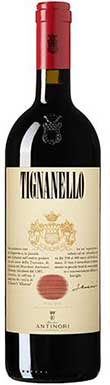

At first, the 1997 Tignanello has elements of an aged Left Bank Bordeaux, with dark fruit and leafy cedar notes. As it sits in the...
1997
Antinori

Antinori, Solaia, Tuscany, Italy, 1997
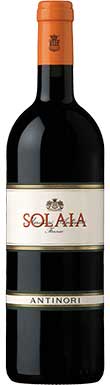
Expressive and appealing right from the start, the nose offers tobacco, blackcurrant and a tangle of herbs. Conversely, the palate has a slightly austere and...
1997
Antinori
Antinori, Tignanello, Tuscany, Italy, 1999
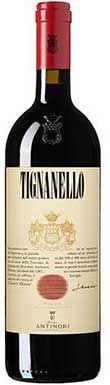
The 1999 Tignanello is delightfully fragrant, exhibiting dried mint, currants and tea leaf. While it does not have the density of 1997, nor the tension...
1999
Antinori
Antinori, Solaia, Tuscany, Italy, 1999
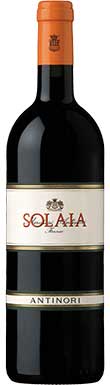
Revealing its extraordinary complexity slowly, the 1999 vintage is ultimate savoury minerality, with a persistent liquorice note, which winemaker Renzo Cotarella said he felt marks...
1999
Antinori
Antinori, Tignanello, Tuscany, Italy, 2001
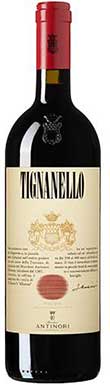
Besides a slightly higher percentage of Sangiovese in this vintage, the presence of wood is also more pronounced, with vanilla and sweet spice aromas evident...
2001
Antinori
Antinori, Solaia, Tuscany, Italy, 2001
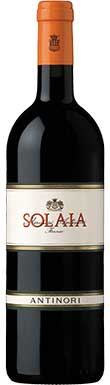
Plump and rich in style, the palate offers layers of blackberry preserve as well as nuances of espresso and liquorice. The wine freshens up as...
2001
Antinori
Antinori, Tignanello, Tuscany, Italy, 2005
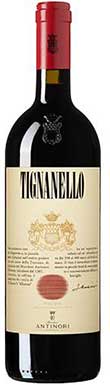
On the nose a subtle smokiness makes way for fragrant floral, pepper, tea and fennel notes. The palate is still fresh, with admirable vibrancy and...
2005
Antinori
Antinori, Solaia, Tuscany, Italy, 2005
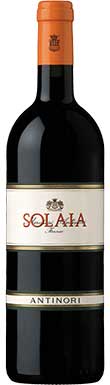
Decidedly balsamic in character, the 2005 vintage exhibits persistent thyme nuances with savoury leather, incense and dried plum adding intrigue. The structure is quite angular...
2005
Antinori
Antinori, Tignanello, Tuscany, Italy, 2007
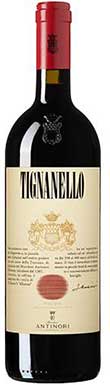
With tobacco, leather and dried red plum aromas, the 2007 Tignanello initially comes across as advanced for its age. The palate presents more youthfully and...
2007
Antinori
Antinori, Solaia, Tuscany, Italy, 2007
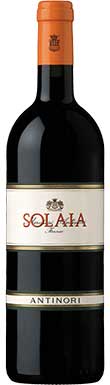
While touches of mocha and wood spice are still evident, waves of Mediterranean herb wash over the palate and the finish lingers with mint and...
2007
Antinori
Antinori, Tignanello, Tuscany, Italy, 2010
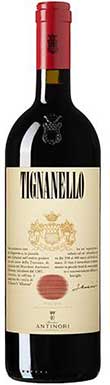
This demonstrates amazing aromatic complexity. Balsamic herbs like rosemary, sage and thyme meet red forest berries, sous-bois, creosote and warm stones. There is a sinewy...
2010
Antinori
Antinori, Solaia, Tuscany, Italy, 2010
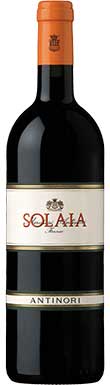
The 2010 Solaia is less immediately giving on the nose than the Tignanello of the same vintage, taking time to reveal nuances of grilled herbs,...
2010
Antinori
Antinori, Tignanello, Tuscany, Italy, 2011
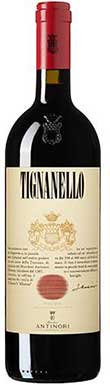
An exuberant, full-figured and precocious wine, portraying the generous warmth of the year. Macerated berries, cherry compote and dried Mediterranean herbs waft from the glass....
2011
Antinori
Antinori, Solaia, Tuscany, Italy, 2011
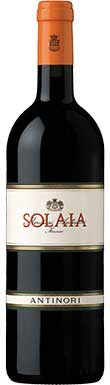
Very youthful with ripe cassis, smoke, coffee and anise, the 2011 Solaia is laden with sweet dense fruit that just stops short of being top...
2011
Antinori
Antinori, Tignanello, Tuscany, Italy, 2013
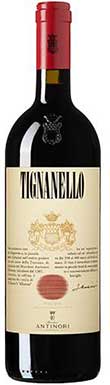
Winemaker Renzo Cotarella declared the 2013 to be one of the most vibrant Tignanellos Antinori has ever made. It recalls 2010 but is a slightly...
2013
Antinori
Antinori, Solaia, Tuscany, Italy, 2013
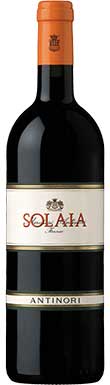
Like the Tignanello of the same vintage, the 2013 Solaia is restrained in character. It resembles a young Bordeaux, with top notes of cassis, hints...
2013
Antinori
