Time to try Alsace Pinot Noir
If you favour fragrance and elegance over concentration, it's time to delve into the geologically complex world of Alsace Pinot Noir...


Much has been written about its Rieslings, but less is said about Alsace’s Pinot Noir. This is largely because Pinot only accounts for 10% of the region’s total production.
The Alsace region
Alsace is a unique place, torn between French and German ownership down the centuries. With the Vosges mountain range on its western border and the Rhine on its eastern flank, it seems like a somewhat isolated outpost of France and – certainly when it comes to its wines – it has more in common with its German neighbours across the Rhine. Here lies the Black Forest and the German wine region of Baden, which produces similarly feather-touch Pinots of fragrance and earthiness.
Perhaps Alsace’s key feature is its geography and geology. The region spans a narrow corridor about 75 miles long, running approximately north to south, and all along its length the Vosges mountains create a rain shadow, making Alsace one of France’s driest regions.
Additionally, the geology here is incredibly diverse, with 13 identified soil types. These range from volcanic soils, granite and schist in the mountainous areas to the west, to limestone and marl-clay in the foothills and loess and alluvial deposits on the plain.
The benefit to growers is that they can use this extraordinary diversity of terroirs much like ingredients and seasoning in food. While some have chosen to focus on the character a particular soil type brings to a wine – austerity from grapes grown on schist, or bright acidity from limestone, for example – others blend different terroirs for a more rounded approach.
Alsace Pinot Noir
The main sticking point for Pinot Noir is that Alsace Grand Cru wines can only be made from specific white varieties – there are no red grands crus. Although there are some delicious examples out there, including those sourced from grand cru vineyards, the inability to designate a Pinot Noir wine as a Grand Cru surely affects the variety’s ability to be marketed as effectively as the whites.
Some producers at least hint at a Pinot’s grand cru roots by including the first initial of the vineyard in the name of the wine – for instance, Muré’s V Pinot Noir is from the Vorbourg grand cru, and Kirrenbourg’s Terroir B Pinot Noir is from the Brand grand cru.
It may be a pain for producers looking to sell their wines at the best prices, but for consumers it represents an opportunity to pick up a relative bargain compared to the arguably better-known Pinot Noirs, or Spätburgunders, from across the river. And let’s not forget that Alsace Pinot Noir offers an alternative, lighter, even more fragrant style to that bastion of French Pinot, Burgundy.
Alsace Pinot Noir to try:
You may also like:
Alsace: Top Riesling terroirs
Markus Molitor Rieslings and Pinot Noirs
German Grosses Gewächs new releases: Top wines
Domaine Kirrenbourg, Terroir B Pinot Noir, Alsace, France, 2017
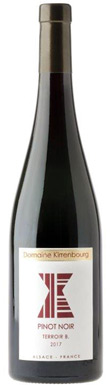

From the granite soils of the Brand grand cru, this Pinot is quite broad and dense but with an airy quality. Hedgerow fruits are joined by a touch of rich black cherry on a textured palate, with spices and mineral notes behind. It has a savoury, almost austere feel with good acidity and a slightly saline finish.
2017
Domaine Kirrenbourg

Bott-Geyl, Galets Oligocène Pinot Noir, Alsace, France, 2015
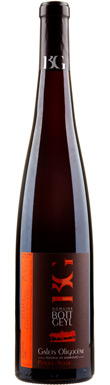
<p>Domaine Bott-Geyl has a family winemaking tradition reaching back to 1795 and now owns 15ha of vines across 80 parcels, which were converted to organics in 2000 and biodynamics in 2002. This Pinot Noir, named after the calcareous pebbles on Oligocène marl soils that make up the vineyard, is matured in barriques for around 18 months. The result is a soft but tight and textured expression with lovely gamey, redcurrant scents. The acidity is vibrant and pulls the wine together, but takes a back seat to the delightfully fresh cherry and strawberry flavours. Beautiful purity.</p>
2015
Bott-Geyl
Schoenheitz, St-Grégoire Pinot Noir, Alsace, France, 2017
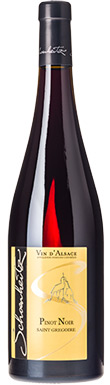
From a 0.63ha south- southwest-facing vineyard on decomposed granite soils in the Munster Valley (known as the Val Saint Grégoire before the Protestant reformation). It has a bright hedgerow fruit aroma with gentle black pepper and herb touches. In the mouth it's lovely and tight but with an airy quality. Savoury-edged red fruits are joined by a touch of spice and lovely fine-laced acidity. Matured in old oak barrels.
2017
Schoenheitz
Paul Ginglinger, Les Rocailles Pinot Noir, Alsace, France, 2016
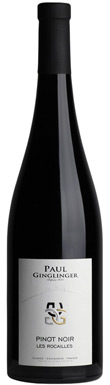
<p>Michel is the 12th-generation owner of this domaine, which has 12ha of organic vineyards. Les Rocailles comes from a plot of marl-limestone in the Eichberg grand cru - one of the driest and warmest microclimates in Alsace - and the wine is aged in French oak for 12 months. The result is an earthy, textured Pinot with some density on the palate, offering fresh cherry and dried red fruit flavours. There's some richness here, but it's lifted by the limestone acidity.</p>
2016
Paul Ginglinger
Domaine Muré, V Pinot Noir, Alsace, France, 2017
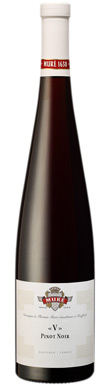
The grapes for 'V' - named after its Vorbourg source - come from predominantly clay-limestone over calcareous sandstone within the estate's south- to southeast-facing clos at the southern end of the the Vorbourg grand cru. What this gives is a delicious cherry and redcurrant character with a touch of autumnal earthiness. It's very vibrant with good acidity, displaying a fragrant, elegant mid-palate of strawberry and raspberry fruits with just a touch of spice on the long finish.
2017
Domaine Muré
Jean Becker, F de Zellenberg Pinot Noir, Alsace, France, 2016
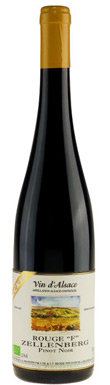
This Pinot comes from the grand cru of Froehn (hence the 'F'), which fans out around the town of Zellenberg. The fruit is hand-harvested and aged in 20% new oak barriques. It has a creamy nose with some warm black cherry scents, while the palate is broad and soft. Vanilla-infused wood, a subtle streak of caramel and black cherry and red fruit flavours lead to a warming finish with subtle but fresh acidity.
2016
Jean Becker
Domaine Rémy Gresser, Brandhof Pinot Noir, Alsace, France, 2016
Rémy Gresser's family have been making wines here since 1520. The estate now has 10ha to its name and the vineyards are managed using organic and biodynamic practices. The Brandhof lieu-dit is situated on limestone soils, which give this wine a light, bright character. It has flavours of red cherry and strawberry fruits, with some underlying tannins giving a touch of structure, tied together with gentle red-fruited acidity. Fairly simple but a great dinner table red.
2016
Domaine Rémy Gresser
Domaine Jean Sipp, Osmose Pinot Noir, Alsace, France, 2016
Domaine Jean Sipp owns 2ha of Pinot Noir and this Osmose bottling is from vines grown on marl. It has tangy black cherry and red fruit fragrances with some earthiness in the background. The palate is textured and also tangy, with some herby, bretty spiciness and some barrel oakiness, although it seems to lack the concentration and length to be able to age as well as some others here - despite having a more noticeable tannic structure.
2016
Domaine Jean Sipp
Cave De Ribeauville, Bio Pinot Noir, Alsace, France, 2015
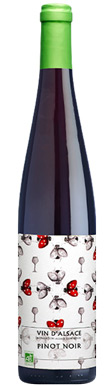
<p>This cooperative was founded in the late 19th century - a time when ownership of the Alsace region changed hands between France and Germany. It now has 235ha of vines across the region, and this organic Pinot Noir is sourced from low-yielding vines around Ribeauvillé. There's some tannic structure here, noticeable immediately, and the palate displays a terracotta nuance to the hedgerow fruits, joined by a touch of barrel tar, cream and spice. Gentle acidity runs through the core.</p>
2015
Cave De Ribeauville
Maison Cattin, Selection Parcellaire Pinot Noir, Alsace, France, 2017
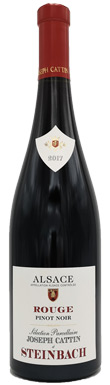
<p>The fragrant cherry and strawberry character of this wine, accompanied by some wild herb notes and a splash of black pepper, is hallmark Alsace Pinot. The low yields of sustainably farmed grapes give purity and just enough intensity, although this is a light, fluid example. Cattin is one of the largest and oldest producers in Alsace, and was one of the region's first producers to export to China.</p>
2017
Maison Cattin
