
Champagne brands to buy: Over 100 vintage & non-vintage bottles rated
Yohan Castaing reports on producers' latest releases, with tasting notes & scores for 102 vintage and non-vintage Champagnes from 45 different producers...


Scroll down to see the wines...
For this report on the best Champagne brands to buy, I tasted approximately 150 Champagnes both in the region and from samples sent in. My final selection of 102 includes 72 latest-release vintage Champagnes, spanning the years 1999 to 2015, plus 30 non-vintage Champagnes which represent the best that the region has to offer.
The Champagne region
Champagne is so well known as a symbol of celebration that we can forget that it is, above all, a wine produced under special conditions – a unique wine, rich in diversity and singularity. The region of Champagne and its three main towns, Reims, Epernay and Aÿ, are situated at the crossroads of two important old trade routes. This helped Champagne to become known in all the major European markets and to acquire its long-held reputation.
Located in the north-east of France, 30 miles east of Paris, the region is divided into various sectors extending over five French departments, forming a thin ribbon a few hundred metres wide. The largest part, nearly 66% of the region, is located in the Marne department. To the west, towards Paris, the departments of Aisne and Seine-et-Marne account for another 10%. To the south, the remaining 24% is spread over the departments of Aube and Haute-Marne.
Quick link: See all Champagne tasting notes & scores from this report – includes vintage and non-vintage Champagnes
The circumscribed region authorised to label its wines as Champagne was strictly defined by law in 1927, although it has expanded over time. In 2018, the appellation extended to 33,843 hectares of vines (22,467ha in the Marne, 8,018ha in the Aube and Haute-Marne, and 3,358ha in the Aisne and Seine-et-Marne). This 33,843ha area comprises 280,000 separate parcels of vines owned by 16,000 growers and 340 Champagne houses.
Champagne is divided into four main production areas, each one further divided according to the diversity of its terroirs as well as by viticultural practices and preferred grape variety:
Montagne de Reims
This is possibly an exaggerated description of a massif that culminates at an altitude of 300m. The vineyard area is located on the slopes of the Cote de l’Ile de France, forming an arc that links Reims and Épernay. It is home to some of Champagne’s finest Pinot Noir vineyards, planted on terroirs with predominantly chalky bedrock soils.
The Vallée de la Marne
Stretching from Epernay to the department of Seine-et-Marne is this vast territory of multiple terroirs, where the Marne River flows through a large valley. Limestone lies under a thick layer of clay at deeper and deeper levels as you head west. Pinot Meunier thrives in these geological conditions.
Côte des Blancs
Situated south of Epernay, its chalky soils make the Côte des Blancs the best place to plant Chardonnay, and 95% of the vineyard area is planted with this variety.
Côte des Bar
70 miles southeast of Epernay, the Côte des Bar is the principal vineyard area of the Aube department, lying on steep slopes with Kimmeridgian marl soils. This region has long been overshadowed by the three listed above, but a new generation of growers is revealing its potential for quality, making it one of the most interesting Champagne regions right now.
Each grape-growing village in Champagne is evaluated according to the quality of its terroir. Established in 1911, the Échelle des Crus system makes it possible to fix grape prices using a scale based on a simple rule: higher prices for better terroirs / villages. The 17 best villages are classified as ‘100%’ and grapes grown here qualify as ‘grand cru’, while 42 more villages classified between 90 and 99% are considered ‘premier cru’.
House styles & a sense of place
For years, Champagne viticulture was oriented more towards high production quantities than haute couture viticulture with lower volumes. With global warming and the emergence of cult winegrowers (Selosse, Egly-Ouriet and others), winemaking and viticultural techniques are evolving, and site-specific wines are gaining attention. A sense of place is now highlighted by many winegrowers as well as by an increasing number of Champagne houses, making Champagne one of the most interesting and dynamic regions in France.
However, it is the ‘house style’ philosophy – the interpretation of the winegrowers or chef de cave (cellar managers) – that is the soul of Champagne. All Champagnes have their own identities, based on the decisions made about the blend of grape varieties, the addition of reserve wines, whether to vinify in oak barrels, the level of dosage, how long to age the wines…the list goes on.
Champagne houses tend to promote their personal styles as interpreted by their chef de cave using a set framework depending on the year, while the smaller-sized wine grower will prefer to produce distinct cuvées from a single terroir or a single grape variety. The interest of Champagne comes from these multiple philosophies, resulting as they do in varied and sometimes completely original wines.
This eclecticism is reflected in the different styles of Champagne that can be produced: blanc de blancs are made exclusively from Chardonnay, while blanc de noirs are elaborated from Pinot Noir and/or Pinot Meunier. Rosé Champagne is made in most instances by adding a small proportion of still red wine to the blend, although the saignée method is employed by some producers who favour a bolder style. Vintage champagne is made from the harvest of a single year, sometimes from more than one plot or terroir.
By far the highest production volume is that of non-vintage or ‘NV’ Champagne, elaborated using a variety of vintages, grapes and terroirs. NV bottlings are often the most affordable of a producer’s Champagnes, and can be appreciated as an aperitif or even with desserts, thanks to its fine, lively acidity.
Champagne vintages to look out for:
With new vintage Champagne releases in this report spanning nearly two decades (1999-2015 vintages), there are plenty of options for drinkers out there.
Look for 2007 Champagnes based on Chardonnay, and rosé for its depth and fine texture.
2008 is highly rated by almost everybody, combining concentrated fruit with brilliant acidity.
2009 is a powerful vintage that will be perfect for white meats.
2012, which produced magnificent Pinot Noir, is a gastronomic vintage.
Yohan’s pick of the best Champagne brands:
Billecart-Salmon
The Billecart family has made Champagne in Mareuil-sur-Aÿ since 1818. The Billecart-Salmon style is one of the purest, finest, and most brilliant of the whole region. Its Champagnes are particularly well suited to gastronomy.
Try: Billecart-Salmon, Clos St-Hilaire 2002
Philipponnat
Since 1999, Charles Philipponnat, the grand-nephew of founder Pierre, has been carrying out qualitative work that makes this house one of the most interesting in Champagne today.
Try: Philipponnat, La Remissonne 2009
Jacquesson
Jacquesson’s origins go back to 1798. After a long decline, the house was reborn in the 1970s when it was bought by the Chiquet family. It has since produced distinguished wines of great finesse and depth of character.
Try: Jacquesson, Avize Champ Caïn 2008
Olivier Bonville
Since 1900, the Franck Bonville house has been located in Oger in the Côte des Blancs sector. Today, Olivier Bonville is at the helm and produces lively, fresh Champagnes with remarkable aromatic complexity.
Try: Olivier Bonville, Les Belles Voyes 2012
Yohan’s top-rated vintage Champagnes:
94 points and above
See all 102 Champagne tasting notes & scores from this report
Yohan’s non-vintage Champagne reviews from this report are also included in The best non-vintage Champagnes to buy
See all 102 Champagne tasting notes & scores from this report
Champagne grape varieties
In most instances, Champagne is a blend of the three key permissible grape varieties (Chardonnay, Pinot Noir and Pinot Meunier) sourced from diverse sites and from several different vintages. In the past, a number of grape varieties were planted in Champagne, but now the region focuses on just three:
Pinot Noir
The main grape variety, representing 38% of total plantings, Pinot Noir brings power and depth.
Pinot Meunier
Occupying 31% of the total vineyard area, Pinot Meunier produces round, fruity wines with balanced acidity.
Chardonnay
Accounting for 30% of total plantings, Chardonnay produces a floral, mineral style and very fine wines.
Pinot Blanc, Arbane and Petit Meslier are other varieties that are still authorised for Champagne production, but they are planted in tiny amounts.
Dosage by numbers
Doux: more than 50 g/l of residual sugar.
Demi-Sec: 32-50 g/l.
Sec or dry: 17-32 g/l.
Extra-Dry: 12-17 g/l.
Brut: 0-12 g/l.
Extra-Brut: 0-6 g/l.
Brut Nature / Non-Dosé / Brut-Zéro: No dosage, and with no more than 3g/l of residual sugar remaining from fermentation.
You may also like:
The best non-vintage Champagnes to buy
Champagne: Magnum Vs Bottle: Panel Tasting Results
Dom Pérignon 1990-2009: ‘The mother of all DP tastings’
Louis Roederer, Cristal, Champagne, France, 2008
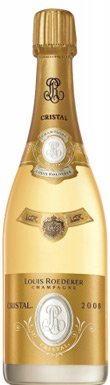

A sublime Champagne from Cristal from the famous and much praised 2008 vintage, which Jean-Baptiste Lécaillon calls a ‘dry and cool year that was a...
2008
Louis Roederer

Billecart-Salmon, Clos St-Hilaire, Champagne, France, 2002
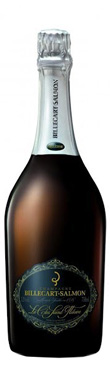
Sourced from the one-hectare Clos St-Hilaire, a walled vineyard, this 2002 opens with toasty aromas, spices, white fruits and roasted nuts. This voluminous Champagne has...
2002
Billecart-Salmon
Dom Pérignon, Rosé, Champagne, France, 2006
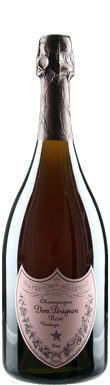
2006, with its 20% addition of red wine, has always been one of the most boomingly intense renditions of Dom Pérignon Rosé, and today the...
2006
Dom Pérignon
Philipponnat, Clos des Goisses, Champagne, France, 2010
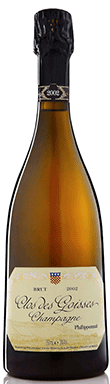
The 2010 Clos des Goisses, of which there will be only 5,000 bottles, shows a generous and lively bouquet of white pepper, white flowers, apricot...
2010
Philipponnat
Krug, Champagne, France, 2006
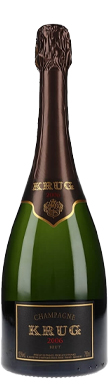
Veritably dripping with notes of rich buttery pastry and toasted brioche, honey and golden syrup-coated pineapple, this is the definition of indulgence. Fluffy pancakes and...
2006
Krug
Dom Pérignon, Champagne, France, 2008
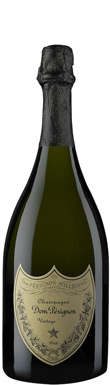
<p>Dom Pérignon is named after 17th-century Benedictine monk Dom Pierre Pérignon (1638-1715), who is said to have invented sparkling wine while cellarmaster at the Abbey...
2008
Dom Pérignon
Pierre Péters, Cuvée Les Chétillons Blanc de Blancs, Champagne, France, 2012
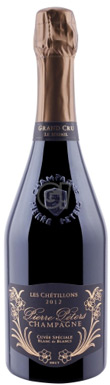
Sourced from three parcels in the Grand Cru village of Le Mesnil-sur-Oger, Les Chétillons possesses an impressive aromatic richness of spring flowers, mint, white fruits...
2012
Pierre Péters
Taittinger, Comtes de Champagne Rosé, Champagne, France, 2007
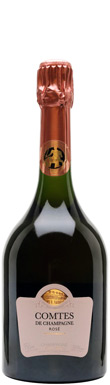
<p>The Comtes de Champagne Rosé is composed of 30% Chardonnay (Grands Crus from Côtes de Blancs), 70% Pinot Noir (Grands Crus from Montagne de Reims,...
2007
Taittinger
Billecart-Salmon, Cuvée Nicolas François, Champagne, France, 2006
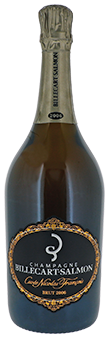
Mature toasted brioche and macadamia nuts on nose, white chocolate and toast. Great acidity on the palate provides a lot of support to the complex,...
2006
Billecart-Salmon
Jacquesson, Avize Champ Caïn, Champagne, France, 2008
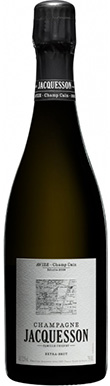
<p>Champ Caïn is a small plot of 1.2ha planted with 12,000 Chardonnay vines. The nose is very expressive, all fruit and brioche. It has a...
2008
Jacquesson
Philipponnat, La Rémissonne, Champagne, France, 2009
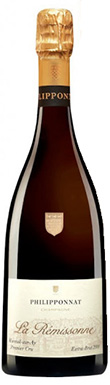
<p>Located adjacent to Clos de Goisses and adjoining the village of Mareuil-sur-Ay, La Rémissonne is a single 0.6ha plot, west-facing with a distinctly chalky soil...
2009
Philipponnat
Pierre Péters, Cuvée Spéciale Les Montjolys Blanc de Blancs, Champagne, France, 2012
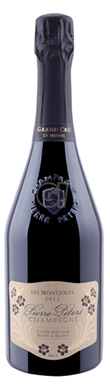
<p>Les Montjolys is a blanc de blancs sourced from a superb chalky terroir in the village of Mesnil-sur-Oger. The intense aromas and the precise notes...
2012
Pierre Péters
Ruinart, Dom Ruinart Rosé, Champagne, France, 2007
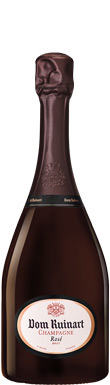
2007 is the first vintage with Frédéric Panaiotis as chef de cave. Made from 80% Chardonnay and 20% Pinot Noir (vinified as red wine), this...
2007
Ruinart
Taittinger, Comtes de Champagne, Champagne, France, 2007
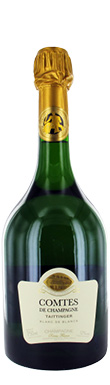
A plentiful, early harvest after a cool and rainy August did little for the reputation of the 2007 vintage. Still, I find that the quality...
2007
Taittinger
Thiénot, T Sélection, Champagne, France, 1999
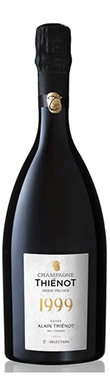
<p>1999 is a huge vintage in Champagne. Made from 80% Chardonnay (sourced from Côte des Blancs) and 20% Pinot Noir (sourced from Ecumières and the...
1999
Thiénot
Francis Boulard & Fille, Petraea, Champagne, France, 2012
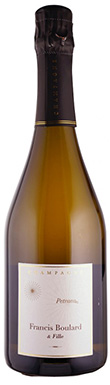
<p>This is the first vintage of Petraea, the new organic cuvée from Boulard. The bouquet shows a brillant complexity, with orchard fruit, spices and white...
2012
Francis Boulard & Fille
Jacquesson, Dizy Corne Bautray, Champagne, France, 2008
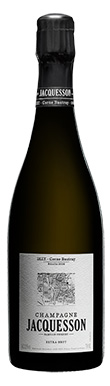
Sourced from a small southwest-facing plot, this 100% Chardonnay Champagne has no dosage. The 2008 shows a rich, complex and racy bouquet of white pepper,...
2008
Jacquesson
Larmandier–Bernier, Chemins d'Avize, Champagne, France, 2012
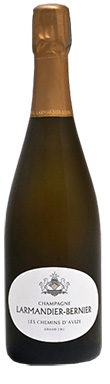
<p>Les Chemins d’Avize is made from the Grand Cru grapes. The fabulous 2012 vintage is powerful and expressive, and this Champagne possesses precision in its...
2012
Larmandier–Bernier
Franck Bonville, Les Belles Voyes, Champagne, France, 2012
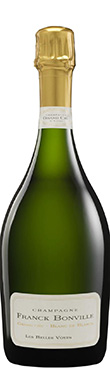
<p>Les Belles Voyes is a fantastic terroir from Oger, and this blanc de blancs shows floral and honey notes accompanied by pastry and hazelnut hints....
2012
Franck Bonville
Philipponnat, Les Cintres, Champagne, France, 2009
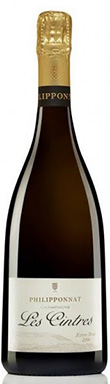
<p>Les Cintres is a small plot inside Clos des Goisses in Mareuil-sur-Aÿ, one of the warmest sites in Champagne. This has a very expressive nose...
2009
Philipponnat
Bollinger, Grande Année, Champagne, France, 2008
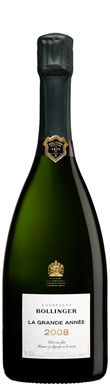
In 2008, the remarkable maturity of the grapes combined with an amazing acidity has produced a vintage of great balance, concentration and depth. The wine...
2008
Bollinger
Gonet-Médeville, La Grande Ruelle, Champagne, France, 2006
<p>La Grande Ruelle comprises just 0.2 hectares in the Ambonnay Grand Cru. With sumptuous notes of nuts, pastry, almonds and white flowers, this 100% Pinot...
2006
Gonet-Médeville
Larmandier–Bernier, Terre de Vertus, Champagne, France, 2012
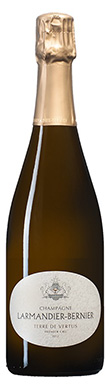
Terre de Vertus Blanc de Blancs is a powerful and dense Premier Cru with very complex aromas of hazelnut, dried flowers, citrus and smoke. Perfectly...
2012
Larmandier–Bernier
Laurent-Perrier, Grande Cuvée Alexandra Rosé, Champagne, France, 2004
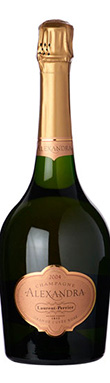
<p>Laurent-Perrier's flagship rosé is a blend of 80% Pinot Noir and 20% Chardonnay from Grand Cru vineyards, and has been bottled only seven times since...
2004
Laurent-Perrier
Franck Bonville, Pur Avize, Champagne, France, 2012
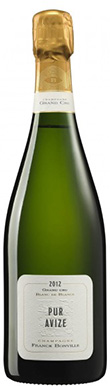
<p>Pur Avize is 100% Chardonnay from Avize, with a dosage of 2g/l. It has complex and energetic peach, pear and white pepper aromas. Pur Avize...
2012
Franck Bonville
Pierre Gerbais, L'Osmose Blanc de Blancs, Champagne, France, 2014
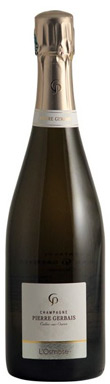
<p>Made with 100% Chardonnay, L’Osmose is aged for 30 months on its lees and captures plenty of mineral, pastry and white fruit aromas. Rich and...
2014
Pierre Gerbais
Thiénot, La Vigne Aux Gamins Blanc de Blancs, Champagne, France, 2007
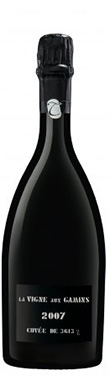
<p>This is Thienot's 2007 interpretation of its famous Vignes aux Gamins, recently disgorged (April 2019). Malolactic fermentation is employed for this Champagne. The nose is...
2007
Thiénot
